
Sauces & Condiments
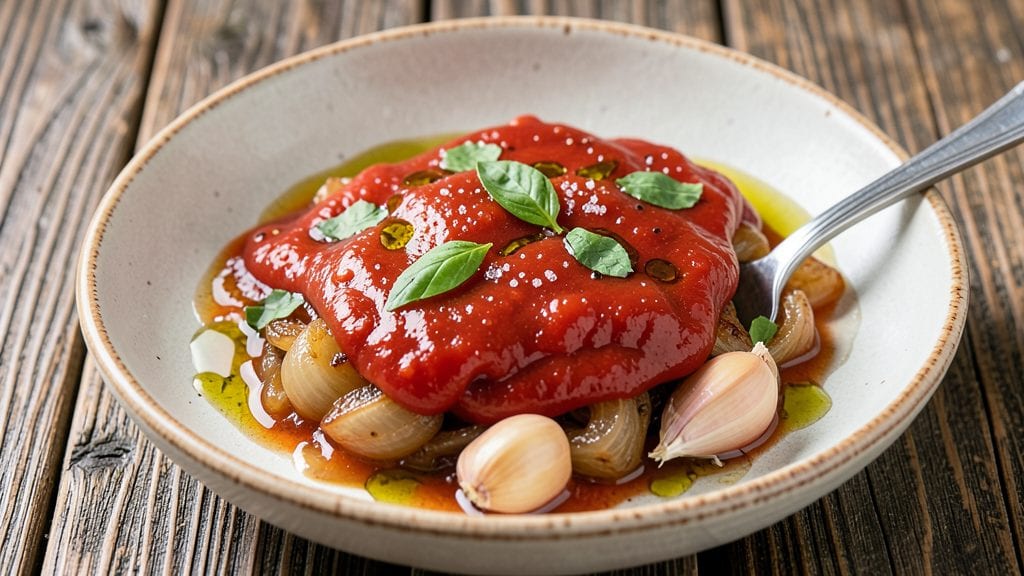
Nonna's tomato sauce recipe transforms simple canned tomatoes into a rich, layered masterpiece that tastes like love simmered in a copper pot. 💛 I learned this technique from my Italian neighbor in Portland, who swore by the slow simmer that develops deep, caramelized flavors while keeping the basil bright and fresh-tasting. The secret lies in balancing acidity and sweetness, letting the sauce work its magic over time.
This isn't just marinara—it's a versatile foundation that works with pasta, meatballs, or as a topping for grilled proteins. The process is straightforward but requires patience: crushed tomatoes, garlic, olive oil, and fresh basil combine in a pot, simmering until thickened and aromatic.
No blender needed—just time and attention to create that perfect balance of richness and brightness.
By the end, you'll have a sauce so deeply flavorful it tastes homemade, with none of the canned shortcuts. The basil stays vibrant, the tomatoes caramelize into sweetness, and the garlic infuses without overpowering.
It keeps beautifully in the fridge for up to five days, or you can freeze it for months—because good sauce only gets better with time.
Use it as a base for your favorite Italian dishes or drizzle it over roasted vegetables for a restaurant-quality finish. Here's how to make it—just like Nonna would.
Ingredients for nonna's sauce
Ten simple ingredients transform into Nonna's rich, aromatic tomato sauce that sings with basil brightness.
| Ingredient | Amount | Notes |
|---|---|---|
| Crushed Tomatoes (San Marzano preferred) 🍅 | 28 oz | High-quality canned, no salt added |
| Extra-Virgin Olive Oil 🫒 | ½ cup | Fruity, peppery, first cold press |
| Garlic Cloves 🧄 | 6 cloves | Fresh, peeled, thinly sliced |
| Fresh Basil Leaves 🌿 | 1 cup | Packed, stems removed, vibrant green |
| Yellow Onion 🧅 | 1 whole | Medium size, finely diced |
| Granulated Sugar 🍚 | 1 tbsp | Balances acidity, adjust to taste |
| Red Wine Vinegar 🍷 | 1 tbsp | Brightens flavors, not balsamic |
| Diamond Crystal Kosher Salt 🧂 | 1 ½ tsp | Fine grain, adjust to taste |
| Freshly Ground Black Pepper 🌶️ | ½ tsp | Cracked peppercorns preferred |
| Dried Oregano 🍃 | 1 tsp | Italian variety, not Mexican |
The tomatoes are everything—San Marzano if you can find them, but any high-quality canned works. Look for brands with minimal additives and vibrant color. Trader Joe's and Whole Foods carry great options. Fresh basil matters too—pick leaves that are bright green and fragrant, not wilted. The garlic should be plump and firm, with no green shoots. For the olive oil, grab a fruity, peppery extra-virgin—California or Italian brands work best. I usually buy a large bottle and keep it in the pantry for dressings too.
No San Marzano tomatoes? Crushed tomatoes in a heavy-duty can (like Muir Glen) are your next best bet. Short on fresh basil? Dried basil at one-third the amount works in a pinch, but it won't be as vibrant. The red wine vinegar can be swapped for lemon juice if you prefer, though it changes the flavor profile slightly. For a vegetarian version, skip the meatballs and use this sauce as a pasta topping or dip. The sugar and vinegar balance the acidity—adjust to taste, but don't skip them entirely. Pre-minced garlic? Fresh is better, but it's fine if you're in a rush.
This sauce only gets better with time—3-4 days in the fridge lets the flavors meld perfectly. For longer storage, freeze in 1-cup portions for easy use later. Thaw overnight in the fridge or warm gently on the stove. The basil wilts fast, so add it fresh at the very end. If you make extra, freeze it with a splash of water to prevent browning. Reheat gently on low heat, stirring occasionally, to preserve that Nonna-quality richness.
Why You'll Love This Recipe
- No Chopping Needed: I swear by this—just crush garlic, slice onion, and toss in whole basil leaves. The pot does all the work while you sip wine and pretend you’re in Italy.
- Umami Bomb: That San Marzano tomato? Sweet, rich, and deep—like a hug in sauce form. The olive oil and slow-simmered garlic make it taste like it’s been cooking all day (even if it’s just 20 minutes).
- Pasta’s Best Friend: Slap it on spaghetti, toss with grilled chicken, or drizzle over roasted veggies. It’s the one sauce that actually makes everything better—no fancy plating required.
- Leftovers That Lie: I make a big batch Sunday night, and by Wednesday, no one remembers it’s “last week’s.” Freeze half for when you’re too tired to cook, and it’ll still taste like you cared. (Spoiler: It will.)
Step-by-step instructions for Nonna's tomato sauce
Here's the method that builds rich, aromatic layers—just like Nonna would make.
🍳 Step 1: Sauté Onion and Garlic Until Translucent
Heat the 0.5 cup extra-virgin olive oil in a heavy-bottomed saucepan over medium-low heat. Add the 1 whole yellow onion, finely diced, and cook for 8-10 minutes until completely soft and translucent. You'll notice the onion releases its natural moisture and begins to caramelize slightly at the edges—that's when it's ready for the next step.
Reduce heat to low and add the 6 cloves garlic cloves, thinly sliced. Stir gently for 1-2 minutes until the garlic just begins to turn golden—never let it brown, or it'll turn bitter. Here's the thing—this slow cooking develops a deep, sweet foundation for the sauce. If the garlic starts to sizzle too vigorously, immediately reduce the heat or remove the pan from the burner until it calms down.
🥘 Step 2: Add Tomatoes and Simmer for Depth
Pour in the 28 oz crushed tomatoes, stirring to combine with the onion and garlic mixture. Add the 1 tbsp granulated sugar, 1 tbsp red wine vinegar, 1.5 tsp diamond crystal kosher salt, 0.5 tsp freshly ground black pepper, and 1 tsp dried oregano. Bring to a gentle simmer over medium heat, then immediately reduce to low heat—this sauce needs patience.
Partially cover the pan and let it simmer uninterrupted for 45-50 minutes. Stir occasionally, but not constantly—you want the sauce to develop its own texture and flavor without breaking down the tomatoes prematurely. You'll see the sauce gradually thicken and deepen in color, turning from a bright red to a rich, ruby hue. This is where the magic happens: the acidity mellows, the sweetness balances, and the flavors meld into something truly extraordinary.
👨🍳 Step 3: Finish with Fresh Basil for Brightness
After the initial simmer, increase the heat to medium and let the sauce reduce slightly more until it reaches your desired consistency—it should coat the back of a spoon but still be loose enough to drizzle. Remove the pan from heat and let it cool for 5 minutes. Here's where it gets fun: tear the 1 cup fresh basil leaves (stems removed) into smaller pieces and gently fold them into the warm sauce.
Let the basil infuse for 10 minutes off the heat—this allows the vibrant green notes to brighten the sauce without overpowering the deep tomato flavor. Taste and adjust seasoning if needed, adding a pinch more salt or a splash of red wine vinegar if the acidity needs balancing. The basil should be visible but not dominant; think of it as a fresh accent rather than the star of the show.
⏰ Step 4: Rest and Store Properly
Transfer the sauce to a clean glass jar or airtight container, pressing a piece of plastic wrap directly onto the surface to prevent a skin from forming. Let it cool completely at room temperature, then refrigerate for up to 5 days or freeze for up to 3 months. The flavors will continue to develop and deepen over time—this is why Nonna's sauce tastes even better the next day.
When ready to use, gently reheat the sauce over low heat, stirring occasionally. If it thickens too much, add a splash of water or pasta water to loosen it. This sauce is incredibly versatile—use it as a base for pasta, drizzle over grilled meats, or serve with crusty bread. The key is to let it shine on its own, just as Nonna intended.
Pro Tips For Making Nonna'S Sauce
- Sweat the Onion First: Don’t brown it—cook the onion in olive oil over medium-low heat until it’s translucent and just starting to soften (about 5-7 minutes). I learned this the hard way: caramelized onions turn the sauce cloying, and raw bits make it taste undercooked. Keep the heat steady so it doesn’t stick, and resist the urge to rush.
- Crush Garlic Gently: Mince the garlic into tiny, even pieces—not a paste—so it infuses without burning. I used to smash it with the flat of my knife, and half the time it’d turn bitter before the tomatoes even went in. A sharp knife and quick, light chops keep it aromatic and sweet.
- Simmer Low and Slow: Once the tomatoes hit the pot, drop the heat to a bare simmer (just tiny bubbles at the edges) and walk away for at least 45 minutes. My first few batches ended up watery because I kept peeking or stirring too much. The longer it cooks, the deeper the flavor—no shortcut here.
- Add Basil Late: Tear the basil leaves by hand and fold them in only in the last 10 minutes of cooking. Whole leaves keep their brightness, and adding them early turns the sauce bitter. If you’re short on time, use a tiny handful of dried basil (½ teaspoon) instead—it won’t be the same, but it’ll save you from a sad, wilted mess.
Perfect pairings for nonna's sauce
Pasta Pairings
This sauce is a match made in heaven with al dente spaghetti—the classic choice—but I love it even more with bucatini or pappardelle. The thick, ribbon-like pappardelle (about ¼-inch wide) soaks up the sauce beautifully, creating a luxurious, saucy bite.
For a rustic touch, serve with tonnarelli, a square-cut pasta that holds its shape while clinging to the sauce. 🍝
Meatballs and Meat
Nonna's sauce elevates homemade meatballs to restaurant quality. I use a mix of ground beef and pork (80/20 ratio) with breadcrumbs, egg, and grated Parmesan for structure. Simmer the meatballs in the sauce for 15-20 minutes until cooked through.
The sauce also pairs perfectly with grilled chicken or sausage—just drizzle it over the top or serve it on the side for dipping.
Bread and Bruschetta
Toasted ciabatta or sourdough makes a fantastic base for bruschetta. Spread a thin layer of the warm sauce on the bread, top with a sprinkle of Pecorino Romano, and finish with a few torn basil leaves.
For extra richness, add a dollop of ricotta cheese before baking at 375°F for 5-7 minutes. This makes a perfect appetizer or light lunch. 🥖
Vegetable Sides
Use this sauce as a vibrant topping for roasted eggplant or grilled zucchini. Toss halved eggplant with olive oil, salt, and pepper, then roast at 400°F for 20 minutes before drizzling with sauce.
It also works beautifully with polenta or mashed potatoes—just warm the sauce slightly and spoon it over the top for a creamy, saucy contrast.
Beverage Pairings
A crisp Italian Pinot Grigio complements the sauce's acidity and fresh basil notes. For a non-alcoholic option, try sparkling water with a squeeze of lemon. If you prefer beer, a light Italian lager like Peroni or Birra del Borgo cleanses the palate without overpowering the dish.
Avoid heavy reds—they’ll clash with the sauce’s brightness. 🍷
Nutrition facts
Frequently asked questions
Can I use fresh tomatoes instead of canned for Nonna's sauce?
Fresh tomatoes work but require extra prep. Peel, seed, and crush 4-5 large ripe tomatoes (about 2 pounds) to replace the canned version. Simmer them longer—1-2 hours—to concentrate flavors. For best results, blend them first to remove excess water, then strain. Canned tomatoes still win for convenience and consistent flavor.
Why does the recipe call for both sugar and vinegar?
The 1 tbsp sugar balances the acidity of tomatoes and vinegar, while the 1 tbsp red wine vinegar brightens the sauce. Together, they create harmony—sugar mellows sharpness, vinegar prevents flatness. Skip both and the sauce may taste one-dimensional. Taste as you go and adjust by ¼ tsp increments.
How do I fix a sauce that's too acidic or too bland?
For too acidic, stir in ½ tsp sugar and let simmer 5 minutes. For too bland, add ½ tsp salt or a pinch of dried oregano. If it's both, balance with 1 tsp tomato paste> (mixed with water) to deepen flavor. Never add raw garlic—it'll overpower.
Can I make this sauce in a slow cooker?
Sauté onion and garlic first, then transfer everything to the slow cooker. Cook on low for 6-8 hours or high for 3-4 hours. The long cook time enhances flavors, but check occasionally to prevent burning. Add basil at the very end (last 30 minutes) to preserve its freshness.
What's the best way to reheat frozen Nonna's sauce?
Thaw overnight in the fridge, then reheat gently on low heat with a splash of water or pasta water. Stir frequently to prevent sticking. For frozen sauce straight from the freezer, simmer in a pot with ½ cup water for 10-15 minutes until fully thawed and heated through. Never microwave—it breaks down texture.