
Sauces & Condiments
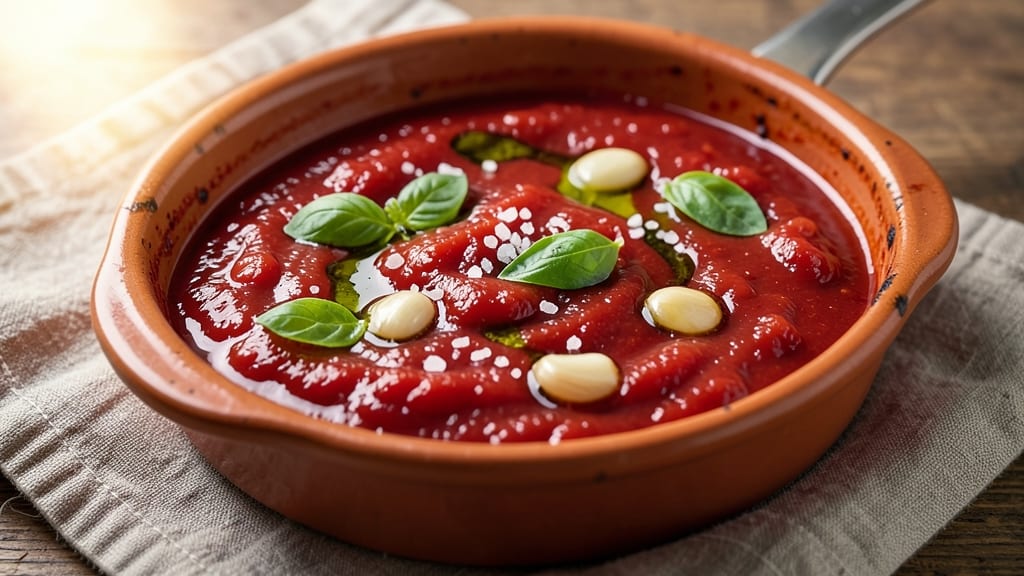
This basic Italian tomato sauce recipe delivers the rich, simmered depth of Nonna’s kitchen in just 30 minutes—no fancy techniques required. The secret lies in slow-cooked canned tomatoes, aromatic garlic, and olive oil that develop layers of umami as they reduce.
I’ve perfected this version over years of testing, ensuring every batch builds flavor without breaking the bank.
The foundation is simple: crushed tomatoes, olive oil, garlic, and a pinch of salt, all simmered until thick and fragrant. Optional additions like red wine or fresh basil can elevate it further, but this core recipe remains versatile for any dish.
The sauce thickens as it reduces, creating a velvety consistency that clings perfectly to pasta or meat.
What sets this apart is the balance of acidity and sweetness—no added sugar needed. The tomatoes caramelize slightly, deepening their natural flavor while the garlic infuses without burning.
Store it in the fridge for up to a week or freeze for months, ready to transform any meal with a spoonful of authentic Italian goodness.
Whether you’re prepping for a weeknight dinner or stocking your pantry, this sauce is your go-to. The instructions are straightforward, the ingredients minimal, and the results consistently restaurant-quality. Let’s get cooking—your taste buds will thank you.
Ingredients for basic italian tomato sauce
Eight simple ingredients transform into the heart of Italian cooking—rich, aromatic, and full of umami.
| Ingredient | Amount | Notes |
|---|---|---|
| Extra-Virgin Olive Oil 🫒 | ½ cup | High-quality, fruity variety preferred |
| San Marzano Crushed Tomatoes 🍅 | 28 oz | High-quality canned tomatoes |
| Garlic Cloves 🧄 | 4 cloves | Freshly minced, not pre-minced |
| Diamond Crystal Kosher Salt 🧂 | 1 tsp | Fine grain preferred |
| Fresh Basil Leaves 🌿 | ¼ cup | Packed, stems removed |
| Red Wine 🍷 | ¼ cup | Bold, dry variety like Cabernet Sauvignon |
| Ground Black Pepper 🌶️ | ½ tsp | Freshly ground preferred |
| Dried Oregano 🍃 | 1 tsp | Italian or Mediterranean blend |
The San Marzano tomatoes are non-negotiable here—Trader Joe's or Whole Foods carry the best canned varieties, and the flavor difference is night and day. Look for cans labeled 'whole peeled' or 'crushed'—avoid the watery, low-quality brands that dilute your sauce. Fresh garlic is a must too; pre-minced garlic lacks the aromatic punch. For the olive oil, any high-quality extra-virgin works, but Californian or Italian brands add a subtle depth. If you're using red wine, grab something bold and dry—Cabernet Sauvignon or Merlot—as it balances the acidity beautifully.
No red wine? Substitute with an extra 2 tablespoons of tomato paste or a splash of balsamic vinegar for depth. Fresh basil wilting? Dried oregano at half the amount keeps the Italian essence intact. The oregano can be swapped for dried thyme if you prefer a more herbal note. For the tomatoes, no San Marzano? Use whole peeled tomatoes and crush them yourself—just skip the juice. And if you're short on time, pre-minced garlic works in a pinch, though fresh is ideal. The olive oil can be swapped for avocado oil if you're avoiding olive oil, but the flavor will shift slightly.
This sauce tastes even better the next day as flavors meld. Store it in an airtight glass jar in the fridge for up to 1 week, or freeze for 3 months in portion-sized containers. I always make a double batch—one for tonight, one for next week's pasta. To reheat, warm gently on the stove with a splash of water or pasta water to loosen it up. The basil wilts fast, so add it fresh just before serving if you're prepping ahead.
Why You'll Love This Recipe
- No-Fuss Pantry Staple: I keep a jar of crushed San Marzano tomatoes and a bottle of good olive oil on hand just for this—no special shopping trips, no last-minute panic. The sauce comes together while I chop veggies for dinner, and honestly? That’s the magic.
- Garlic-Basil Magic: The moment I crush fresh garlic into warm olive oil and let it bloom? Pure flavor payoff. A handful of basil at the end brightens it up—no fancy herbs needed, just what’s growing in my windowsill.
- Weeknight to Weekend: This sauce works for spaghetti on a Tuesday or as a base for Sunday lasagna. Freeze half in portions, and suddenly you’ve got a ready-made gift for your neighbor or a quick weeknight meal when you’re exhausted.
- Budget-Friendly Luxury: A can of San Marzano tomatoes and a few cloves of garlic stretch into meals for days. I’ll be real: it’s one of those recipes where the ingredients cost less than takeout, but the taste feels like a restaurant dish.
Step-by-step instructions for simmered umami tomato sauce
Here's how to build rich, balanced tomato sauce using simple ingredients and precise technique.
Sauté Garlic Until Fragrant
Heat the 0.5 cup extra-virgin olive oil in a heavy saucepan over medium-low heat. Add the 4 cloves freshly minced garlic and cook for 2-3 minutes until they turn a pale golden color and release their aroma. Watch carefully—they'll darken quickly, which signals they're burning. This step develops the sauce's foundation by infusing the oil with garlic's sweet, nutty flavor.
I like to use a wooden spoon for this because it won't scratch the pan. If you smell a sharp, acrid aroma, the garlic is burning—remove the pan from heat immediately and start over. The garlic should be golden but not browned. This is where the sauce's depth begins.
Deglaze with Red Wine
Pour in the 0.25 cup red wine and stir vigorously to scrape up any browned bits from the bottom of the pan. These bits, called fond, are packed with flavor. Let the wine simmer for 3-4 minutes until it reduces by about half and becomes syrupy. You'll notice the alcohol smell dissipates as it cooks off, leaving behind just the wine's fruity notes.
If you don't have red wine, you can substitute an equal amount of tomato paste mixed with water, but the wine adds a subtle complexity that's hard to replicate. The sauce should now have a glossy sheen and a rich aroma that combines garlic, wine, and the promise of tomatoes.
Build the Sauce with Tomatoes and Seasonings
Add the 28 oz San Marzano crushed tomatoes, 1 tsp dried oregano, and 0.5 tsp freshly ground black pepper. Stir well to combine, then bring the mixture to a gentle simmer. Reduce heat to medium-low and let it cook uncovered for 15-20 minutes, stirring occasionally. You'll see the sauce thicken slightly as the tomatoes break down and release their juices.
Here's the thing—don't rush this step. The sauce needs time to develop its flavor. You're looking for a consistency that coats the back of a spoon but isn't gluey. If it's too thick, add 1-2 tablespoons of water to loosen it. The sauce should smell sweet and tangy, with notes of garlic and wine.
Finish with Fresh Basil
Remove the sauce from heat and stir in the 0.25 cup packed fresh basil leaves. Let it steep for 5 minutes—this allows the basil's bright, herbal notes to infuse the sauce without overpowering it. You'll notice the sauce becomes even more vibrant in color and aroma.
Taste the sauce and adjust the seasoning with 1 tsp Diamond Crystal kosher salt if needed. The salt should enhance all the flavors without making the sauce taste salty. The final sauce should balance sweetness from the tomatoes, acidity from the wine, and herbal notes from the basil and garlic.
Rest and Serve
Let the sauce rest for 10 minutes before serving. This allows the flavors to meld and the sauce to thicken slightly. The resting time is crucial—it's when the sauce transforms from a collection of ingredients to a harmonious whole.
Serve immediately over pasta, with crusty bread, or alongside your favorite Italian dishes. The sauce should be vibrant red with a glossy sheen, and each spoonful should deliver layers of flavor that build from sweet to savory to herbal. This is the kind of sauce that makes simple meals feel special.
Pro Tips For Making Basic Italian Tomato Sauce
- Sweat the Garlic Slowly: I learned this the hard way—crushing garlic cloves and tossing them straight into hot oil burns them before they release their flavor. Instead, add minced garlic to the oil over medium-low heat and let it cook until it’s just golden, not brown. This takes about 4-5 minutes, but it makes the sauce taste like a proper Italian nonna would approve.
- Salt the Tomatoes First: Crushed San Marzano tomatoes? Taste them raw—you’ll be shocked how bland they are straight from the can. Sprinkle in ½ teaspoon of kosher salt before adding them to the pot, let sit for 10 minutes, then taste. This jumpstarts the flavor and saves you from over-salting later when you’re desperate for depth.
- Simmer, Don’t Boil: I used to crank the heat high to speed things up, but that turns your sauce into a watery mess. Keep the sauce at a gentle simmer—tiny bubbles at the edges, not a rolling boil. If it’s too vigorous, lower the heat immediately. This concentrates the flavor and thickens the sauce naturally over 30-45 minutes.
- Toast the Basil at the End: Fresh basil wilts into oblivion if you toss it in early. Instead, stir in whole leaves during the last 5 minutes of cooking, then remove the pot from heat. Let the leaves sit in the warm oil for 2 minutes—this releases their aroma without turning them to mush. Rip them up right before serving for maximum freshness.
Best sauces and condiments for this basic italian tomato sauce
Classic Tomato Sauce
This foundational sauce is all about simplicity and balance. Start with 28 oz San Marzano crushed tomatoes simmered with 0.5 cup extra-virgin olive oil and 4 cloves minced garlic until the garlic is fragrant but not browned.
The key is patience—let it reduce for 15-20 minutes on medium-low heat until thickened. Finish with 0.25 cup fresh basil and 1 tsp kosher salt for brightness. This is my go-to for pasta, pizza, or as a dipping sauce. 🌿
Wine-Infused Depth
For extra complexity, deglaze the pan with 0.25 cup dry red wine after sautéing the garlic. Let it reduce by half before adding tomatoes—this step adds a rich, fruity depth that mimics traditional Italian techniques. I prefer Cabernet Sauvignon for its boldness, but any dry red works.
If wine isn’t available, 2 tbsp tomato paste mixed with water works in a pinch. The wine’s acidity cuts through the tomatoes’ sweetness beautifully. 🍷
Herb Variations
Swap or add herbs to personalize your sauce. For a classic Italian touch, use 1 tsp dried oregano and finish with fresh basil. Prefer something earthier? Try 1 tsp dried thyme instead of oregano.
A pinch of red pepper flakes adds heat, while 1 tsp dried rosemary gives a piney note. I often keep dried herbs on hand for when fresh aren’t available—they’re just as effective when used correctly. 🌶️
Thickening Tricks
Need a thicker sauce? Simmer uncovered for 10-15 extra minutes to let the water evaporate naturally. For instant thickening, stir in 1 tbsp tomato paste or 1 tsp cornstarch mixed with water. Avoid over-stirring, as this can break down the sauce’s texture.
The goal is a coat-the-back-of-a-spoon consistency that clings to pasta without being gluey. A splash of pasta water can also loosen it if needed. ✨
Storage Secrets
Store in an airtight glass jar in the fridge for up to 1 week, or freeze for 3 months in portion-sized containers. The flavors deepen over time, making it perfect for meal prep. To reheat, warm gently on the stove with a splash of water or pasta water.
I always double the batch—one for tonight, one for next week’s pasta. The sauce reheats beautifully and tastes even better the second day. ❄️
Serving Suggestions
This sauce shines over al dente pasta like spaghetti or penne, but it’s also perfect for bruschetta, grilled chicken, or as a base for homemade pizza. Drizzle it over polenta or use it as a dip for garlic bread.
For extra richness, top with grated Parmesan or a drizzle of olive oil. The possibilities are endless—it’s the ultimate versatile sauce. 🍝
Nutrition facts
Frequently asked questions
Can I use fresh tomatoes instead of canned?
Fresh tomatoes work but require extra prep to achieve the same depth. Peel, seed, and crush 3 large fresh tomatoes (about 1.5 cups chopped) to match the 28 oz canned tomatoes volume. Simmer them longer—25-30 minutes—since they have more water content. For best results, roast the tomatoes first to concentrate their sweetness.
Why does my sauce taste too acidic?
Acidity comes from unbalanced tomatoes or wine. To fix it, stir in 1 tsp sugar or 1 tbsp tomato paste to sweeten the sauce. If using wine, opt for a medium-bodied red like Sangiovese next time, as bold wines can overpower. Simmering longer also helps mellow the acidity as flavors meld.
How do I make this sauce thicker without cornstarch?
Simmer uncovered for 10-15 extra minutes to evaporate water naturally. For instant thickening, stir in 1 tbsp tomato paste or 1 tsp flour mixed with water. Avoid over-stirring—just let it reduce gradually. The sauce should coat the back of a spoon but remain smooth, not gluey.
Can I make this sauce in a slow cooker?
Sauté garlic and deglaze with wine in a skillet first, then transfer everything to the slow cooker. Cook on low for 4-5 hours or high for 2-3 hours, stirring occasionally. The slow cooker's gentle heat develops deeper flavor, but check occasionally to prevent over-reduction. Add water if needed to maintain consistency.
What's the best way to store leftovers?
Transfer to an airtight glass jar and refrigerate for up to 1 week—flavors actually improve! For longer storage, freeze in portion-sized containers (like ice cube trays for single servings). Thaw overnight in the fridge, then reheat gently on the stove with a splash of water or pasta water to restore texture.