
Sauces & Condiments
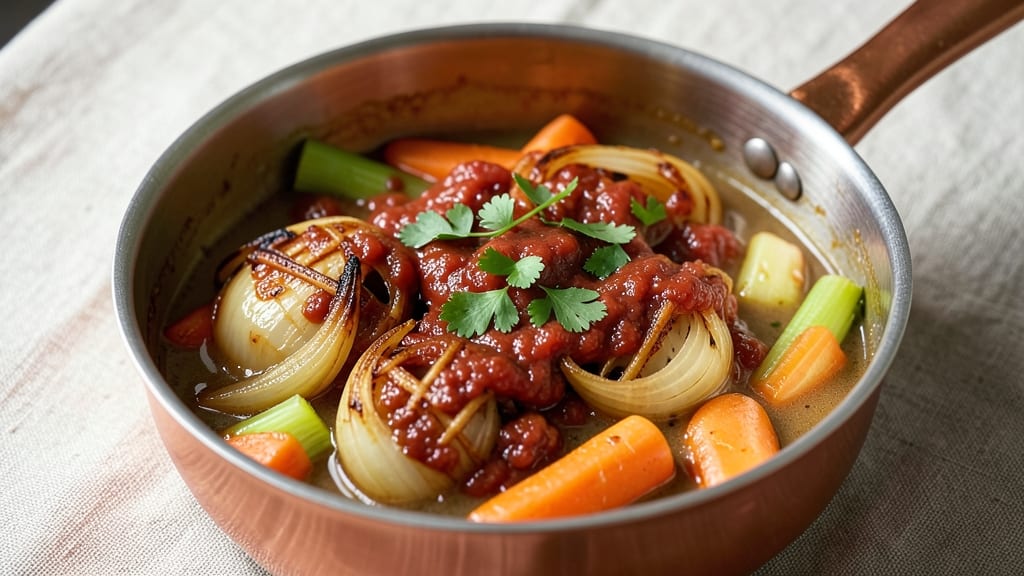
This basic espagnole sauce recipe transforms simple pantry staples into the rich, deep foundation of French cuisine—perfect for elevating braised meats, stews, or even vegetarian dishes.
The secret lies in slow reduction of mirepoix, tomato paste, and brown stock, creating layers of caramelized depth that take hours to develop but deliver restaurant-quality results in minutes of prep.
Traditionally built on a mirepoix of onions, carrots, and celery, this sauce incorporates tomato paste for color and acidity, then simmers with herbs until it thickens into a velvety, aromatic base.
While classic versions rely on meat-based stock, modern adaptations use mushroom or vegetable stock for a vegetarian-friendly twist that doesn’t compromise flavor.
The result is a sauce that’s both humble and extraordinary—deeply savory with just a hint of sweetness from the caramelized vegetables.
It keeps beautifully in the fridge for up to a week or freezes for months, making it the ultimate pantry essential for home cooks who want professional techniques without the fuss.
Whether you’re braising beef, enriching a stew, or using it as a base for pasta, this espagnole sauce delivers the kind of complex flavor that turns simple dishes into showstoppers. Let’s get started with the technique that’s been the backbone of French kitchens for centuries.
Ingredients for basic espagnole sauce
Pantry staples and fresh aromatics create this velvety sauce foundation for braised dishes.
| Ingredient | Amount | Notes |
|---|---|---|
| Yellow Onions 🧅 | 2 whole | Medium size, diced into 1/4-inch pieces |
| Carrots 🥕 | 2 whole | Medium size, peeled and diced into 1/4-inch pieces |
| Celery Stalks 🌿 | 2 whole | Fresh, diced into 1/4-inch pieces |
| Tomato Paste 🍅 | 2 tbsp | High-quality, unsweetened |
| Brown Stock 💧 | 4 cups | Homemade or high-quality store-bought |
| Dry White Wine 🍷 | 1 cup | Medium-bodied, like Sauvignon Blanc |
| Fresh Thyme 🌿 | 2 sprigs | Stems removed, leaves only |
| Fresh Bay Leaves 🌿 | 2 whole | Standard size, not crumbled |
| All-Purpose Flour 🌾 | 1 tbsp | For thickening slurry |
| Cold Water 💧 | 1 tbsp | For flour slurry |
| Salt 🧂 | 1 ½ tsp | Diamond Crystal kosher salt |
| Black Peppercorns 🌶️ | ½ tsp | Freshly cracked |
The mirepoix—onions, carrots, and celery—forms the aromatic backbone of this sauce. Look for fresh, firm vegetables with vibrant color; yellow onions should be crisp and free of sprouts. Carrots should be straight and firm, while celery should snap easily when bent. For the brown stock, homemade is ideal, but high-quality brands like Kitchen Basics or Pacific Foods work well. The tomato paste should be unsweetened—Barilla or Mutti are excellent choices. Fresh thyme and bay leaves should be fragrant; if dried, use one-third the amount, but fresh delivers superior depth.
No white wine? Dry vermouth or additional stock works in a pinch, though wine adds brightness. Substitute vegetable stock for brown stock for a vegetarian version, though the flavor will differ slightly. If you lack fresh herbs, dried thyme at one-third the amount suffices, but fresh is non-negotiable for bay leaves. For the flour slurry, cornstarch works too—just use half the amount. The key is slow reduction; rushing this step sacrifices depth. If your mirepoix burns, reduce the heat and stir more frequently—patience is everything here.
This sauce thickens beautifully when cooled, so reheat gently on low heat, stirring occasionally. Store in an airtight container in the fridge for up to 1 week, or freeze for 3 months in portions. For braising, use room-temperature sauce to avoid shocking the meat. The flavor actually improves over time as the aromatics meld further. Double the batch—it disappears faster than you'd think, especially when paired with beef braises or mushroom risotto.
Why You'll Love This Recipe
- Pantry Magic: I swear by this sauce because it uses things I always have—onions, carrots, celery—just chopped and simmered. No last-minute grocery runs, no forgotten spices lurking in the back of the cabinet.
- Deep Umami Hit: That tomato paste and brown stock combo? It’s where the flavor actually lives. The slow reduction turns simple veggies into something rich and savory, like a hug in a pot.
- Weeknight Swiss Army Knife: Slap it on pasta, braise chicken in it, or stretch it into a stew—this sauce does it all. I’ve even drizzled it over grilled cheese when I was feeling fancy (don’t judge).
- Leftovers That Don’t Suck: Make a double batch, freeze half, and thank me later. The flavor only gets better after reheating, and it’s cheaper than takeout. My wallet and future self high-five every time.
Step-by-step instructions for basic espagnole sauce
Master this foundational technique once, and you'll unlock countless braising and stew possibilities.
Sauté the Mirepoix to Develop Deep Flavor
Heat a large, heavy-bottomed pot over medium heat and add the diced 2 whole Yellow Onions, 2 whole Carrots, and 2 whole Celery Stalks. Cook without stirring for 5 minutes to allow the vegetables to caramelize slightly at the edges. This creates a rich, nutty base flavor that's essential for espagnole.
Once the vegetables begin to soften and release their juices, stir occasionally for another 8-10 minutes until they're tender but not browned. You'll know they're ready when they release easily from the bottom of the pan and have softened to about ¼-inch dice consistency. The aroma should be sweet and vegetal—this is your foundation.
Build the Sauce with Tomato Paste and Stock
Reduce the heat to medium-low and stir in the 2 tbsp Tomato Paste, spreading it evenly over the vegetables. Cook for 2 minutes to cook off the raw taste of the tomato paste, stirring constantly to prevent burning. This step deepens the sauce's color and adds umami complexity.
Pour in the 4 cups Brown Stock and 1 cup Dry White Wine, scraping up any browned bits from the bottom of the pot with a wooden spoon. Add the 2 sprigs Fresh Thyme and 2 whole Fresh Bay Leaves, then bring the mixture to a gentle simmer. Cover and cook for 25-30 minutes until the vegetables are completely tender and the liquid has reduced by about ¼.
Season and Thicken the Sauce
Remove the thyme sprigs and bay leaves, then season the sauce with 1.5 tsp Salt and 0.5 tsp Black Peppercorns. Taste and adjust the seasoning—this is your flavor baseline, so balance is critical. The sauce should be rich and well-seasoned at this point, with a deep, complex flavor profile.
In a small bowl, whisk together the 1 tbsp All-Purpose Flour and 1 tbsp Cold Water to create a smooth slurry. Slowly pour the slurry into the simmering sauce while whisking constantly to prevent lumps. Return the sauce to a gentle simmer and cook for 5-7 minutes until it thickens to a glossy, coatable consistency. The sauce should now cling to the back of a spoon and have a velvety texture.
Finish and Strain for a Silky Texture
Once the sauce reaches the desired thickness, strain it through a fine-mesh sieve into a clean saucepan, pressing gently on the vegetables to extract all the flavor. Discard the solids in the sieve. Return the strained sauce to the stove and keep it warm over low heat—never let it boil, as this can cause it to separate or develop a skin.
The finished espagnole should have a deep, reddish-brown color and a rich, complex flavor that balances sweetness, acidity, and umami. It should coat the back of a spoon smoothly and be versatile enough to serve as a base for countless braises, stews, and sauces. Use it immediately or store it in the refrigerator for up to 5 days or freeze it for up to 3 months.
Pro Tips For Making Basic Espagnole Sauce
- Sweat, Don’t Burn: The onions, carrots, and celery (your mirepoix) need to soften, not toast into oblivion. Medium heat is your friend here—if you’re getting dark spots, lower the flame. I learned this the hard way after one batch tasted like a campfire.
- Slice Evenly, Cook Faster: Carrots and celery in ¼-inch pieces, onions in thin half-moons. Uniform size means even cooking—no one wants mushy carrots or undercooked celery. (Yes, even if you’re impatient like me, resist the urge to rush this.)
- Deglaze Aggressively: After browning the tomato paste, splash in a little stock or water and scrape the bottom hard—every last bit of fond clinging to the pan. That’s flavor you’re losing otherwise. Use a wooden spoon like a paintbrush.
- Simmer, Don’t Boil: Once the stock comes in, keep it at a gentle simmer, not a rolling boil. Too much heat turns your rich sauce thin and watery. Think "barely bubbling," not "volcano." (Your future self will notice the difference.)
Pro cooking tips for great basic espagnole sauce
Slow Simmer Secrets
Patience is key—simmering espagnole sauce at gentle heat (around 180-190°F) allows the flavors to meld without burning. I use a French oven or Dutch oven for even heat distribution. If your sauce starts to bubble too vigorously, reduce the heat immediately to prevent skin formation. 🌡️
For deeper flavor, I recommend simmering uncovered for the last 10-15 minutes to concentrate the aromatics. This step intensifies the sauce's richness, especially when using homemade stock. Just be sure to stir occasionally to prevent sticking.
Tomato Paste Technique
The 2 tbsp tomato paste is your secret weapon for color and depth. Spread it evenly over the mirepoix before adding liquids to ensure even distribution. I like to use Barilla tomato paste because it's unsweetened and has a smooth texture.
Cook it for 2 minutes to remove the raw taste—this makes all the difference in the final flavor.
If your sauce tastes too acidic after adding wine, balance it with a pinch of sugar or a splash of heavy cream at the end. The goal is harmony, not overpowering acidity. Taste as you go—this sauce is all about adjusting to your palate.
Thickening Without Lumps
Creating a smooth slurry with 1 tbsp flour and 1 tbsp cold water is crucial for a velvety finish. Whisk vigorously to eliminate clumps before adding it to the sauce. I find that cornstarch works too—just use ½ tbsp mixed with 1 tbsp water for a glossier texture.
Whisk constantly while the sauce thickens to prevent lumps. If you do get a few, simply strain the sauce again through a fine-mesh sieve. The result should be silky and coatable—like a perfect sauce for braised short ribs or beef bourguignon.
Stock Substitutions
For a vegetarian version, swap brown stock for mushroom or vegetable stock. I recommend Pacific Foods Vegetable Stock for depth. The umami will be slightly different, but the technique remains the same. If using store-bought stock, avoid salted varieties—season to taste at the end instead.
For extra richness, deglaze the pot with a splash of red wine vinegar before adding the stock. This adds brightness and cuts through the heaviness of the mirepoix. It’s a pro trick I picked up from a French chef—trust me, it elevates the sauce.
Nutrition facts
Frequently asked questions about espagnole sauce
What makes espagnole sauce different from other brown sauces?
Espagnole sauce stands out because it combines a classic mirepoix with tomato paste and wine for depth, then thickens with a flour slurry. Unlike gravies, it simmers for hours to develop complex caramelized flavors. The tomato paste gives it a richer color and subtle sweetness, while the wine adds brightness that cuts through richness. It's the foundation for many French sauces like demi-glace.
Can I make this sauce vegetarian?
Simply replace the brown stock with mushroom or vegetable stock—Pacific Foods brand works well. For extra umami, add 1 tbsp soy sauce or a splash of red wine vinegar when deglazing. The texture and technique remain identical, though the flavor will be slightly less meaty. The sauce still thickens beautifully and works perfectly for vegetarian braises or pasta dishes.
Why did my sauce turn out too thin?
Thin sauce usually means one of three things: insufficient simmering time, under-reduced stock, or improper slurry technique. First, ensure you simmered uncovered for the last 10-15 minutes to concentrate flavors. Second, check if you used enough flour (the 1 tbsp should thicken 4 cups of liquid properly). Finally, whisk constantly when adding the slurry to prevent clumping. If it's still too thin, simmer uncovered for another 5-10 minutes to evaporate excess liquid.
How can I use this sauce beyond braising?
Espagnole sauce is incredibly versatile! Use it as a base for beef bourguignon, mushroom risotto, or even pasta sauces. Deglaze the pan with wine after cooking to make a quick reduction for pan sauces. It also works beautifully as a glaze for roasted vegetables or drizzled over grilled meats. The key is to keep it warm (not boiling) to maintain its silky texture. Store leftovers in the fridge for up to 5 days or freeze for 3 months.
What's the best way to reheat stored espagnole sauce?
Always reheat gently over low heat and stir frequently to prevent skin formation. Start with the sauce at room temperature (remove from fridge 30 minutes before reheating) and add a splash of water or stock if it thickens too much. Never microwave—it can create a skin and alter the texture. For restaurant-quality results, reheat in a saucepan with a splash of dry white wine or broth to refresh the flavors. The sauce should return to its velvety consistency when properly reheated.