
Sauces & Condiments
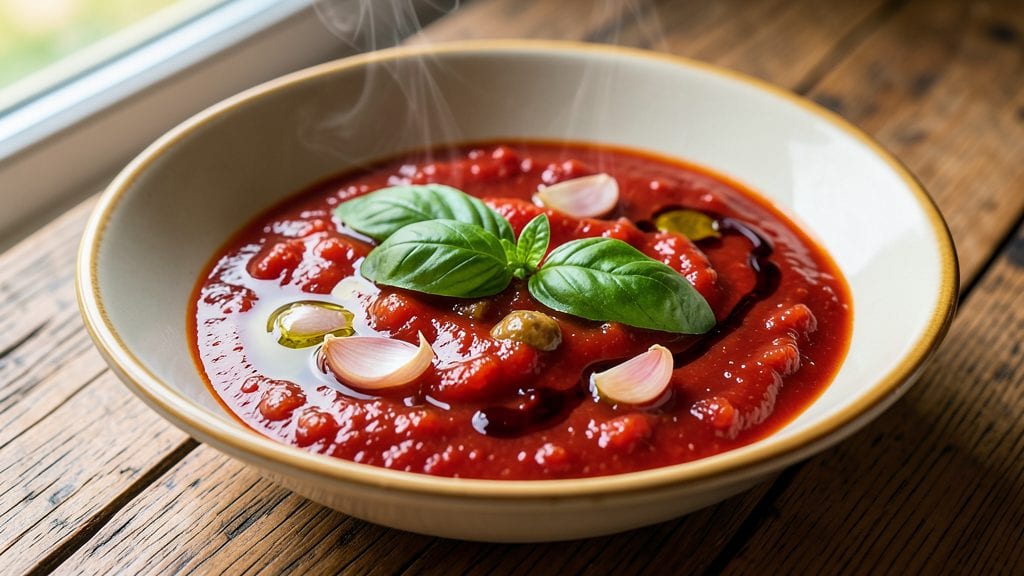
Lidia Bastianich’s marinara sauce recipe transforms simple ingredients into a rich, slow-simmered sauce that captures the essence of Italian tradition. The key lies in balancing acidity, umami, and sweetness—where canned tomatoes meet garlic, olive oil, and fresh herbs to create something deeper than store-bought versions.
I’ve adapted her method to deliver restaurant-quality flavor at home, with a technique that builds complexity over time rather than rushing for quick results.
This marinara isn’t just for pizza or pasta—it’s a versatile sauce that elevates any dish it touches. The slow simmer reduces the sauce to a concentrated, velvety texture while allowing flavors to meld into harmony.
No blender required; just patience and attention to detail. What starts as a humble tomato base evolves into something bold, aromatic, and impossibly satisfying—the kind of sauce that makes you reach for another plate.
The secret weapon? A two-stage cooking process: first, a gentle simmer to break down the tomatoes, then a final reduction to intensify flavors. Fresh basil and a touch of sugar balance the acidity, while a splash of red wine vinegar adds brightness.
The result is a sauce with layers of depth—savory, slightly sweet, and herbaceous—ready to transform your meals.
Once made, this marinara keeps beautifully in the refrigerator for up to a week, or you can freeze it for months. Use it as a dipping sauce, a pasta topping, or the star of a homemade pizza.
The possibilities are endless, but the foundation is always the same: authentic, slow-cooked Italian flavor that tastes like home.
Ingredients for lidia's marinara sauce
Ten essential ingredients elevate simple tomatoes into Lidia's velvety, umami-packed marinara masterpiece.
| Ingredient | Amount | Notes |
|---|---|---|
| San Marzano Whole Canned Tomatoes 🍅 | 28 oz | Crushed by hand for texture |
| Extra-Virgin Olive Oil 🫒 | ½ cup | Italian variety preferred for depth |
| Garlic Cloves 🧄 | 6 cloves | Peeled and lightly crushed |
| Red Wine Vinegar 🍷 | 1 tbsp | For acidity balance |
| Granulated Sugar 🍯 | 1 tbsp | Balances tomato acidity |
| Fresh Basil Leaves 🌿 | ½ cup | Packed, stems removed |
| Diamond Crystal Kosher Salt 🧂 | 1 ½ tsp | Adjust to taste |
| Black Peppercorns 🌶️ | ½ tsp | Freshly cracked |
| Dried Oregano 🍃 | ½ tsp | Italian variety preferred |
| Tomato Paste 🍅 | 1 tbsp | High-quality, no additives |
The San Marzano tomatoes are non-negotiable—their sweet, meaty texture and low acidity create the ideal base. Whole peeled cans from Italian markets or specialty stores like Eataly deliver superior quality, but Mueller or Cento brands at major grocers work well too. For authenticity, crush the tomatoes by hand with your fingers for a rustic texture that no blender can replicate. The extra-virgin olive oil should be Italian, preferably from Tuscany or Umbria, where the peppery notes complement the tomatoes beautifully. Penzeys or local Italian delis often carry excellent options beyond the standard grocery store selection.
No San Marzano tomatoes? High-quality crushed tomatoes in a 28-oz can work—just avoid brands with added salt or preservatives. The red wine vinegar can be swapped for white wine vinegar or lemon juice, though red adds subtle depth. Fresh basil is ideal, but dried basil at one-third the amount suffices in a pinch. For the tomato paste, avoid the squeeze tubes—high-quality canned paste like Bertolli or Barilla delivers superior flavor. The garlic should be fresh, never powdered, and lightly crushed to release aroma without bitterness. If you're short on time, minced jarred garlic works but lacks the same depth.
This sauce develops complexity over time, so reheat gently in a saucepan—never microwave, as it breaks down the texture. For long-term storage, portion into airtight containers with a thin layer of olive oil on top to preserve freshness. Keeps in the refrigerator for up to 1 week and freezes beautifully for up to 6 months. The sauce actually improves with age as flavors meld. For a restaurant-quality touch, finish with a drizzle of high-quality olive oil and a sprinkle of fresh basil before serving—this is the secret to Lidia's signature presentation.
Why You'll Love This Recipe
- Just 5 Ingredients: I swear, that’s it—no confusing spice blends or secret pantry items. The San Marzano tomatoes alone do half the work, their sweetness and depth cutting through the sharp garlic and vinegar like a knife through butter. Honestly, I keep a jar of this in my fridge for emergencies (read: lazy Mondays).
- Garlic-Kissed Magic: That moment when you crush the raw garlic into the olive oil? Pure flavor alchemy. The vinegar brightens it up just enough so it doesn’t overpower, while the sugar—yes, sugar—rounds out the acidity. It’s the kind of sauce that makes you pause mid-bite, like, "Wait, how is this so good?"
- Weeknight to Dinner Party: Same sauce, endless uses. Slather it on toast for a quick lunch, toss it with pasta for a 15-minute dinner, or use it as a base for meatballs when company’s over. Between us, I’ve even drizzled it over grilled cheese when I was really tired. (Don’t tell my Italian nonna.)
- Make-Ahead Goldmine: Simmer it down, let it cool, and it tastes better the next day—if you can resist eating it all. I double the batch on Sundays, freeze half, and thank myself later when I’m scrambling to feed the kids. Plus, the San Marzanos stretch like crazy, so you’re not drowning in leftovers. Smart move.
Step-by-step instructions for Lidia's marinara sauce
Here's the method for crafting a rich, slow-simmered marinara with layers of umami and bright acidity.
Build the Flavor Base in Olive Oil
Heat the 0.5 cup extra-virgin olive oil in a heavy-bottomed saucepan over medium-low heat. Add the 6 cloves peeled and lightly crushed garlic cloves and cook until they're just golden around the edges—about 3-4 minutes. This gentle cooking prevents bitterness while developing their sweet, nutty notes.
Next, stir in the 1 tbsp tomato paste and cook for another 2 minutes until it darkens slightly and releases its concentrated flavor. This step creates the foundational umami that will carry through the entire sauce. The reason we cook the paste first is that raw tomato paste can make the sauce taste flat and one-dimensional.
Incorporate Tomatoes and Balance Flavors
Pour in the 28 oz San Marzano whole canned tomatoes, crushing them by hand with your fingers as you add them. This creates a textured sauce with pockets of juiciness rather than a smooth, watery consistency. Stir in the 1 tbsp granulated sugar and 1 tbsp red wine vinegar—these balance the tomatoes' natural acidity while adding brightness.
Bring the mixture to a gentle simmer, then reduce heat to low. The sauce should bubble softly but not vigorously. Here's the thing—this slow simmer is where the magic happens. Let it cook uncovered for 25-30 minutes, stirring occasionally, until the tomatoes break down and the sauce thickens noticeably. You'll see the color deepen to a rich, ruby red as the flavors meld.
Season and Finish with Herbs
Stir in the 1.5 tsp diamond crystal kosher salt, 0.5 tsp black peppercorns, and 0.5 tsp dried oregano. Taste the sauce at this point—it should be well-seasoned but not overwhelming. The salt should enhance all the flavors without making them taste salty, and the pepper should add a subtle warmth that cuts through the richness.
Remove the pan from heat and stir in the 0.5 cup packed fresh basil leaves, stems removed. Let the sauce sit for 5 minutes to allow the basil's bright, aromatic oils to infuse. The basil should be added at the end to preserve its vibrant flavor—adding it earlier would make the sauce taste bitter as the leaves cook down.
Adjust Consistency and Serve
If the sauce is too thick, thin it with 1-2 tablespoons of pasta water (reserved from boiling) while stirring. The texture should coat the back of a spoon but still be loose enough to cling to pasta. For a smoother finish, blend the sauce briefly with an immersion blender—this is optional but creates a velvety texture that's perfect for dipping.
Serve immediately over al dente pasta or crusty bread, where the sauce will soak in and create a flavorful, saucy experience. The sauce should taste bright with tomato sweetness, a touch of acidity from the vinegar, and deep umami from the tomato paste. Each bite should deliver a balance of flavors that makes you want to take another spoonful.
Pro Tips For Making Lidia'S Marinara Sauce
- CRUSH TOMATOES BY HAND: Skip the blender—use your fingers to break open the San Marzano tomatoes right in the pot. This keeps the sauce chunkier and lets you control the texture better than any appliance. (Yes, it’s messy, but it’s also faster and more precise.)
- SWEAT GARLIC LOW AND SLOW: After cooking the garlic in olive oil, reduce the heat to the very lowest setting and let it bubble gently. Burnt garlic ruins the sauce, and this method guarantees golden, fragrant cloves without the bitterness. (I learned this the hard way—now I never rush it.)
- BALANCE ACID WITH SUGAR: Taste the vinegar first, then add sugar gradually—a pinch at a time. The goal is brightness, not sweetness. Too much sugar kills the tang; too little makes the sauce taste sharp. (This is where most people go wrong.)
- SIMMER UNTIL IT THICKENS: Let the sauce reduce uncovered on medium-low heat for at least 20 minutes. Stir occasionally, and resist the urge to add water—patience is what gives it that deep, jammy consistency. (Your future pasta will thank you.)
Essential equipment for this recipe
Heavy-Bottomed Saucepan
This is the most critical tool for your marinara—never use a thin, reactive pan. I swear by a 5-quart enameled cast-iron Dutch oven like Le Creuset or All-Clad because it distributes heat evenly and prevents scorching.
The enameled coating also makes cleanup a breeze. If you're on a budget, a stainless steel saucepan from Farberware works well, but avoid non-stick—it can't handle the prolonged simmering this sauce requires. 🔥
Immersion Blender
While this sauce is traditionally rustic with texture, an immersion blender like Ninja Foodi or Hamilton Beach lets you create a silky version when needed. I use mine to blend just a portion of the sauce for dipping or pizza toppings without losing the chunky texture in the rest.
For a completely smooth sauce, pulse in 10-second bursts—over-blending can turn it mushy. Store-bought versions can't compete with this level of control. ✨
Wooden Spoon
A long-handled wooden spoon is essential for stirring without scratching your pan. I prefer olive wood> from OXO because it's heat-resistant and gentle on enameled surfaces. Avoid metal utensils—they can react with the acidity in tomatoes over time.
The wooden spoon also helps you gauge consistency by letting you lift sauce easily to check thickness. Pro tip: Soak it in warm, soapy water immediately after use to prevent sticking. 💫
Fine-Mesh Strainer
This isn't always necessary, but I keep a 3-inch fine-mesh strainer like Eberhardt on hand for removing basil stems or any unwanted bits. If you crush tomatoes by hand, a strainer helps catch large seeds or skins.
For a smoother sauce, strain it before blending—this removes any gritty texture while preserving the rich tomato flavor. I use mine when making marinara for dipping sauces where texture isn't desirable. 🥄
Measuring Spoons
Precision matters with marinara—1/8 teaspoon too much salt can ruin the balance. Invest in a set of stainless steel measuring spoons like Weston for accuracy. The 1/4 tsp and 1/8 tsp sizes are especially useful for adjusting seasoning.
I also keep a small scale (like OXO Good Grips) for weighing spices when I'm feeling particularly precise—it's amazing how much difference 0.1 grams can make in a sauce this delicate. 💡
Glass Jars for Storage
For long-term storage, glass mason jars with airtight lids (like Ball or Le Parfait) preserve flavor better than plastic. The dark glass blocks light, which prevents the sauce from developing off-flavors. I portion sauce into pint-sized jars—perfect for freezing or gifting.
Leave 1 inch of headspace to allow for expansion if freezing. The jars also make it easy to reheat portions directly in the microwave or stovetop. 🌟
Nutrition facts
Frequently asked questions
Why does Lidia's recipe use whole canned tomatoes instead of crushed?
Crushing the tomatoes by hand creates a rustic texture with pockets of juiciness that store-bought crushed versions lack. The slow simmer breaks down the skins naturally, while hand-crushing prevents excess water release. This method builds depth as the tomatoes slowly release their sweetness and acidity over time.
Can I make this marinara without fresh basil?
Yes! Use 1/3 cup dried basil instead, but add it during the simmer (not at the end) since dried herbs cook down. For extra flavor, toast the dried basil in the olive oil with the garlic for 30 seconds before adding tomatoes. The sauce will still taste aromatic, though fresh basil adds vibrant brightness.
How do I prevent the sauce from tasting too acidic?
Balance acidity by adjusting the sugar-to-vinegar ratio. If it's too sharp, add 1/2 tsp more sugar or a pinch of brown sugar during the final 5 minutes of simmering. For a richer taste, stir in 1 tsp tomato paste at the end. The key is patience—let the sauce reduce naturally to mellow the acidity.
What's the best way to reheat leftover marinara?
Gently warm in a saucepan over low heat with a splash of water or pasta water to loosen the sauce. Never microwave—it breaks down the texture and dulls flavors. For extra richness, stir in 1 tsp olive oil while reheating. If the sauce thickens too much, thin with a little water or broth.
Can I use this sauce for pizza instead of tomato sauce?
Spread a thin layer as your base and top with cheese and toppings. The sauce's depth will shine through without overpowering. For extra authenticity, reduce the sauce further to create a concentrated "marinara glaze" by simmering uncovered for 10-15 extra minutes. The slow-cooked tomatoes create a perfect balance of sweetness and acidity for pizza.