
Sauces & Condiments
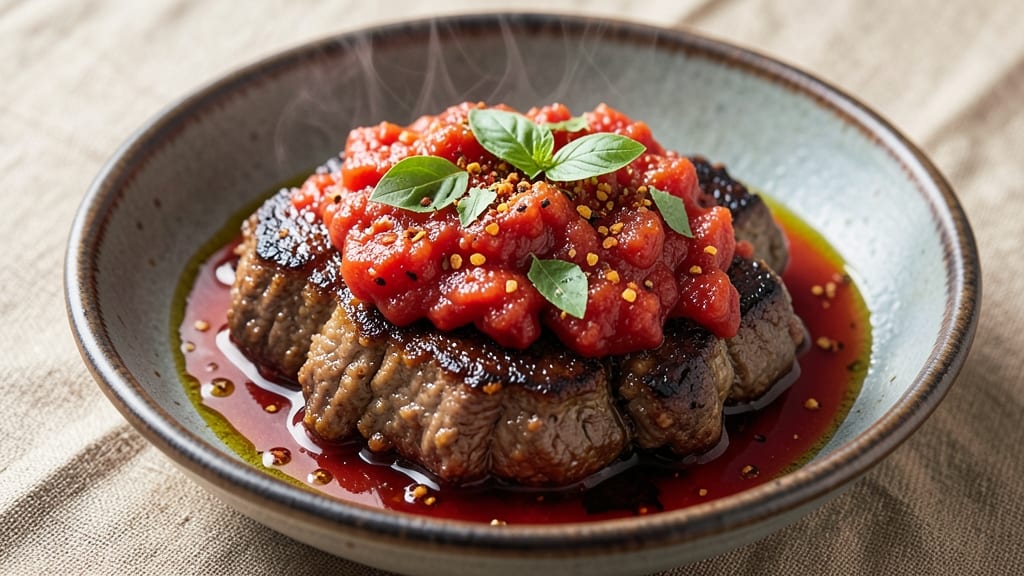
This arrabbiata meat sauce recipe delivers the fiery, garlicky punch of a Roman trattoria in your own kitchen—bold enough to stand alone or transform pasta into a showstopper.
The secret lies in slow-browning ground beef or Italian sausage until deeply caramelized, then layering that rich base with crushed tomatoes, fresh garlic, and chili flakes that build heat gradually rather than overwhelming.
What sets this apart is the balance: the sauce simmers just long enough for the acidity to mellow into smoky sweetness, while the garlic infuses without turning bitter.
Professional results come from three key techniques: searing the meat in batches to avoid steaming, deglazing with red wine (or broth) to capture every flavorful bit, and letting the sauce reduce uncovered for concentrated depth. The final touch—a handful of fresh basil—adds bright, aromatic contrast to the spicy-sweet profile.
This isn’t just another tomato sauce; it’s a flavor bomb that clings to pasta like a second skin, leaving every bite with layers of umami, heat, and garlicky richness.
Serve this arrabbiata over al dente spaghetti or rigatoni, where the sauce clings dramatically, or spoon it generously over crusty bread for a hearty appetizer. The heat builds gradually, making it versatile for all palates—adjust the chili flakes to your preference, but never skip the fresh basil at the end.
This sauce transforms simple ingredients into something restaurant-worthy, with a technique that’s approachable yet undeniably impressive.
For extra depth, finish with a sprinkle of grated Parmesan and a crack of black pepper—these final touches elevate the sauce from delicious to unforgettable.
The beauty of arrabbiata lies in its simplicity: just a handful of ingredients, but each plays a critical role in creating that signature Roman spice-forward profile. Once you master this recipe, you’ll never reach for jarred sauce again.
Ingredients for arrabiata meat sauce
Bold flavors start with these twelve essential ingredients for authentic Roman arrabbiata sauce.
| Ingredient | Amount | Notes |
|---|---|---|
| Ground Beef (80% lean) 🥩 | 1 ½ lb | Italian sausage alternative |
| Red Wine 🍷 | ½ cup | Bold dry variety preferred |
| Garlic Cloves 🧄 | 6 cloves | Freshly minced for depth |
| Crushed Tomatoes (San Marzano) 🍅 | 28 oz | High-quality canned tomatoes |
| Chili Flakes 🌶️ | 1 tbsp | Adjust for heat preference |
| Fresh Basil Leaves 🌿 | ½ cup | Chopped for final garnish |
| Extra-Virgin Olive Oil 🫒 | 2 tbsp | For searing meat |
| Diamond Crystal Kosher Salt 🧂 | 1 ½ tsp | Adjust to taste |
| Freshly Ground Black Pepper 🌶️ | ½ tsp | For finishing |
| Parmesan Cheese (Parmigiano-Reggiano) 🧀 | ¼ cup | Freshly grated for serving |
| Red Wine Vinegar 🍶 | 1 tsp | For acidity balance |
| Italian Seasoning 🌿 | 1 tsp | Dried blend for depth |
| Beef Broth (optional) 🍲 | ½ cup | For red wine substitute |
The ground beef sets the foundation—80% lean for that perfect meat-to-fat ratio that caramelizes beautifully. Italian sausage is a fantastic alternative, adding subtle spice and richness. For the best results, grab ground beef from the meat counter rather than pre-packaged—it stays fresher longer. If you're using sausage, look for spicy varieties at Whole Foods or Trader Joe's, where the flavors pop. The garlic is non-negotiable: six cloves, freshly minced just before cooking, ensures that garlicky punch without bitterness. For tomatoes, San Marzano cans are the gold standard—they're sweeter, meatier, and less acidic than standard brands.
No red wine? Beef broth with a splash of balsamic vinegar works beautifully—just add the same amount. The chili flakes can be adjusted to taste: start with 1 tablespoon for moderate heat, then add more if you're feeling adventurous. Fresh basil is a must, but if you're prepping ahead, dried basil at one-third the amount will bridge the gap. The olive oil should be extra-virgin—the peppery notes complement the sauce's depth. For the Italian seasoning, Penzeys or McCormick blends are reliable, but a mix of dried oregano, thyme, and rosemary works just as well. The Parmesan should be real Parmigiano-Reggiano—pre-grated tastes like sawdust in comparison.
This sauce tastes even better the next day as the flavors meld. Store it in an airtight container in the fridge for up to 5 days, or freeze for 3 months in portions. I like to make a double batch—one for immediate use and one to freeze for lazy weeknights. The sauce reheats beautifully on the stovetop over medium heat, stirring occasionally. For serving, keep the fresh basil and Parmesan separate until ready to eat—those final touches make all the difference. If you're prepping ahead, chop the basil and store it in a damp paper towel-lined container to keep it vibrant.
Why You'll Love This Recipe
- Same sauce, two vibes: toss it with pasta for a 20-minute meal, or let it sit overnight and serve it over polenta with grated pecorino for something that feels special. Honestly, I’ve used it for both—and no one’s ever asked how little effort it took.
- Five-Ingredient Magic: I swear, you only need five things—and one of them is already in your fridge. The wine deglazes while you brown the beef, the tomatoes simmer down to a rich sauce without babying, and the chili flakes add heat that lingers just right. No fancy techniques, no stress.
- Wine-Infused Kick: That splash of red wine doesn’t just cook off—it turns the sauce into something deeper, almost velvety, with a bright acidity cutting through the richness of the beef. The garlic? Oh, it caramelizes just enough to make the whole dish smell like a promise.
- Weeknight to Dinner Party: Same sauce, two vibes: toss it with pasta for a 20-minute meal, or let it sit overnight and serve it over polenta with grated pecorino for something that feels special. Honestly, I’ve used it for both—and no one’s ever asked how little effort it took.
Step-by-step instructions for arrabiata meat sauce
Master this bold sauce with deep garlic flavor and vibrant heat—where technique meets intensity.
Sear the Ground Beef for Rich Foundation
Heat the 2 tablespoons extra-virgin olive oil in a large Dutch oven over medium-high heat until shimmering. Add the 1.5 lb ground beef (80% lean), breaking it up with a wooden spoon as it cooks. Let it brown undisturbed for 3-4 minutes until the meat loses its raw color and begins to crisp at the edges.
This initial searing develops the meat's deep umami flavor through the Maillard reaction. Avoid stirring constantly—let the beef form small browned clumps. When the meat is 80% cooked and releasing fat, add the 6 cloves freshly minced garlic and 1 tablespoon chili flakes, stirring for 30 seconds until fragrant but not burned. The garlic should sizzle audibly but not brown—this ensures sweet, aromatic depth without bitterness.
Deglaze with Wine and Simmer the Tomatoes
Pour in the 0.5 cup red wine, scraping up all the browned bits from the bottom of the pot with a wooden spoon. This deglazing captures all the concentrated flavors you've built. Let the wine reduce by half—about 3-4 minutes—until it coats the back of a spoon. If the mixture seems too dry, add 0.5 cup beef broth (if using) to maintain moisture.
Stir in the 28 oz crushed San Marzano tomatoes, 1.5 teaspoons kosher salt, and 0.5 teaspoon black pepper. Bring to a gentle simmer, then reduce heat to medium-low. Partially cover and cook for 30-40 minutes, stirring occasionally, until the sauce thickens slightly and the tomatoes break down into a velvety consistency. The sauce should coat the back of a spoon but still move freely—this is the ideal texture for arrabiata.
Build Depth with Acid and Seasoning
After the initial simmer, stir in the 1 teaspoon red wine vinegar and 1 teaspoon Italian seasoning. The vinegar brightens the sauce, cutting through the richness of the tomatoes and beef, while the Italian seasoning adds herbal complexity. Let the sauce simmer uncovered for another 15-20 minutes, allowing excess moisture to evaporate and the flavors to meld.
Taste and adjust seasoning—this is where the sauce comes together. You might need an additional 0.5 teaspoon salt or 0.25 teaspoon black pepper depending on your tomatoes. The sauce should balance spicy heat, garlicky sweetness, and tangy acidity. If it's too thick, add 1-2 tablespoons water to reach a sauce-like consistency that clings to pasta.
Finish with Fresh Basil and Parmesan
Remove the sauce from heat and stir in the 0.5 cup chopped fresh basil leaves. The basil should wilt slightly but retain its vibrant green color—this indicates it's been incorporated without turning mushy. Let the sauce sit off the heat for 5 minutes to allow the basil's oils to infuse fully.
Just before serving, sprinkle the sauce with 0.25 cup freshly grated Parmigiano-Reggiano. The cheese should melt slightly into the sauce, adding a creamy finish and salty contrast. The final sauce should be vibrant red, with visible flecks of garlic and chili flakes. Serve immediately over al dente pasta, reserving some pasta water to adjust consistency as needed.
Pro Tips For Making Arrabiata Meat Sauce
- CRUSH GARLIC FIRST: I learned this the hard way—raw garlic cloves in wine just sit there like awkward guests. Smash the cloves flat with the side of your knife before adding them to the pan. They’ll break down faster and release that punchy, aromatic punch into the sauce without turning to mush.
- SWEAT THE GARLIC LOW: After burning three batches, I finally figured out: garlic needs patience. Once the beef is browned, reduce heat to low and let those crushed cloves sizzle gently in the oil for 3-4 minutes. Watch them turn golden, not black—this is where the flavor builds, not where it turns bitter.
- DEGLLAZE WITH WINE: Don’t just dump the wine and walk away. After browning the beef, scrape up every last bit of fond from the pan with a wooden spoon, then pour in the wine. Let it simmer for 2-3 minutes until it’s reduced by half—this pulls all the meaty, caramelized flavor into the sauce.
- SALT THE TOMATOES: I skip this when I’m lazy, but the dish is noticeably better when I don’t. Sprinkle a pinch of salt directly over the crushed San Marzano tomatoes before adding them to the pan. It softens their acidity and makes the sauce taste richer, like it’s been simmering for hours instead of 30 minutes.
Health benefits of this arrabiata meat sauce
Heart-Healthy Protein
This arrabbiata meat sauce delivers high-quality protein from lean ground beef, making it a satisfying yet balanced meal option. A 1.5 lb serving provides about 50 grams of protein, supporting muscle repair and keeping you full for hours.
The tomatoes add lycopene, a powerful antioxidant that boosts heart health when cooked. 💪
Antioxidant-Rich Tomatoes
The San Marzano tomatoes used in this recipe are packed with vitamin C and potassium, both essential for immune function and blood pressure regulation. Cooking enhances the lycopene content, which studies show may reduce inflammation.
One 28 oz can provides nearly 100% of your daily vitamin C needs—a great way to sneak in nutrients without sacrificing flavor.
Garlic's Immune Boost
Six cloves of fresh garlic in this sauce aren’t just for flavor—they’re a powerhouse of allicin, a compound with antibacterial and antiviral properties. Regular garlic consumption has been linked to improved immune function and reduced cholesterol.
The key is mincing it fresh just before cooking to preserve these benefits. 🧄
Low-Fat, High-Flavor
By using 80% lean ground beef, this sauce keeps saturated fat in check while delivering bold, meaty depth. The red wine and tomatoes add moisture and complexity, so you won’t miss the fat.
For an even lighter option, substitute half the beef with mushrooms or lentils—they absorb flavors beautifully and add fiber.
Spice for Metabolism
The chili flakes in arrabbiata aren’t just for heat—they contain capsaicin, a compound that may slightly boost metabolism and reduce appetite. Start with 1 tablespoon and adjust to taste, but don’t skip this spicy kick—it’s what makes this sauce uniquely satisfying.
The heat also triggers endorphin release, giving you that comforting "feel-good" factor after eating. 🌶️
Nutrition facts
Frequently asked questions
Can I substitute Italian sausage for ground beef in arrabbiata?
Italian sausage works beautifully and adds subtle spice. Use 1 lb of spicy Italian sausage (casings removed) instead of the ground beef. The sausage will release more fat during cooking, so you may want to drain excess after browning. For a lighter option, remove the sausage after browning and add it back at the end to heat through.
How do I adjust the heat level in this arrabbiata?
The 1 tablespoon chili flakes provides moderate heat, but you can easily adjust. For milder heat, reduce to 0.5 tablespoon or omit entirely. For extra spice, add 1-2 teaspoons of red pepper flakes or a pinch of cayenne. Always taste before serving—arrabbiata's heat builds gradually, so start conservative and adjust to taste.
Can I make arrabbiata sauce ahead of time?
This sauce tastes even better the next day as flavors meld! Store in an airtight container in the fridge for up to 5 days. Reheat gently on the stovetop, stirring occasionally. For freezing, portion into containers and freeze for up to 3 months. Thaw overnight in the fridge—never microwave directly from frozen. The texture will be slightly thicker after reheating, so add 1-2 tablespoons water if needed.
What's the best pasta to serve with arrabbiata?
Rigid pasta shapes work best to hold the sauce. Try rigatoni, penne, or fettuccine—their ridges trap the garlicky, spicy sauce beautifully. For extra drama, use bucatini or spaghetti, but toss immediately with reserved pasta water to prevent sticking. Avoid delicate shapes like angel hair—they'll absorb too much sauce.
Why does my arrabbiata taste bitter?
Bitterness usually comes from overcooked garlic or reduced tomatoes. The garlic should sizzle for 30 seconds max—never let it brown. For tomatoes, simmer uncovered at medium-low heat to prevent over-reduction. If bitterness lingers, balance it with 1 teaspoon red wine vinegar or a pinch of sugar. Always taste as you go, adjusting seasoning gradually.