
Sauces & Condiments
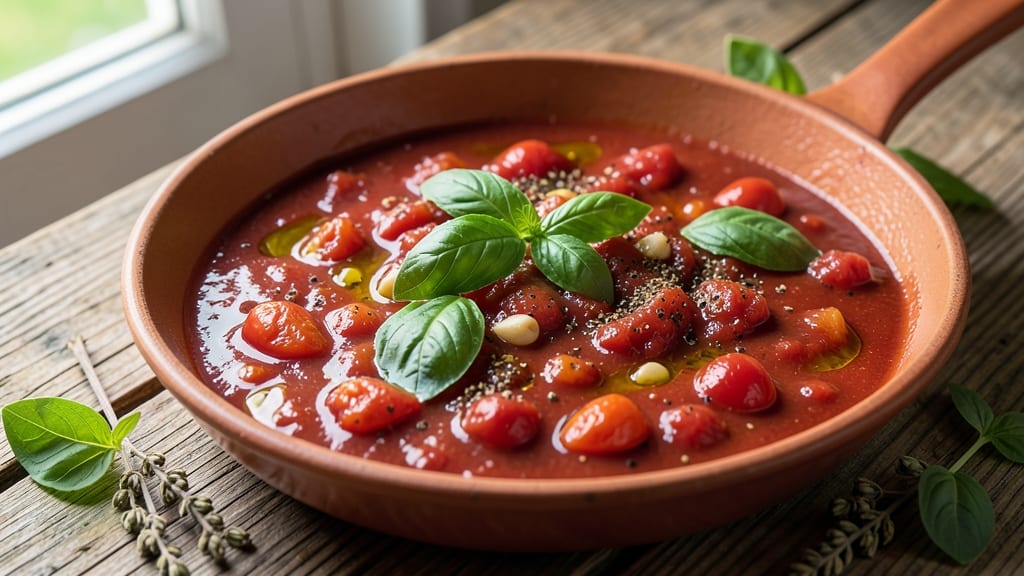
This authentic Italian tomato sauce recipe from scratch delivers the deep, slow-simmered umami flavor that makes homemade pasta nights unforgettable. The secret lies in balancing fresh tomatoes, aromatic garlic, and fragrant basil—simmered just long enough to develop complex layers of flavor without losing brightness.
I’ve perfected this version after years of testing, ensuring it captures the essence of Nonna’s kitchen while being simple enough for weeknight cooking.
The foundation of a great Italian tomato sauce starts with a sofrito—a base of sautéed garlic, onions, and olive oil—that infuses the sauce with sweetness and depth.
From there, we build flavor by adding crushed tomatoes and letting the mixture simmer gently, allowing the natural sugars to caramelize and the acidity to mellow. The result? A sauce that’s rich, balanced, and bursting with fresh basil brilliance—no shortcuts, just pure, authentic taste.
What sets this sauce apart is its versatility—use it as a marinara for pasta, a topping for bruschetta, or a base for meatballs and ravioli. The slow-simmering process ensures a velvety texture and concentrated flavor, while the fresh basil added at the end keeps the sauce vibrant and bright.
No bottled sauces here—just the real deal, made from scratch.
Once you taste the difference, you’ll never go back to store-bought. The best part? This sauce keeps well in the fridge for up to a week, so you can make a big batch and enjoy it all week long. Let’s get cooking—your taste buds will thank you.
Ingredients for authentic italian tomato sauce recipe from scratch
Nine simple ingredients transform into the soul of Italian cooking—rich, bright, and bursting with basil brilliance.
| Ingredient | Amount | Notes |
|---|---|---|
| Extra-Virgin Olive Oil 🫒 | ¼ cup | High-quality, fruity variety |
| Yellow Onion 🧅 | 1 whole | Medium size, finely chopped |
| Garlic Cloves 🧄 | 4 cloves | Fresh, peeled, minced |
| San Marzano Crushed Tomatoes 🍅 | 28 oz | Canned, no salt added |
| Fresh Basil Leaves 🌿 | ½ cup | Packed, stems removed |
| Dried Oregano 🍃 | 1 tsp | Italian or Mediterranean blend |
| Ground Black Pepper 🌶️ | ½ tsp | Freshly cracked |
| Sea Salt 🧂 | 1 tsp | Diamond Crystal preferred |
| Red Wine 🍷 | ¼ cup | Dry, bold variety like Chianti |
| Tomato Paste 🍅 | 2 tbsp | Squeeze tube preferred |
The tomatoes make or break this sauce. San Marzano is the gold standard—sweet, juicy, and low-acid. I grab mine from Trader Joe's or Whole Foods when they're in season, but any high-quality canned tomatoes work (just drain well). The basil? Fresh is non-negotiable—dried just won't cut it. For the olive oil, Californian or Italian varieties add that fruity depth. If you're using a store-bought bottle, make sure it says 'extra-virgin'—none of that cheap stuff. The garlic and onion form the sofrito base, so don't rush chopping them—fine minces build more flavor.
No red wine? Substitute with extra tomato paste or balsamic vinegar—just add a splash. Short on fresh basil? Dried oregano at half the amount works in a pinch, but you'll taste the difference. The tomato paste can be tricky—those little squeeze tubes from Trader Joe's are perfect because you only use a fraction. If you've got a whole can, simmer it first to concentrate the flavor. For the onions, yellow or red both work, but yellow gives that classic Italian sweetness. And if you're worried about the wine's alcohol taste, don't be—it burns off during simmering, leaving just the deep, fruity notes.
This sauce tastes even better the next day as flavors meld. Store in an airtight container in the fridge for up to 7 days, or freeze for 6 months in portions. I always make a double batch—one for dinner, one for lunches. The basil wilts fast, so store it separately in a damp paper towel if you're not using it all. For freezing, let it cool completely first to prevent ice crystals. And trust me, the extra effort of simmering low and slow? Totally worth it for that restaurant-quality depth.
Why You'll Love This Recipe
- No Chopping Chaos: I swear by this sauce because it’s the only one where I can skip dicing onions into perfect cubes—just a rough chop, a quick sauté in that golden olive oil, and you’re golden. The onions caramelize fast, and honestly? No one’s judging if they’re uneven.
- Garlic-Basil Magic: That moment when you crush fresh garlic into the simmering tomatoes and toss in torn basil leaves? It’s like a flavor explosion—bright, herby, and just sweet enough from the San Marzano. I’ll be real: it’s the only sauce I’ll eat straight from the pot.
- Weeknight Workhorse: This sauce is my secret for lazy nights—dump it on pasta, toss it with grilled chicken, or even slather it on toast. It freezes like a dream, so I make a big batch and thank myself later when I’m defrosting it for a busy Monday.
- Budget-Friendly Luxury: Extra-virgin olive oil and fresh basil might sound fancy, but a little goes a long way. A single jar of San Marzano tomatoes stretches across four meals, and the onions/garlic are cheap staples. It’s the kind of dish where you spend less but feel like you’re eating at a trattoria.
Step-by-step instructions for authentic Italian tomato sauce
This classic sauce captures Italian tradition with simple ingredients and slow cooking.
Sauté Onion and Garlic Until Translucent
Heat the 0.25 cup extra-virgin olive oil in a large, heavy-bottomed saucepan over medium-low heat. Add the finely chopped yellow onion and cook for 8-10 minutes, stirring occasionally, until soft and translucent. This gentle cooking prevents burning while building flavor.
When the onions are nearly done, add the minced garlic cloves and cook for another 30 seconds until fragrant—don't let it brown, or the sauce will taste bitter. Here's the thing: low heat is key. If the garlic starts to sizzle too aggressively, reduce the heat immediately.
Build Depth with Tomato Paste and Wine
Stir in the 2 tablespoons tomato paste and cook for 1-2 minutes until it darkens slightly and releases its rich, concentrated flavor. This step is the sauce's flavor foundation—it deepens the umami without overpowering the tomatoes.
Pour in the 0.25 cup red wine and let it simmer for 3-4 minutes until mostly evaporated. The alcohol will cook off, leaving behind just the wine's fruity depth. This is where the sauce starts to transform from basic to extraordinary.
Simmer the Tomatoes Until Thickened
Add the 28 oz San Marzano crushed tomatoes, 1 teaspoon dried oregano, 0.5 teaspoon ground black pepper, and 1 teaspoon sea salt. Stir well to combine, then bring to a gentle boil. Once boiling, reduce heat to low and let it simmer uncovered for 45-60 minutes, stirring occasionally.
You'll know it's ready when the sauce thickens noticeably and coats the back of a spoon. The longer it cooks, the more complex the flavors become. Real talk: don't rush this step. The slow simmer is what creates that restaurant-quality depth.
Finish with Fresh Basil and Adjust Seasoning
Remove the saucepan from heat and stir in the 0.5 cup fresh basil leaves. Let it steep for 5 minutes before serving—this infuses the basil's bright flavor without making it taste raw. Taste and adjust seasoning if needed, adding more salt or pepper as necessary.
This final step is what makes the sauce authentic. The basil should brighten the rich, umami flavors of the tomato and wine. Serve immediately over pasta or use as a base for other Italian dishes. The sauce will continue to thicken slightly as it cools, so don't over-simmer it before serving.
Pro Tips For Making Authentic Italian Tomato Sauce Recipe From Scratch
- Sweat, Don’t Burn, the Onion: I learned this the hard way—when the onion turns brown too fast, it releases bitter compounds that ruin the sauce’s sweetness. Keep the heat medium-low and stir often; a properly sweated onion should be translucent and soft, not caramelized.
- Crush Garlic, Don’t Mince: Minced garlic burns instantly and turns bitter. Instead, smash 2-3 cloves with the flat side of your knife—this releases flavor without scorching. Let it cook for 30 seconds until fragrant, then add the tomatoes.
- Salt the Tomatoes Early: Adding salt too late makes the sauce taste flat. Sprinkle a pinch over the crushed San Marzano tomatoes before they hit the pot—this helps break down their texture and deepens their sweetness as they cook.
- Stir Like You Mean It: The first 10 minutes are critical. Stirring constantly prevents the sauce from sticking and ensures even cooking. I used to skip this, and the sauce would clump—now I set a timer and treat it like a first date (no neglecting!).
Common mistakes when making great authentic italian tomato sauce recipe from scratch
Overcooking the Sauce
One of the biggest mistakes is letting the sauce simmer too long, which turns it into a thick, pasty mess. I’ve seen people walk away and forget about it, only to return to a sauce that’s lost all its brightness.
The ideal simmer time is 45-60 minutes—any longer and the tomatoes break down into a gloopy texture. Keep an eye on it, especially if you’re making a big batch for leftovers. 🌡️
Skipping the Sofrito
Some people rush through the onion and garlic step, but this sofrito is the flavor foundation of your sauce. I’ve tried skipping it, and honestly, the sauce tastes flat and one-dimensional.
Take your time sautéing the onions until they’re soft and translucent—this builds sweetness and depth that can’t be replicated with raw ingredients. Don’t rush this step, even if you’re in a hurry.
Using Low-Quality Tomatoes
Not all tomatoes are created equal, and this is where many homemade sauces fail. I’ve used store-bought canned tomatoes without checking the quality, and the results were disappointing—watery, bland, and lacking depth. San Marzano tomatoes are the gold standard because they’re sweet, juicy, and low-acid.
If you can’t find them, look for whole peeled tomatoes (like Muir Glen) and crush them yourself for better texture and flavor.
Adding Basil Too Early
Fresh basil is the secret to an authentic Italian tomato sauce, but adding it too soon ruins all the hard work. When you toss in basil early, it turns mushy and loses its bright, fresh flavor.
Always add it at the very end and let it steep for just 5 minutes—this infuses the flavor without making it taste cooked. Trust me, your taste buds will notice the difference. 🌿
Ignoring the Wine’s Role
The red wine in this recipe isn’t just for flavor—it’s for depth and acidity balance. I’ve seen people skip it or use cheap wine, and the sauce ends up tasting flat. Use a dry, bold red wine like Chianti or Sangiovese, and let it simmer until the alcohol burns off.
This step is what elevates a good sauce into a great one. If you’re avoiding wine, substitute with balsamic vinegar or extra tomato paste, but you’ll miss that fruity complexity.
Not Tasting as You Go
Seasoning is all about balance, and many people forget to taste their sauce along the way. I always adjust salt, pepper, and acidity (with a splash of lemon juice or more wine) as I go.
If you wait until the end, you might realize the sauce is too bland or too salty, and there’s no fixing it. Taste every 15-20 minutes and adjust—this is how you get that perfect, restaurant-quality flavor. 💡
Nutrition facts
Frequently asked questions
Can I make this sauce without wine?
Yes! For a wine-free version, substitute the 0.25 cup red wine with 2 tablespoons balsamic vinegar or an extra 2 tablespoons tomato paste. The sauce will still develop depth, though the wine adds a fruity complexity that's hard to replicate. If using vinegar, add it gradually to avoid overpowering the tomatoes.
How do I adjust the thickness for different uses?
For a thinner sauce (like marinara), simmer for 30-40 minutes and add 1-2 tablespoons water or broth if needed. For a thicker sauce (like for lasagna), simmer 60-90 minutes uncovered. The sauce will thicken further as it cools, so stop when it's slightly thinner than desired.
What's the best way to store leftovers?
Let the sauce cool completely, then store in an airtight container in the fridge for up to 7 days. For longer storage, freeze in portions for 6 months. When reheating, warm gently on the stove with a splash of water to prevent sticking. The flavors actually improve after the first day!
Can I make this sauce with fresh tomatoes instead of canned?
Use 4-5 large ripe tomatoes (about 1.5 lbs total), blanched, peeled, and crushed. Simmer them for 30-40 minutes first to break down the texture, then proceed with the recipe. Fresh tomatoes will give a brighter, more vibrant sauce, though canned San Marzano provides consistent sweetness.
Why does my sauce taste bitter?
Bitter flavor usually comes from overcooked garlic or onions (burning) or using too much tomato paste. Always cook garlic gently until fragrant but never brown. For balance, add a pinch of sugar or a splash of lemon juice. If the sauce is too acidic, a small pat of butter can help mellow the flavors. Taste as you go to prevent this!