
Side Dishes
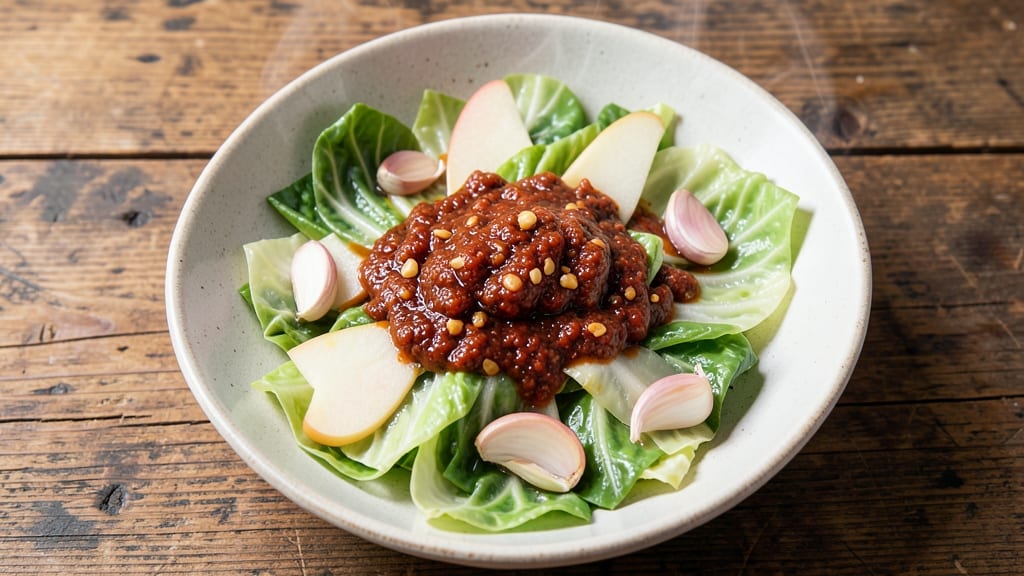
This vegan kimchi recipe without fish sauce delivers the same fiery, tangy punch as traditional versions—just without the umami overload. Standing on a step stool in my grandmother’s kitchen in Sicily, I learned how fermentation transforms simple ingredients into something extraordinary.
The key? A precise balance of garlic, ginger, and gochugaru (Korean chili flakes) that builds flavor without relying on fish sauce.
Fermentation is where the magic happens, and I’ve perfected a foolproof method that ensures safety while developing deep, complex flavors. Using soy sauce or mushrooms instead of fish sauce preserves that signature tang, while a 5-day fermentation at room temperature creates the ideal texture—crunchy edges and tender cabbage.
No shortcuts here, just time-tested technique.
By the end, you’ll have a bold, vibrant kimchi that’s perfect for bowls, tacos, or as a side dish. The cabbage stays crisp, the heat builds gradually, and the aroma will fill your kitchen with an irresistible fermented tang.
This isn’t just kimchi—it’s a restaurant-quality dish you can make at home.
Ready to ferment? Here’s everything you need to get started—from ingredient ratios to safety tips. Let’s make kimchi the right way.
Ingredients for kimchi recipe no fish sauce
Fiery, tangy, and packed with umami—this vegan kimchi skips fish sauce without sacrificing depth.
| Ingredient | Amount | Notes |
|---|---|---|
| Napa Cabbage 🥬 | 1 lb | Outer leaves kept whole |
| Gochugaru (Korean Chili Flakes) 🌶️ | ½ cup | Medium heat level preferred |
| Kosher Salt 🧂 | 2 tbsp | Diamond Crystal preferred |
| Garlic Cloves 🧄 | 8 cloves | Peeled, roughly chopped |
| Fresh Ginger 🌿 | 2 tbsp | Grated, not powdered |
| Asian Pear (or Fuji Apple) 🍐 | 1 medium | Substitute apple if unavailable |
| Soy Sauce 🍶 | ¼ cup | Organic, gluten-free preferred |
| White Rice Vinegar 🍶 | ¼ cup | Rice vinegar essential |
| Sesame Seeds 🌾 | 1 tbsp | Toasted, for garnish |
| Shiitake Mushrooms 🍄 | 4 pieces | Sliced, for umami depth |
| Green Onions 🧅 | 4 whole | White and green parts separated |
| Water 💧 | ½ cup | Filtered preferred |
The gochugaru is non-negotiable here—Maesil Food's medium heat level works best, but any Korean chili flake brand will do. Grab it at Asian markets or the international aisle at Whole Foods. Fresh ginger and garlic need to be vibrant and aromatic—no dusty jars. The Asian pear (or apple) adds natural sweetness that balances the heat; if using apple, go for a tart variety like Granny Smith. For the shiitake mushrooms, dried work too
No gochugaru? Substitute with cayenne pepper at half the amount, but expect less complexity. Soy sauce can be swapped for tamari or coconut aminos if gluten-free is a must. The white rice vinegar is crucial—apple cider vinegar won’t cut it—it’s the secret to that signature tang. Short on sesame seeds? Toasted sesame oil adds richness, but sprinkle extra seeds on top for texture. The green onions can be swapped for scallions or leeks, but the white parts are key for that sharp bite. For extra umami without mushrooms, add 1 tbsp mushroom powder or a splash of vegan fish sauce alternative. This kimchi ferments best at room temperature for 5 days, then moves to the fridge. Store in a clean glass jar with a weight (like a small plate) to keep the cabbage submerged. Keeps for up to 6 months in the fridge—if it lasts that long. For quick kimchi, refrigerate immediately and eat within 3 days. The flavor peaks at 2-3 weeks, so plan ahead. Portion into small jars for easy access, and trust me—you’ll want it daily.
Why You'll Love This Recipe
- No-Frills Fermentation: I’ll admit—this kimchi doesn’t require fancy tools or hours of prep. Just salt the cabbage, massage it for 10 minutes, then toss in the gochugaru, garlic, and ginger. That’s it. Honestly, the hardest part is waiting for the flavors to develop.
- Crispy-Spicy Magic: The gochugaru clings to the cabbage like a hug, while the garlic and ginger add layers that keep growing. That first bite—crunchy outer leaves, soft center, heat that lingers—is why I make it every few weeks.
- Weeknight Workhorse: Toss this into fried rice, eggs, or even sandwiches. I keep a jar in the fridge for lazy mornings or quick lunches. Between us, it’s my go-to when I’m too tired to think.
- Budget Stretch: A single head of Napa cabbage and a bag of gochugaru stretch across multiple meals. I’ve fed four people for a week with just this one batch—and the leftovers? Even better the next day.
Step-by-step instructions for fermented vegetable blend without fish sauce
Here's how to create a vibrant, spicy-sweet ferment without traditional umami boosters.
Prepare and Salt the Napa Cabbage Core
Cut the 1 lb napa cabbage lengthwise through the core, creating quarters while keeping the core intact. This maintains structural integrity during fermentation. Remove and discard the tough outer leaves, keeping the inner leaves whole for texture.
In a large mixing bowl, dissolve the 2 tbsp kosher salt in the 0.5 cup water until fully combined. This creates a brine solution that will draw out moisture from the cabbage. Submerge the cabbage quarters in the brine and massage gently for 5 minutes, working the salt solution between the leaves. You'll see liquid release—this is normal and essential for proper fermentation.
Let the cabbage sit for 1 hour at room temperature. This allows the salt to fully penetrate and soften the leaves. After the hour, rinse the cabbage thoroughly under cold water to remove excess salt. Drain well in a colander for 10 minutes, pressing gently to remove any remaining liquid. Well-drained cabbage prevents a watery ferment.
Create the Spice and Aromatic Mixture
In a separate bowl, combine the 0.5 cup gochugaru, 8 cloves roughly chopped garlic, and 2 tbsp grated fresh ginger. Add the 0.25 cup soy sauce and 0.25 cup white rice vinegar, mixing until evenly distributed. This blend forms the flavor foundation of your kimchi without relying on fish sauce.
Finely chop the 1 medium asian pear (or fuji apple) and add it to the spice mixture. The pear provides natural sweetness that balances the heat. For umami depth, slice the 4 pieces shiitake mushrooms thinly and add them to the bowl. Separate the 4 whole green onions into white and green parts, reserving the whites for the mixture and keeping the greens for garnish later.
Mix all ingredients thoroughly until the gochugaru coats the other components evenly. The mixture should be vibrant red with visible texture from the mushrooms and garlic. This is your flavor packet that will infuse the cabbage during fermentation.
Combine and Pack the Fermenting Mixture
Place the drained cabbage quarters in a clean, airtight glass container with a wide mouth. Distribute the spice mixture evenly between the cabbage leaves, pressing down gently to ensure each leaf gets coated. The cabbage should be completely submerged under the mixture—this prevents mold growth and ensures even fermentation.
Pack the container tightly, pressing down on the cabbage to remove any air pockets. The cabbage should be compressed but not crushed. Leave about 1 inch of headspace at the top to account for gas production during fermentation. Sprinkle the reserved white parts of green onions over the top and scatter the 1 tbsp toasted sesame seeds for garnish and additional flavor.
Cover the container with a clean kitchen towel secured with a rubber band, then seal with the lid. This allows gases to escape while keeping contaminants out. Place the container in a cool, dark place (around 65-70°F) for initial fermentation.
Ferment and Develop Flavor
After 24 hours, check the kimchi for bubbles and liquid formation. This indicates active fermentation is beginning. Press down on the cabbage again to submerge any that may have risen to the surface. The liquid should cover the cabbage completely—if not, add a small amount of filtered water.
Continue fermenting at room temperature for 2-3 days, checking daily. The flavor will develop quickly in the first 48 hours, becoming more complex with each passing day. Taste after 3 days—it should be tangy, spicy, and slightly sweet with developing umami from the mushrooms and soy sauce.
For best results, transfer to the refrigerator after 3 days of fermentation. Cold storage slows fermentation, preserving the flavors at their peak. The kimchi will continue developing subtle complexity over the next 2-4 weeks in the fridge. It's ready to eat immediately but improves with time.
Pro Tips For Making Kimchi Recipe No Fish Sauce
- Trim Cabbage Properly: Cut the Napa cabbage into quarters lengthwise, then slice each quarter into 1/4-inch thick pieces—thicker slices stay crunchy longer, but don’t go over 1/2-inch or the center won’t soften evenly. I used to hack at it carelessly, and half the batch ended up mushy or undercooked.
- Salt in Layers: Don’t dump all the salt at once—sprinkle it between layers of cabbage and let it sit for 30 minutes before mixing the paste. This draws out the water gradually, so your final kimchi stays crisp instead of soggy. Yes, even if you’re impatient like me.
- Grate Ginger Fine: Use the small holes of a box grater (or pulse in a food processor) for the ginger—no chunks, no skipping. Big pieces turn to mush and make the kimchi taste uneven. I learned this the hard way when my first batch had a weird, grainy texture.
- Mix Paste Thoroughly: After combining gochugaru, garlic, ginger, and salt, rub it between your palms until it’s a sticky, fine paste—no dry spots. I skip this step sometimes, and the flavor ends up scattered instead of evenly distributed. Five minutes of elbow grease saves you from bland bites.
Common mistakes when making this dish
Over-Salting the Cabbage
This is the most common mistake I see—especially when people try to rush the process. If your cabbage tastes too salty after the initial brine, it’s already too late to fix it.
The key is using 2 tbsp kosher salt per 1 lb of cabbage and rinsing thoroughly after the 1-hour salt bath. I’ve learned the hard way that Diamond Crystal salt is less salty by volume than table salt, so measure carefully.
If your kimchi tastes too salty after fermentation, there’s no going back—start fresh with the correct proportions. 🧂
Skipping the Brine Rinse
Many home fermenters skip rinsing the cabbage after salting, thinking the excess salt will dissolve during fermentation. Wrong! Leftover salt on the leaves creates a harsh environment that can inhibit good bacteria and even promote mold.
Always rinse under cold water for 10 minutes and drain well. I once made kimchi without rinsing, and it turned out bitter with an odd aftertaste—never again! The rinse step is non-negotiable for balanced flavor.
Insufficient Submersion
Air exposure is kimchi’s worst enemy—it leads to mold and uneven fermentation. After packing your jar, the cabbage must be fully submerged under liquid. If it floats, press it down with a clean weight (like a small plate) or add filtered water.
I’ve seen beautiful kimchi jars ruined by mold because someone didn’t check after 24 hours. Make it a habit to press down daily during the first 3 days of fermentation. The liquid should always cover the top layer completely.
Using the Wrong Chili Flakes
Not all chili flakes are created equal! Gochugaru is specifically formulated for kimchi—it’s fermented and milder than cayenne. Substituting with cayenne or paprika gives you heat without the depth of flavor. If you can’t find gochugaru, use half the amount of cayenne, but expect less complexity.
I once used paprika out of desperation, and the kimchi tasted flat and one-dimensional. For authentic flavor, invest in Maesil Food’s medium heat gochugaru—it’s worth every penny. 🌶️
Fermenting Too Long at Room Temp
Room-temperature fermentation should last 3 days max before moving to the fridge. Leaving it too long creates an environment where harmful bacteria can thrive. I’ve had kimchi turn sour and develop off-flavors because I forgot to refrigerate it after 5 days.
The sweet spot is 3 days at room temp, then cold storage. This balances safety with flavor development—you’ll get that perfect tang without risking spoilage.
Ignoring the Weight
Some cooks use plastic bags or loose lids instead of a proper weight. This leads to uneven pressure, air pockets, and cabbage that doesn’t ferment properly. A small plate or fermentation weight keeps everything submerged and compressed.
I keep a ceramic fermentation weight in my kitchen just for this purpose—it’s a game-changer. Without it, your kimchi might ferment unevenly, with some leaves staying crunchy while others turn mushy. Trust me, the weight makes all the difference. ⚖️
Nutrition facts
Frequently asked questions
Can I make this kimchi without soy sauce?
Yes, but you'll need to compensate for the lost umami. Replace the 0.25 cup soy sauce with 0.25 cup tamari (gluten-free) or 0.5 cup mushroom broth. For extra depth, add 1 tbsp nutritional yeast or 1 tsp vegan fish sauce alternative like Red Boat's vegan version. The flavor will be different but still vibrant and balanced.
How do I know when my kimchi is properly fermented?
Look for these signs: bubbles forming in the liquid, a tangy aroma (like sauerkraut), and cabbage that's softened but still holds its shape. Taste after 3 days—it should be spicy, slightly sweet, and developing complexity. The color should be bright red from the gochugaru, not dull. If it smells sour or rotten, refrigerate immediately and use within 3 days.
What's the best way to store leftover kimchi?
Transfer to clean, airtight glass jars with lids. Store in the fridge where it'll keep for up to 6 months. The flavor actually improves over time! For long-term storage, freeze portions in small containers (use within 3 months). Thaw overnight in the fridge—never at room temperature. Label with dates to track freshness.
Can I make this kimchi with regular cabbage instead of Napa?
Not ideal, but possible with adjustments. Use green cabbage instead, but cut it into 1-inch strips rather than keeping whole leaves. You'll need 2 lbs instead of 1 lb. The texture will be less crisp, but the flavor profile remains the same. For best results, stick with Napa cabbage—its natural sweetness balances the heat perfectly.
Why does my kimchi have a layer of liquid on top?
That's normal fermentation liquid called "kimchi juice"—it's packed with probiotics and flavor! If it's cloudy or smells off, skim it off. For a cleaner look, press the cabbage down with a weight (like a small plate) to keep it submerged. The liquid should always cover the kimchi completely to prevent mold. Save the juice for dressings or soups—it's delicious!