
Sauces & Condiments
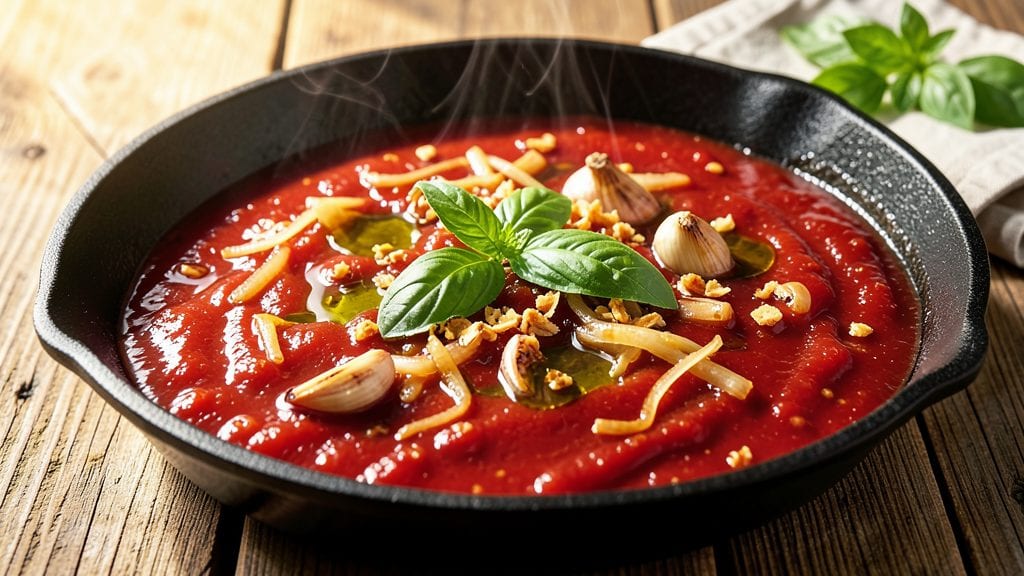
Grandma's tomato sauce recipe is the kind of sauce that transforms simple meals into something extraordinary—deep, rich, and packed with umami flavor that develops over hours of slow simmering.
The secret lies in balancing acidity with sweetness, letting the natural sugars in tomatoes caramelize while aromatics like garlic and onions build complex layers of taste. I've perfected this version over years of testing, and it's become the foundation for everything from Sunday suppers to weeknight dinners.
What makes this sauce truly special is its versatility—it works as a base for pasta, a topping for pizza, or even a braising liquid for meats. The slow-simmered method allows the flavors to meld together beautifully, creating a sauce that's both simple in ingredients and sophisticated in taste.
Fresh basil added at the end brightens the dish without overpowering the deep, savory notes that define this classic tomato sauce.
By the time you're done, you'll have a velvety, umami-rich sauce that's smooth yet still vibrant with fresh herbs. The texture is perfect—neither too thin nor too thick—so it clings beautifully to noodles, melts into cheesy pizzas, or enhances the depth of braised dishes.
This is the kind of sauce that makes you want to freeze extra jars for future meals when you crave that homemade taste.
Ready in about 2 hours but worth every minute, this sauce keeps well in the fridge for up to a week or freezes beautifully for months. Whether you're feeding a family or prepping for meal prep, this tomato sauce delivers restaurant-quality flavor with minimal effort.
Let's get started on creating your own batch of this timeless classic.
Ingredients for grandma's tomato sauce
Eleven simple ingredients that build layers of umami and brightness over hours of slow cooking.
| Ingredient | Amount | Notes |
|---|---|---|
| San Marzano Tomatoes 🍅 | 28 oz | Canned, whole, no salt added |
| Extra-Virgin Olive Oil 🫒 | ½ cup | High quality, fruity |
| Yellow Onion 🧅 | 1 whole | Medium, finely chopped |
| Garlic Cloves 🧄 | 4 cloves | Fresh, peeled, minced |
| Fresh Basil Leaves 🌿 | ¼ cup | Packed, stems removed |
| Tomato Paste 🍅 | 2 tbsp | Smooth, no sugar added |
| Dried Oregano 🍃 | 1 tsp | Italian preferred |
| Red Wine 🍷 | ½ cup | Dry, bold variety |
| Sea Salt 🧂 | 1 ½ tsp | Fine grain preferred |
| Black Pepper 🌶️ | ½ tsp | Freshly ground |
| Granulated Sugar 🍚 | 1 tbsp | Balances acidity |
San Marzano tomatoes are the star here—they're sweeter and less acidic than regular canned tomatoes, which makes all the difference. Look for the official San Marzano label at Italian markets or the canned section of Whole Foods. If you can't find them, Muir Glen or Century Brand are solid backups. The fresh basil? Farmers markets have the best, but grocery store basil works too—just pick leaves that are bright green and firm. For the red wine, any dry, bold variety like Cabernet Sauvignon or Merlot works. I usually grab whatever's open in my fridge, but if you're buying specifically, Trader Joe's has great affordable options.
No San Marzano tomatoes? Regular crushed tomatoes work, but add an extra pinch of sugar to balance the acidity. Short on fresh basil? Dried oregano at half the amount gives you a similar earthy note. The tomato paste can be swapped for a splash of tomato juice if you're really in a pinch, though it won't be as rich. For the red wine, beef or vegetable broth with a splash of balsamic vinegar gets you close. If you don't have extra-virgin olive oil, any good-quality olive oil works—just don't use the cheapest stuff. The sugar is key for balancing the acidity, so don't skip it unless your tomatoes are naturally very sweet.
This sauce tastes even better the next day as the flavors meld together. Store it in the fridge for up to 1 week in an airtight container, or freeze for up to 6 months. I always make extra and freeze it in 1-cup portions for quick weeknight dinners. When reheating, add a splash of water or broth if it gets too thick—it's normal for it to reduce as it cools. The basil should go in fresh at the end, so add it just before serving to keep those bright notes vibrant.
Why You'll Love This Recipe
- Same sauce, endless uses: toss with pasta, slather on grilled cheese, or let it simmer as a base for meatballs. I’ll be real—it’s my lazy Sunday dinner and my “wow, I cooked” dish.
- No-Fuss Simplicity: I swear, this sauce is that easy—just chop an onion, crush garlic, and dump in tomatoes. The San Marzano plumps up like magic while you sip wine and pretend you’re not cooking.
- Sunshine in a Jar: That first spoonful? Sweet, bright, and packed with garlic’s slow caramelized bite. The basil finishes it like a fresh kiss—honestly, I’ve made it three times this week, and I’m not tired of it.
- Weeknight to Dinner Party: Same sauce, endless uses: toss with pasta, slather on grilled cheese, or let it simmer as a base for meatballs. I’ll be real—it’s my lazy Sunday dinner and my “wow, I cooked” dish.
Step-by-step instructions for grandma's tomato sauce
Here's how to create a rich, aromatic sauce that tastes like a hug from your kitchen.
Sauté the Onion Until Transparent
Heat the 0.5 cup extra-virgin olive oil in a large, heavy-bottomed pot over medium heat. Add the 1 whole yellow onion that's been finely chopped and cook for 5-7 minutes, stirring occasionally. You want the onions to soften and become translucent without browning—this builds the flavor foundation.
Here's the thing—don't rush this step. When the onions are properly softened, they'll release their natural sweetness and mellow out any sharpness in the tomatoes later. If they start to brown too quickly, reduce the heat slightly. You're aiming for a gentle, even cooking process that develops the sauce's depth.
Add Garlic, Tomato Paste, and Wine
Once the onions are translucent, add the 4 cloves minced garlic and stir for 30 seconds until fragrant—you should smell that wonderful garlic aroma. Immediately add the 2 tbsp tomato paste and stir vigorously to coat the onions and garlic completely. This creates a flavorful base that won't stick to the pot.
Pour in the 0.5 cup red wine and scrape up any browned bits from the bottom of the pot with a wooden spoon. These bits are packed with flavor, and you want to incorporate them into the sauce. Let the wine simmer for 3-4 minutes until it reduces by about half. This step concentrates the flavors and adds complexity to your sauce.
Incorporate Tomatoes and Seasonings
Add the 28 oz San Marzano tomatoes (crushed by hand or with a wooden spoon), 1.5 tsp sea salt, 0.5 tsp black pepper, 1 tsp dried oregano, and 1 tbsp granulated sugar. Stir well to combine all ingredients thoroughly. The sugar helps balance the acidity of the tomatoes, while the oregano adds that classic Italian flavor.
Bring the mixture to a gentle boil, then reduce the heat to low and let it simmer uncovered. This sauce needs time to develop its rich, umami depth. You'll know it's ready when the sauce has thickened slightly and coats the back of a spoon, which typically takes 45-60 minutes. The longer it simmers, the more complex the flavors become.
Finish with Fresh Basil
About 10 minutes before the sauce is fully reduced, stir in the 0.25 cup fresh basil leaves. This is when the basil's bright, fresh flavor shines through without becoming bitter from overcooking. Taste the sauce and adjust the seasoning if needed—you might need a little more salt or sugar to balance the flavors perfectly.
Continue simmering for another 5-10 minutes until the sauce reaches your desired consistency. It should coat the back of a spoon but still be smooth and velvety. The fresh basil will add that final touch of brightness that makes this sauce truly special. Remove from heat and let it cool slightly before serving.
Pro Tips For Making Grandma'S Tomato Sauce
- Sweat, Don’t Sear, Onions: I learned this the hard way—when you brown onions for tomato sauce, keep the heat medium-low and cover the pan. The goal is to soften and release sweetness, not crisp them into burnt bits. If they start sticking, splash in a few tablespoons of water and stir. You want them translucent, not golden.
- Crush Garlic, Don’t Mince: Whole garlic cloves add depth without bitterness, but if you’re using minced, crush them first with the flat side of your knife. This releases more flavor without burning. And here’s the thing: if your sauce tastes sharp, you likely cooked the garlic too long—pull it out when it’s just fragrant, not brown.
- Simmer Slow, Not Boil: The moment your San Marzano tomatoes hit the pot, reduce heat to a bare simmer. Boiling burns the edges and makes the sauce taste thin and raw. A gentle roll of bubbles is all you need—this is how the flavors meld. I used to rush it, but now I set a timer and let it work its magic.
- Salt Early, Salt Often: Taste your sauce within the first 15 minutes and add salt if needed—it’s easier to fix than over-salting later. And don’t skimp: a well-seasoned sauce carries flavor better. My grandmother always said, “If it doesn’t taste like the sea, add more.” (Yes, even if you’re impatient like me.)
Essential equipment for this recipe
Heavy-Bottomed Pot
Your saucepan is the most critical piece of equipment—never use nonstick for this recipe. I swear by a 5-6 quart Dutch oven like the Lodge Pre-Seasoned Cast Iron or All-Clad Stainless Steel.
Cast iron retains heat beautifully and develops a natural nonstick surface over time, while stainless steel distributes heat evenly. Avoid thin, lightweight pots—they can't maintain consistent heat, leading to scorched bits and uneven cooking. 🔥
Wooden Spoon
A long-handled wooden spoon (about 12 inches) is essential for stirring and scraping up those flavorful browned bits from the bottom of the pot. I use a Oxo Good Grips because it's heat-resistant and comfortable to hold for long simmering sessions.
Avoid metal spoons—they can scratch your pot and react with the acidic tomatoes over time.
Immersion Blender
For a smoother texture, an immersion blender like the Ninja Foodi or Magic Bullet makes blending easy without transferring hot sauce to a separate container. If you prefer a completely smooth sauce, blend about halfway through cooking (after the tomatoes are added) for 30-60 seconds.
This creates a velvety texture while still allowing some natural chunkiness. 💫
Fine-Mesh Strainer
A fine-mesh strainer (like the OXO Good Grips) helps remove seeds and skins if you prefer a seedless sauce. After crushing the tomatoes, strain them through the mesh into your pot.
This step is optional but creates a cleaner texture for dishes like pasta or pizza where you want a smooth finish.
Kitchen Scale
While measurements are given in cups and tablespoons, a digital kitchen scale (like the OXO Good Grips) ensures precision, especially for ingredients like sugar and salt. For example, 1 tablespoon of granulated sugar weighs about 12 grams—small variations can drastically affect the sauce's balance.
This is particularly useful if you're scaling the recipe up or down. ⚡
Glass Jars
For storage, 4-8 oz glass jars (like Ball or Mason jars) are ideal for freezing or gifting. They maintain the sauce's quality for up to 6 months in the freezer and are perfect for portion control.
I always label jars with the date and contents—trust me, you'll forget what's in your freezer after a few months! 📅
Nutrition facts
Frequently asked questions
Can I use regular canned tomatoes instead of San Marzano?
Yes, but you'll need to adjust the acidity. Regular crushed tomatoes work well—just add an extra ½ teaspoon of sugar to balance the stronger acidity. For best results, choose brands without added salt or preservatives to maintain the sauce's pure flavor profile.
How do I prevent the sauce from getting too thick?
Add a splash of water or broth (about ¼ cup) if the sauce thickens too much while simmering. Stir well and let it cook for another 5-10 minutes to rebalance the consistency. The sauce will naturally thicken more as it cools, so don't worry if it looks perfect at the end.
Can I make this sauce in a slow cooker?
Sauté the onions, garlic, and tomato paste in a skillet first, then transfer everything to a 6-quart slow cooker. Cook on low for 6-8 hours (or high for 3-4 hours) with the lid slightly ajar during the last hour to reduce excess moisture. The slow cooker method works beautifully for hands-off flavor development.
What's the best way to store leftover sauce?
Let the sauce cool completely, then transfer to airtight glass jars or containers. It keeps in the fridge for up to 1 week or freezes for 6 months. For freezing, leave ½-inch headspace to prevent ice crystals. Thaw overnight in the fridge and stir in fresh basil before serving.
Why does my sauce taste bitter?
Bitter flavor usually means the tomatoes overcooked or the sauce reduced too much. Add a pinch of sugar or a splash of red wine to balance it. For future batches, reduce heat during simmering and taste frequently. The sauce should be rich, not bitter—adjust seasonings gradually.