
Sauces & Condiments
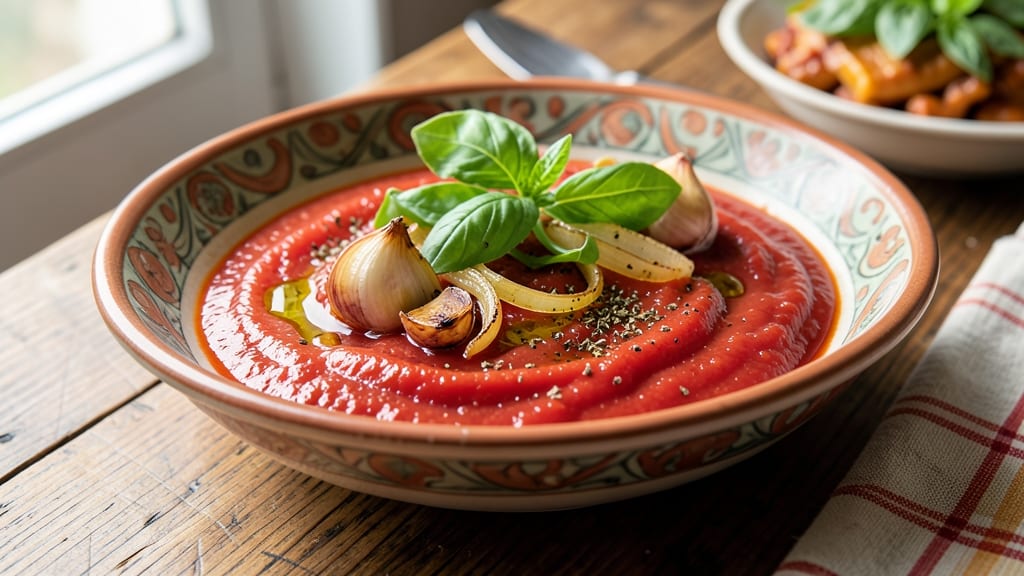
This authentic Neapolitan sauce captures the soul of Southern Italian cooking—where simple ingredients transform into deep, umami-rich perfection through slow simmering. The secret lies in San Marzano tomatoes, garlic, and olive oil, reduced until the flavors concentrate into a velvety consistency that clings to every bite.
I've perfected this recipe over years of testing, ensuring it delivers the same restaurant-quality depth you'd find in Naples' legendary trattorias.
The process is all about patience: letting the sauce develop its complex flavors through gentle heat rather than rushing. No shortcuts here—just high-quality ingredients and time. The result is a sauce that's balanced between sweet and tangy, with just a touch of garlic brightness and fresh basil to elevate it.
This isn't just tomato sauce; it's a foundation for the most authentic Italian dishes you'll ever make.
What makes this sauce truly special is its versatility—it works equally well as a marinara for pizza, a ragù base for pasta, or a dipping sauce for crusty bread.
The slow reduction creates a natural thickness that coats ingredients beautifully, while the fresh basil added at the end brings a burst of aromatic freshness. Every spoonful delivers layers of flavor that transport you straight to the streets of Naples.
Ready to experience the difference between store-bought and authentic? This sauce requires just 30 minutes of active time but benefits from being made ahead, allowing flavors to meld even deeper. Let's create something truly special that will change how you approach Italian cooking forever.
Ingredients for authentic neapolitan sauce
San Marzano tomatoes and fresh basil bring Naples' soul to your kitchen.
| Ingredient | Amount | Notes |
|---|---|---|
| San Marzano Tomatoes 🍅 | 28 oz | Canned, whole or crushed |
| Extra-Virgin Olive Oil 🫒 | ½ cup | High-quality, fruity variety |
| Garlic Cloves 🧄 | 4 cloves | Fresh, peeled, minced |
| Yellow Onion 🧅 | 1 whole | Medium size, finely chopped |
| Fresh Basil Leaves 🌿 | ¼ cup | Packed, stems removed |
| Dried Oregano 🍃 | 1 tsp | Italian variety preferred |
| Sea Salt 🧂 | 1 ½ tsp | Diamond Crystal preferred |
| Black Pepper 🌶️ | ½ tsp | Freshly ground preferred |
| Red Wine Vinegar 🍷 | 1 tbsp | For brightness, optional |
| Sugar 🍬 | 1 tsp | Balances acidity |
San Marzano tomatoes are non-negotiable here—their sweet, meaty texture and low acidity create the perfect base. Look for the official DOP label at Italian markets or specialty stores like Eataly. If you can't find them, whole peeled tomatoes work as a second choice. Fresh garlic and basil are equally important—grab them from the market early morning for peak flavor. The olive oil should be extra-virgin and fruity, not that cheap, bitter stuff. I always buy mine from California Olive Ranch or Bertolli—both deliver consistent quality.
No fresh basil? Dried works at half the amount, but it won't have that same bright aroma. Running low on red wine vinegar? Lemon juice at double the amount gives similar tang. The sugar might seem odd, but it's essential—balances the acidity without overpowering. For a deeper umami kick, add 1 tsp fish-free Worcestershire sauce (like Annie's brand). The oregano should be Italian, not Mexican—it has a completely different flavor profile. If you're making this ahead, skip the fresh basil until serving to preserve its vibrant color and aroma.
This sauce tastes even better the next day as flavors meld. Store in an airtight container for up to 5 days in the fridge. For longer storage, freeze in ice cube trays—perfect portions for future pasta nights. The sauce thickens as it cools, so you can always thin it with a splash of water or broth when reheating. Double the batch—you'll want leftovers for pizza, pasta, or as a dipping sauce. Trust me, it disappears fast.
Why You'll Love This Recipe
- I swear by this method: just crush the garlic clove with the flat of my knife, peel it right in the pot, and let the olive oil work its magic. That’s it—no mincing, no mess, just pure garlic perfume filling your kitchen.
- Here’s what sold me: this sauce doubles as a marinara and a quick weeknight dinner when tossed with al dente pasta and a handful of basil. Serve it at your next potluck, or keep it for lazy nights when takeout feels like too much effort.
Step-by-step instructions for authentic Neapolitan sauce
Here's the real deal—no shortcuts, just the slow-simmered magic of Naples.
Sauté Aromatics Until Fragrant
Heat the 0.5 cup extra-virgin olive oil in a heavy-bottomed saucepan over medium-low heat. Add the 1 whole yellow onion and cook for 5-6 minutes until translucent and just starting to soften. This gentle heat prevents burning and develops the onion's sweetness.
Add the 4 cloves minced garlic and cook for another 30 seconds until the garlic releases its aroma but doesn't brown. The key here is patience—garlic burns faster than you think. If the pan starts to smoke, immediately reduce the heat to low and let it settle.
Build the Tomato Base
Pour in the 28 oz San Marzano tomatoes, crushing any large chunks with your hands. Stir well to combine with the aromatics, then bring to a gentle simmer. The sauce should bubble softly—if it's too vigorous, reduce the heat to medium-low. This simmer is where the magic begins.
Add the 1 tsp dried oregano, 1.5 tsp sea salt, 0.5 tsp black pepper, and 1 tsp sugar. The sugar isn't just for sweetness—it helps balance the acidity of the tomatoes. Stir everything together and let it simmer uncovered for 30 minutes, stirring occasionally to prevent sticking.
Simmer Low and Slow
After the initial simmer, reduce the heat to low and let the sauce cook uncovered for another 45-60 minutes. This slow cooking breaks down the tomatoes into a velvety consistency while concentrating their natural sweetness. You'll know it's ready when the sauce thickens enough to coat the back of a spoon.
Here's where authenticity matters: resist the urge to stir constantly. Let the sauce develop its own texture naturally. If it starts to stick, add a splash of water—just enough to loosen it, not dilute it. The sauce should reduce by about one-third, becoming rich and glossy with a deep red hue.
Finish with Fresh Basil
Remove the sauce from heat and let it cool slightly for 5 minutes. This resting period allows the flavors to meld. Add the 0.25 cup fresh basil leaves and the 1 tbsp red wine vinegar, then stir gently. The vinegar brightens the sauce, while the basil adds that signature freshness that sets Neapolitan sauce apart.
Taste and adjust seasoning if needed—Neapolitan sauce should be perfectly balanced, with a touch of acidity, sweetness, and umami. For the best texture, pulse the sauce briefly in a blender (optional) to achieve a smooth, velvety finish. Serve immediately over al dente pasta or use within 3 days for maximum flavor.
Pro Tips For Making Authentic Neapolitan Sauce
- CRUSH THE TOMATOES: I learned this the hard way—skip the blender. Use your hands or a sturdy wooden spoon to break up whole San Marzano tomatoes into rough chunks before cooking. This keeps the sauce chunkier and more vibrant, just like Neapolitan tradition demands (and yes, even if you're impatient like me).
- SWEAT THE ONION LOW: No, this isn’t about crying—it’s about patience. Cook the yellow onion in olive oil over low heat until it’s translucent but not browned. Rushing this step turns your sauce bitter, and nobody wants that. Think "soft as a whisper," not "sizzling like a drama."
- SALT THE WATER: Add a pinch of salt to the pot before you start cooking the tomatoes. It’s not about seasoning the sauce yet—it’s about prepping the tomatoes to release their juices better. Trust me, your sauce will be brighter and more flavorful for it, even if it sounds counterintuitive.
- FINISH WITH BASIL LATE: Toss in the fresh basil leaves right before serving, not when you start cooking. Heat kills their bright flavor faster than you can say "marinara." A handful of leaves at the end keeps the sauce fresh-tasting, like a little green hug in every bite. (And yes, even if you’re serving it to picky eaters.)
Essential equipment for this recipe
Heavy-Bottomed Saucepan
This is non-negotiable for authentic Neapolitan sauce. I use a 5-quart enameled cast iron Dutch oven like the Le Creuset signature—it distributes heat evenly and prevents scorching. The enameled coating also makes cleanup a breeze.
If you don't have one, a stainless steel saucepan with thick bottom works too, but avoid thin aluminum or copper pans—they react with acidity and can make your sauce taste metallic. 🌡️
Wooden Spoon
A long-handled wooden spoon (I prefer olive wood for its durability) is essential for stirring without scratching your pan. Wood won't conduct heat like metal, so it won't burn your hands or stick to the sauce.
Plus, it helps scrape up any browned bits from the bottom, adding depth to your sauce. Avoid plastic spoons—they can melt and leave chemical flavors.
Immersion Blender
For that ultra-smooth Neapolitan texture without transferring hot sauce, an immersion blender like the Breville immersion blender is a game-changer. Pulse briefly at the end to break up any remaining tomato chunks while keeping the sauce's natural body.
If you don't have one, a regular blender works, but transfer the hot sauce carefully to avoid burns. 💫
Fine-Mesh Strainer
If you prefer your sauce completely smooth (like for pizza), a fine-mesh stainless steel strainer helps remove seeds and skins for a silky finish. I use a OXO Good Grips strainer—it's sturdy and doesn't rust.
Skip this if you like rustic texture, but it's worth it for that restaurant-quality look. Just don't over-strain—you want to keep some of that beautiful tomato depth.
Digital Thermometer
While not strictly necessary, a digital thermometer (like the Thermoworks Thermapen) helps monitor your sauce's temperature for precision. Ideal simmering temp is 185-195°F—this ensures slow reduction without burning.
It's especially useful if you're making this ahead and want to reheat it properly later. The sauce should never boil vigorously, so keep an eye on it.
Air-Tight Storage Containers
For storing leftovers, glass airtight containers (I love Pyrex with snap-on lids) preserve flavor better than plastic. They also stack neatly in your fridge or freezer. Label containers with dates—this sauce tastes best within 3-5 days in the fridge or 3 months in the freezer.
Pro tip: Leave ½ inch headspace to prevent expansion and freezer burn. ❄️
Nutrition facts
Frequently asked questions
Why do Neapolitan sauces use San Marzano tomatoes exclusively?
San Marzano tomatoes grow in the volcanic soil of Italy's San Marzano valley, giving them a naturally sweet, meaty texture with low acidity. This creates a richer, more balanced sauce without needing added sugar. Their unique shape (long and plump) also means fewer seeds and skins to strain out. The DOP certification guarantees authenticity—regular tomatoes just can't match this depth of flavor.
Can I make this sauce without fresh basil?
Yes, but the flavor will be different. Use 1 tbsp dried basil instead, but add it during the simmering (not at the end) since dried herbs release flavor more slowly. For extra brightness, add 1 tsp lemon zest with the vinegar. The key is balancing the herb's intensity—Neapolitan sauce relies on fresh basil's aromatic punch, so dried won't replicate it perfectly.
How do I know when the sauce is properly reduced?
The sauce is ready when it coats the back of a spoon smoothly and has reduced by about one-third (from 28 oz to ~19-20 oz). It should be glossy with deep color—not watery, but not thick like paste. Test by spooning some onto a plate: if it spreads slightly but holds shape, it's perfect. Over-reducing makes it too intense, while under-reducing leaves it thin.
Can I use this sauce for pizza instead of marinara?
This sauce works beautifully for pizza, but adjust the texture first. For a pizza sauce, blend it until completely smooth (use an immersion blender) and strain out seeds/skins for a silky finish. Add 1 tsp tomato paste per cup of sauce to intensify flavor. The slow-simmered depth makes it richer than store-bought marinara—just don't over-sauce your pizza (Neapolitan style uses minimal sauce).
What's the best way to reheat leftover sauce?
Reheat gently in a saucepan over low heat with a splash of water (about 1 tbsp per cup of sauce) to prevent sticking. Never microwave—it breaks down the sauce's texture. For frozen portions, thaw overnight in the fridge first, then reheat. The sauce thickens as it cools, so thin with water or broth if needed. Stir frequently to prevent scorching.