
Sauces & Condiments
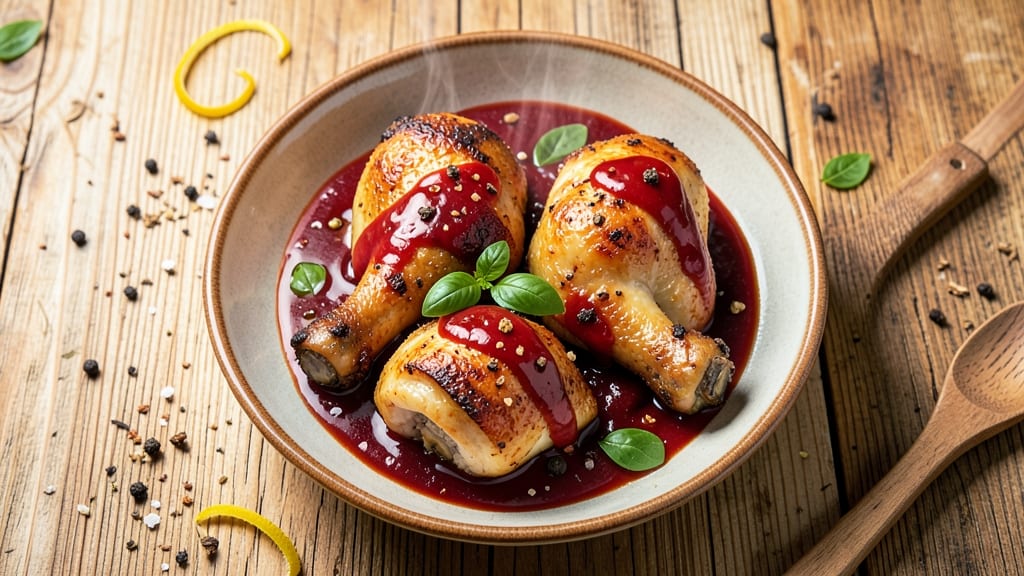
This chicken legs with tomato sauce recipe delivers restaurant-quality results with crispy, golden skin and meat so tender it falls off the bone—all while simmered in a rich, slow-cooked tomato sauce.
The secret lies in a high-heat roast for that perfect crust, followed by a gentle simmer that infuses every bite with deep, savory flavors. I’ve perfected this dish over years of testing, ensuring the sauce clings perfectly to the chicken without overwhelming its natural richness.
The process starts with crispy skin—achieved by roasting the chicken legs skin-side down until they develop that irresistible golden-brown crust. Then, the sauce comes into play: a blend of canned tomatoes, garlic, and herbs simmered until thick and velvety.
The key is patience—letting the sauce reduce slowly so it coats the chicken beautifully, balancing acidity with sweetness for a harmonious finish.
What you end up with is a dish that’s juicy inside and crispy outside, served in a sauce so flavorful it’ll have everyone asking for seconds. The aroma alone—herbaceous, tomato-rich, with a hint of garlic—will fill your kitchen and make dinner feel like a celebration.
This recipe is foolproof, restaurant-worthy, and perfect for feeding a crowd or a cozy weeknight dinner.
Pair it with crusty bread to soak up every last drop of sauce or serve alongside roasted vegetables for a complete meal. The technique is simple, but the results are anything but basic—this is comfort food at its finest. Let’s get cooking!
Ingredients for chicken legs with tomato sauce
Four chicken legs, a golden crust, and a sauce that clings with perfect balance—this is comfort food elevated.
| Ingredient | Amount | Notes |
|---|---|---|
| Chicken Legs 🍗 | 4 whole | Bone-in, skin-on for best texture |
| Extra-Virgin Olive Oil 🫒 | ½ cup | High-quality, fruity variety preferred |
| Salt 🧂 | 1 ½ tbsp | Diamond Crystal kosher preferred |
| Ground Black Pepper 🌶️ | ½ tsp | Freshly cracked for optimal flavor |
| Garlic Cloves 🧄 | 8 cloves | Freshly minced for aromatic depth |
| Canned San Marzano Tomatoes 🍅 | 28 oz | Crushed, high-quality for sweetness |
| Dried Oregano 🌿 | 1 tsp | Mediterranean variety preferred |
| Red Wine 🍷 | ½ cup | Bold dry red, like Chianti |
| Fresh Rosemary 🌿 | 2 sprigs | Fresh sprigs for aromatic infusion |
| Fresh Thyme 🌿 | 2 sprigs | Fresh sprigs for herbal brightness |
| Granulated Sugar 🍚 | 1 tsp | Balances acidity in sauce |
| Fresh Basil Leaves 🌿 | ¼ cup | Chopped for garnish and freshness |
| Balsamic Vinegar 🍶 | 1 tbsp | For depth and complexity |
The chicken legs are non-negotiable—bone-in, skin-on for that signature crispy exterior and juicy interior. Local butchers or specialty grocers often carry the best quality, but any reputable supermarket will have suitable options. Look for legs with a vibrant pink hue and minimal bruising. For the tomatoes, San Marzano is the gold standard—its sweetness and low acidity make it ideal for this sauce. If you can't find it, any high-quality crushed tomatoes will work, but avoid those with added salt or preservatives. The garlic should be fresh, with a pungent aroma when minced, and the red wine should be bold enough to stand up to the tomatoes.
No red wine? Substitute with additional tomato paste and a splash of balsamic vinegar—it adds that same depth without alcohol. Fresh herbs are ideal, but dried oregano at half the amount works in a pinch. For the sugar, honey or maple syrup can replace it one-to-one if you prefer. The olive oil should be extra-virgin for its fruity notes, but if you're using it solely for roasting, a more neutral oil like avocado oil will work just as well. The balsamic vinegar adds a touch of complexity, but if you're out, a few drops of aged balsamic glaze will give you that same rich flavor.
Chicken legs can be prepped ahead—pat them dry and season them up to 24 hours in advance, storing them uncovered in the fridge to dry the skin for better crispiness. The sauce components can be prepped separately and stored in the fridge for 3 days before combining. Once fully cooked, the dish reheats beautifully—simply warm the sauce and chicken together in a skillet over medium heat. For leftovers, store in an airtight container for 4-5 days in the fridge, or freeze for 3 months for future meals.
Why You'll Love This Recipe
- One-Pan Magic: I swear by this recipe—just toss the chicken legs in olive oil, salt, and pepper, then let the garlic and tomatoes work their magic in the same pan. Minimal cleanup, maximum flavor.
- Garlic Bomb Flavor: That first bite of crispy skin with the rich, garlicky tomato sauce? It’s the kind of taste that makes you forget to breathe. The olive oil keeps it juicy while the garlic infuses every bite.
- Leftovers That Don’t Suck: Honestly, I make this on Sunday just so I can reheat it all week. The sauce clings to the chicken, so it’s never dry—perfect for lunchboxes or a lazy Tuesday dinner.
- Budget-Friendly Feast: Chicken legs are cheap, and this recipe stretches them into a meal that feels special. Plus, the pantry staples (olive oil, garlic, salt) mean you’re not breaking the bank for fancy ingredients.
Step-by-step instructions for chicken legs with tomato sauce
Master the balance of crispy skin and tender meat with this methodical approach.
Season and Sear the Chicken Legs for Maximum Crisp
Pat the 4 whole chicken legs completely dry with paper towels—this is non-negotiable for crispy skin. In a small bowl, combine 1.5 tablespoons salt, 0.5 teaspoon ground black pepper, and 1 teaspoon dried oregano. Rub this mixture generously over the chicken, focusing on the skin and crevices. Let them sit uncovered on a wire rack for 30 minutes at room temperature.
Heat 0.5 cup extra-virgin olive oil in a large, heavy skillet over medium-high heat until shimmering but not smoking. Working in batches to avoid crowding, add the chicken legs skin-side down. Press down gently with a spatula during the first 1-2 minutes—this prevents curling and ensures even contact with the pan. Cook until the skin is deep golden brown and crispy, about 8-10 minutes per side. Transfer to a plate and set aside.
Build the Aromatic Tomato-Wine Base
Reduce heat to medium and add 8 minced garlic cloves to the same skillet, cooking for 30 seconds until fragrant but not browned. Stir in 2 sprigs fresh rosemary and 2 sprigs fresh thyme, letting them sizzle for 1 minute to release their oils. Pour in the 0.5 cup red wine, scraping up any browned bits from the bottom—this deglazes the pan and captures all that flavor.
Add the 28 ounces crushed San Marzano tomatoes and 1 teaspoon granulated sugar, stirring to combine. Bring to a gentle simmer, then reduce heat to low. Let the sauce cook uncovered for 15 minutes, stirring occasionally, until it thickens slightly and the alcohol flavor dissipates. The sauce should be rich but still saucy—if it looks too thick, add 2-3 tablespoons water to loosen it.
Simmer the Chicken in Flavorful Tomato Sauce
Return the chicken legs to the skillet, skin-side up, and spoon the sauce over them. The goal is to submerge the chicken halfway in the sauce—this ensures the meat stays moist while the skin remains crispy. Cover the skillet with a lid and transfer to a 325°F oven for 45 minutes, basting the chicken with sauce every 15 minutes. The sauce should reduce slightly, intensifying its flavor.
After 45 minutes, increase oven temperature to 375°F and continue cooking uncovered for another 15-20 minutes, until the chicken is fork-tender and the sauce has thickened to a glossy consistency. The skin should remain crispy while the meat inside is juicy and falling off the bone. If the sauce reduces too much, add 1-2 tablespoons water to maintain balance.
Finish with Herbs and Balsamic for Depth
Remove the chicken from the skillet and tent loosely with foil to rest for 10 minutes. Skim off any excess fat from the sauce, then stir in 1 tablespoon balsamic vinegar and 0.25 cup chopped fresh basil leaves. Simmer for 2-3 minutes to let the basil brighten the sauce and the balsamic add a touch of complexity. Taste and adjust seasoning—you may need a pinch more salt or a crack of black pepper to balance the acidity.
Slice the chicken legs into individual portions and serve directly from the skillet, spooning the sauce generously over each piece. The result should be crispy, golden skin that shatters when bitten, paired with tender, juicy meat bathed in a rich, aromatic tomato sauce. The sauce should cling to the chicken without being overly thick, and the herbs should add freshness to every bite.
Pro Tips For Making Chicken Legs With Tomato Sauce
- CRISP THE SKIN FIRST: After salting and drying the chicken legs, sear them skin-side down in a cold pan over medium heat—no oil needed. The skin will render fat and crisp in 8-10 minutes, locking in flavor and texture. I used to skip this, and the sauce always ended up greasy instead of glossy.
- MINCE GARLIC FINE: For tomato sauce, finely mince the garlic (almost paste-like) so it blends seamlessly without burning. Toss it into the hot oil last—after the chicken’s initial sear—so it infuses without turning bitter. My grandmother swore by this, and she was right: raw garlic chunks just sit there.
- DEGLAZE WITH WINE: After browning the chicken, splash in ½ cup dry white wine (or broth) to scrape up the fond. Let it reduce by half before adding tomatoes—this builds depth faster than scraping alone. Sounds fancy, but it’s the thing that makes the sauce taste restaurant-quality, not homemade.
- LOW AND SLOW FINISH: Once the sauce thickens, drop the heat to a simmer and cover the pan for 15 minutes. This lets the chicken cook through without drying out while the sauce absorbs into the meat. I learned this the hard way—high heat at the end turns the sauce into glue.
Wine and beer pairings for chicken legs with tomato sauce
Red Wine Pairings
A bold Chianti Classico or Sangiovese is my go-to for this dish—its bright acidity and cherry notes cut through the rich tomato sauce while complementing the crispy chicken skin. Look for a 2019-2021 vintage with 12-14% ABV to balance the dish's depth without overpowering it.
The wine's earthy undertones also echo the rosemary and thyme in the sauce. 🍷
For a lighter option, try a Italian Super Tuscan like Sassicaia—its blend of Cabernet Sauvignon and Sangiovese adds structure without heaviness. Serve slightly chilled (60-62°F) to refresh your palate between bites of the saucy chicken.
Beer Pairings
A Malty Italian Amber Ale like Birra del Borgo is perfect—its caramel and biscuit notes harmonize with the tomato sauce's sweetness while the hop bit balances the dish's richness. The beer's moderate alcohol (5.5-6% ABV) won't clash with the chicken's crispy skin. 🍺
For a crisp contrast, opt for a Pilsner such as Peroni. The beer's clean, citrusy profile cleanses your palate between each saucy bite, making it ideal for those who prefer a lighter pairing. Serve at 45-48°F for optimal refreshment.
Seasonal Variations
In summer, swap the red wine for a dry Rosé like Prosecco-based Rosé—its strawberry notes complement the tomatoes while keeping the meal light. The effervescence also cuts through the sauce's richness beautifully.
For winter, consider a Port-style Ruby Port as a dessert pairing. The wine's dark fruit flavors echo the tomato sauce's depth, while its 19-20% ABV adds warmth to the meal. Serve at 65°F for a balanced sip.
Unexpected Pairings
If you're feeling adventurous, try a sparkling wine like Prosecco—its bubbles and citrus notes create a surprising but delightful contrast with the dish's hearty flavors. The acidity in the wine also enhances the tomato sauce's brightness.
A honey-infused beer such as Bell's Honey Brown Ale adds a sweet counterpoint to the dish's savory profile. The honey's floral notes complement the rosemary and thyme, making it a unique but harmonious match. 🍯
Nutrition facts
Frequently asked questions
Can I use bone-in, skin-on chicken thighs instead of legs?
Yes, but expect slightly different cooking times! Chicken thighs cook faster than legs (about 20-25 minutes less total time). Since thighs are leaner, you may want to reduce oven temps by 25°F to prevent drying out. The crispy skin technique works the same, but thighs will stay juicier with less sauce exposure.
How do I fix rubbery chicken skin after cooking?
Undercooked skin is the main culprit! For future attempts, ensure you sear at medium-high heat until golden brown (8-10 minutes per side), then finish in the oven. If it's already rubbery, try reheating in a skillet with 1 tablespoon butter and 1 tablespoon olive oil for 3-4 minutes—this helps restore crispiness.
Can I make this sauce ahead of time?
Prepare the sauce up to 3 days in advance and store it in an airtight container in the fridge. When ready to cook, simply reheat it with the chicken in the skillet. For best results, add 1 tablespoon water per cup of sauce to maintain consistency, and finish with fresh basil to brighten flavors.
What's the best way to reheat leftovers?
Place chicken and sauce in a skillet over medium-low heat and warm through gently. Avoid high heat to prevent drying out the chicken. For extra crispiness, broil for 2-3 minutes at the end. Leftovers keep well for 4-5 days in the fridge or 3 months frozen—just thaw overnight in the refrigerator.
Why did my sauce turn out too acidic?
This usually happens when tomatoes aren't balanced with sweetness. Add 1 teaspoon sugar or honey to the sauce while simmering, or a splash of balsamic vinegar (up to 1 tablespoon) to mellow the acidity. For future batches, ensure you're using high-quality tomatoes like San Marzano and adjust sugar to taste at the end.