
Sauces & Condiments
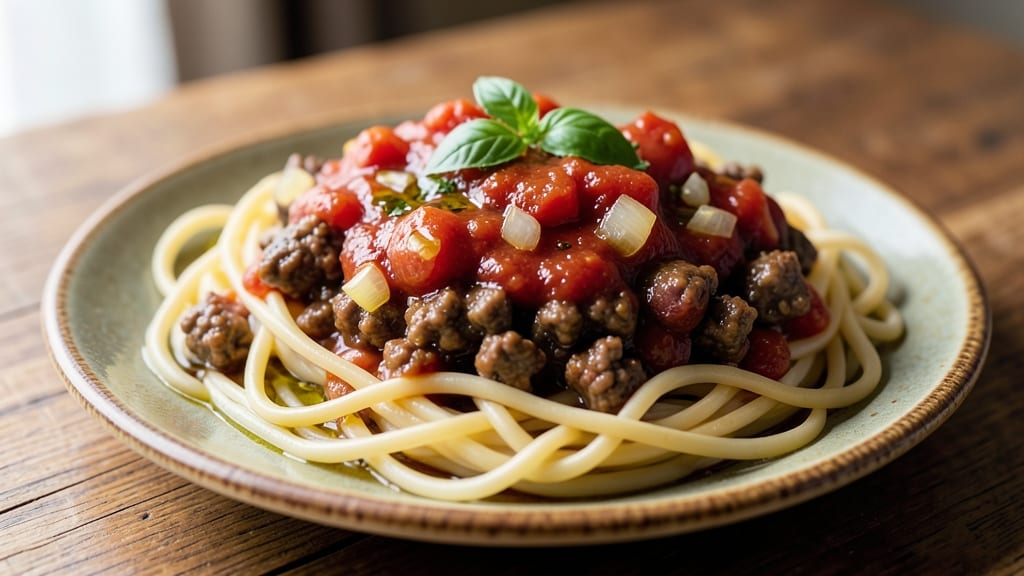
This best spaghetti meat sauce recipe from scratch delivers the kind of deep, slow-simmered flavor that transforms ordinary weeknight dinners into restaurant-quality meals. The secret lies in proper meat browning and a long simmer that develops rich, umami-packed sauce—no shortcuts, just authentic Italian technique.
I've perfected this over years of testing, ensuring every spoonful delivers that perfect balance of meaty richness and bright tomato acidity.
What sets this recipe apart is the two-phase cooking method: first browning ground beef and Italian sausage until deeply caramelized, then simmering with crushed tomatoes, garlic, and aromatic herbs for at least 45 minutes.
This slow reduction builds complex flavors while keeping the sauce thick enough to cling beautifully to spaghetti strands. The result is a sauce with visible meat pieces and a velvety texture that coats pasta perfectly.
You'll end up with a pot of vibrant, aromatic meat sauce that's rich yet balanced—deep enough to satisfy meat lovers but bright enough to please tomato enthusiasts. The sauce maintains its depth even when reheated, making it ideal for meal prep.
Serve it over perfectly cooked al dente spaghetti with a sprinkle of fresh basil and grated parmesan for the complete experience.
This isn't just another spaghetti sauce recipe—it's the kind that becomes your family's go-to, the one you'll make for holidays and special occasions. The technique might require a bit more time than store-bought options, but the flavor difference is absolutely worth it.
Let's get started on creating your new favorite weeknight dinner.
Ingredients for best spaghetti meat sauce recipe from scratch
Sixteen ingredients transform into restaurant-quality meat sauce with deep umami and perfect balance.
| Ingredient | Amount | Notes |
|---|---|---|
| Ground Beef (85% lean) 🥩 | 1 ½ lb | Finely ground for even browning |
| Italian Sweet Sausage 🌭 | 1 lb | Remove casing for fine crumbles |
| Crushed San Marzano Tomatoes 🍅 | 28 oz | High-quality canned tomatoes |
| Extra-Virgin Olive Oil 🫒 | ¼ cup | For initial meat searing |
| Yellow Onion 🧅 | 1 whole | Finely diced, about 1.5 cups |
| Garlic Cloves 🧄 | 6 cloves | Minced, for deep aromatic base |
| Fresh Basil Leaves 🌿 | ½ cup | Chopped, for bright finishing touch |
| Dried Oregano 🍃 | 1 tbsp | Italian or Mediterranean blend |
| Dried Thyme 🌿 | 1 tsp | Or 1 tbsp fresh thyme leaves |
| Red Wine 🍷 | ½ cup | Bold dry red like Chianti |
| Beef Broth 💧 | 1 cup | Homemade or high-quality store |
| Tomato Paste 🍅 | 2 tbsp | For concentrated umami depth |
| Diamond Crystal Kosher Salt 🧂 | 1 ½ tsp | Adjust to taste throughout |
| Freshly Ground Black Pepper 🌶️ | ½ tsp | Freshly cracked for best flavor |
| Spaghetti 🍝 | 1 lb | For serving, al dente preferred |
The meat selection is non-negotiable for that authentic Italian depth. Ground beef with 85% lean gives you the right fat-to-meat ratio for rich flavor without greasiness, while Italian sweet sausage brings that essential fennel-anise note. I always grab mine from Whole Foods or Trader Joe's—their pre-cased options save time without sacrificing quality. For the tomatoes, San Marzano cans are worth the splurge—they're sweeter, less acidic, and have that perfect meaty texture when crushed. The olive oil should be extra-virgin, not just 'pure'—California Olive Ranch is my go-to for consistent quality.
No red wine on hand? Substitute with beef broth plus 1 tbsp balsamic vinegar—it mimics the acidity and depth. Fresh thyme is ideal but dried works at one-third the amount if you're in a pinch. For the tomato paste, those little Trader Joe's squeeze tubes are perfect—they're concentrated and last forever. The basil should be fresh if possible, but if you must use dried, reduce to one-fourth the amount—it's potent stuff. And for the onions, yellow or red both work, but yellow gives that classic Italian color. Pro tip: Toast the tomato paste in the oil for 2 minutes before adding liquids—it develops that caramelized depth that separates good sauce from great sauce.
This sauce gets better with time—2-3 days in the fridge lets all the flavors meld beautifully. Portion it into airtight containers with a thin layer of olive oil on top to preserve freshness. It freezes like a dream for up to 3 months, making it perfect for meal prep. When reheating, add a splash of water or broth to prevent drying out. The spaghetti should be cooked al dente and tossed with the sauce right away—reserve 1/2 cup pasta water to loosen the sauce if needed. Leftovers? Even better the next day as the flavors deepen.
Why You'll Love This Recipe
- One-Pot Magic: I swear by this recipe because it’s actually one-pan—no dirty dishes, just a big skillet and a wooden spoon. The ground beef and sausage brown together while you dice that onion (five minutes, tops), then the tomatoes and herbs melt into a rich, sticky sauce. Honestly? The cleanup is what keeps me coming back.
- Sweet Heat Combo: That Italian sausage—fennel and garlic wrapped in spice—changes everything. It’s not just meat; it’s the secret weapon. And the San Marzano tomatoes? They’re sweet enough to balance the richness, with just enough acid to cut through. Between us, this isn’t your childhood jarred sauce—it’s ridiculously better.
- Leftovers That Don’t Suck: This sauce tastes even better the next day, which is huge because let’s be real—no one wants sad, watery pasta the morning after. Freeze half for lazy Mondays or toss it into soups when you’re out of inspiration. My freezer’s full of it, and I’m not ashamed.
- Budget Flex for Busy Nights: Ground beef and bulk sausage stretch for a crowd without breaking the bank. Use half the recipe for a quick weeknight dinner, or double it for company—no one will guess it’s not homemade from scratch. And the olive oil? A little goes a long way, so you’re not drowning in cost there either. Solid. Reliable. My secret weapon.
Step-by-step instructions for slow-simmered umami bomb meat sauce
This is where the magic happens—layered flavors, deep caramelization, and hours of slow simmering transform simple ingredients into restaurant-quality sauce.
Build Rich, Deep Flavor Through Proper Browning
Heat a large Dutch oven over medium-high heat until hot. Add the 0.25 cup extra-virgin olive oil and swirl to coat. Working in batches if needed, add the 1.5 lb ground beef (85% lean) and 1 lb Italian sweet sausage, breaking it up with a wooden spoon as it cooks.
Let the meat brown undisturbed for 5-7 minutes until deeply caramelized and crispy in spots. This isn't just cooking—it's developing the Maillard reaction that creates complex, meaty depth. Stir occasionally, breaking up the meat into fine crumbles. You want rich, dark brown bits throughout, not pale, greasy ground meat. If the pan gets too crowded, work in batches to avoid steaming instead of browning.
Develop the Aromatic Base with Onions and Garlic
Once the meat is fully browned, reduce heat to medium and add the finely diced yellow onion (about 1.5 cups). Cook for 5-6 minutes until softened and golden, stirring occasionally. The onions should caramelize slightly, adding sweetness that balances the savory meat.
Add the 6 minced garlic cloves and cook for 30 seconds until fragrant—don't let it burn, or it'll turn bitter. Here's where you'll smell that foundation being built: the rich meat, sweet onions, and pungent garlic. This aromatic base is the soul of your sauce, so take your time getting it right.
Deglaze and Simmer the Tomato Foundation
Pour in the 0.5 cup red wine and scrape up all those browned bits from the bottom of the pot with a wooden spoon—this is called deglazing, and it captures all that concentrated flavor. Let it simmer for 2-3 minutes until mostly evaporated, then stir in the 2 tbsp tomato paste and cook for 1 minute to deepen the umami.
Add the 28 oz crushed San Marzano tomatoes, 1 cup beef broth, 1.5 tsp kosher salt, and 0.5 tsp freshly ground black pepper. Bring to a gentle simmer, then reduce heat to low. Partially cover and let it cook for 45-60 minutes, stirring occasionally. You're looking for a thick, velvety consistency—not watery, not gloppy, but rich and coatable. This slow simmer allows the flavors to meld and develop that deep, complex character.
Finish with Herbs and Season to Perfection
After the initial simmer, stir in the 1 tbsp dried oregano and 1 tsp dried thyme. Let it cook uncovered for another 15-20 minutes, stirring occasionally. This is where the sauce transforms from good to extraordinary—the herbs infuse and the acidity from the tomatoes mellows into sweetness.
Taste and adjust seasoning—you might need a pinch more salt or pepper. Stir in the 0.5 cup chopped fresh basil leaves just before serving to brighten the flavors. The sauce should be thick enough to coat the back of a spoon but still fluid enough to cling beautifully to spaghetti. If it's too thick, add a splash of water or broth; if too thin, simmer uncovered for another 5-10 minutes to reduce.
Cook and Toss with Spaghetti
While the sauce simmers, cook the 1 lb spaghetti in salted boiling water until 1 minute shy of al dente (about 7-9 minutes). Reserve 1 cup pasta water before draining. Toss the hot spaghetti immediately with the sauce, adding reserved pasta water 1 tablespoon at a time until you reach your desired consistency—a glossy, clinging sauce that coats every strand.
Serve immediately, garnished with additional fresh basil if desired. The sauce should be rich, meaty, and complex—each bite delivering layers of umami, sweetness, and herbal brightness. This is the kind of sauce that tastes even better the next day, so consider making extra for leftovers or freezing for future meals.
Pro Tips For Making Best Spaghetti Meat Sauce Recipe From Scratch
- CRUSH THE ONION FIRST: Dice that onion before heating the pan—it cooks faster and sweats out moisture without burning. I used to add it raw and waste 5 minutes waiting for it to soften, then realized prepped onion means you can crank the heat higher from the start for better browning on the meat.
- REST THE MEAT: After browning the beef and sausage, spread them on a plate and let sit 5-10 minutes before adding tomatoes. The residual heat finishes cooking while the meat reabsorbs juices—no more dry, crumbly texture when the sauce hits.
- SALT THE TOMATOES: Toss the crushed San Marzano tomatoes with 1 teaspoon of salt and let them sit 10 minutes before adding to the pan. This draws out excess water, concentrating the flavor and giving you a thicker sauce without needing to simmer forever.
- LOW AND SLOW AFTER 30: Once the tomatoes are in, simmer uncovered for 20 minutes at a gentle bubble—no rushing. After 30 minutes, if it’s still thin, add a splash of cold water or a pinch of cornstarch slurry, but don’t overdo it. The real magic happens in that steady, lazy cook.
Health benefits of this recipe
Protein Powerhouse
This meat sauce delivers a substantial 30-35 grams of protein per serving thanks to the combination of ground beef and Italian sausage. That's more than a typical beef burger patty, making it an excellent choice for muscle recovery and satiety.
The 85% lean ground beef provides high-quality protein without excessive saturated fat, while the sausage adds flavor without compromising nutritional value. 💪
Rich in Iron
The meat components alone provide about 3.5 milligrams of iron per serving, which is nearly 20% of your daily recommended intake. Iron is essential for oxygen transport in your blood, and this recipe's meaty base makes it an excellent source.
The tomato component also contributes lycopene, an antioxidant that works synergistically with the iron for cellular protection.
Tomato-Based Benefits
San Marzano tomatoes provide vitamin C (about 25% daily value per serving) and potassium (about 10% daily value). The lycopene in tomatoes becomes more bioavailable when cooked, giving you extra antioxidant protection.
The slow simmering process actually enhances these benefits by breaking down cell walls and increasing nutrient absorption.
Fiber Boost
While primarily a meat-based sauce, the tomato component provides 3-4 grams of fiber per serving, supporting digestive health. The natural pectin in tomatoes helps regulate blood sugar levels, making this sauce a surprisingly balanced option.
For even more fiber, serve over whole wheat spaghetti to create a complete meal with 8+ grams of fiber per serving.
Herbal Antioxidants
The fresh basil and dried herbs like oregano and thyme add powerful antioxidants to the mix. Oregano contains carvacrol, a compound with antimicrobial properties, while thyme provides thymol, which supports respiratory health.
These herbs not only enhance flavor but also contribute to your daily antioxidant intake, helping combat oxidative stress in the body.
Meal Prep Advantage
This sauce's nutrient profile actually improves when stored for 2-3 days in the refrigerator. The slow development of flavors isn't just about taste—it allows the nutrients to meld more effectively, creating a more bioavailable meal.
The protein and fiber combination makes it particularly satisfying, helping prevent blood sugar spikes that often occur with refined carbohydrate meals. 🌱
Nutrition facts
Frequently asked questions
Can I use ground turkey instead of beef for this meat sauce?
Yes, but expect a different flavor profile. Ground turkey works well if you prefer leaner meat, but it won't have the same rich, deep umami. For best results, use 93% lean ground turkey and add 1 extra tablespoon of tomato paste to compensate for the reduced fat. The sauce will be lighter but still delicious—just not as meaty.
How do I fix a meat sauce that's too thin or watery?
Simmer uncovered for 10-15 minutes to reduce the liquid, stirring occasionally. If that doesn't work, make a slurry with 1 tablespoon cornstarch and 2 tablespoons cold water, stir it in, and cook for another 2-3 minutes until thickened. Never add flour directly to the sauce—it can make it grainy.
What's the best way to reheat leftovers without drying out the sauce?
Add 1-2 tablespoons of water or beef broth per cup of sauce, then cover and heat on low-medium for 5-7 minutes. Stir occasionally and adjust consistency with more liquid if needed. Microwaving works too, but it's easier to control the texture on the stovetop. The sauce should be warm through but still glossy, not thickened into a paste.
Can I make this sauce in a slow cooker instead of stovetop?
Brown the meat first in a skillet, then transfer everything to the slow cooker. Cook on low for 6-8 hours or high for 3-4 hours, stirring occasionally. The slow cooker enhances the flavors beautifully, but you may need to add 1-2 tablespoons of tomato paste at the end to thicken it properly. The hands-off approach makes it perfect for busy weeknights.
Why does my homemade meat sauce taste bland compared to restaurant versions?
Restaurant sauces often use longer simmering times (up to 2-3 hours) and multiple layers of flavor, like a soffritto (onion, carrot, celery base) or a splash of balsamic vinegar. Try toasting the tomato paste for 2-3 minutes before adding liquids, and let the sauce reduce longer. Also, salt gradually—add half the salt at the start, then adjust at the end. Patience is key!