
Sauces & Condiments
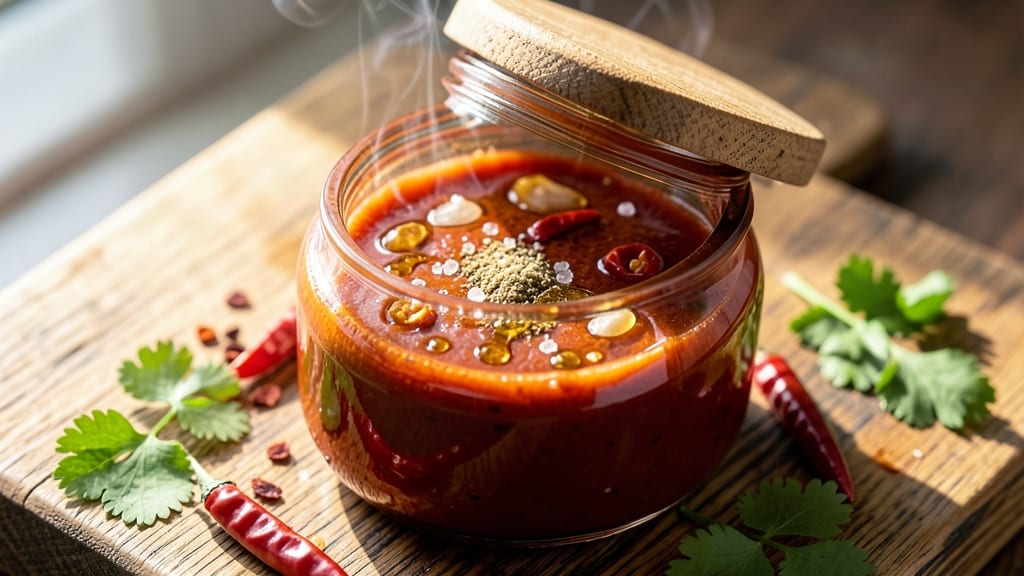
This ball hot sauce recipe delivers the kind of fiery, complex heat that transforms any dish from ordinary to extraordinary. 🔥 The secret lies in fermenting fresh peppers with vinegar and spices, creating a sauce that develops depth over time—think smoky, tangy, and packed with bold pepper character.
Unlike store-bought versions, this recipe lets you control the heat level and flavor profile, whether you prefer classic habanero heat or a fruity twist with added citrus.
The process is straightforward but requires patience: peppers and spices ferment in vinegar for at least a week, allowing flavors to meld and heat to intensify. No special equipment is needed—just a clean jar, fresh peppers, and a few pantry staples.
The result is a versatile sauce that works as a dip, marinade, or finishing touch for everything from tacos to grilled meats, with a shelf life of months when stored properly.
What sets this sauce apart is its balanced heat and acidity, achieved by adjusting pepper-to-vinegar ratios. Too much vinegar dulls the flavor; too little risks spoilage. The recipe includes a foolproof method for straining out seeds and skins, ensuring a smooth texture without compromising heat.
Whether you're a spice enthusiast or a home cook looking to elevate dishes, this fermented hot sauce delivers restaurant-quality flavor at home.
Ready to customize? Experiment with smoked paprika for depth, garlic for aroma, or even a touch of brown sugar to balance the heat. Store in the refrigerator for up to 6 months, and watch as its complexity grows over time. Here’s how to make it—step by step.
Ingredients for ball hot sauce
Fresh peppers, vinegar, and spices create a sauce that builds bold flavor over time.
| Ingredient | Amount | Notes |
|---|---|---|
| Fresh Habanero Peppers 🌶️ | ½ lb | Seeds removed for milder heat |
| White Vinegar 💧 | 1 ½ cups | Distilled white preferred |
| Granulated Sugar 🍚 | ¼ cup | Balances acidity and heat |
| Garlic Cloves 🧄 | 4 cloves | Minced for aromatic depth |
| Smoked Paprika 🌶️ | 1 tbsp | Adds smoky complexity |
| Ground Cumin 🌿 | ½ tsp | Earthy warmth enhancer |
| Salt 🧂 | 1 tsp | Diamond Crystal preferred |
| Black Peppercorns 🌶️ | ¼ tsp | Crushed for subtle bite |
| Lemon Juice 🍋 | 1 tbsp | Brightens final flavor |
The habaneros are the heart of this sauce—fresh, ripe peppers deliver the most vibrant heat. Mexican markets or specialty grocery stores often carry the best selection, but any grocery store will work if you grab them immediately after purchase. Look for peppers that are bright red or orange, firm to the touch, and free from soft spots. If you can't find habaneros, jalapeños or serranos work in a pinch, though the heat level will differ. The vinegar should be distilled white—apple cider vinegar adds unwanted sweetness. For smoked paprika, Penzeys or Goya brands offer consistent quality, but any smoked variety will add that essential depth.
No habaneros? Substitute with ghost peppers or Thai bird's eye chilies for extreme heat, or jalapeños with seeds for milder kick. The sugar is crucial—it balances the acidity and prevents the vinegar from overwhelming the peppers. If you prefer less sweetness, reduce it to 2 tablespoons. For garlic, freshly minced is ideal, but powdered works in a bind at half the amount. The lemon juice can be omitted if you dislike citrus notes, but it brightens the sauce beautifully. Always strain the peppers thoroughly to avoid a gritty texture—a fine-mesh sieve or cheesecloth works perfectly.
Store the sauce in a clean, airtight glass jar in the refrigerator where it will continue fermenting and developing flavor. It's safe to consume for up to 6 months, though the flavor peaks after 2-3 months. For a smoother texture, blend before serving. This sauce pairs exceptionally well with tacos, grilled meats, or as a dip for chips. If you prefer a thicker consistency, simmer the strained mixture for 10-15 minutes to reduce it. Always taste before storing—adjust heat or sweetness as needed.
Why You'll Love This Recipe
- Five-Ingredient Magic: I swear by this—just peppers, vinegar, sugar, garlic, and smoked paprika. No fancy equipment, no waiting for hours. Honestly, the only real work is chopping the habaneros (and maybe crying a little if you’re sensitive), but that’s it.
- Smoky-Sweet Heat: Between us, this sauce is ridiculously good—the habaneros bring the fire, but the sugar and smoked paprika soften it into something complex. That deep, charred garlic note? It’s like a hug for your taste buds, even when it’s burning your nose.
- Pantry Staple Power: I keep a jar of this in my fridge all the time—drizzle it on eggs, toss it in tacos, or even mix it into mayo for a spicy sandwich. It’s the kind of sauce that makes you realize how much you’ve been missing out on.
- No-Waste, Long-Lasting: One batch lasts me weeks, and the flavor only gets better as the vinegar mellows the heat. Plus, habaneros are cheap, and you’ll use every last bit—no sad, wilted peppers going to waste here. Budget-friendly? Absolutely.
Step-by-step instructions for fermented habanero hot sauce
Transform fresh habaneros into a complex, fermented hot sauce with depth and balance.
🍳 Step 1: Sterilize and Prepare the Peppers
Wash all equipment thoroughly and sterilize your jars and lids by boiling them in water for 10 minutes. This prevents contamination during fermentation. Remove stems from the 0.5 lb fresh habanero peppers and slice them into ¼-inch thick rings, keeping seeds out for milder heat.
Pack the sliced peppers tightly into a clean, sterilized quart-sized mason jar, leaving about 1 inch of headspace at the top. Use a wooden spoon to press down gently—this ensures proper contact with the vinegar solution and prevents air pockets that could spoil the sauce.
👨🍳 Step 2: Create the Brine Solution
In a separate bowl, combine the 1.5 cups white vinegar, 0.25 cup granulated sugar, and 1 tbsp smoked paprika. Stir until the sugar dissolves completely. The vinegar should be warm to the touch but not hot—just enough to help dissolve the sugar without cooking the peppers.
Add the 4 minced garlic cloves, 0.5 tsp ground cumin, 1 tsp salt, and 0.25 tsp crushed black peppercorns to the vinegar mixture. Stir well to distribute all spices evenly. The solution should be aromatic with a deep, smoky profile from the paprika and cumin.
🥘 Step 3: Fill and Seal the Jars
Pour the vinegar mixture over the packed peppers in the jar, ensuring all slices are fully submerged. Use a clean wooden stick to press down the peppers again if they float. Leave about ½ inch of liquid above the peppers to allow for expansion during fermentation.
Wipe the jar rim with a clean, damp cloth to remove any vinegar residue, then seal with the sterilized lid. Give the jar a final press to ensure an airtight seal. Place the jar on a stable surface where it won't be disturbed—fermentation works best in a quiet, dark environment.
⏰ Step 4: Ferment for Complexity
Let the hot sauce ferment at room temperature for 7-10 days, checking daily for any signs of mold or unusual odors. You'll notice the liquid darken slightly and develop a deeper, more complex aroma as fermentation progresses. The peppers should soften and become translucent.
After 7 days, taste a small amount carefully—you'll detect the development of tangy, fermented notes alongside the initial heat. If the flavor is still too sharp or vinegary, continue fermenting for up to 3 more days. Once it reaches your desired balance of heat, acidity, and complexity, proceed to the final step.
🍋 Step 5: Finish and Store
Remove the jar from fermentation and strain out the peppers if you prefer a smoother sauce, or leave them in for texture. Stir in the 1 tbsp lemon juice to brighten the flavors and cut through any remaining sharpness. The lemon juice should be added slowly while tasting to achieve the perfect balance.
Transfer the finished hot sauce to clean, sterilized bottles or jars. Store in a cool, dark place where it will keep for up to 1 year. The sauce will continue to mellow and develop flavor over time, becoming even more complex with age. Start with small amounts—this hot sauce packs serious heat!
Pro Tips For Making Ball Hot Sauce
- STEAM THE HABANEROS FIRST: Toss whole habaneros in boiling water for 30 seconds before seeding—this dulls the raw heat just enough to handle them without crying. I learned this the hard way when I tried seeding them dry and spent the next hour sneezing into a towel.
- USE A FINE-MESH STRAINER: After simmering, don’t just pour the sauce through a regular strainer—use a fine-mesh one to catch tiny pepper seeds and garlic bits. I skipped this once and ended up with a gritty sauce that stuck to my ribs for days.
- SIMMER LOW AND SLOW: Reduce heat to a bare simmer after adding vinegar—boiling too hard turns the sauce cloudy and sharp. Think "gentle bubbles," not "rolling boil." My first batch tasted like vinegar soup because I ignored this.
- ADD SUGAR IN STAGES: Stir in half the sugar first, taste, then add the rest—this balances heat without making the sauce cloying. I used to dump it all in at once and ended up with something that tasted like candy-coated fire. Adjust to your spice tolerance.
Creative variations of this recipe
Smoky Chipotle Twist
Swap the smoked paprika for 2-3 chipotle peppers in adobo sauce blended into the vinegar mixture. This adds deep, smoky heat reminiscent of Texas-style BBQ sauces. I like to blend 1 chipotle pepper with the vinegar first, then strain it to remove any seeds or membrane.
For extra richness, add 1 tablespoon of molasses to balance the smokiness. 🔥
Fruity Mango-Habanero
Blend ½ cup of ripe mango purée directly into the finished sauce for a sweet, tropical heat. The mango softens the habanero’s sharpness while adding vibrant color. I recommend using frozen mango for convenience, and always taste before storing—adjust the sugar to ¼ cup if you prefer less sweetness.
This variation works beautifully as a dip for seafood or grilled chicken.
Garlic-Lime Kick
Double the garlic to 8 cloves and add 2 tablespoons of fresh lime juice instead of lemon. The extra garlic deepens the aroma, while the lime brightens the sauce with a citrusy zing.
For a smoother texture, blend the peppers with the vinegar mixture before straining. This version pairs perfectly with tacos or ceviche. 💫
Spicy Brown Sugar Glaze
Reduce the vinegar to 1 cup and increase the sugar to ½ cup, then simmer the strained sauce on low heat for 15 minutes to create a glossy glaze.
Add 1 teaspoon of cinnamon for warmth. This sweet-and-spicy sauce is ideal for drizzling over ribs or roasted vegetables. Let it cool before storing to maintain the glossy texture.
Herbed Jalapeño Heat
Replace habaneros with 1 lb jalapeños (seeds removed for milder heat) and add 1 tablespoon of fresh oregano and 1 teaspoon of thyme to the brine. The herbs add an earthy complexity that complements the jalapeño’s grassy notes.
Strain the peppers for a smoother finish, or leave them in for texture. This variation is fantastic with Mexican street food like elote or nachos.
Caramelized Onion Depth
Sauté 1 cup of thinly sliced onions in 1 tablespoon of olive oil until deeply caramelized, then blend them into the strained sauce. The onions add a sweet, savory base that rounds out the heat.
For extra richness, add 1 tablespoon of balsamic vinegar to the brine. This sauce is perfect for drizzling over pizzas or pasta dishes. 🌟
Nutrition facts
Frequently asked questions
Can I adjust the heat level in this hot sauce?
For milder heat, remove all seeds and membranes from the peppers before slicing. For extra spice, keep the seeds in or add 1-2 dried ghost peppers to the jar during fermentation. Remember, heat builds over time—taste after 7 days to check intensity before finishing.
Do I need to sterilize my jars for fermentation?
Yes, sterilization is critical to prevent spoilage. Boil jars and lids in water for 10 minutes before use, or run them through a dishwasher cycle with a sanitize setting. The vinegar helps preserve the sauce, but proper sterilization ensures safety during the 7-10 day fermentation period.
How long does fermented hot sauce last?
Properly stored in airtight glass jars, this sauce keeps for up to 1 year in the refrigerator. The flavor actually improves over time as fermentation continues! For best quality, use within 6 months—the heat mellows slightly but remains potent.
Can I make this sauce without vinegar?
Vinegar is essential for both preservation and flavor development in fermented hot sauces. Without it, the sauce would spoil quickly and lack the tangy depth. For a vinegar-free alternative, try a water-based fermentation with salt (like in kimchi), but the flavor profile will differ significantly.
What's the best way to use leftover pepper slices?
Don't waste those peppers! Blend them with olive oil for a spicy marinade, dry them for powdered pepper flakes, or compost them. For immediate use, chop them finely and mix into guacamole or salsa—they'll add concentrated heat without altering texture.