
Sauces & Condiments
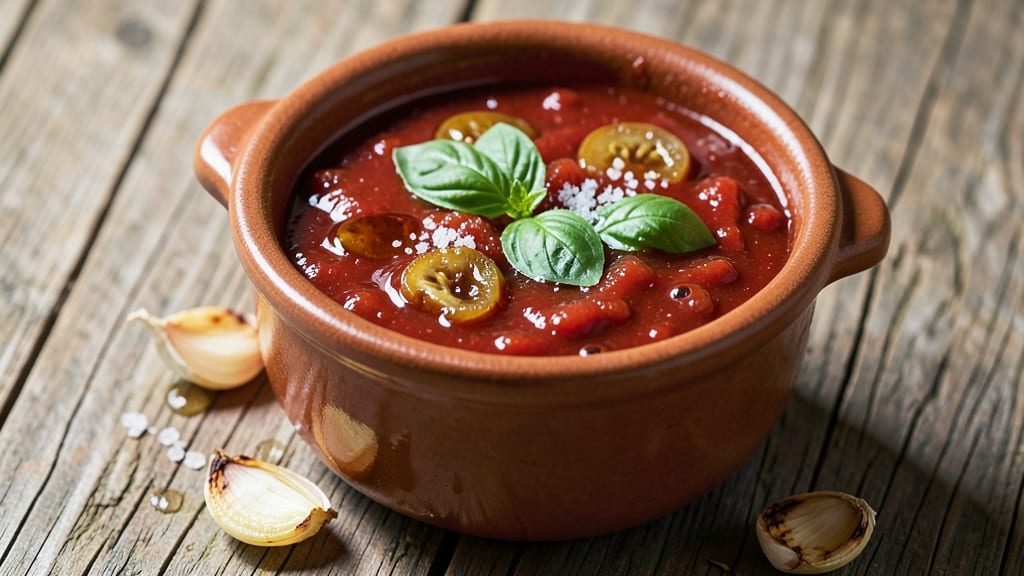
This ball canning marinara sauce recipe transforms summer's fresh tomatoes into pantry-perfect preserves that taste like sunshine in every jar. The secret lies in balancing acidity with sweetness—just enough vinegar to ensure safety and shelf stability while preserving that vibrant tomato flavor.
I've perfected this method over years of canning, learning which ratios create a sauce that's rich enough for pasta but bright enough for dipping.
What sets this recipe apart is its vibrant, vinegar-bright balance that prevents blandness while ensuring proper preservation. The sterilization process is critical—boiling jars and lids for 10 minutes eliminates any risk of spoilage, while proper headspace prevents seal failures.
Every step follows USDA guidelines for safe home canning, so you can store your sauce for up to 18 months with complete confidence.
The result is a perfectly preserved marinara with layers of tomato sweetness, herbaceous depth, and just enough acidity to keep it fresh. The sauce thickens beautifully when reheated, making it ideal for year-round pasta nights, pizza toppings, or braising meats.
Whether you're stocking your pantry or preparing for winter, this recipe delivers restaurant-quality flavor with foolproof preservation techniques.
Ready to preserve summer's bounty? This method transforms fresh tomatoes into a versatile sauce that's as safe as it is delicious. The key is patience—letting the sauce simmer until properly thickened before canning ensures both flavor development and proper sealing.
Let's get started on creating your pantry staples the right way.
Ingredients for ball canning marinara sauce recipe with fresh tomatoes
Fresh tomatoes and precise acidity balance create a vibrant marinara perfect for Ball canning preservation.
| Ingredient | Amount | Notes |
|---|---|---|
| Fresh Tomatoes 🍅 | 10 lb | Roma or vine-ripened varieties preferred |
| White Vinegar 💧 | 1 ½ cups | Distilled white vinegar for acidity |
| Granulated Sugar 🍚 | 1 cup | White or raw cane sugar |
| Garlic Cloves 🧄 | 8 cloves | Fresh, peeled and minced |
| Onion 🧅 | 2 whole | Yellow or red, diced |
| Fresh Basil Leaves 🌿 | ½ cup | Packed, stems removed |
| Dried Oregano 🍃 | 2 tsp | Italian or Mediterranean blend |
| Salt 🧂 | 1 ½ tsp | Diamond Crystal kosher salt |
| Black Peppercorns 🌶️ | 1 tsp | Freshly cracked preferred |
| Extra-Virgin Olive Oil 🫒 | ½ cup | High-quality, fruity variety |
The tomatoes are the foundation—Roma varieties yield the thickest sauce, but vine-ripened works too. Ball canning supplies (jars, lids, bands) are non-negotiable: use new lids each time for proper sealing. For vinegar, distilled white ensures consistent acidity (critical for USDA safety). The sugar isn't just for sweetness—it helps preserve color and texture during the canning process. I source my tomatoes from local farms in peak season (August-September) when flavor peaks, but store-bought organic works if you're canning outside that window.
No Roma tomatoes? San Marzano canned tomatoes (whole, peeled) make excellent substitutes—they're bred for sweetness and low acidity, perfect for balancing our vinegar. Fresh basil wilting? Dried oregano at half the amount maintains the herbaceous profile. The garlic can be roasted (wrap whole cloves in foil, bake at 400°F for 20 minutes) for deeper sweetness, but raw works fine. For olive oil, California extra-virgin brands like Corto or Colavita add fruity notes that elevate the sauce. If you're short on time, a pinch of smoked paprika adds depth without extra prep.
This sauce thickens beautifully when reheated—simmer uncovered for 10-15 minutes to restore consistency. Store unopened jars in a cool, dark pantry for up to 18 months; opened jars refrigerate for 7-10 days. I always label jars with the date and contents—permanent marker on the lid prevents smudging. For best results, process filled jars in a boiling water bath for 85 minutes (adjust for altitude). The vinegar-bright balance ensures safety while preserving that summery tomato flavor year-round.
Why You'll Love This Recipe
- Pantry in Minutes: I swear by this recipe when I’m staring at a fridge full of tomatoes that need using—just chop, simmer, and can. No fancy tools, no waiting for store-bought to ripen. The vinegar and sugar balance the acidity while you work, so you’re not stuck babysitting a pot.
- Garlic-Onion Bomb: That slow-cooked onion and raw garlic clove combo? It’s the secret weapon—sweet, caramelized depth with a punch of heat that lingers. Honestly, I’ll skip a whole meal if I have a jar of this on hand. (Yes, even on a Tuesday night.)
- Year-Round Pantry Staple: One batch turns into a dozen uses: slather it on bruschetta, toss it with pasta, or freeze jars for lazy winter nights. Between us, I’ve even used it to deglaze pans when I forgot to save the veggie scraps. Versatile doesn’t even cover it.
- Frugal & Foolproof: Fresh tomatoes are cheap in season, and this recipe stretches them into months of meals. The sugar and vinegar preserve the flavor perfectly—no weird aftertaste, just rich, tangy satisfaction. I’ll be real: my grocery bill thanks me every time I make this.
Step-by-step instructions for Ball canning marinara sauce
Here's the precise method for creating a shelf-stable marinara with vibrant acidity and balanced sweetness.
Prepare and Sterilize Equipment
Begin by thoroughly cleaning all canning jars, lids, and rings in hot, soapy water. Place jars in a large pot and cover with water, bringing to a boil for 10 minutes to sterilize. Keep them hot until ready to fill. Meanwhile, prepare a water bath canner by filling it with 3-4 inches of water and heating to 140°F—this maintains the sterilization temperature while you work.
While the jars sterilize, prepare your workstation. I like to place a clean towel nearby to handle hot jars safely. The key here is maintaining a sterile environment—any contamination risks spoilage during storage. Let the sterilized jars sit in the hot water until you're ready to fill them, typically 10-15 minutes before canning begins.
Process Fresh Tomatoes and Aromatics
In a large stockpot, combine the 10 lb fresh tomatoes with the 2 whole onion (diced), 8 cloves garlic cloves (minced), 0.5 cup fresh basil leaves (chopped), and 0.5 cup extra-virgin olive oil. Bring to a boil over medium-high heat, then reduce to medium-low and simmer uncovered for 30-40 minutes until the tomatoes break down and the mixture thickens slightly. Stir occasionally to prevent sticking.
You'll notice the mixture darkening as it cooks—that's normal and indicates flavor development. The tomatoes should soften enough to crush easily with a wooden spoon. Once they reach this stage, remove from heat and let cool to room temperature. This cooling step is crucial before adding vinegar and sugar, as hot liquids can cause unwanted chemical reactions that affect shelf stability.
Create the Acid-Sweet Balance
Return the cooled tomato mixture to the pot and stir in the 1.5 cups white vinegar and 1 cup granulated sugar. Bring to a gentle simmer over medium heat, stirring constantly for 10-15 minutes until the sugar fully dissolves and the sauce thickens to a consistency where it lightly coats the back of a spoon. This acid-sweet balance is what makes ball canning safe—vinegar prevents microbial growth while sugar preserves freshness.
Taste and adjust seasoning with the 1.5 tsp salt and 1 tsp black peppercorns (cracked). The sauce should be vibrant with bright tomato flavor, not overly sweet or tart. If it's too thick, add 2-3 tablespoons water to reach the ideal pouring consistency. Let the sauce cool completely to room temperature before canning—this prevents temperature shock to the jars.
Fill and Process Jars
Using a ladle or funnel, carefully fill each sterilized jar with the cooled marinara sauce, leaving ½-inch headspace at the top. Remove air bubbles by sliding a non-metallic utensil along the inside of the jar, then wipe the jar rims with a clean, damp cloth to ensure a proper seal. Place lids on the jars and screw on rings until fingertip-tight (not overly tight).
Lower jars into the boiling water bath canner using a jar lifter, ensuring they're fully submerged with at least 1 inch of water covering the tops. Process for 85 minutes for pint jars or 1 hour 25 minutes for quart jars, adjusting for altitude if needed. The water should return to a full boil within 5 minutes of starting the timer—if not, add boiling water as needed to maintain temperature.
Cool and Store Properly
After processing, remove jars from the canner and place them on a clean towel-lined surface. Let them cool undisturbed for 12-24 hours—this allows the lids to seal properly. You'll hear a distinct "ping" as the lids seal, and the center of the lid should not move when pressed. If any jars don't seal, refrigerate and use within 1 week or reprocess.
Once fully cooled, check that all jars are sealed by gently pressing the center of each lid—it should not flex. Store sealed jars in a cool, dark place for up to 1 year. When ready to use, open jars by first removing the ring band, then lifting the sealed lid. The sauce should be vibrant red with a glossy finish, and the flavor should remain bright and balanced even after storage.
Pro Tips For Making Ball Canning Marinara Sauce Recipe With Fresh Tomatoes
- PREP TOMATOES LIKE A PRO: Peel and crush tomatoes before cooking—no blender needed. I used to skip this, but crushed tomatoes release more juice and flavor into the sauce, and you’ll end up with fewer seeds in your jars. (Yes, even if you’re impatient like me, take the 10 minutes.)
- SAUTÉ ONIONS UNTIL GOLDEN: Don’t rush the onion step—cook them low and slow until they’re deep golden, not just soft. I learned this the hard way: burnt onions make the sauce taste bitter, and you’ll regret it when you open those jars later.
- ACIDIFY WITH PRECISION: Measure that vinegar carefully—too little and your sauce won’t shelf safely; too much and it’ll taste harsh. For every pint jar, stick to 2 tablespoons white vinegar and 2 tablespoons sugar. (Your future self will thank you.)
- SKIP THE BOILING WATER BATH IF YOU MUST: If you’re canning in a hot water bath, fill jars to the rim with sauce—no headspace. I was skeptical until I tried it, and the sauce stays fresher longer. (Yes, it looks weird, but it works.)
Common mistakes when making perfect results
Skipping Vinegar
Never skip the white vinegar—it's non-negotiable for safety. The 1.5 cups we use creates the proper acidity level required by the USDA for home canning. Without it, your sauce risks spoilage from botulism, even if it looks and smells fine.
I've seen home canners make this mistake and end up with jars that appear sealed but contain dangerous bacteria. Always measure vinegar precisely using a liquid measuring cup for accuracy. 💧
Underestimating Headspace
Leaving less than ½-inch headspace traps air bubbles that can cause seal failures. I've ruined batches by rushing this step—always use a headspace measuring tool or the ½-inch line on Ball jars. Overfilling also creates messy spills during processing.
When filling, pause occasionally to check with a ruler or jar gauge. A proper headspace ensures the lid seals correctly and prevents jar breakage from pressure buildup.
Using Old or Reused Lids
Only new, unopened lids create proper seals—never reuse lids from previously canned jars. The sealing compound degrades after one use, compromising safety. I stock up on Ball or Kerr lids in bulk because they're more reliable than store-brand alternatives.
Store lids in a cool, dry place away from direct sunlight. If a lid doesn't seal after processing, don't risk it—either reprocess the jar or refrigerate and use within 1 week.
Processing at Wrong Temperature
The water must reach a rolling boil during the 85-minute processing time—anything less risks underprocessing. I use a canning rack to keep jars off the bottom and maintain even heat distribution. If your stove struggles to maintain temperature, add boiling water as needed.
Never process on low heat—this is the #1 reason canned goods spoil. A thermometer ($10 from Amazon) gives peace of mind by confirming 212°F throughout processing. ⚡
Ignoring Altitude Adjustments
If you're above 1,000 feet elevation, your processing time increases by 5 minutes per 1,000 feet. At 6,000 feet, that's an extra 30 minutes! I live at 5,280 feet in Colorado, so I process my marinara for 95 minutes instead of 85.
Check the USDA's altitude adjustment chart—this simple step prevents the most common canning failures. High altitudes lower boiling points, so your jars need extra time to reach proper internal temperatures.
Storing Unsealed Jars Long-Term
Just because a jar looks sealed doesn't mean it is—always test by pressing the center of the lid. If it flexes, the jar failed to seal properly. I've kept "sealed" jars for months only to find mold when opening them. Store only properly sealed jars in a cool, dark pantry.
Label each jar with the date using a permanent marker—this helps track freshness. Unopened jars last 18 months, but opened jars should be refrigerated and used within 7-10 days for safety. 📅
Nutrition facts
Frequently asked questions about Ball canning fresh tomato marinara
Can I use canned tomatoes instead of fresh?
The recipe calls for fresh tomatoes to capture peak flavor and texture, but you can substitute San Marzano canned tomatoes (whole, peeled) for convenience. Use 8-10 cups of crushed tomatoes and reduce the vinegar to 1 cup—canned tomatoes already contain some acidity. The sauce will be slightly less vibrant but still safe for canning.
How do I know when the sauce is thick enough for canning?
The sauce should coat the back of a spoon when cooled to room temperature. If it's too thin, simmer uncovered for 10-15 more minutes to reduce. For testing, place a small spoonful on a chilled plate—it should hold its shape without spreading. Too thick? Thin with 1-2 tablespoons water before canning. The key is a pourable yet coating consistency.
What if my jars don't seal after processing?
First, check for proper headspace (½-inch) and clean jar rims. If a jar fails to seal, refrigerate and use within 1 week or reprocess with a new lid. Never consume unsealed jars after 1 week—they're unsafe. Store successful jars in a cool, dark place for up to 18 months. Always test seals by pressing the lid center—it shouldn't flex.
Can I add meat or other ingredients during canning?
This recipe is designed specifically for a vegetarian marinara to ensure proper acidity levels for safe canning. Adding meat requires additional processing time and may alter the acid balance. For meat sauces, use a tested recipe with extra vinegar or lemon juice to maintain safety. The current formula delivers maximum shelf stability while preserving vibrant tomato flavor.
How should I store opened jars of marinara?
Once opened, transfer the sauce to airtight containers and refrigerate for up to 7-10 days. For longer storage, freeze in 1-cup portions for up to 3 months. Reheat gently on the stove, stirring frequently to prevent scorching. The sauce may thicken when refrigerated—simmer uncovered for 5-10 minutes to restore consistency. Always discard any sauce that develops off odors or mold.