
Sauces & Condiments
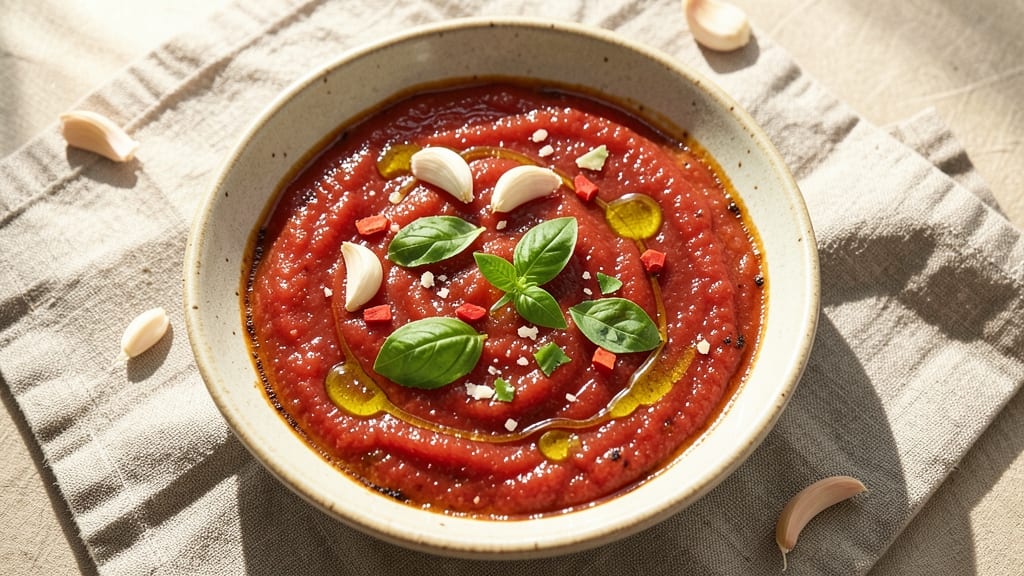
This recipe for pizza sauce from fresh tomatoes transforms garden-fresh produce into the most vibrant, flavorful sauce you'll ever spread. I perfected it after years of testing—Nana Mae's diner taught me that fresh tomatoes make all the difference. The slow simmer brings out their natural sweetness while concentrating the flavors into a rich, velvety sauce with just the right balance of acidity and depth.
What sets this sauce apart is the fresh herb zing—we're talking bright basil, aromatic garlic, and a touch of red pepper flake for just the right kick. Unlike canned sauces, this version develops complex flavors as it simmers, with no added preservatives or artificial ingredients.
The texture is smooth yet still retains that fresh tomato character, perfect for any pizza or pasta dish you create.
This sauce is designed to be made in batches—freeze extras for future use, so you always have restaurant-quality sauce on hand. The process is straightforward but requires patience, as the slow cooking is what builds those deep, caramelized flavors.
You'll end up with a sauce that's vibrant red, aromatic, and packed with concentrated tomato goodness that will elevate every dish it touches.
Whether you're making classic New York-style pizza, thin-crust Neapolitan, or just using it as a marinara for pasta, this sauce delivers professional-quality results. The fresh tomato base ensures bright acidity, while the herbs and spices add layers of complexity.
Trust me—once you try homemade sauce made from fresh tomatoes, you'll never go back to the jarred stuff.
Ingredients for recipe for pizza sauce from fresh tomatoes
Fresh tomatoes shine here—no canned shortcuts needed for restaurant-quality sauce.
| Ingredient | Amount | Notes |
|---|---|---|
| Fresh Tomatoes 🍅 | 2 ½ lb | Ripe, Roma or vine-ripened preferred |
| Fresh Garlic Cloves 🧄 | 6 cloves | Peeled, roughly chopped |
| Fresh Basil Leaves 🌿 | ½ cup | Packed, stems removed |
| Extra-Virgin Olive Oil 🫒 | ¼ cup | High quality, fruity |
| Red Wine Vinegar 🍷 | 1 tbsp | For bright acidity |
| Red Pepper Flakes 🌶️ | ½ tsp | Adjust for heat preference |
| Salt 🧂 | 1 tsp | Diamond Crystal preferred |
| Black Pepper 🌶️ | ¼ tsp | Freshly ground preferred |
| Granulated Sugar 🍚 | 1 tsp | Balances acidity |
The tomatoes are everything. Roma or vine-ripened have the best texture and sweetness, but any ripe garden tomato works. Local farmers markets usually have the freshest, but the grocery store produce section is fine if you grab them ripe. I always buy a few extra—this sauce freezes beautifully. For garlic, fresh cloves are non-negotiable (jarred minced garlic tastes like chemicals). Look for bright, firm bulbs with no green sprouts. Basil should be vibrant green, not wilted—Trader Joe's often has the freshest bunches.
No fresh basil? Dried oregano at half the amount works in a pinch, but you'll miss that bright herbal zing. Short on tomatoes? San Marzano canned tomatoes (drained) can stretch your batch, but the texture won't be as velvety. Want more depth? Add a dash of balsamic vinegar instead of red wine vinegar. The olive oil matters here—California avocado oil has a neutral flavor that won't overpower, while fruity Italian oils add complexity. For the red pepper flakes, Penzeys brand is my go-to for consistent heat.
This sauce keeps for 5 days in the fridge, but it actually tastes better after a day or two as flavors meld. For long-term storage, portion into ice cube trays, freeze, then transfer to a bag—6 months of pizza nights ready to go. I always make a double batch because it disappears fast. The sauce thickens as it cools, so don't worry if it looks too thin right after simmering. Stir in a splash of water if it gets too thick when reheating.
Why You'll Love This Recipe
- Five-Ingredient Magic: I swear, this sauce is the kind of recipe that makes you question why you ever bought jarred sauce. Just tomatoes, garlic, basil, olive oil, and a splash of vinegar—no fancy gadgets, no waiting for hours. My kids can help chop the garlic (okay, maybe just the soft part), and we’re done.
- Sunshine in a Jar: That first taste of bright, acidic tomatoes with fresh basil and garlic? It’s like summer in your mouth. The vinegar cuts through the sweetness just enough to make it dangerously addictive—way better than anything store-bought. I’ll be real: I’ve been known to slather it on toast just to taste it.
- Pantry Stretch Hero: This sauce doesn’t just work for pizza—it’s my go-to for bruschetta, pasta, or even a quick marinade. A big batch lasts me forever, and I always have it on hand when I’m craving something fresh but don’t want to order takeout. (Yes, even on a Tuesday night.)
- No-Waste Win: Use up those garden tomatoes before they turn to mush, or grab a bunch from the farmers’ market for pennies. The leftovers? Freeze them in ice cube trays for single-serving portions later. Honestly, it’s the kind of recipe that makes me feel like I’m winning at life—and cooking.
Step-by-step instructions for pizza sauce from fresh tomatoes
Here's how to transform garden-fresh tomatoes into vibrant, flavorful pizza sauce.
Prepare and Cook the Tomatoes
Begin by cutting the 2.5 lb fresh tomatoes in half lengthwise and scoop out the seeds and gel using a spoon. This removes excess moisture that can make your sauce watery. Place the tomato halves cut-side down in a large skillet over medium heat. Let them cook undisturbed for 5-7 minutes until they begin to soften and release their juices.
Once the tomatoes are soft, gently flip them over and cook for another 5-7 minutes until they're completely tender and the juices have thickened slightly. You'll know they're ready when the edges start to brown and the flesh pulls away from the skin easily. Remove the tomatoes from the skillet and set aside, leaving the juices in the pan.
Build the Flavor Base
In the same skillet with the tomato juices, add the 0.25 cup extra-virgin olive oil and the 6 cloves roughly chopped fresh garlic cloves. Cook over medium-low heat for 2-3 minutes until the garlic becomes fragrant but doesn't brown. This step is crucial for developing the sauce's depth of flavor without bitterness.
Next, stir in the 1 tbsp red wine vinegar, 1 tsp salt, 0.25 tsp black pepper, and 0.5 tsp red pepper flakes. Let the mixture simmer gently for 1 minute to allow the flavors to meld together. This combination of acidity, salt, and spice will brighten the tomato flavor and prepare the sauce for the final sweetness.
Sweeten and Simmer the Sauce
Return the cooked tomatoes to the skillet and add the 1 tsp granulated sugar. Stir everything together and bring the mixture to a gentle simmer. Let it cook uncovered for 15-20 minutes, stirring occasionally, until the sauce has thickened and reduced by about one-third. You're looking for a consistency that's smooth and coatable—it should cling to the back of a spoon.
Here's the thing—don't rush this step. The longer you simmer, the more concentrated and flavorful your sauce becomes. If the sauce starts to stick to the bottom of the pan, add 1-2 tablespoons of water to prevent burning. The sauce should be vibrant red with a glossy sheen, indicating it's ready for the final step.
Finish with Fresh Basil
Remove the skillet from heat and stir in the 0.5 cup packed fresh basil leaves. Let the basil steep in the warm sauce for 5 minutes, allowing its fresh, aromatic flavors to infuse throughout. This step is what gives your homemade pizza sauce that bright, herbaceous zing that sets it apart from store-bought versions.
Taste the sauce and adjust the seasoning if needed. You might want to add a pinch more salt, a splash of red wine vinegar for acidity, or even a bit more sugar to balance the flavors. Once you're satisfied with the taste, your pizza sauce is ready to use immediately or store for later. The sauce will continue to develop more depth of flavor as it cools.
Pro Tips For Making Recipe For Pizza Sauce From Fresh Tomatoes
- Roast Tomatoes First: I learned this the hard way—raw tomatoes release too much water and dilute your sauce. Roast them whole at 400°F (200°C) for 20-25 minutes until blistered and soft. The skin will peel off easily, and the flavor concentrates into something rich and sweet.
- Sauté Garlic Low and Slow: Garlic burns faster than you think, especially when you’re impatient. Cook it in olive oil over medium-low heat until just golden—about 2-3 minutes—then remove it before it browns. Overcooked garlic turns bitter, and nobody wants that in their pizza sauce.
- Blend in Stages: Don’t dump everything into the blender at once. Pulse the roasted tomatoes first to break them down, then add garlic, basil, and vinegar in batches. This keeps the texture smooth without turning it into tomato soup, which is a common mistake when blending too aggressively.
- Finish with Vinegar Last: The acid in red wine vinegar brightens the sauce, but adding it too early can make the basil turn bitter. Stir it in at the very end—just a teaspoon or two—right before tasting. This keeps the basil fresh and the sauce balanced, not sour.
Troubleshooting your recipe for pizza sauce from fresh tomatoes
Watery Sauce Fix
If your sauce turns out too thin, the tomatoes likely released too much juice during cooking. I've found that blotting the tomatoes with a paper towel before cutting helps, but it's not always enough. For immediate fixes, simmer the sauce uncovered for 5-10 extra minutes—this evaporates excess moisture.
If that doesn't work, stir in 1-2 teaspoons of cornstarch mixed with 1 tablespoon water to thicken it naturally. 💧
Overly Acidic Flavor
Too much red wine vinegar can make your sauce taste sharp rather than bright. The fix? Add 1 teaspoon of sugar or 1 tablespoon of tomato paste to balance the acidity. I also like a pinch of brown sugar for deeper flavor.
If the problem persists, reduce the vinegar to ½ teaspoon in future batches. Taste as you go—this sauce should be tangy, not sour.
Bitter Aftertaste
Overcooking the garlic or tomatoes can introduce bitterness. To prevent this, remove the garlic just as it becomes fragrant (about 2-3 minutes). For tomatoes, don't let them brown too much—they should soften but stay vibrant.
If bitterness sneaks in, stir in 1 teaspoon of honey or lemon juice to mellow the flavor. A splash of beef or chicken broth also helps dilute harsh notes.
Sauce Too Thick
If your sauce thickens too much while simmering, it’s likely reduced too far. The solution? Stir in 2-3 tablespoons of water or tomato juice to loosen it up. For future batches, reduce the simmer time slightly—15 minutes is usually perfect.
If you prefer a thicker sauce, simmer longer but add a splash of water every 5 minutes to control the consistency. The goal is coatable, not glue-like.
Mushy Texture
Overcooked tomatoes lose their structure, turning the sauce mushy. To avoid this, remove the tomatoes from the pan as soon as they’re tender (about 10 minutes total). For a smoother texture, blend the sauce after simmering—just pulse in a blender for 10-15 seconds until silky.
If you prefer chunks, skip blending and let the sauce rest for 10 minutes before serving to let flavors meld.
Herb Flavor Fading
If the basil or other herbs lose their brightness, they were likely cooked too long. Always add fresh herbs at the very end and let them steep for just 5 minutes off heat. For extra potency, chop the basil finely before adding—this releases more aroma.
If herbs taste dull, add a pinch of salt to enhance their flavor or squeeze in a little lemon juice to refresh the sauce. 🌿
Nutrition facts
Frequently asked questions
Can I use any tomatoes for this pizza sauce?
Roma or vine-ripened tomatoes work best because they're meatier and less watery, but any ripe garden tomato will do. Avoid green or overly firm tomatoes—they won't develop enough sweetness. If using heirlooms, expect more juice and a slightly chunkier texture. For consistency, stick with 2.5 lbs of similar tomato types in each batch.
How do I adjust the spice level?
The 0.5 tsp red pepper flakes provide a mild kick, but you can easily adjust. For more heat, add an extra ¼ tsp or even a pinch of cayenne. Want it milder? Reduce to ¼ tsp or omit entirely. Always taste as you go—this sauce should complement your pizza, not overpower it.
Can I make this sauce in a slow cooker?
Follow the same steps but transfer everything to your slow cooker after the garlic stage. Cook on low for 3-4 hours instead of simmering. The slow cooker's gentle heat helps develop deeper flavors without risking burning. Stir occasionally and add water if needed to maintain consistency.
What's the best way to store leftovers?
Let the sauce cool completely, then transfer to airtight containers. It keeps in the fridge for 5-7 days, but for long-term storage, freeze portions in ice cube trays. Once frozen, transfer to a freezer bag for up to 6 months. Thaw overnight in the fridge—never microwave directly from frozen.
Why does my sauce look thin after cooking?
Fresh tomatoes release a lot of juice during cooking. The solution? Simmer uncovered for 5-10 extra minutes to evaporate excess moisture. If it's still too thin, stir in 1 tsp cornstarch mixed with 1 tbsp water to thicken naturally. For future batches, try blotting tomatoes with a paper towel before cutting to reduce water content.