
Sauces & Condiments
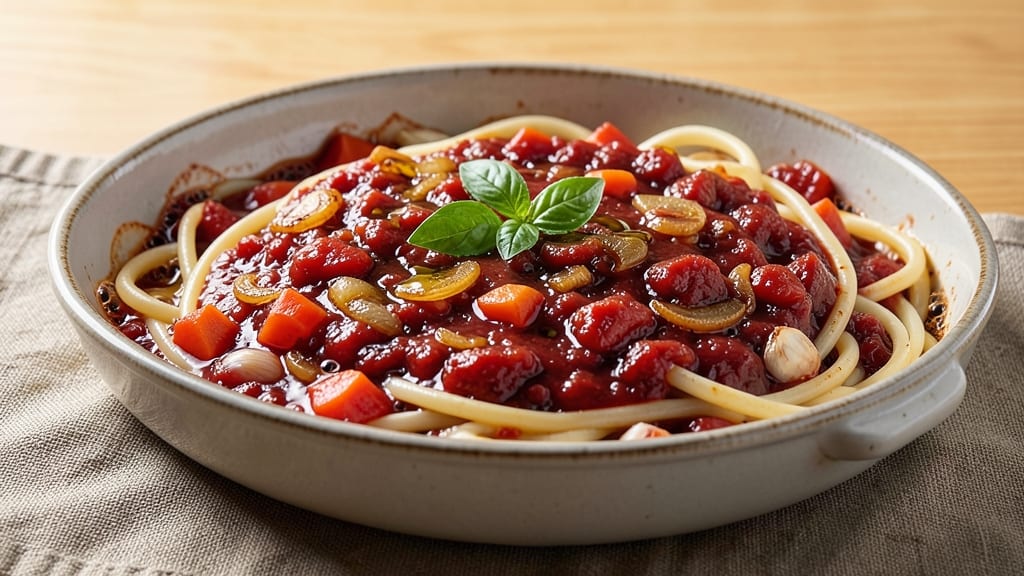
This baked spaghetti sauce recipe transforms simple pantry staples into a rich, layered masterpiece that deepens in flavor overnight. The secret lies in slow simmering—where tomatoes caramelize, herbs infuse, and meat (if using) melts into tender perfection.
Unlike quick sauces, this method builds complex umami depth that turns ordinary weeknight dinners into restaurant-quality meals.
The process is straightforward but requires patience: start with a robust base of crushed tomatoes, garlic, and aromatics, then let it simmer for hours until thickened. A final bake intensifies flavors while creating a glossy, velvety texture that clings perfectly to pasta.
The hidden herb layers—like oregano and basil—add subtle complexity without overpowering the tomato base.
What you’ll end up with is a sauce so rich it tastes like it’s been simmering for days, not hours. The slow cooking breaks down ingredients into a velvety, thick consistency that’s ideal for batch cooking.
Whether you’re meal prepping or serving a crowd, this sauce delivers consistent, restaurant-quality results every time.
Best of all, it keeps beautifully in the fridge for up to a week, making it the ultimate pantry staple. Ready to elevate your pasta game? Let’s get started with this foolproof technique that transforms basic ingredients into something extraordinary.
Ingredients for baked spaghetti sauce
Twelve pantry staples create restaurant-quality sauce with layers of umami and herb complexity.
| Ingredient | Amount | Notes |
|---|---|---|
| Crushed Tomatoes (46 oz Can) 🍅 | 1 can | San Marzano preferred for sweetness |
| Extra-Virgin Olive Oil 🫒 | ½ cup | High-quality, fruity variety |
| Garlic Cloves 🧄 | 6 cloves | Freshly minced for maximum aroma |
| Carrots 🥕 | 2 medium | OR 1 cup grated |
| Celery Stalks 🧅 | 2 whole | Diced into small pieces |
| Yellow Onion 🧅 | 1 medium | Diced into small pieces |
| Ground Beef (80% Lean) 🥩 | 1 ½ lb | Finely ground for even cooking |
| Dried Oregano 🌿 | 2 tsp | Mediterranean variety preferred |
| Dried Basil 🌿 | 1 tbsp | Use half if fresh available |
| Red Wine 🍷 | ½ cup | Bold, dry variety recommended |
| Kosher Salt 🧂 | 1 ½ tsp | Diamond Crystal preferred |
| Black Peppercorns 🌶️ | ½ tsp | Freshly cracked preferred |
| Granulated Sugar 🍚 | 1 tbsp | Balances acidity in tomatoes |
The tomato base is non-negotiable—San Marzano crushed tomatoes deliver unmatched sweetness and depth. Whole Foods and Trader Joe's carry them year-round, but check the Latin market for bulk options at better prices. For the aromatics, fresh garlic and celery are essential; Penzeys sells pre-minced garlic if you prefer convenience. The beef should be 80% lean for optimal fat content—this is what creates the rich, velvety texture during baking. If you're avoiding meat entirely, lentils or mushrooms work as excellent substitutes, though texture will differ slightly.
Red wine is ideal for acidity balance, but beef broth with a splash of balsamic works in a pinch. Fresh basil transforms the sauce—use twice the amount of dried—but if you're short, Italian seasoning provides a close approximation. The carrots and onion can be swapped for bell peppers or zucchini for a lighter profile. For those tracking sodium, reduce the kosher salt to 1 teaspoon and add 1 teaspoon of smoked paprika for depth. The sugar is critical—it rounds out the acidity of the tomatoes and wine, creating that perfect balance that defines restaurant-quality sauces.
This sauce develops best when made ahead—flavor intensifies overnight in the refrigerator. Store in airtight glass containers for up to 7 days; the acidity preserves it beautifully. For long-term storage, freeze in 1-cup portions—thaw overnight in the fridge before reheating. The sauce thickens as it cools, so add 1-2 tablespoons of water or broth when reheating if needed. Portion into meal prep containers with your choice of pasta for grab-and-go meals.
Why You'll Love This Recipe
- One-Pot Magic: I swear by this—no chopping mountains of veggies, just a quick dice of carrots and celery while the sauce simmers. That 46 oz can of tomatoes does half the work for you, and the garlic? Just smash a few cloves—no mincing, no mess.
- Deep, Rich Flavor: Between us, this sauce tastes like it simmered for hours, but it’s actually done in under 40 minutes. The olive oil caramelizes the garlic and veggies into something ridiculously savory, while the tomatoes thicken into a glossy, umami-packed blanket over everything.
- Meal Prep MVP: Honestly, this is my go-to for lazy Sundays or hectic weeks. Make a double batch, freeze half, and you’ve got a weeknight dinner solved. It reheats like a dream—no separation, no sad texture—just pure, comforting sauce ready to toss with pasta or spoon over grilled chicken.
- Budget-Friendly Luxury: A giant can of tomatoes, a few stalks of celery, and a handful of carrots stretch into so much sauce. I’ve fed six people (plus my picky teenager) with one batch, and the leftovers? Better than takeout. The best part? No fancy ingredients—just honest, flavorful goodness.
Step-by-step instructions for slow-simmered umami baked spaghetti sauce
This method builds deep flavor through layered cooking techniques and precise timing.
Develop the Flavor Base with Aromatics
Heat the 0.5 cup extra-virgin olive oil in a large Dutch oven over medium heat. Add the 1 medium yellow onion, 2 medium carrots (diced into ¼-inch pieces), and 2 whole celery stalks (diced similarly). Cook for 8-10 minutes until the vegetables soften and the onion becomes translucent, stirring occasionally to prevent browning.
Add the 6 cloves garlic cloves (minced) and cook for 30 seconds until fragrant—this releases their full aromatic potential. The vegetables should form a thick paste at the bottom of the pot, which will serve as the flavor foundation for your sauce. If the vegetables begin to stick, reduce the heat slightly and continue stirring until properly caramelized.
Brown the Ground Beef for Rich Depth
Push the vegetable mixture to one side of the Dutch oven and add the 1.5 lb ground beef (80% lean) to the empty space. Cook over medium-high heat for 5-7 minutes, breaking the beef into fine crumbles with a wooden spoon. The goal is to achieve a deep brown color—this develops the meaty umami that carries through the entire sauce.
Once the beef is fully browned, use a wooden spoon to scrape up any browned bits from the bottom of the pot and distribute them evenly. These bits, called fond, are packed with concentrated flavor. Add the 0.5 cup red wine and scrape again to deglaze the pan, allowing the wine to dissolve all the flavorful deposits. Let it simmer for 2-3 minutes until the wine reduces by half.
Incorporate Tomatoes and Seasonings
Pour in the 1 can crushed tomatoes and stir well to combine with the beef mixture. Add the 1 tbsp granulated sugar, 1.5 tsp kosher salt, 0.5 tsp black peppercorns, 2 tsp dried oregano, and 1 tbsp dried basil. The sugar helps balance the acidity of the tomatoes while enhancing their natural sweetness.
Bring the mixture to a gentle boil, then reduce the heat to low and let it simmer uncovered for 45-60 minutes. Stir occasionally to prevent the sauce from sticking to the bottom. You'll notice the sauce gradually thickens as moisture evaporates, and the flavors meld together. The sauce is ready when it coats the back of a spoon and the vegetables are tender but not mushy.
Finish with a Baked Umami Boost
Transfer the sauce to a 9x13-inch baking dish and spread it evenly. Cover tightly with aluminum foil and bake at 350°F for 30 minutes. Remove the foil and bake for an additional 15-20 minutes until the sauce thickens further and develops a rich, caramelized top layer. This baking step intensifies the flavors and creates a concentrated sauce with deep umami notes.
For best results, let the baked sauce rest at room temperature for 10 minutes before serving. This allows the flavors to settle and the texture to set properly. The sauce should be thick enough to cling to spaghetti without being overly dry, with a complex balance of sweet, savory, and herbal notes. Serve immediately over al dente pasta or store in an airtight container in the refrigerator for up to 5 days. Reheat gently on the stovetop, stirring occasionally to prevent scorching.
Pro Tips For Making Baked Spaghetti Sauce
- SAUTÉ THE VEGETABLES FIRST: Crushed tomatoes taste better when they’re not swimming in raw carrot and celery. Cook those chopped veggies in olive oil over medium-high heat for 8–10 minutes until they soften and release their flavors—this builds depth before the tomatoes even enter the pot.
- SALT THE TOMATOES: That 46 oz can of crushed tomatoes needs seasoning before it goes in the oven. Stir in 1½ teaspoons of salt (yes, even if the can says it’s low-sodium) and let it sit for 10 minutes—this balances acidity and lets flavors meld.
- SKIP THE BOIL-OVER: If you’re baking this in a deep dish, cover it loosely with foil after the first 30 minutes. Without it, the sauce will bubble over like a volcano, leaving you scrubbing tomato stains off your ceiling fan. (I learned this the hard way.)
- UPGRADE WITH A SPLASH OF WINE: A ¼ cup of dry red wine (or even white wine in a pinch) deglazes the pot after sautéing the veggies and adds brightness. It’s the 5-minute swap that makes the difference between “fine” and “restaurant-quality.” (Use what you have—no need for fancy bottles.)
Flavor customization for this recipe
Sweet & Tangy Twist
Add 1 tbsp honey or 1 tbsp balsamic glaze during the final baking phase to create a sweet-tangy contrast. The honey caramelizes beautifully, while balsamic adds depth without overpowering. I often use local wildflower honey for a subtle floral note that pairs perfectly with the umami-rich sauce. 🍯
Spicy Kick
For heat lovers, stir in 1 tsp crushed red pepper flakes or ½ tsp cayenne pepper with the tomatoes. For smoky heat, add 1 tsp smoked paprika during the simmering stage.
If you prefer fresh heat, fold in 2 chopped jalapeños at the end—just remove seeds for milder spice. Always taste as you go!
Herb Variations
Swap out the basil and oregano for different herb combinations. Try 1 tsp dried thyme + 1 tsp rosemary for a Mediterranean twist, or ½ tsp cinnamon + ½ tsp allspice for a subtle Middle Eastern warmth.
Fresh herbs like cilantro or parsley add brightness—just add them after baking to preserve their freshness.
Meat Alternatives
For vegetarian versions, replace beef with 1 cup cooked lentils or 8 oz mushrooms (finely chopped). For seafood lovers, add ½ lb chopped shrimp or mussels during the final 10 minutes of baking. The mushrooms add an earthy depth, while seafood brings a briny contrast that elevates the sauce's complexity.
Umami Boosters
Enhance the sauce's depth with 1 tbsp soy sauce or 1 tsp fish sauce (add during simmering). For a meaty flavor without meat, use 2 tbsp tomato paste + 1 tsp miso paste.
These ingredients amplify the natural umami without altering the sauce's texture. Note: Fish sauce and miso are optional but transformative!
Texture Adjustments
For a chunkier sauce, leave the vegetables slightly larger when dicing. For a smoother finish, blend ½ cup of the sauce before mixing back in. If your sauce is too thick after baking, stir in 1-2 tbsp water or broth.
Too thin? Simmer uncovered for an extra 5-10 minutes to reduce. The goal is a velvety consistency that clings beautifully to pasta. ✨
Nutrition facts
Frequently asked questions
Why does this baked sauce taste better than regular simmered sauce?
The baking step concentrates flavors through slow reduction, creating a deeper umami profile. The extended cooking time also allows herbs to fully infuse and sugars to caramelize, transforming simple ingredients into complex layers of taste. This method mimics professional restaurant techniques where sauces are finished in the oven for maximum depth.
Can I make this sauce without meat?
Replace the 1.5 lb ground beef with 1 cup cooked lentils or 8 oz finely chopped mushrooms for a rich vegetarian version. The mushrooms add earthy depth while lentils provide protein. For extra umami, add 1 tbsp soy sauce or 1 tsp miso paste during simmering. The texture will be slightly different but still delicious.
How do I fix a sauce that's too thin after baking?
Simmer the sauce uncovered on the stovetop over medium-low heat for 10-15 minutes, stirring occasionally. This evaporates excess moisture without burning. For a quicker fix, mix 1 tbsp cornstarch with 2 tbsp water, stir into the sauce, and simmer for 2-3 minutes until thickened. Never skip the resting period after baking—this helps the sauce set properly.
Can I freeze this baked spaghetti sauce?
Yes, but freeze it before baking for best results. Portion into 1-cup airtight containers, leaving ½-inch headspace for expansion. Thaw overnight in the fridge before reheating. If using pre-baked sauce, reheat gently on low heat, stirring frequently to prevent separation. The texture may change slightly after freezing, but the flavor remains rich. Store frozen sauce for up to 3 months.
What's the best pasta to pair with this sauce?
Use spaghetti or linguine for classic pairing, but rigatoni or penne work beautifully too. For extra sauce adherence, try farfalle or fusilli. Avoid delicate pastas like angel hair—they can break when tossed. Cook pasta 1 minute less than package instructions and reserve ½ cup pasta water to thin the sauce if needed. Al dente pasta enhances the sauce's texture contrast.