
Sauces & Condiments
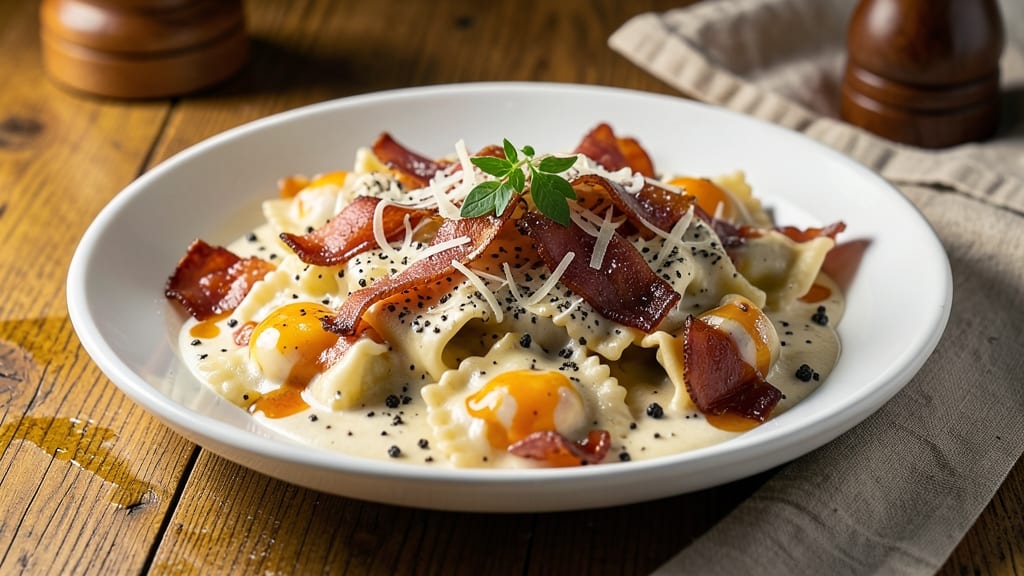
This bacon carbonara ravioli sauce transforms simple ingredients into a velvety, golden masterpiece that clings perfectly to every ravioli. The secret lies in pancetta-infused egg yolks and a precise balance of cream and cheese, creating a sauce that's rich yet light enough to coat delicate pasta without overwhelming it.
I developed this recipe after years of perfecting restaurant-quality carbonara at home—no lumps, no separation, just pure, creamy decadence in every bite.
The foundation starts with crispy pancetta, rendered until perfectly golden and rendered down into a fragrant fat that forms the base of the sauce. As the pancetta cooks, it releases its smoky, savory essence that infuses the egg yolks and cream, creating layers of flavor that build with each spoonful.
What sets this sauce apart is the technique of tempering the eggs with warm pasta water—a crucial step that ensures a silky, emulsified finish without the risk of scrambled eggs.
By the time you're done, you'll have a sauce that's luxuriously thick yet still glossy, with pockets of creamy richness and delicate bacon bits throughout.
The texture is what makes this sauce exceptional—it clings to ravioli like a second skin, creating each bite into a perfect balance of creamy, cheesy, and smoky satisfaction. This isn't just a sauce; it's the kind of luxurious touch that elevates any pasta dish into something restaurant-worthy.
The beauty of this recipe is its versatility—it works equally well with fresh or frozen ravioli, and the leftovers reheat beautifully, provided you do it right (I'll share the secret in the tips section).
Whether you're serving it as a special dinner or a comforting weeknight meal, this sauce delivers that restaurant-quality carbonara experience at home, with just the right amount of indulgence.
Ingredients for bacon carbonara ravioli sauce
Nine ingredients. One luxurious sauce. Restaurant-quality carbonara at home.
| Ingredient | Amount | Notes |
|---|---|---|
| Pancetta 🥓 | 4 oz | Diced small, crispy rendered |
| Large Egg Yolks 🥚 | 4 whole | Fresh, room temperature |
| Heavy Cream 🥛 | ¾ cup | Full-fat for richness |
| Pecorino Romano Cheese 🧀 | ¾ cup | Freshly grated, fine |
| Parmesan Cheese 🧀 | ½ cup | Freshly grated, fine |
| Freshly Ground Black Pepper 🌶️ | ½ tsp | Freshly cracked preferred |
| Diamond Crystal Kosher Salt 🧂 | ¼ tsp | Adjust to taste |
| Unsalted Butter 🧈 | 2 tbsp | Cold, cubed |
| Reserved Pasta Water 💧 | ½ cup | From cooking ravioli |
The pancetta is non-negotiable—it's the smoky backbone of this sauce. Look for thick-cut pancetta at the deli counter (the kind that comes in a slab), not the pre-diced stuff. Costco or Whole Foods have great options, but any butcher will cut it for you. Render it low and slow until it's crispy and golden—don't rush this part. Those crispy bits are flavor gold. For the cheeses, Pecorino Romano is a must—it's sharper and saltier than Parm, giving that authentic carbonara bite. If you can only find Parmesan, use it, but add an extra pinch of salt. The egg yolks? Fresh is key—they should be bright yellow, not pale or cloudy.
No pancetta? Guanciale works perfectly—it's the Italian cousin and even more flavorful. Short on Pecorino? Parmesan plus a pinch of salt gets you close, but you'll lose that sharp tang. The butter isn't just for richness—it helps emulsify the sauce. Don't skip it. For the pasta water, always reserve a cup before draining—it's the secret to a silky sauce. If your ravioli is pre-cooked (like frozen), use the package instructions for water. Fresh pasta? Cook it al dente, then drain and shock it in ice water before reserving the water. The cream can be swapped for half-and-half if you prefer a lighter sauce, but trust me on the full-fat version.
This sauce is best made fresh, but it reheats beautifully if done right. Portion into ramekins before refrigerating—prevents a skin from forming. To reheat, add a splash of warm water or pasta water and stir gently over low heat. Keeps for 3 days in the fridge, 1 month frozen. Freeze in single portions for easy reheating. The leftovers? Even better the next day—all that flavor has time to meld. And if you make extra, toss it with a fried egg for carbonara toast the next morning.
Why You'll Love This Recipe
- Here’s what sold me: the way pancetta’s fatty, salty depth marries with the creamy egg base and those grated cheeses. It’s not just carbonara—it’s carbonara with a ravioli hug, where every bite has that crispy edge and velvety center. Honestly, I’ve tried store-bought sauces, and this one makes them look lazy.
- I’ll be real: most rich sauces turn gloppy when reheated. Not this one. The heavy cream keeps it luscious, and the pecorino adds a little sharpness to cut through any dryness. Plus, pancetta is cheaper than bacon, so you’re getting restaurant-quality flavor without the guilt. My freezer’s always stocked with this—because why not eat well on a budget?
Step-by-step instructions for pancetta carbonara ravioli sauce
This rich, velvety sauce comes together faster than you'd think—just follow the order and timing.
Render the Pancetta Until Crispy
Place the 4 oz pancetta in a large skillet over medium heat—no oil needed. Let it cook undisturbed for 5-6 minutes until the fat begins to render and the pancetta turns golden brown and crispy at the edges. I stir it occasionally after the first couple minutes to prevent burning, but I don't rush this step. Crispy pancetta is the secret to that incredible texture in your sauce.
Once fully rendered, the pancetta should look like tiny crispy leaves floating in about 2 tablespoons of golden fat. If you see any pink remaining, cook it another minute—it needs to be fully cooked. Remove the pancetta with a slotted spoon and set it aside on a paper towel-lined plate, leaving all that delicious fat in the skillet. This fat is the foundation of your sauce, so don't drain it!
Melt Butter and Create the Cheese Mixture
Reduce the heat to medium-low and add the 2 tbsp cold unsalted butter to the skillet with the pancetta fat. Let it melt completely, about 1 minute, until it foams and smells nutty. This butter adds richness that balances the saltiness of the pancetta.
While the butter melts, whisk together the 4 whole large egg yolks, 0.75 cup heavy cream, 0.75 cup finely grated Pecorino Romano cheese, 0.5 cup finely grated Parmesan cheese, 0.5 tsp freshly ground black pepper, and 0.25 tsp Diamond Crystal kosher salt in a bowl. The mixture should be pale yellow and smooth—almost like a thick custard. I like to whisk it vigorously for about 30 seconds to fully incorporate the cheeses and create a homogenous blend. This ensures your sauce will be creamy, not grainy.
Combine Everything Off the Heat
Here's where things get critical—remove the skillet from heat completely. The residual heat from the pancetta fat is all you need to gently cook the egg mixture without scrambling it. Add the egg mixture to the skillet and stir constantly with a wooden spoon for 30-45 seconds until it begins to thicken slightly.
Now add the crispy pancetta back to the skillet along with 0.25 cup of the 0.5 cup reserved pasta water. Stir everything together for another 30 seconds until the sauce becomes silky and coats the back of the spoon. If it's too thick, add more pasta water 1 tablespoon at a time until you reach a luxurious, clinging consistency—it should coat the spoon but still be pourable. The sauce should be warm but not hot; if it's too hot, the eggs will curdle.
Finish with the Ravioli
Add your cooked ravioli to the skillet and toss gently to coat each piece with the sauce. The residual heat from the ravioli will help melt any remaining cheese and create a perfect sauce-to-pasta ratio. If the sauce looks too thin after tossing, add another splash of pasta water—just enough to create that perfect glossy sheen.
Serve immediately while the sauce is still warm and creamy. The pancetta should be crispy, the cheese melted into a velvety texture, and each bite should deliver that perfect balance of rich, salty, and creamy flavors. This sauce is best enjoyed right away, so don't let it sit—it thickens as it cools. Garnish with extra black pepper if you like, and enjoy your luxurious carbonara ravioli!
Pro Tips For Making Bacon Carbonara Ravioli Sauce
- CRISP THE PANCETTA LOW: Cook the pancetta on medium-low heat until it’s golden and crisp—not blistering. I learned this the hard way: high heat burns the fat before the meat renders, leaving you with bitter bits instead of rich flavor. Let it work its magic slowly, stirring occasionally, until the edges are crispy enough to crunch.
- GRATE CHEESE FRESH: Skip the pre-grated cheese—it’s full of anti-caking agents that make your sauce grainy and clumpy. Use a fine grater for Pecorino Romano and Parmesan, and mix them in equal parts. The texture difference is night and day, and your sauce will actually melt into the ravioli instead of sitting in lumps.
- TEMPER THE EGGS: Warm the yolks with a splash of pasta water before adding the cheese and cream. This prevents scrambling when the hot sauce hits them. I used to just toss everything in cold, and half the time, I ended up with a sad, rubbery mess instead of a silky sauce.
- STIR CONSTANTLY OFF HEAT: Once the cheese and cream hit the yolks, take the pan off the heat and stir like you’re trying to win a race. The residual heat is enough to cook the eggs without scrambling them. I know it’s annoying, but skipping this step means you’ll either have a gluey sauce or overcooked eggs—neither is ideal.
Serving suggestions for this bacon carbonara ravioli sauce
Garnish Like a Pro
Freshly cracked black pepper transforms this sauce from good to extraordinary. Use a microplane or pepper grinder for the finest texture—I love the Baratza Encore for consistent results. Sprinkle just before serving so the aroma hits first. For extra flair, add chopped chives or crispy pancetta bits on top. 🌶️
Side Dish Pairings
A simple arugula salad with lemon vinaigrette cuts through the richness. Toss 4 cups baby arugula with 2 tbsp olive oil, 1 tbsp lemon juice, and a pinch of salt.
The peppery bite refreshes your palate after each rich bite. For heartier meals, serve with garlic bread made from a crusty Italian loaf like Bocce.
Beverage Matchups
Italian whites like Vermentino or Pinot Grigio complement the sauce's creamy richness. For something lighter, try a crisp lager like Peroni. If you prefer red, go for a Chianti—its acidity balances the sauce's fat. Avoid heavy wines that overpower the delicate flavors. 🍷
Make It Extra Special
Add crispy prosciutto on top for a luxurious touch. Or drizzle with white truffle oil (just ½ tsp) for an earthy depth. For a veggie boost, fold in sautéed mushrooms or spinach at the end. These additions elevate the dish without altering the sauce's core flavors.
Presentation Tips
Serve on a white or dark plate to make the sauce pop. Use a slotted spoon to place ravioli on the plate, letting excess sauce pool attractively. Garnish with edible flowers or a sprinkle of flaky sea salt for a restaurant-worthy finish. 💫
Leftovers Reinvented
Turn leftover sauce into a carbonara frittata—whisk with eggs, pour into a buttered pan, and bake until set. Or use it to top toasted baguette slices with a fried egg for a quick breakfast. The sauce reheats beautifully when stored properly in airtight containers.
Nutrition facts
Frequently asked questions
Why does this recipe use pancetta instead of regular bacon?
Pancetta is the traditional choice for authentic carbonara because it's less fatty than regular bacon, rendering beautifully into crispy, flavorful bits while leaving behind just the right amount of golden fat. The Italian cured meat has a delicate, smoky flavor that enhances the sauce without overpowering it. If you can't find pancetta, guanciale (cured pork cheek) works perfectly too.
Can I make this sauce ahead of time?
This sauce actually tastes better the next day as the flavors meld. Store it in airtight containers in the fridge for up to 3 days, or freeze for 1 month. To reheat, add a splash of warm pasta water or heavy cream and stir gently over low heat. Never microwave—it'll break the emulsion and make the sauce grainy.
What's the secret to getting the perfect creamy texture?
The magic happens when you work off the heat and temper the eggs with warm pasta water. The residual heat from the pancetta fat gently cooks the egg mixture without scrambling it, while the pasta water helps emulsify everything into a silky consistency. Always keep stirring and add liquid gradually if needed—this sauce should coat the back of your spoon but still be pourable.
Can I use regular Parmesan instead of Pecorino Romano?
While you can substitute, Pecorino Romano is essential for authentic flavor—it's saltier and sharper than Parmesan, giving that classic carbonara bite. If you only have Parmesan, use 0.75 cup total cheese and add an extra pinch of salt to compensate. For best results, mix half Pecorino and half Parmesan if possible.
What if my sauce gets too thick or breaks?
If it thickens too much, thin it with 1 tablespoon at a time of warm pasta water or heavy cream while stirring constantly. For broken sauce, whisk in 1 teaspoon cold water to help re-emulsify. The key is to work quickly and keep moving—this sauce is delicate but forgiving if you catch it early.