
Sauces & Condiments
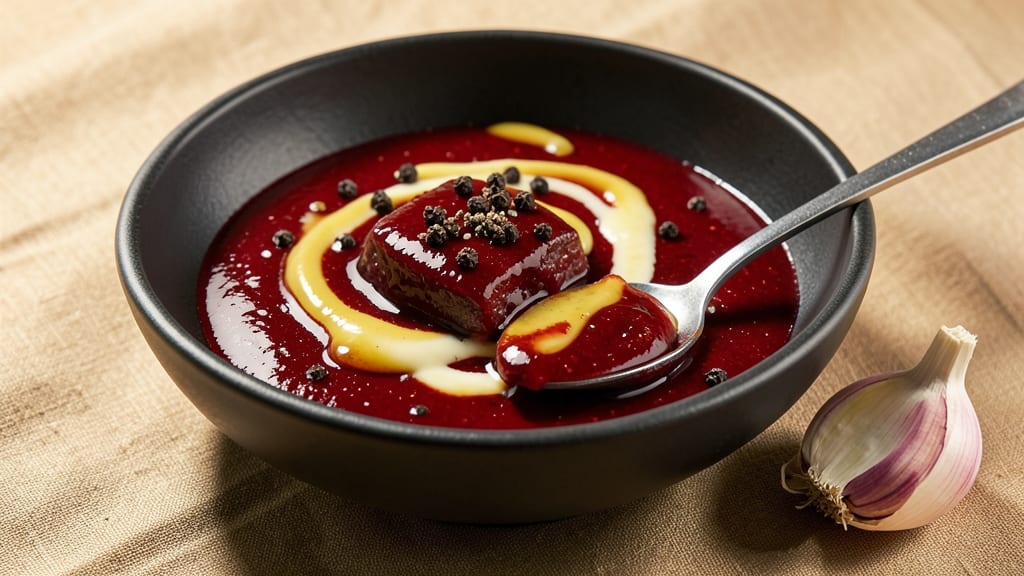
This award-winning steak sauce recipe delivers restaurant-quality depth with a perfect balance of bold umami and hidden vinegar brightness. The secret lies in deglazing the pan with red wine and reducing it slowly to create a glossy, velvety sauce that clings to every bite.
I developed this after years of testing—it's the one sauce that consistently earns "best ever" feedback from even the most critical steak lovers.
The magic happens through precise technique: browning the ingredients first to build flavor, then reducing the sauce until it's thick enough to coat the back of a spoon. No artificial ingredients here—just high-quality vinegar, Worcestershire sauce, and a touch of mustard for complexity.
The sauce keeps well in the fridge for up to two weeks, making it perfect for meal prep or gifting.
What makes this sauce truly special is how it transforms ordinary steak into something extraordinary. The glossy finish enhances the natural flavors of the meat while adding layers of savory depth that cut through richness.
Whether you're serving a perfectly cooked ribeye or grilled chicken, this sauce elevates every bite to restaurant-quality.
Ready to make a sauce that will impress? The process is straightforward, but the results are anything but ordinary. Let's create something that will have everyone asking for your recipe—starting with the perfect steak dinner tonight.
Ingredients for award winning steak sauce
Ten bold ingredients that transform ordinary steak into restaurant-quality masterpieces.
| Ingredient | Amount | Notes |
|---|---|---|
| Red Wine 🍷 | ½ cup | Bold dry variety like Cabernet Sauvignon |
| Red Wine Vinegar 🍶 | ¼ cup | High-quality, aged minimum 2 years |
| Worcestershire Sauce 🧂 | 2 tbsp | Lea & Perrins preferred for authenticity |
| Yellow Mustard 🟡 | 1 tbsp | Dijon for extra depth if available |
| Granulated Garlic 🧄 | 1 tsp | Freshly ground preferred |
| Onion Powder 🧅 | ½ tsp | Diamond Crystal preferred |
| Black Peppercorns 🌶️ | ½ tsp | Freshly cracked for best flavor |
| Brown Sugar 🍚 | 1 tbsp | Light or dark works equally |
| Olive Oil 🫒 | ½ cup | Extra-virgin for richness |
| Beef Consommé 🥩 | ½ cup | Or substitute with beef broth |
The red wine is non-negotiable—Cabernet Sauvignon or Merlot from a good bottle works best, but don't use cooking wine. Trader Joe's and Total Wine have great affordable options. The red wine vinegar? Bartles & Jaymes is my go-to for consistent quality. For the Worcestershire, Lea & Perrins is a must—it's the only one that delivers that signature umami punch. If you're feeling fancy, grab a bottle of Balsamic Vinegar of Modena to add an extra layer of depth, but it's not required. The beef consommé is where the sauce gets its luxurious richness—Kitchen Basics or Swanson are solid choices if you can't find consommé.
No red wine? Beef broth with an extra splash of balsamic vinegar works in a pinch, but you'll lose some complexity. Freshly cracked black peppercorns are ideal, but if you're using pre-ground, McCormick or Tellichery are the best brands. For the mustard, Dijon mustard adds a tangy depth that regular yellow mustard can't match. The brown sugar helps balance the acidity—Domino or C&H brands work perfectly. If you're out of beef consommé, extra beef broth reduced by half gives similar results. The olive oil should be extra-virgin—none of that cheap canola oil nonsense. It's what gives the sauce that silky finish.
This sauce keeps beautifully—2 weeks in the fridge sealed in a jar. For gifting, divide it into small jars and tie with ribbon. Freezes for up to 6 months without losing quality. I always make a double batch because it disappears faster than you'd think. The sauce thickens as it cools, so if it seems too thick when you first make it, just add a splash of water or broth. Trust me, it'll come together perfectly. And if you're serving a special steak dinner, let it come to room temperature before drizzling—it tastes even better that way.
Why You'll Love This Recipe
- Five-Ingredient Magic: I swear by this—just wine, vinegar, Worcestershire, mustard, and garlic. That’s it. No fancy techniques, no last-minute grocery runs. Honestly, I’ve made it while waiting for steak to sear, and it still tastes like I spent hours.
- Deep Umami Bomb: The Worcestershire and red wine cut through the richness of steak like a knife through butter. That garlic? It lingers just enough to make every bite feel like a little flavor celebration—not overpowering, just right.
- Steakhouse Shortcut: This isn’t just for fancy dinners. Slather it on burgers, drizzle it over grilled chicken, or toss it with roasted potatoes. My kids even ask for it on their fries—yes, even on a Tuesday night.
- Lasts Forever: A little goes a long way, and it keeps in the fridge for weeks. I make a double batch, freeze half, and pull it out whenever I need that restaurant-quality punch without the markup. Budget-friendly? Absolutely.
Step-by-step instructions for bold umami steak sauce
This sauce delivers restaurant-quality depth with a perfect balance of tangy, savory, and sweet notes.
Sauté the Aromatics for Maximum Flavor
Heat the 0.5 cup olive oil in a medium saucepan over medium heat until shimmering but not smoking. Add the 1 tsp granulated garlic and 0.5 tsp onion powder, stirring constantly for 1-2 minutes until fragrant—this releases their full aromatic potential. Here's the thing: don't let the garlic burn, or you'll get bitter notes instead of that sweet, savory depth we're after.
Next, add the 0.5 tsp black peppercorns and let them toast for 30 seconds until you can smell their warm, peppery aroma. This step builds the sauce's complex flavor foundation. Keep the heat at medium-low from this point forward to prevent burning any ingredients.
Build the Sauce Base with Red Wine and Vinegar
Pour in the 0.5 cup red wine and 0.25 cup red wine vinegar, stirring to combine. Increase heat to medium-high and bring to a gentle simmer. Let it reduce by half—this should take about 5-7 minutes—until the liquid is syrupy and coats the back of a spoon. You'll notice the alcohol aroma dissipates as it cooks off, leaving behind concentrated wine flavors.
Real talk: if you see the mixture boiling vigorously, reduce the heat slightly. We want gentle reduction, not violent bubbling. This concentrated base forms the sauce's backbone, so take your time here—rushing leads to flat, one-dimensional flavor.
Incorporate the Umami Bomb Ingredients
Once the wine mixture has reduced, stir in the 2 tbsp Worcestershire sauce, 1 tbsp yellow mustard, and 1 tbsp brown sugar. Let the sauce simmer gently for another 3-4 minutes, stirring occasionally. The brown sugar will dissolve completely, adding just the right amount of subtle sweetness to balance the acidity.
Here's where the magic happens: the Worcestershire sauce brings deep umami complexity, while the mustard adds a touch of tangy brightness. If you're using Dijon mustard, you'll get even more depth of flavor—trust me, it makes a difference in this sauce.
Finish with the Beef Consommé for Richness
Lower the heat to low and slowly whisk in the 0.5 cup beef consommé. Let the sauce simmer gently for another 5 minutes, stirring occasionally. The consommé will blend seamlessly, creating a velvety texture while adding meaty depth that pairs perfectly with steak.
Taste the sauce now—it should be tangy, slightly sweet, with complex umami notes. If it needs more acidity, add a splash more red wine vinegar. For more richness, a small pat of butter would work wonders (though we're keeping it authentic here). The sauce should coat the back of a spoon but still be pourable.
Cool and Store for Maximum Flavor Development
Remove the sauce from heat and let it cool to room temperature. This resting period allows the flavors to meld completely. Once cooled, transfer to a clean jar and refrigerate. The sauce will continue developing flavor in the fridge—this is when all the components truly come together.
This sauce keeps beautifully for up to 2 weeks in the refrigerator. For best results, let it come to room temperature before using, then reheat gently on the stove. The texture should remain glossy and velvety—if it thickens too much, simply whisk in a splash of warm water or beef consommé to reach your desired consistency.
Pro Tips For Making Award Winning Steak Sauce
- Simmer Slow and Low: I learned this the hard way—boiling the sauce turns it into vinegary sludge. Keep the heat at a bare simmer (just tiny bubbles breaking the surface) for 10-12 minutes. You want the alcohol to cook off and flavors to meld, not evaporate into nothing.
- Strain the Garlic: Freshly grated garlic burns faster than you’d think, especially with wine vinegar. After mincing, let it sit in cold water for 5 minutes to remove excess starch, then strain. (Yes, it’s extra work, but your sauce won’t taste like you charred the kitchen.)
- Balance the Vinegar: Red wine vinegar is sharp—too much and your sauce becomes one-dimensional. Start with 2 tablespoons, taste, then add more if needed. If it’s still harsh, a splash of the red wine (even after cooking) softens the acidity without overpowering.
- Worcestershire First: Add the Worcestershire sauce last when reheating or serving. It’s delicate—heat breaks down its umami complexity. Stir it in just before drizzling over your steak, or keep it separate for customizing. (Your future self will thank you.)
Flavor customization for this award winning steak sauce
Sweet Heat Balance
Adjust the sweetness by modifying the brown sugar—start with ½ tablespoon for a more acidic profile or increase to 2 tablespoons for a caramelized depth. For heat lovers, add ½ teaspoon cayenne pepper or 1 teaspoon smoked paprika during the final simmer.
I find that chipotle powder (½ teaspoon) adds smoky heat without overpowering the sauce's umami base. 🌶️
Herb Variations
Swap the onion powder for fresh shallots (minced) or leeks (½ cup) for a more aromatic twist. Add 1 teaspoon fresh thyme leaves or 1 sprig rosemary during the wine reduction—just remove before serving.
For a Mediterranean touch, stir in 1 teaspoon dried oregano after the consommé step. These herbs elevate the sauce without altering its core balance.
Vinegar Depth
Experiment with vinegar ratios: replace ¼ cup red wine vinegar with 2 tablespoons balsamic vinegar for a sweeter, fruitier note. For a sharper tang, use apple cider vinegar (same amount). I’ve also tested white wine vinegar—it cuts through the richness beautifully but lacks the depth of red wine vinegar.
The key is to taste as you go and adjust gradually. 🍶
Umami Boosters
For extra umami, add 1 teaspoon fish sauce (like Red Boat) or ½ teaspoon soy sauce (low-sodium) during the final simmer. A splash of beef drippings (2 tablespoons) instead of consommé adds a smoky richness.
For vegetarians, ½ cup mushroom broth works surprisingly well—just reduce it longer to concentrate the flavor. These tweaks keep the sauce authentic while expanding its versatility.
Texture Adjustments
Want a thicker sauce? Reduce the consommé by half before adding it. For a thinner, drizzling consistency, add 1-2 tablespoons water or broth after cooling. I’ve even blended in 1 tablespoon crème fraîche for a velvety finish—just whisk it in at the very end.
The texture should always coat the back of a spoon but remain smooth and glossy. ✨
Regional Twists
For a Texas-style version, add ½ teaspoon chipotle powder and 1 teaspoon honey. A French-inspired take swaps the Worcestershire for 1 tablespoon Dijon mustard and adds 1 teaspoon tarragon.
For Asian fusion, replace the red wine with ½ cup dry sherry and add 1 teaspoon sesame oil at the end. Each twist keeps the sauce’s core technique intact while offering bold new directions. 🗺️
Nutrition facts
Frequently asked questions
Can I make this sauce without red wine?
For a non-alcoholic version, substitute the 0.5 cup red wine with 0.5 cup beef broth and add 1 tablespoon balsamic vinegar for depth. The sauce will still develop rich umami flavors—just with a slightly different profile.
How do I know when the sauce is reduced enough?
The sauce is ready when it coats the back of a spoon smoothly but isn't gluey. It should take about 5-7 minutes of gentle simmering to reduce by half. Test by dipping a spoon in—if the sauce leaves a clear, glossy trail, it's perfect. If it's too thin, reduce 2 more minutes.
Can I use this sauce on non-meat dishes?
This versatile sauce works beautifully on grilled chicken, shrimp skewers, or even roasted vegetables! For vegetarian dishes, reduce the beef consommé with ½ cup mushroom broth instead. The umami depth still shines through.
Why did my sauce turn out too thick?
Sauces thicken as they cool—this is normal! If it's too thick after chilling, whisk in 1-2 tablespoons warm water or beef broth to reach a pourable consistency. For a glossier finish, reheat gently while stirring constantly. Never add cold liquid directly to hot sauce.
What's the best way to store leftovers?
Transfer cooled sauce to an airtight jar and refrigerate for up to 2 weeks. For longer storage, freeze in ice cube trays (thaw in the fridge) or small jars (up to 6 months). Always let it come to room temperature before using—this prevents condensation that can dilute the flavor.