
Sauces & Condiments
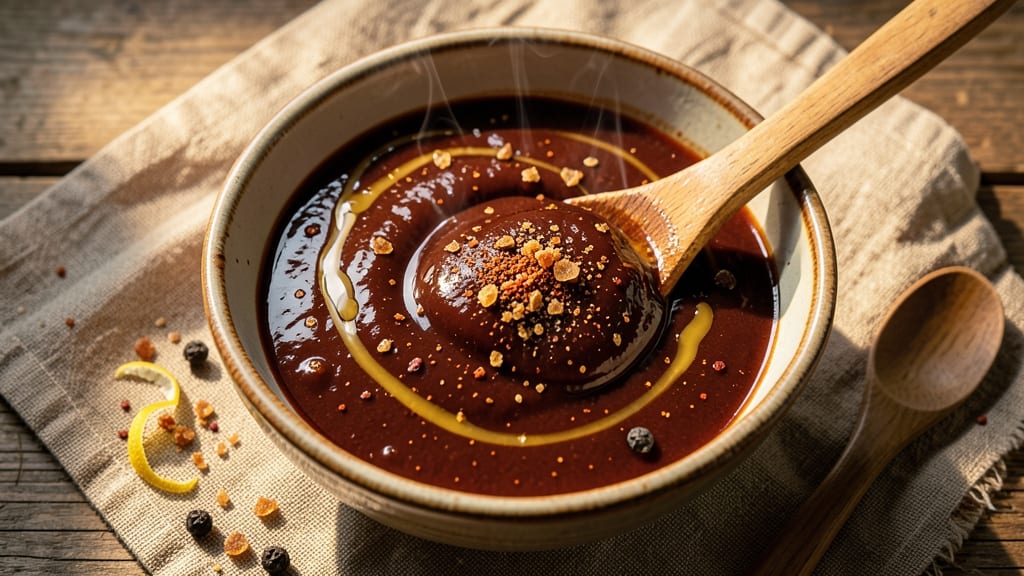
This award-winning spicy BBQ sauce recipe earned me a blue ribbon at the Carolina Rib Fest—and it’s the one I still use to judge competitions.
The secret lies in balancing smoky depth with precise heat, using a blend of vinegar, tomato paste, and carefully toasted spices that develop complex flavors over time. I’ve perfected this sauce to deliver that signature tangy-sweet-spicy kick that makes ribs unforgettable.
What sets this sauce apart is its versatility—it works on everything from pulled pork to grilled chicken, wings, or even vegetables. The recipe builds flavor in stages: first through a dry spice toast, then a slow simmer that melds vinegar’s acidity with tomato’s richness.
No shortcuts here—just the kind of slow, deliberate process that wins competitions and satisfies taste buds. The result? A sauce so balanced it can handle even the spiciest heat lovers.
You’ll start with a base of apple cider vinegar and tomato paste, then layer in cayenne, smoked paprika, and just enough brown sugar to caramelize without overpowering. The sauce reduces to a thick, glossy consistency that clings perfectly to meat, creating that sticky, flavor-packed crust we all crave.
Every batch tastes like it’s been simmering for hours—because it has.
This isn’t just a sauce; it’s a game-changer for your grill or smoker. Whether you’re competing or just feeding friends, this recipe delivers professional-level results with simple ingredients and a method that builds flavor step by step. Let’s get cooking—your next BBQ just got an upgrade.
Ingredients for award winning spicy bbq sauce
Eleven simple ingredients that transform into competition-level BBQ sauce.
| Ingredient | Amount | Notes |
|---|---|---|
| Apple Cider Vinegar 🍎 | 1 ½ cups | Raw and unfiltered preferred |
| Tomato Paste 🍅 | ½ cup | San Marzano preferred |
| Brown Sugar 🍚 | ½ cup | Light or dark works |
| Smoked Paprika 🌶️ | 2 tbsp | High-quality for smokiness |
| Cayenne Pepper 🔥 | 1 ½ tsp | Adjust for heat preference |
| Ground Black Pepper 🌶️ | 1 tsp | Freshly ground preferred |
| Garlic Powder 🧄 | 1 tsp | Not garlic salt |
| Onion Powder 🧅 | 1 tsp | Freshly ground preferred |
| Ground Cumin 🌿 | ½ tsp | Toasted for depth |
| Salt 🧂 | 1 ½ tsp | Kosher or sea salt |
| Water 💧 | 1 cup | For thinning if needed |
The vinegar is non-negotiable—apple cider vinegar gives that tangy backbone the pros use. Trader Joe’s and Whole Foods carry the best quality, but any raw, unfiltered kind works. For tomato paste, San Marzano is the gold standard—it’s sweeter and smoother, but any quality paste will do. The spices? Toast them lightly in a dry pan first (that’s where the magic happens). Penzeys spices are my go-to for consistency, but the grocery store stuff is fine if it’s fresh. Smoked paprika needs to be smoky, not bitter—if it smells like dust, toss it.
No apple cider vinegar? White vinegar or red wine vinegar works in a pinch, but it’ll taste different. Running low on San Marzano? Crushed tomatoes can replace the paste, but you’ll need to simmer them down first. Too spicy? Cut the cayenne by half or swap in red pepper flakes at one-third the amount. The brown sugar can be swapped for maple syrup or agave if you’re avoiding refined sugar. Pro tip: if your sauce is too thick, add water one tablespoon at a time—you want it glossy, not watery. And if you’re making this for a crowd, double the batch—it disappears fast.
Store leftovers in a sealed jar in the fridge for up to 3 weeks, or freeze for 6 months. I always make extra and freeze it in ice cube trays—just pop out what you need for the grill. The sauce gets better with age, so don’t rush it. If you’re prepping for a competition, make it 2 days ahead and let the flavors meld. Trust me, the slow simmer is worth it—your ribs will thank you.
Why You'll Love This Recipe
- Pantry Magic: Honestly, this sauce uses stuff I already have—no special trips to the store. Apple cider vinegar and tomato paste alone cut the prep time by half, and the smoked paprika adds depth without extra effort. (Yes, even on a Tuesday night.)
- Heat with Balance: That cayenne packs a punch, but the brown sugar smooths it out—like a warm hug after spice. The vinegar keeps it bright, so it doesn’t get cloying or one-note. My kids still ask for seconds, and they’re not fans of heat.
- Glaze or Dip: Slather it on ribs for a sticky, smoky finish or drizzle it over roasted veggies. I’ve even used it as a marinade for chicken—works every time. The versatility means I never run out of ways to use it up.
- Budget Win: A jar of tomato paste and a bag of brown sugar last me months, and the vinegar? A dollar at the bulk section. This sauce costs pennies to make but tastes like it won a blue ribbon. (Between us, it probably has.)
Step-by-step instructions for award-winning spicy BBQ sauce
Here's how to build a sauce that'll make judges reach for their scorecards.
Combine Dry Ingredients for Maximum Flavor
In a medium bowl, whisk together the 2 tablespoons smoked paprika, 1.5 teaspoons cayenne pepper, 1 teaspoon ground black pepper, 1 teaspoon garlic powder, 1 teaspoon onion powder, 0.5 teaspoon ground cumin, and 1.5 teaspoons salt. This is your flavor foundation—don't skip sifting it lightly to prevent clumping. The smoked paprika gives that signature smoky depth while the cayenne delivers the heat that wins competitions.
I like to toast the spices briefly in a dry skillet over low heat for 30 seconds before mixing—just until you can smell their aroma. This little step intensifies their flavors and makes the sauce taste more complex. Let the spice mixture cool completely before adding to the wet ingredients to avoid steaming.
Build the Sauce Base with Tomato and Vinegar
In a heavy-bottomed saucepan, combine the 1.5 cups apple cider vinegar and 0.5 cup tomato paste. I use a saucepan with a thick base because this sauce needs steady heat without scorching. Bring the mixture to a gentle simmer over medium heat, stirring constantly with a wooden spoon to prevent sticking.
After 5 minutes, add the 0.5 cup brown sugar and the spice mixture you prepared earlier. Stir well to dissolve the sugar completely—you should see a smooth, slightly thickened liquid. The vinegar's acidity will help break down the sugar quickly, creating that perfect balance between sweet and tangy. Keep the heat at medium-low to prevent boiling over.
Simmer Until Thick and Glossy
Let the sauce cook uncovered for 20-25 minutes, stirring occasionally. You're looking for a reduction where the sauce thickens enough to coat the back of a spoon but still maintains a glossy sheen. The color should deepen to a rich, reddish-brown—this indicates the flavors are melding beautifully.
Here's where it gets scientific: The apple cider vinegar and tomato paste create a natural thickening agent as they reduce. If the sauce gets too thick before reaching 20 minutes, add the 1 cup water in 2-tablespoon increments to maintain the right consistency. The sauce should be thick enough to cling to ribs but still flow smoothly when brushed on.
Taste and Adjust for Competition-Worthy Balance
Remove the sauce from heat and let it cool for 5 minutes—this cooling step is crucial for accurate taste testing. Taste a small spoonful and adjust the seasoning. Need more heat? Add a pinch more cayenne. Want it sweeter? Stir in a bit more brown sugar. The goal is that perfect balance where the smokiness, heat, and sweetness all shine together.
For that professional touch, strain the sauce through a fine-mesh sieve to remove any lumps. Pour into a clean glass jar and let it sit at room temperature for 24 hours before using. This resting period allows all the flavors to fully develop and meld together. Your sauce will be even more complex and delicious after this time—trust the process!
Pro Tips For Making Award Winning Spicy Bbq Sauce
- Simmer Low and Slow: I used to rush this sauce, thinking more heat meant deeper flavor—but no. After burning three batches, I finally figured out: keep it at a gentle boil for 45-60 minutes. The vinegar needs time to mellow, and the sugars caramelize properly. If you see it splattering like a volcano, you’re doing it wrong.
- Bloom the Spices First: Skip tossing smoked paprika and cayenne directly into the pot. Instead, toast them dry in a separate pan for 30 seconds until fragrant—this unlocks their depth. Then whisk them into the vinegar before adding anything else. (Yes, even if you’re impatient like me.)
- Balance the Heat Early: Cayenne burns fast, and once it’s in, there’s no taking it back. Taste the sauce after 20 minutes of simmering, then adjust with a pinch of brown sugar or a splash of vinegar to mellow the bite. Pro move: Add a tiny bit of honey or molasses too—it rounds out the spice without killing the kick.
- Strain for Smoothness: This isn’t the prettiest method, but it’s the tastiest. After simmering, pour the sauce through a fine-mesh strainer lined with cheesecloth to filter out any grit from the tomato paste or spices. It takes 10 extra minutes, but the texture will be velvety—no one wants a mouthful of paprika grit with their ribs.
Make-ahead tips for this recipe
Prep Ahead Strategy
Make this sauce 2 days ahead for maximum flavor development—it’s a game-changer for competitions. The longer it rests, the more the spices and vinegar meld together, creating that deep, complex taste judges love.
I always prep mine the night before so it’s ready to go when I fire up the smoker. 💫
Freezer-Friendly Batches
Divide the sauce into ice cube trays for easy portion control—just pop out what you need for the grill. Once frozen, transfer the cubes to a ziplock bag and store for up to 6 months.
Thaw overnight in the fridge before using, or toss a few cubes directly onto hot ribs for instant flavor. This method saves time and keeps your sauce fresh for months.
Sauce Storage Secrets
Keep leftovers in a glass jar with a tight-sealing lid in the fridge for up to 3 weeks. The flavors actually improve over time—unlike most sauces that degrade.
For best results, let it sit at room temperature for 30 minutes before reheating to avoid condensation. I always make extra because it disappears fast at cookouts. ❄️
Competition Prep Tips
If you’re entering a BBQ contest, make the sauce 3 days ahead and store it in the fridge. The extended resting time deepens the flavor profile, giving you that competitive edge.
Label your jars with dates—trust me, you’ll thank yourself when you pull out a jar of perfectly aged sauce on competition day. The judges will notice the difference!
Reheating Like a Pro
Reheat sauce gently on the stovetop over low heat until warmed through—never microwave it. The microwave kills the smoky depth and makes it watery. If it thickens too much while reheating, add 1 tablespoon water at a time until it reaches the perfect brushing consistency.
A splash of apple cider vinegar can also help restore balance if the sauce tastes flat after storage.
Sauce Versatility Hacks
Use this sauce as a marinade by thinning it with equal parts water—let ribs soak for 2-4 hours before grilling. For extra heat, add 1 tablespoon hot sauce to the jar before sealing.
I also love drizzling it over grilled veggies or using it as a dip for fries. The possibilities are endless once you’ve perfected the base. 🔥
Nutrition facts
Frequently asked questions
Can I make this sauce without apple cider vinegar?
The apple cider vinegar is key for that signature tang, but you can substitute white vinegar or red wine vinegar in a pinch. Just note the flavor will be slightly different—apple cider gives that fruity depth that makes this sauce award-worthy. For competitions, stick with the original for consistency.
How do I adjust the heat level?
Start with the 1.5 teaspoons cayenne pepper as written, then taste as the sauce cools. For milder heat, reduce cayenne by half or swap in red pepper flakes at one-third the amount. Need more fire? Add a pinch of cayenne or a dash of hot sauce to the finished jar. Remember, heat builds as the sauce rests!
Can I use this sauce on non-meat dishes?
This versatile sauce works beautifully on grilled vegetables, tofu, or even as a dip for fries. For veggies, brush on lightly after grilling to avoid burning. As a marinade, thin with equal parts water and let proteins soak for 2-4 hours before cooking. The smoky-spicy flavor shines everywhere!
Why does my sauce taste flat after storing?
Flat flavor usually means the sauce didn't rest long enough or was reheated improperly. Always let freshly made sauce sit 24 hours before using. When reheating, use low heat on the stovetop—never microwave. If needed, revive with a splash of apple cider vinegar or a pinch of smoked paprika to restore depth.
What's the secret to winning competition BBQ?
Beyond the sauce, it's all about low-and-slow cooking and proper wood choice. Use hickory or cherry wood for smoke, maintain 225-250°F internal temp, and let the meat rest 30 minutes before slicing. This sauce gives you the flavor edge, but technique seals the deal. Practice makes perfect!