
Sauces & Condiments
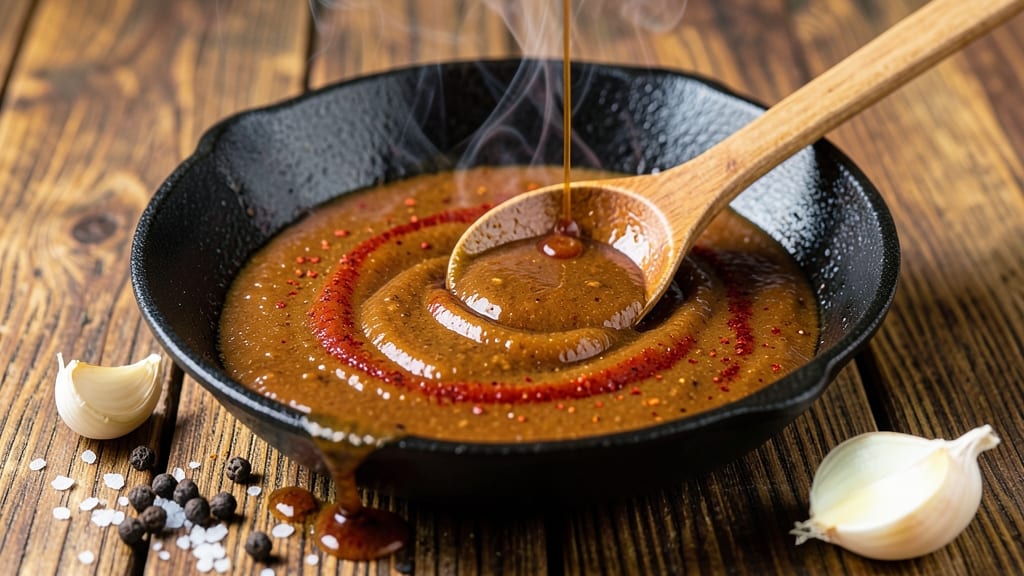
This award-winning Kansas City BBQ sauce delivers the perfect balance of smoky depth and tangy brightness that makes every bite unforgettable. After years of perfecting my technique—starting with that first competition where I proved homemade could beat the big brands—I’ve cracked the code for a sauce that’s rich, complex, and packed with the signature molasses-sweetened tang that defines KC BBQ. The secret? A slow-simmered blend of tomato paste, vinegar, and spices that develops layers of flavor as it reduces.
What sets this sauce apart is the harmony between its bold molasses sweetness and the bright, almost hidden acidity from apple cider vinegar—trust me, that’s the magic that keeps it from tasting one-note.
I use a mix of chili powder and smoked paprika for heat without overpowering, while a touch of garlic and onion powder adds depth. The sauce is versatile enough for ribs, pulled pork, or even as a dipping sauce, but it’s the slow reduction that builds that restaurant-quality finish.
By the time you’re done, you’ll have a glossy, sticky sauce with just the right balance of sweet, tangy, and smoky—ready to transform your BBQ from good to award-worthy. The key is patience; letting it simmer until it thickens just enough to cling to meat without being syrup-like.
This isn’t just another BBQ sauce—it’s the kind that makes people ask for your recipe.
Perfect for grilling, smoking, or even drizzling over baked beans, this sauce keeps well in the fridge for up to two weeks, so you can make a big batch and enjoy it all season long. Let’s get cooking—your taste buds won’t regret it.
Ingredients for award winning kansas city bbq sauce
These twelve ingredients create the perfect balance of smoky, sweet, and tangy KC BBQ sauce.
| Ingredient | Amount | Notes |
|---|---|---|
| Tomato Paste 🍅 | 1 cup | High-quality, no sugar added |
| Molasses 🍯 | ½ cup | Unsulphured for best flavor |
| Apple Cider Vinegar 🍏 | ½ cup | Raw, unfiltered preferred |
| Smoked Paprika 🌶️ | 2 tbsp | High-quality smoked variety |
| Chili Powder 🌶️ | 1 ½ tbsp | Mild to medium heat |
| Garlic Powder 🧄 | 1 tbsp | Freshly ground preferred |
| Onion Powder 🧅 | 1 tbsp | Finely ground preferred |
| Brown Sugar 🍚 | ½ cup | Light or dark, packed |
| Salt 🧂 | 1 ½ tsp | Kosher or sea salt |
| Black Pepper 🌶️ | ½ tsp | Freshly ground preferred |
| Ground Cinnamon 🌿 | ¼ tsp | Optional, for depth |
| Water 💧 | 1 ½ cups | Filtered preferred |
The molasses and tomato paste are the heart of this sauce—look for unsulphured molasses at stores like Whole Foods or specialty markets. Apple cider vinegar should be raw and unfiltered (Mott's or Bragg's are solid choices). Smoked paprika is non-negotiable for that authentic KC flavor—Penzeys or McCormick are reliable brands. The brown sugar should be packed tightly into the measuring cup for accurate flavor balance. I always double-check my spices for freshness—if they smell dusty, toss them and start fresh.
No molasses? Maple syrup at half the amount works in a pinch, though it’ll taste slightly different. Running out of apple cider vinegar? White vinegar or balsamic can substitute, but reduce the amount to 0.25 cup to avoid over-acidity. Pre-ground spices? Toast them in a dry pan for 30 seconds to wake up their flavors—game-changer. The tomato paste can be from a tube or can, but San Marzano cans have the best flavor. If you’re making a big batch, consider splitting the sauce into smaller jars to store—glass is best.
This sauce tastes even better the next day as the flavors meld. Store in an airtight container in the fridge for up to 2 weeks. For longer storage, freeze in ice cube trays and transfer to a bag—6 months of flavor. I always make a double batch because it disappears fast. The sauce thickens as it cools, so if it seems too thick, just add a splash of water or vinegar to loosen it up. Perfect for ribs, pulled pork, or even as a dipping sauce for fries.
Why You'll Love This Recipe
- Pantry Magic: I swear, this sauce comes together with stuff I already had—tomato paste, molasses, and vinegar—no fancy shopping required. Honestly, the only thing I measure is my excitement when I taste it.
- Smoky Depth Fast: That smoked paprika and chili powder? They pack a punch, but it’s the molasses that ties everything together into something rich and complex. It’s the kind of flavor that makes you slow down and savor every bite.
- Tailgate or Tuesday: Slather it on ribs for a crowd or toss it with grilled chicken for a weeknight dinner. Between us, I’ve even drizzled it over baked beans when I was out of ketchup—no judgment.
- Budget-Friendly Powerhouse: A small jar of tomato paste and a bottle of vinegar stretch for months of this sauce. I’ll be real: my grocery bill hasn’t looked this generous since I quit buying pre-made BBQ sauce.
Step-by-step instructions for award-winning Kansas City BBQ sauce
Here's how to build that perfect balance of smoky depth and tangy brightness.
Bloom the Spices in Tomato Paste
In a large, heavy-bottomed saucepan, combine the 1 cup tomato paste with the 2 tbsp smoked paprika and 1.5 tbsp chili powder. Place over medium heat and stir constantly for 3-4 minutes until the mixture darkens and releases an intense, aromatic fragrance. This step develops the deep, smoky foundation of your sauce.
Don't walk away—those spices need constant attention. You're looking for a rich, earthy aroma that fills your kitchen. If the paste starts to stick, add 1 tablespoon of the 1.5 cups water to help it release its flavors. This initial bloom is where all the complex flavors begin to meld together.
Add Molasses and Brown Sugar
Reduce heat to medium-low and stir in the 0.5 cup molasses and 0.5 cup brown sugar. Cook for 5-6 minutes, stirring frequently, until the sugar fully dissolves and the mixture thickens slightly. The molasses will give your sauce that signature Kansas City richness while the brown sugar adds subtle caramel notes.
Watch carefully—molasses can burn easily. If the mixture starts to darken too quickly, immediately reduce heat to low or add another 1 tablespoon of water to cool it down. You want a smooth, glossy consistency at this stage, not a burnt residue at the bottom of your pan.
Incorporate Aromatics and Vinegar
Add the 1 tbsp garlic powder, 1 tbsp onion powder, 0.5 cup apple cider vinegar, and remaining 1 cup water (from the total 1.5 cups). Bring to a gentle simmer over medium heat, then reduce to low heat and let it cook uncovered for 15-20 minutes, stirring occasionally.
The vinegar will add that bright, tangy zing that cuts through the richness, while the garlic and onion powders build depth. You'll notice the sauce reducing slightly as it simmers—this is normal. Keep stirring every few minutes to prevent sticking, especially since we're using tomato paste which can scorch.
Season and Simmer to Perfection
Add the 1.5 tsp salt, 0.5 tsp black pepper, and 0.25 tsp ground cinnamon (if using). Stir well to combine, then increase heat to medium-high and bring to a rolling boil. Once boiling, reduce heat to low and simmer uncovered for 20-25 minutes, stirring occasionally, until the sauce thickens to a glaze-like consistency.
This final simmering time is crucial—you want the sauce to coat the back of a spoon when you lift it. Taste as you go and adjust seasoning if needed. The sauce should be sweet, smoky, and tangy with just a hint of heat from the chili powder. If it's too thick, add 1 tablespoon water at a time until you reach your desired consistency.
Cool and Store Properly
Remove from heat and let the sauce cool completely at room temperature. This cooling period allows all the flavors to fully meld together. Once cooled, transfer to clean, sterilized jars or containers. The sauce will thicken further as it cools, so don't be concerned if it looks too thick when hot.
Store in the refrigerator for up to 3 months or freeze for up to 6 months. When ready to use, simply reheat gently on the stovetop or in the microwave. This sauce gets better with age as the flavors continue to develop. Use it on ribs, pulled pork, chicken, or even as a glaze for vegetables—it's incredibly versatile!
Pro Tips For Making Award Winning Kansas City Bbq Sauce
- Simmer Slow and Steady: Kansas City sauce needs time—don’t rush the simmer. After adding vinegar and spices, reduce heat to a gentle bubble and let it cook uncovered for at least 45 minutes. I learned this the hard way when I cranked the heat and ended up with a gluey mess instead of a glossy, balanced sauce.
- Bloom the Spices First: Toast your smoked paprika and chili powder in a dry pan for 30 seconds before adding them to the tomato paste. This wakes up their flavors and cuts through the sweetness of the molasses. (Yes, even if you’re impatient like me—trust the process.)
- Balance the Molasses Early: Taste the sauce after adding molasses but before the vinegar. If it’s too sweet, add a splash of vinegar now instead of later—it’s easier to fix than trying to cut sweetness after the fact. My grandmother swore by this, and she was right: molasses is sneaky.
- Use Real Vinegar, Not Substitutes: Apple cider vinegar isn’t just for tang—it’s the backbone of the flavor. Skip the balsamic or white vinegar shortcuts; the depth of real ACV makes the difference. I was skeptical until I tried it—now I measure it twice to make sure I don’t run out.
Pro cooking tips for great award winning kansas city bbq sauce
Low and Slow Simmer
This sauce isn't made in a rush—it's all about that low and slow simmer that builds depth. I use a heavy-bottomed saucepan (like my trusty All-Clad) to prevent scorching, and I keep the heat at medium-low to low throughout the entire process.
The key is patience; rushing will burn the molasses and make your sauce bitter. Let it reduce naturally over 45-50 minutes total, stirring occasionally to prevent sticking. 🌡️
Spice Bloom Magic
The 3-4 minute spice bloom at the start is where the sauce's soul develops. When you toast the smoked paprika and chili powder in the tomato paste, you're releasing their essential oils and creating that deep, smoky aroma that defines KC BBQ.
I stir constantly during this phase—no distractions! The paste should darken and smell like a smokehouse. If it starts to stick, add just 1 tablespoon water to help it release its flavors without diluting the mixture.
Vinegar Balance
Many home cooks underestimate the vinegar, but that 0.5 cup apple cider vinegar is what prevents your sauce from tasting cloyingly sweet. The acidity brightens all the flavors and cuts through the richness of the molasses.
I add it after the molasses and sugar have dissolved to let those flavors meld first. If you're worried about overpowering the sauce, remember—it'll mellow as it simmers. Taste as you go and adjust if needed, but trust the recipe first.
Thickness Control
You want your sauce to be glossy and coatable, not syrupy or watery. The final consistency should be like honey or light syrup—thick enough to cling to meat but still spreadable.
If it's too thick after simmering, add 1 tablespoon water at a time until you reach that perfect balance. I've ruined batches by over-reducing, so I check the consistency every 5 minutes in the final stages. A quick test: lift a spoonful—if it leaves a visible trail, it's ready. ✨
Flavor Development
This sauce tastes even better the next day because the flavors have time to marry and deepen. That's why I always make a double batch—I know I'll want leftovers. The molasses and spices continue to meld in the fridge, creating even more complexity.
If you're in a hurry, let it sit at room temperature for at least 2 hours before using it on meat. That waiting time makes all the difference between good sauce and award-winning sauce.
Equipment Essentials
Don't skimp on your tools here. A heavy-bottomed saucepan (like Le Creuset or All-Clad) prevents hot spots that can burn your sauce. I also recommend a wooden spoon for stirring—it won't scratch your pan like metal utensils.
For measuring, use a liquid measuring cup for the vinegar and water, and a dry measuring cup packed tightly for the brown sugar. And always use a fine-mesh strainer if you want ultra-smooth sauce—though I love the slight texture from the spices. 💡
Nutrition facts
Frequently asked questions
Why does this sauce need to simmer for so long?
The extended simmering time—45-50 minutes total—is what develops the sauce's complex flavor profile. This slow reduction allows the molasses to caramelize gently, the vinegar to mellow, and all the spices to meld together into a cohesive, smoky-sweet blend. Rushing this step can leave your sauce tasting flat or even burnt.
Can I make this sauce without molasses?
Yes, but the flavor will be noticeably different. For a substitute, use half the amount of maple syrup (0.25 cup) or 0.3 cup honey. These alternatives will give you sweetness but won't provide the same deep, almost caramel-like richness that molasses contributes to authentic Kansas City-style BBQ sauce. The sauce will still be delicious, just with a slightly lighter body.
How do I adjust the heat level for sensitive eaters?
To reduce the heat, cut the chili powder in half (0.75 tbsp) or replace it entirely with 1 extra tbsp smoked paprika. For a milder kick, you can also strain out some of the spice particles after simmering. Remember, the sauce will develop more heat as it cools, so taste it after it's fully cooled before serving.
What's the best way to use this sauce on ribs?
For ribs, I recommend using this sauce in two stages. First, apply a thin layer during the last 30 minutes of cooking to help form a crust. Then, in the final 10 minutes, brush on more sauce to create that glossy finish. For competition-style ribs, you can even add a final glaze by broiling them for 2-3 minutes with sauce on top—just watch closely to avoid burning.
Can I make this sauce in a slow cooker?
Combine all ingredients in your slow cooker and cook on LOW for 4-5 hours, stirring occasionally. The slow cooker method is actually ideal for this sauce as it prevents scorching and allows for even heat distribution. You may need to add 1-2 extra tablespoons of water if it gets too thick during cooking. The flavors will develop beautifully with this gentle approach.