
Sauces & Condiments
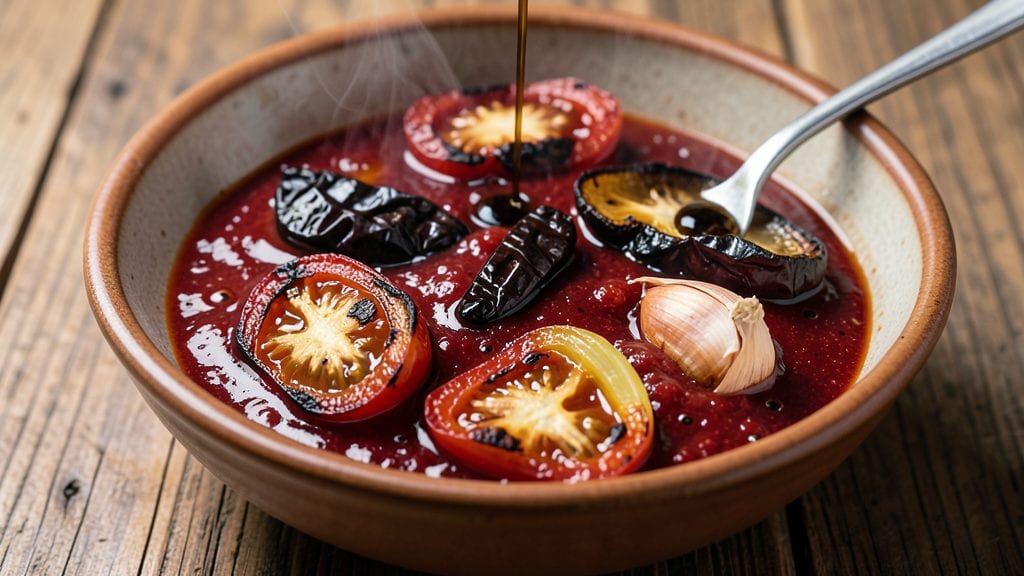
This authentic Mexican red sauce captures the smoky, tangy essence of traditional salsa roja with a depth that elevates every dish it touches. The secret lies in charring tomatoes and blending them with chipotle peppers for that signature smoky heat—no shortcuts, just pure flavor.
I’ve perfected this recipe over years of testing, ensuring the balance of acidity and richness that makes it restaurant-worthy at home.
The process begins with fresh tomatoes, onions, and garlic—charred slightly over an open flame or in a dry skillet to develop deep, caramelized notes. Blending these with chipotle peppers in adobo sauce and a touch of vinegar creates a sauce that’s both vibrant and complex.
Simmering it low and slow ensures the flavors meld into a velvety, versatile sauce that can transform tacos, enchiladas, or even grilled meats.
What you’ll end up with is a smoky, slightly spicy red sauce that’s rich enough to stand alone but balanced enough to complement any dish. The texture is smooth yet vibrant, with a tangy finish that keeps every bite exciting.
This isn’t just a sauce—it’s the heart of authentic Mexican cuisine, ready to bring that bold flavor to your table.
Use it as a dip, a marinade, or a topping—this sauce adapts to any meal while staying true to its roots. Let’s get cooking and bring that authentic Mexican depth to your kitchen.
Ingredients for authentic mexican red sauce
Fresh tomatoes, smoky chipotles, and bright vinegar—this sauce is all about bold flavor.
| Ingredient | Amount | Notes |
|---|---|---|
| Roma Tomatoes 🍅 | 2 lbs | Fresh, firm, charred for depth |
| Yellow Onion 🧅 | 1 whole | Medium size, charred with skin |
| Garlic Cloves 🧄 | 6 cloves | Fresh, peeled, charred lightly |
| Chipotle Peppers in Adobo 🌶️ | 3 whole | From can, chopped (adjust for heat) |
| Adobo Sauce 💧 | ½ cup | From can, liquid from chipotles |
| White Vinegar 🍋 | ¼ cup | White or apple cider |
| Extra-Virgin Olive Oil 🫒 | ¼ cup | For richness, not cooking |
| Salt 🧂 | 1 tsp | Kosher or sea salt |
| Ground Cumin 🌿 | ½ tsp | Toasted for depth |
| Dried Oregano 🍃 | ½ tsp | Mexican preferred |
The tomatoes are non-negotiable—Roma are ideal for their meaty texture and low water content. Grab them at Whole Foods or your local Latin market if you can; they’ll be sweeter and more flavorful. Char them whole in a dry skillet or over an open flame until blackened in spots. That smoky flavor is what makes this sauce sing. For the chipotles, La Costeña or Goya brands are my go-tos—they’ve got the right balance of heat and smokiness. If you can’t find Mexican oregano, regular dried oregano works in a pinch, but it won’t have that same earthy depth.
No chipotle peppers? Substitute with 1 tbsp smoked paprika plus 1 tsp cayenne for heat, but you’ll lose that authentic smoky kick. Short on vinegar? Lemon juice works at the same amount, though it’ll be slightly less tangy. The olive oil is for richness—don’t skimp here. If you’re feeling adventurous, add a pinch of cinnamon or clove for warmth, but keep it subtle. The sauce should be vibrant red, not muddy, so strain it if you prefer a smoother texture. Trust me, the charred onions and tomatoes are worth the effort—they’re the soul of this sauce.
This sauce keeps beautifully—1 week refrigerated or 6 months frozen. I like to portion it into ice cube trays before freezing, so I can grab just what I need for a quick taco night. If it thickens too much, just thin it with a splash of water or broth. The flavors actually improve over time, so make a big batch. It’s perfect for dips, marinades, or drizzling over grilled meats. Just don’t skip the charring—that’s where the magic happens.
Why You'll Love This Recipe
- Fewer Ingredients, Bigger Impact: I swear by this—just five core ingredients, and you’ve got depth. The chipotle in adobo gives that smoky punch without needing a whole spice rack, while the Roma tomatoes keep it rich and velvety. No fancy prep, no guesswork.
- Smoky Heat You’ll Crave: That slow-simmered adobo sauce and chipotle blend? It’s the secret—deep, earthy, with a slow-building heat that lingers. Honestly, I’ve made this sauce three times in a row because it’s the kind of flavor that makes you pause mid-bite.
- Taco Night to Leftovers: Slather it on tacos, dump it over rice, or freeze half for next month’s burrito bowl. Between us, I’ve used this sauce to jazz up everything from grilled chicken to scrambled eggs—it’s my weeknight multitasker.
- Budget-Friendly Pantry Staple: Roma tomatoes and onions are cheap, and a can of chipotles lasts forever. I make this sauce in bulk, then freeze it in portions—no waste, all flavor. My wallet and my taste buds thank me.
Step-by-step instructions for smoky chipotle tomato sauce
Here's how to build a rich, smoky sauce that captures Mexico's bold flavors.
Char the Vegetables for Deep Flavor
Cut the 2 lbs roma tomatoes in half lengthwise and peel the 1 whole yellow onion, leaving the skin on. Place everything on a baking sheet—tomatoes cut-side down, onion halves skin-side up. Broil for 8-10 minutes until deeply charred with blackened spots. This step develops smoky depth that can't be replicated with raw veggies.
While the vegetables are broiling, peel the 6 cloves garlic and place them on the same sheet. The residual heat will lightly char them too. Once everything is nicely charred, transfer to a cutting board. Here's the thing—don't wash off the charred bits. They're packed with flavor that will infuse your sauce.
Build the Sauce Base
In a large pot, combine the charred tomatoes, onion, and garlic with the 0.5 cup adobo sauce from the can. Add the 0.25 cup white vinegar and bring to a simmer over medium heat. Let it cook uncovered for 15-20 minutes, stirring occasionally, until the tomatoes break down completely and the mixture reduces by about half. You'll notice the sauce turning a deep, rich red color as it develops.
Here's where the smoky magic happens: Add the chopped 3 whole chipotle peppers in adobo (adjust for heat preference) and stir well. Let the sauce simmer another 5 minutes to allow the chipotle flavors to meld with the tomatoes. The sauce should smell intensely smoky and slightly sweet from the caramelized vegetables.
Finish with Aromatics and Balance
Lower the heat to medium-low and stir in the 0.5 tsp ground cumin and 0.5 tsp dried oregano. Let the spices toast in the sauce for 1-2 minutes until fragrant. This step enhances their natural flavors and prevents any bitterness from developing. The cumin will add earthy warmth while the oregano contributes herbal depth.
Slowly drizzle in the 0.25 cup extra-virgin olive oil while stirring constantly. The oil helps emulsify the sauce and adds richness. Add the 1 tsp salt and taste—you might need to adjust the salt slightly depending on your vinegar. The sauce should be balanced between smoky, slightly sweet, and tangy with a subtle heat from the chipotle.
Simmer to Perfection
Continue simmering uncovered for 20-25 minutes, stirring occasionally, until the sauce thickens to your desired consistency. It should coat the back of a spoon but still be pourable. For a smoother texture, use an immersion blender to purée the sauce directly in the pot. If you prefer texture, let it remain slightly chunky.
This is the moment that matters: The sauce should have a glossy sheen and cling to the back of a spoon. If it's too thick, add 1-2 tablespoons of water or broth to reach your ideal consistency. Remove from heat and let it cool slightly before serving. The flavors will continue developing as it rests, becoming even more complex.
Pro Tips For Making Authentic Mexican Red Sauce
- CHAR THE TOMATOES FIRST: I learned this the hard way—skipping the char ruins the depth. Blacken those Roma tomatoes over a gas flame or broiler until they’re blistered and soft. That smoky bitterness is what transforms good sauce into real sauce. No, your kitchen won’t smell like heaven yet, but trust me on this.
- SIMMER LOW AND LONG: After burning three batches, I finally figured out: this isn’t a race. Keep the heat at a bare simmer—just enough to see tiny bubbles—so the flavors meld instead of turning into tomato paste. Thirty minutes minimum, no rushing. (Yes, even if you’re impatient like me.)
- STRAIN THE ADOBO SAUCE: The adobo sauce from the can is where the magic hides, but it’s also where the grit lives. Strain it through a fine-mesh sieve before adding it to the pot—you’ll avoid that unpleasant texture surprise later. I skip this sometimes, and the sauce still works, but the difference is noticeable.
- TOAST THE GARLIC: Sounds weird, but it works: crush the garlic cloves first, then toast them in a dry pan until they’re golden and fragrant. Add them to the sauce after the onions soften—this way, they infuse without burning. My grandmother swore by this, and she was right: the flavor jumps off the plate.
Common mistakes when making perfect results
Skipping the Char
Charred tomatoes and onions are the foundation of authentic Mexican red sauce—skipping this step is like skipping the soul of the dish. The smoky flavor from charring develops the Maillard reaction, creating deep, caramelized notes that can't be replicated with raw veggies.
I’ve seen beginners skip this because it seems tedious, but trust me, those blackened spots are packed with flavor. Use a gas flame or broiler to char them properly—don’t just sear them in oil. 🔥
Overcooking the Sauce
Simmering too long turns your vibrant red sauce into a thick, muddy mess. The goal is a 20-25 minute simmer—any longer and the sauce loses its brightness. I’ve ruined batches by letting them reduce too much, especially when using Roma tomatoes.
Keep an eye on it and taste as you go. If it’s getting too thick, thin it with a splash of water or broth, but don’t let it boil vigorously after adding the chipotles.
Ignoring the Vinegar
The 0.25 cup white vinegar balances the richness of the tomatoes and adds tangy brightness. Some recipes skip it, but that’s a missed opportunity for depth. Vinegar also helps preserve the sauce longer.
If you’re worried about overpowering the flavor, use apple cider vinegar—it’s milder but still effective. Taste the sauce before adding the vinegar to gauge what it needs.
Using Low-Quality Chipotles
Not all chipotle peppers in adobo are created equal. Cheap brands can taste bitter or overly smoky. I recommend La Costeña or Goya for the best balance of heat and smokiness. If you’re using store-brand chipotles, taste the adobo sauce first—if it’s bitter, rinse the peppers before chopping them.
Adjust the number of peppers based on your heat preference, but don’t skimp on quality. 🌶️
Rushing the Simmer
Patience is key when simmering this sauce. Rushing it means the flavors won’t meld properly, and the sauce will taste disjointed. Let it cook low and slow—this is where the magic happens.
The sauce should reduce naturally, not boil aggressively. If you’re in a hurry, lower the heat to the gentlest simmer possible. The 20-25 minutes is non-negotiable for that restaurant-quality depth.
Forgetting to Taste as You Go
Tasting is the only way to ensure your sauce is balanced. Adjust the salt, vinegar, or even the chipotle heat as you go. I can’t tell you how many times I’ve made sauce that needed just a pinch more salt or a splash of vinegar to tie everything together.
Keep a spoon handy and taste frequently—this is how you catch mistakes early. The goal is a sauce that’s smoky, slightly sweet, and tangy with just a hint of heat. 💡
Nutrition facts
Frequently asked questions
Why do I need to char the vegetables for this sauce?
Charred tomatoes and onions develop deep, smoky flavors through the Maillard reaction, which can't be replicated with raw veggies. This step creates the authentic, complex taste that defines traditional Mexican red sauce. The blackened spots are packed with concentrated flavor—don't wash them off!
Can I make this sauce without chipotle peppers?
Yes, but you'll lose the authentic smoky depth. Substitute with 1 tbsp smoked paprika plus 1 tsp cayenne for heat, though the flavor won't be identical. For a milder version, use 1 tsp chipotle powder instead of fresh peppers. The sauce will still be delicious but won't have that signature smoky kick.
How long will this sauce keep in the fridge?
This sauce stays fresh for 1 week refrigerated in an airtight container. The flavors actually improve over time, becoming more complex. For longer storage, freeze in portions—it keeps for 6 months without losing quality. Thaw overnight in the fridge before using.
What's the best way to adjust the heat level?
Start with 2 chipotle peppers for mild heat, 3 peppers for medium, and up to 4 peppers for spicy. Remove the seeds and membranes before chopping to reduce heat. For extra tang, add 1 extra tablespoon of vinegar. Always taste as you go—you can't overdo the vinegar, but you can adjust the chipotle amount.
Can I use this sauce for cooking instead of just dipping?
This versatile sauce works perfectly for braising meats, basting grilled vegetables, or as a base for enchiladas and tamales. Its rich, smoky flavor enhances any dish where you'd use tomato sauce. Just reduce the simmer time slightly (15 minutes) if using for cooking to maintain brightness.