
Sauces & Condiments
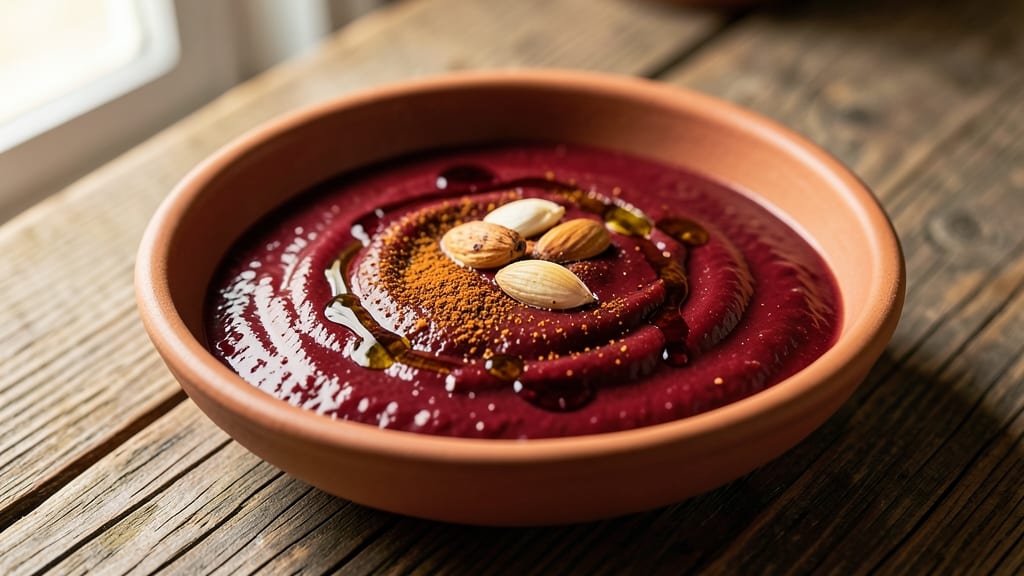
This traditional romesco sauce recipe brings the bold flavors of Catalonia to your kitchen with its smoky roasted red peppers and nutty depth. The sauce's signature blend of charred peppers, almonds, and garlic creates a rich, velvety texture that elevates everything from grilled meats to crusty bread.
I've perfected this version over years of testing, ensuring every batch delivers that authentic, restaurant-quality taste.
The foundation of great romesco lies in properly roasting the red peppers until their skins blacken and blister, then peeling away the charred layers to reveal sweet, smoky flesh underneath. Toasted almonds add crunch and richness, while garlic and olive oil bind everything together into a smooth, creamy sauce.
This vegetarian-friendly recipe requires just 15 minutes of active prep time, though the flavors deepen as it rests.
What you'll end up with is a versatile sauce that works as a dip for paella, a marinade for grilled meats, or a finishing touch for roasted vegetables.
The smoky-sweet flavor profile makes it perfect for both summer dishes and hearty winter meals. Each spoonful delivers layers of complexity that transform simple ingredients into something extraordinary.
Once you try this authentic romesco, you'll never go back to store-bought versions. The secret to its success lies in balancing the smokiness of the peppers with the nuttiness of the almonds and the brightness of the garlic. Let's create this classic sauce that brings Catalan tradition to your table.
Ingredients for traditional romesco sauce
Nine simple ingredients transform into smoky, nutty romesco magic.
| Ingredient | Amount | Notes |
|---|---|---|
| Roasted Red Peppers 🍅 | 2 cups | Charred, peeled, and chopped |
| Almonds 🥜 | 1 cup | Raw, skinless, toasted |
| Garlic Cloves 🧄 | 6 cloves | Peeled, roughly chopped |
| Extra-Virgin Olive Oil 🫒 | 1 cup | High quality, fruity |
| Red Wine Vinegar 🍷 | 2 tbsp | Dry, aged variety |
| Smoked Paprika 🌶️ | 1 tbsp | Sweet or hot smoked |
| Salt 🧂 | 1 tsp | Sea salt preferred |
| Ground Black Pepper 🌶️ | ½ tsp | Freshly ground preferred |
| Bread Crumbs 🍞 | 2 tbsp | Panko or stale bread |
| Water 💧 | ½ cup | For blending consistency |
The red peppers are the heart of romesco, so char them properly—direct flame or broiler works best. Trader Joe's or Whole Foods often carry pre-roasted jars, but homemade makes all the difference. Look for plump, firm peppers with vibrant color—no wrinkled or soft spots. Toast the almonds in a dry pan until golden (about 5 minutes), then cool completely before blending. Costco sells bulk almonds at great prices, but any raw almonds work. The garlic? Fresh is non-negotiable—jarred minced has no depth. For smoked paprika, Penzeys or Goya brands deliver that authentic smokiness.
No roasted peppers? Sun-dried tomatoes (oil-packed) at half the amount add sweetness, though you'll lose that smoky depth. Almonds too pricey? Hazelnuts or walnuts work beautifully—just toast them first. Short on red wine vinegar? Balsamic vinegar or apple cider vinegar both work, though the flavor shifts slightly. The bread crumbs? Panko adds extra crunch, but regular bread crumbs work fine. For a smoother sauce, blend in water or extra olive oil as needed—this sauce should coat the back of a spoon but still be spreadable.
Romesco keeps for 5 days in the fridge, sealed tightly with a thin layer of olive oil on top. Freezes perfectly for up to 3 months—portion into ice cube trays for single servings. I always make double batches because it disappears fast—perfect for paella, grilled veggies, or toasted bread. The sauce tastes even better the next day as flavors meld. Store in a clean jar with a tight lid, and give it a quick stir before using.
Why You'll Love This Recipe
- No-Fuss Assembly: I swear by this—just toast the almonds in the same pan you roast the peppers, then blend everything raw. No chopping, no peeling, no stress. The food processor does all the work while I sip my coffee.
- Nutty-Garlicky Magic: That first bite? Smoky, rich, with a nutty crunch from the almonds and a sharp garlic punch that lingers. The red wine vinegar cuts through the fat, balancing it into something ridiculously good—like a hug in sauce form.
- Pantry Staple Power: Honestly, I make this when I’m low on inspiration or ingredients. Roasted peppers from a jar? Works. Store-bought almonds? Still works. Drizzle it over grilled fish, toss it with roasted veggies, or slather it on crusty bread—it’s my go-to for lazy nights or last-minute guests.
- Makes More Than Enough: Between us, this sauce doubles as a meal prep hero. I whip up a big batch on Sundays, store it in the fridge, and use it all week—no waste, no extra effort. Plus, the almonds and olive oil stretch my grocery budget without sacrificing flavor. (Yes, even on a Tuesday night.)
Step-by-step instructions for traditional romesco sauce
Here's how to build this iconic Spanish sauce with perfect balance and smoky depth.
Toast the Almonds and Garlic for Nutty Foundation
Heat a dry skillet over medium heat. Add the 1 cup almonds and toast for 5-7 minutes, stirring constantly, until they turn a rich golden brown and release their aroma. Remove from heat immediately—they'll continue cooking from residual heat.
In the same skillet, add the 6 cloves garlic cloves and toast for 1-2 minutes until fragrant but not browned. Watch closely—garlic burns quickly. Transfer both to a plate and let cool completely before processing. This dry toasting enhances their natural oils and prevents a greasy sauce later.
Roast the Roasted Red Peppers for Intensified Flavor
While the almonds cool, pulse the 2 cups roasted red peppers in a food processor until you achieve a chunky but smooth paste—think texture between hummus and salsa. For extra depth, I like to add 1 tablespoon smoked paprika and ½ teaspoon ground black pepper at this stage to integrate the spices evenly.
If using store-bought roasted peppers, drain them thoroughly first. The moisture content affects the sauce's consistency. You want a thick paste that coats the back of a spoon but still has visible texture—this creates that signature rustic quality in traditional romesco.
Blend the Base with Olive Oil and Vinegar
In the food processor, add the toasted almonds and garlic to the pepper mixture. Pulse until combined but still slightly textured. With the processor running, slowly drizzle in ½ cup extra-virgin olive oil—this prevents the sauce from becoming too thick from the almond oils.
Add the 2 tablespoons red wine vinegar and 1 teaspoon salt, then blend until smooth. The sauce should be thick but pourable. If it's too stiff, add 1 tablespoon water at a time until you reach a spreadable consistency. Taste and adjust seasoning—traditional romesco should balance sweet, smoky, and tangy flavors.
Create the Emulsified Finish with Bread Crumbs
Transfer the sauce to a saucepan and place over low heat. Gradually whisk in the remaining ½ cup extra-virgin olive oil while stirring constantly. This creates the signature emulsified texture that makes romesco so luxurious. The heat should be gentle—just enough to warm the sauce without breaking the emulsion.
Stir in the 2 tablespoons bread crumbs and cook for 2-3 minutes until they absorb some of the oil and add a subtle crunch. Remove from heat immediately—the sauce will continue thickening as it cools. For serving, I like to drizzle with an additional 1 tablespoon olive oil to enhance the glossy finish.
Pro Tips For Making Traditional Romesco Sauce
- CHAR THE ALMONDS LOW: Roasting almonds for romesco isn’t about color—it’s about flavor. Use a dry skillet on medium-low heat (160–180°F) and stir constantly for 8–10 minutes until they’re golden but not bitter. I learned this the hard way: high heat burns them fast, and you end up with ashes instead of nutty depth.
- PEEL PEPPERS WHILE WARM: Skip the cold peels—roasted red peppers release their skins much easier when still warm. Run them under hot water for 30 seconds first, then peel while they’re slightly steaming. (Yes, it’s messy, but your sauce will be smoother.)
- TOAST GARLIC IN OIL: Add the garlic to the olive oil after the almonds are done, and keep the heat gentle. Toasting garlic in oil for 30–45 seconds until fragrant (but not brown) prevents bitterness. Overcooked garlic turns romesco into a sad, acrid mess.
- BLEND IN STAGES: Start with the roasted peppers and almonds, then add garlic and vinegar in small batches. Pulse first, then blend fully—this prevents a gritty texture. (And for heaven’s sake, don’t skip the final taste for salt; traditional romesco needs it.)
Storing and reheating this traditional romesco sauce
Fridge Storage Secrets
Transfer your freshly made romesco to an airtight glass jar—I prefer Le Parfait or Ball jars—and press plastic wrap directly on the surface to prevent oxidation. Store in the fridge for up to 5 days, but I recommend using it within 3 days for peak freshness.
The sauce actually improves as flavors meld, but texture may slightly thicken over time. Always stir before using to redistribute the nut oils and olive oil. 💫
Freezer-Friendly Tips
For long-term storage, portion romesco into silicone ice cube trays or small jars—this makes single servings perfect for paella or dipping. Freeze for up to 3 months, but I find the texture works best within 2 months.
Thaw overnight in the fridge and give it a quick blend with 1 tablespoon water or olive oil to restore smoothness. Avoid microwave thawing—it breaks the emulsion.
Reheating Like a Pro
For fridge-stored romesco, gently reheat in a saucepan over low heat with 1 tablespoon water to prevent scorching. Stir constantly for 3-5 minutes until warmed through—never exceed 160°F or the almonds will separate.
For freezer-thawed sauce, blend briefly to restore texture before reheating. I add a fresh pinch of smoked paprika after warming to revive the smoky depth. 🔥
Texture Rescue Guide
If your romesco thickens too much after storage, thin with 1 teaspoon extra-virgin olive oil or water while blending. For separated sauce, whisk vigorously with 1 tablespoon warm water and a splash of red wine vinegar to re-emulsify.
The bread crumbs help stabilize the sauce, but a quick pulse in the food processor can restore smoothness if needed.
Serving After Storage
Romesco tastes best at room temperature, so let it sit for 10-15 minutes before serving. I drizzle with fresh olive oil and a sprinkle of toasted almonds to refresh the presentation.
For extra brightness, add a few drops of lemon juice just before serving. The sauce pairs perfectly with grilled meats, seafood, or crusty bread—just like in Catalonia! ✨
Nutrition facts
Frequently asked questions
What makes this romesco sauce different from other roasted pepper sauces?
Traditional romesco stands out with its nutty depth from toasted almonds and smoky complexity from properly charred peppers. Unlike simple pepper sauces, it includes bread crumbs for texture and red wine vinegar for tangy brightness—creating that signature Catalan balance of sweet, smoky, and acidic flavors.
Can I substitute almonds with another nut?
Hazelnuts or walnuts work beautifully—they add their own unique flavors. Just toast them first (like the almonds) to enhance their natural oils. For a seed option, try toasted sunflower seeds, though they'll be less rich. The key is toasting for maximum flavor development.
How do I fix romesco that's too thick or separated?
For thick sauce, thin with 1 teaspoon olive oil or water while blending. If separated, whisk vigorously with 1 tablespoon warm water and a splash of red wine vinegar to re-emulsify. The bread crumbs help stabilize, but a quick pulse in the food processor can restore smoothness. Always store properly to prevent separation.
Is this romesco vegetarian?
Yes, this traditional recipe is completely vegetarian. Some variations include anchovies for umami depth, but this version relies on garlic, smoked paprika, and red wine vinegar to create rich flavor without animal products. The almonds and peppers provide all the necessary depth.
What's the best way to use leftover romesco?
Leftover sauce makes incredible dips for grilled meats, spreads for toasted bread, or marinades for seafood. Try it on roasted vegetables, drizzled over paella, or even as a base for cold soups. The flavors actually improve after resting! For extra freshness, add a sprinkle of toasted almonds or fresh herbs before serving.