
Sauces & Condiments
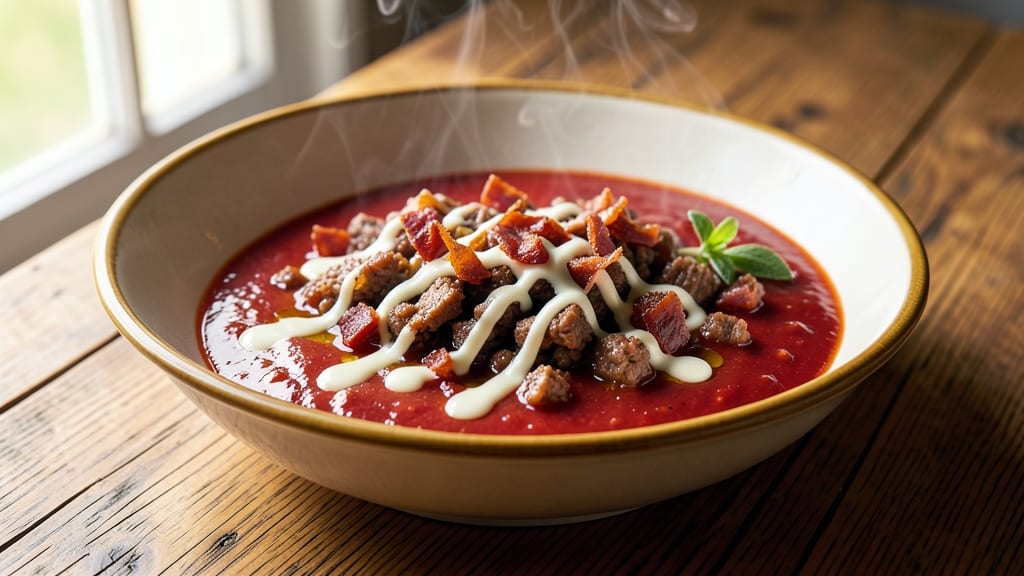
This authentic Italian red meat sauce transforms simple ingredients into a rich, slow-simmered masterpiece that captures the heart of Italian cooking. The secret lies in patience—browning pancetta for deep flavor, letting wine reduce to perfection, and simmering until the sauce develops that signature umami depth.
I’ve perfected this recipe over years of testing, ensuring every spoonful delivers the complexity of a traditional Italian ragù.
The foundation begins with finely diced pancetta (or guanciale for authenticity), which releases its fat to create a flavorful base. Ground beef and pork blend seamlessly, while tomato passata adds brightness without overpowering the meat.
A splash of red wine and a touch of milk (or cream) balance acidity, creating a sauce that’s both robust and velvety. The long simmer—at least 2 hours—allows flavors to meld into something truly extraordinary.
What sets this sauce apart is its versatility. Use it over al dente pappardelle for a classic tagliatelle al ragù, or serve it with polenta or mashed potatoes for a hearty meal.
The sauce thickens beautifully as it cools, making it ideal for meal prep—just reheat with a splash of water or broth to restore its silky texture. Every bite carries layers of savory, sweet, and herby notes, proving that authenticity doesn’t require shortcuts.
For those who love customization, a handful of fresh basil or parsley at the end adds brightness, while a pinch of nutmeg or a splash of balsamic vinegar deepens the flavor. But the magic? Sticking to the classic method. Let’s get cooking.
Ingredients for authentic italian red meat sauce
Pantry staples meet Italian tradition for a sauce that builds flavor hour by hour.
| Ingredient | Amount | Notes |
|---|---|---|
| Pancetta 🥓 | ½ lb | Finely diced, or substitute guanciale |
| Ground Beef 🥩 | 1 lb | 80% lean, for rich flavor |
| Ground Pork 🐖 | ½ lb | Balances beef richness |
| Tomato Passata 🍅 | 2 cups | San Marzano preferred |
| Red Wine 🍷 | ½ cup | Bold dry variety like Cabernet |
| Whole Milk 🥛 | ¼ cup | Balances acidity |
| Yellow Onion 🧅 | 1 whole | Finely chopped, sweet variety |
| Garlic Cloves 🧄 | 4 cloves | Minced for aromatic base |
| Fresh Rosemary 🌿 | 1 tbsp | Chopped, for earthy depth |
| Fresh Basil 🌿 | ¼ cup | Chopped, for fresh finish |
| Kosher Salt 🧂 | 1 ½ tsp | Diamond Crystal preferred |
| Ground Black Pepper 🌶️ | ½ tsp | Freshly ground for heat |
The pancetta is non-negotiable for that authentic umami punch—look for thick-cut slices at Whole Foods or your local butcher. If guanciale is available, use it (it's the true Italian choice). Ground beef and pork should be 80% lean or better—the fat content is what makes this sauce sing. For the tomato passata, San Marzano cans are worth the splurge—they're sweeter and less acidic than regular tomatoes. The onion and garlic? Yellow onions add sweetness, while fresh garlic cloves (not powder) give that authentic aroma. I always grab extra rosemary—it's one of those herbs that freezes beautifully for future sauces.
No pancetta? Substitute bacon or extra ground pork, but you'll lose some depth. Running low on red wine? Beef broth with a splash of balsamic vinegar mimics the acidity. Fresh rosemary is ideal, but dried at one-third the amount works in a pinch. The milk can be swapped for heavy cream if you prefer extra richness. For the tomato passata, crushed tomatoes in a pinch (just strain out the skins first). And if you're making a big batch, double the herbs—they'll mellow out during the long simmer but add freshness at the end.
This sauce tastes even better the next day as flavors meld. Store in an airtight container in the fridge for up to 5 days, or freeze for 3 months. I portion mine into 1-cup containers for easy meal prep—just reheat with a splash of water or broth to restore that silky texture. The sauce thickens as it cools, so don't worry if it looks too thin right after cooking. For serving, finish with fresh basil and a sprinkle of Parmigiano-Reggiano—it's the perfect marriage of slow-cooked depth and fresh herb brightness.
Why You'll Love This Recipe
- No Chopping Needed: I swear by this—just dice the pancetta into tiny cubes (no knife skills required) and toss it straight into the pan. The ground meats brown in minutes, and the passata? You can grab it pre-blended, no canning skills needed.
- Wine-Paired Magic: That splash of red wine doesn’t just cook off—it deepens the sauce into something rich and velvety, like a glass of Chianti poured into your pasta. The pancetta adds a salty, crispy crunch that makes every bite sing.
- Weeknight to Dinner Party: Simmer it for 45 minutes, and you’ve got a sauce that works over spaghetti for Tuesday or alongside slow-cooked beef for Sunday. Freeze half for lazy nights, and the rest? Perfect for impressing guests who think Italian food takes hours.
- Budget-Friendly Luxury: Ground pork and beef stretch further than you’d think, and pancetta (even the cheap kind) gives it restaurant-quality depth. A bottle of wine? That’s the only splurge, and it turns grocery-store ingredients into something that tastes like Nonna’s kitchen.
Step-by-step instructions for authentic Italian red meat sauce
This method delivers the rich, balanced flavors of traditional Italian ragù—slow-cooked meats with vibrant herbs and perfect acidity.
Render the Pancetta and Build the Aromatic Base
Heat a heavy Dutch oven over medium-low heat and add the 0.5 lb pancetta. Cook for 8-10 minutes, stirring occasionally, until the fat renders out and the pancetta becomes crispy and golden. Use a slotted spoon to remove the pancetta, leaving the rendered fat in the pot.
In the same pot, add the 1 whole yellow onion and cook for 5-6 minutes until softened and translucent. Add the 4 cloves garlic cloves and 1 tbsp fresh rosemary, cooking for another 1-2 minutes until fragrant. This aromatic base forms the flavor foundation of your sauce.
Brown the Meats for Deep Flavor
Working in batches to avoid overcrowding, add the 1 lb ground beef and 0.5 lb ground pork to the pot. Break up the meat with a wooden spoon and cook over medium-high heat for 5-6 minutes until the meat loses its raw color and browns deeply. This browning step, called the Maillard reaction, creates complex flavors that will develop throughout the simmer.
Return the crispy pancetta to the pot and stir to combine. The rendered fat will help distribute the meat's flavors evenly throughout the sauce. This is where the authentic richness begins to build.
Deglaze and Incorporate the Wine
Pour in the 0.5 cup red wine and scrape up any browned bits from the bottom of the pot with a wooden spoon. This deglazing step captures all the concentrated flavors that have settled there. Let the wine simmer for 3-4 minutes until it reduces by half and the alcohol smell dissipates.
Add the 2 cups tomato passata and 1.5 tsp kosher salt. Stir well to combine, then bring the mixture to a gentle simmer. The passata should coat the back of a spoon, indicating the sauce has reached the right consistency for simmering.
Slow Simmer for Umami Development
Reduce the heat to low and let the sauce simmer uncovered for 1.5 hours, stirring occasionally. This long, slow cook time allows the flavors to meld and develop depth. The sauce should gradually reduce and thicken as it cooks.
After 1 hour, stir in the 0.25 cup whole milk and 0.5 tsp ground black pepper. The milk adds a subtle richness that balances the acidity of the tomatoes. Continue simmering for another 30 minutes, stirring occasionally to prevent sticking.
Finish with Fresh Herbs and Adjust Seasoning
Remove the pot from heat and stir in the 0.25 cup fresh basil. Let the sauce sit for 5 minutes to allow the flavors to meld. Taste and adjust the seasoning if needed—add more salt if the sauce tastes bland, or a splash of red wine if it needs more acidity.
The sauce is now ready to serve. It should be rich, velvety, and deeply flavorful with a perfect balance of umami, acidity, and fresh herbs. This authentic Italian red meat sauce pairs beautifully with al dente pasta or crusty bread.
Pro Tips For Making Authentic Italian Red Meat Sauce
- Cook Pancetta First: Dice it small—no bigger than ¼-inch cubes—and render it until the fat is golden, not brown. I used to rush this, but crispy pancetta adds depth that raw bits can’t. Let it sit in the pan for 3-4 minutes after the last crackle to pull all the flavor out.
- Deglaze Like a Pro: After browning the meat, immediately pour in the red wine and scrape the fond off the pan with a wooden spoon. Let it simmer until it’s almost gone—this is where the sauce’s richness hides. Skipping this step leaves you with a flat, one-dimensional sauce.
- Salt the Passata: Stir in ½ teaspoon of salt per cup of tomato passata before adding it to the pan. Store-bought passata is often bland, and this adjustment saves you from over-salting later. Trust me, your sauce will taste more balanced from the start.
- Simmer Slow and Low: Once the wine reduces, drop the heat to a gentle simmer and let it cook uncovered for at least 45 minutes. I learned this the hard way—rushing it makes the sauce taste raw. If it’s too thick, add a splash of water, but never rush the cooking time.
Serving suggestions for leftovers
Classic Pasta Pairings
This sauce was born for pappardelle or tagliatelle—wide, flat noodles that cradle the rich sauce beautifully. I always cook my pasta al dente (about 1 minute less than package instructions) so it continues cooking in the sauce.
For extra indulgence, toss with Parmigiano-Reggiano and a handful of fresh basil right before serving. 🍝
Polenta or Risotto
Skip the pasta and serve over creamy polenta or risotto for a heartier meal. The sauce's velvety texture contrasts perfectly with polenta's softness. I like to make a big batch of polenta ahead and reheat it in the microwave with a splash of whole milk before adding the sauce.
For risotto, stir the sauce into the cooked rice in the final minutes for a luxurious finish.
Grilled or Roasted Meats
Use this sauce as a dipping sauce for grilled steaks, chicken, or even baked bruschetta. The acidity cuts through rich meats beautifully. I love serving it with garlic bread or roasted vegetables like zucchini and bell peppers.
For a showstopper, drizzle the sauce over seared scallops or grilled shrimp for a seafood twist.
Stuffed Pasta or Potatoes
Stuff gnocchi, ravioli, or even baked potatoes with this sauce for a comforting meal. I often fill homemade ravioli with a mix of ricotta and spinach, then top with the sauce and grated Pecorino Romano.
For potatoes, scoop out the centers, mix with a little butter and cheese, then fill with sauce and bake until golden.
Bread and Appetizers
Don't let this sauce go to waste—serve it as a dipping sauce with crusty bread, fresh focaccia, or arancini. I also love spreading it on garlic toast with a sprinkle of Parmigiano-Reggiano for a quick appetizer.
For extra flair, top with a drizzle of balsamic glaze or truffle oil before serving.
Meal Prep Serving Ideas
This sauce reheats beautifully, so plan ahead! Store leftovers in airtight containers and reheat with a splash of water or broth to restore its silky texture. Serve over leftover roasted chicken, mashed potatoes, or even grilled cheese sandwiches for a gourmet upgrade.
For a quick lunch, toss with whole wheat spaghetti and top with sautéed mushrooms for added depth. 💫
Nutrition facts
Frequently asked questions
Can I substitute pancetta with bacon in this recipe?
Yes, but expect slightly different flavor. Pancetta provides a delicate, salty sweetness that's key to authentic ragù. If using bacon, choose thick-cut slices and remove excess salt—it's saltier than pancetta. For the closest match, use guanciale (Italian cured pork cheek) if available. The fat content remains similar, but the flavor profile shifts slightly.
Why does the recipe call for both beef and pork?
The combination creates the perfect balance of flavors and textures. Beef provides hearty richness while pork adds subtle sweetness and tenderness. The fat ratio (80% lean beef + 50% lean pork) ensures a velvety sauce without excessive grease. Traditional Italian ragù often uses this meat blend for that signature depth of flavor.
Can I make this sauce in a slow cooker instead of stovetop?
Brown the meats and aromatics in a skillet first, then transfer everything to your slow cooker. Use the low setting for 6-8 hours (the longer cook time enhances flavor). Add the milk and herbs in the last 30 minutes to prevent curdling. The slow cooker method is perfect for hands-off prep while maintaining authenticity.
What's the best way to store and reheat leftovers?
Store in airtight containers in the fridge for up to 5 days or freeze for 3 months. To reheat, add a splash of water or broth (about 1-2 tablespoons per cup of sauce) and simmer gently over low heat. Stir frequently to prevent sticking—this helps restore the silky texture. Never microwave directly from frozen to avoid breaking the sauce's emulsion.
How can I make this sauce less acidic?
If the sauce tastes too tangy, balance it by adding a pinch of sugar (about 1/4 teaspoon) or a splash of heavy cream (1-2 tablespoons). For more depth, stir in a small piece of Parmigiano-Reggiano while reheating—the cheese's umami helps neutralize acidity. The milk already added helps, but these adjustments work if your tomatoes are particularly bright.