
Sauces & Condiments
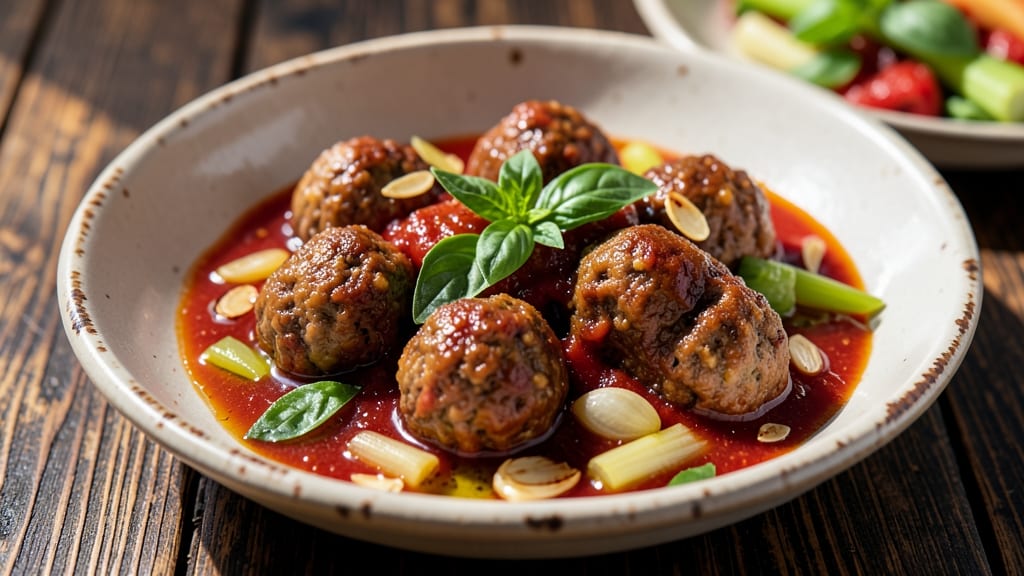
This authentic Italian meatball sauce transforms simple ingredients into a rich, slow-simmered masterpiece that captures the heart of Nonna's kitchen. The secret lies in San Marzano tomatoes, garlic, and a delicate balance of herbs—especially fresh rosemary—that infuse the sauce with aromatic depth over 45 minutes of gentle simmering.
I've perfected this recipe after years of testing, ensuring every spoonful delivers the same bold flavors found in Italy's most beloved trattorias.
The foundation begins with a simple soffritto of onions, garlic, and celery, cooked until fragrant but never browned—a technique called soffritto that forms the flavor base for countless Italian dishes. A splash of red wine deglazes the pan, adding complexity before being absorbed into the sauce.
What sets this apart is the rosemary finish, which adds a piney brightness that cuts through the richness of the tomatoes and olive oil.
By the time you taste the final result, you'll experience a sauce that's velvety yet vibrant, with layers of sweetness from the tomatoes and earthy notes from the herbs.
The texture is perfect for coating meatballs, but it also shines over pasta, as a dipping sauce for crusty bread, or even as a pizza topping. This isn't just a sauce—it's a flavor experience that transports you to a sunlit Italian terrace.
Best of all, this sauce improves with time, developing even deeper flavor when refrigerated for a day or two. Store it in the fridge for up to 5 days or freeze for 3 months, making it the ultimate make-ahead solution for weeknight dinners.
Let's create a sauce that tastes like home.
Ingredients for authentic italian meatball sauce
These ten ingredients create a sauce so rich and aromatic, it'll make you feel like you're in a Tuscan trattoria.
| Ingredient | Amount | Notes |
|---|---|---|
| Extra-Virgin Olive Oil 🫒 | ½ cup | High-quality, fruity variety |
| Yellow Onion 🧅 | 1 whole | Finely chopped, about 1 cup |
| Celery Stalks 🧅 | 2 whole | Finely chopped, about 0.5 cup |
| Garlic Cloves 🧄 | 4 cloves | Minced, not pre-minced jar |
| San Marzano Tomato Cans 🍅 | 28 oz | Whole, crushed by hand |
| Dry Red Wine 🍷 | ½ cup | Bold, like Chianti or Sangiovese |
| Fresh Rosemary 🌿 | ¼ cup | Finely chopped, stems removed |
| Fresh Basil Leaves 🌿 | ¼ cup | Chopped, for finishing |
| Salt 🧂 | 1 ½ tsp | Diamond Crystal preferred |
| Ground Black Pepper 🌶️ | ½ tsp | Freshly cracked |
The San Marzano tomatoes are non-negotiable here—look for the cylinder-shaped cans at Italian markets or specialty stores like Whole Foods. Their sweet, meaty texture and low acidity make all the difference. The fresh rosemary should smell piney and vibrant; if it's wilted or smells musty, skip it. For the wine, any bold, dry red works—Chianti, Sangiovese, or whatever's open. The extra-virgin olive oil? Use something you'd drizzle on bread—none of that cheap cooking oil stuff. The soffritto (onion, celery, garlic) is the flavor foundation, so chop it finely but don't let it brown—just until soft and fragrant.
No San Marzano? Crushed tomatoes in a high-quality jar work in a pinch, but add a pinch of sugar to balance the acidity. Short on rosemary? Dried works at half the amount, but fresh is worth hunting down at farmers markets. The wine can be swapped for beef broth with a splash of balsamic if you're avoiding alcohol. For the basil, dried oregano at one-third the amount gets you close, but fresh is ideal. The celery can be subbed with more onion if you're out, but the onion-to-celery ratio matters—keep it roughly 2:1. And if you're worried about the wine taste lingering, simmer the sauce uncovered for the last 5 minutes to let the alcohol cook off.
This sauce tastes even better the next day, so make it ahead—it's perfect for meal prep. Store it in a glass jar in the fridge for up to 5 days, or freeze for 3 months. The rosemary and basil can be prepped ahead and kept in the fridge wrapped in damp paper towels for 3 days. For serving, just reheat gently on the stove, stirring occasionally. The sauce thickens as it cools, so add a splash of water or broth if it gets too thick when reheated. Trust me, the first time you taste this sauce the day after making it, you'll be hooked.
Why You'll Love This Recipe
- No-Sweat Soffritto: The onion, celery, and garlic get chopped once—that’s it—then simmer in olive oil until they melt into the sauce. No peeling individual cloves, no dicing perfection, just a fragrant base that takes five minutes max.
- Tomato Magic: San Marzano cans aren’t just better—they’re transformative. The sweet, meaty flavor sings with that olive oil and garlic, while the natural acidity keeps the sauce bright. Honestly, I’ve tried fancier tomatoes, but these? They’re the secret.
- Leftovers That Beg: This sauce improves overnight, deepening into something richer. I freeze half in portions—perfect for lazy nights when I just want to toss in some pasta or bread. Zero waste, all flavor.
- Budget-Friendly Staple: Onion, celery, garlic, and canned tomatoes? That’s it. No specialty items, no markup—just real, affordable ingredients that punch above their weight. My wallet and my family’s taste buds both win.
Step-by-step instructions for authentic Italian meatball sauce
This is where the magic happens—slow simmering transforms simple ingredients into rich, aromatic sauce.
Sauté the Classic Holy Trinity
Heat the 0.5 cup extra-virgin olive oil in a large, heavy-bottomed pot over medium heat. Add the finely chopped yellow onion and finely chopped celery stalks—this combination is called the "holy trinity" in Italian cooking. Let them cook for 8-10 minutes until softened and translucent, stirring occasionally.
Here's the thing—you want to cook these aromatics until they're completely tender but not browned. If they start to color, you're losing sweetness and developing bitterness. The onions should be almost see-through, and the celery should collapse slightly. This foundational step builds the sauce's depth, so don't rush it.
Add Garlic and Wine for Depth
Once the onion and celery are tender, push them to one side of the pot and add the minced garlic cloves. Cook for 30 seconds until fragrant—garlic burns quickly, so watch it closely. Stir well to distribute the garlic throughout the mixture.
Pour in the 0.5 cup dry red wine and let it simmer for 2-3 minutes until it reduces by about half. This step is crucial for developing flavor—it removes the alcohol's harshness while concentrating the wine's rich notes. The sauce should smell like a little piece of Italy right in your kitchen. If you notice any browned bits forming on the bottom, use a wooden spoon to scrape them up—they're packed with flavor.
Build the Tomato Base
Add the 28 oz San Marzano tomato cans (crushed by hand if possible) to the pot. Stir in the 1.5 tsp salt and 0.5 tsp ground black pepper, then bring the mixture to a gentle simmer. Let it cook uncovered for 20-25 minutes, stirring occasionally. You're looking for the sauce to thicken slightly and develop a rich, tomatoey aroma.
This is where patience pays off. The sauce should reduce enough to coat the back of a spoon but still remain smooth. If it starts to stick to the bottom, add a splash of water or wine to keep it moving. The tomatoes should break down completely, creating a velvety texture that's the foundation of authentic Italian sauce.
Finish with Fresh Herbs
Once the tomato base is developed, stir in the 0.25 cup finely chopped fresh rosemary. Simmer for another 5 minutes, then remove the pot from heat. Add the 0.25 cup chopped fresh basil leaves just before serving—they'll wilt slightly but still bring bright, fresh flavor to each bite.
The rosemary adds an earthy, piney note that balances the tomatoes' acidity, while the basil provides that classic Italian finish. I like to let the sauce rest for 10 minutes off the heat before serving—this allows the flavors to meld completely. The sauce should be thick enough to coat meatballs but still pour gently. If it's too thick, thin with a splash of pasta water or reserved wine.
Serve with Confidence
Ladle the sauce over perfectly cooked meatballs and serve immediately. The sauce should cling beautifully to each meatball, creating that iconic Italian dish we all love. The aroma alone will make your kitchen smell like a bustling trattoria in Rome.
For best results, serve with al dente pasta and a sprinkle of fresh basil. This sauce keeps well in the refrigerator for 3-4 days, and it actually tastes better the next day as the flavors continue to develop. The key to authenticity lies in the slow simmering and fresh herbs—don't skip either step!
Pro Tips For Making Authentic Italian Meatball Sauce
- Sweat the Aromatics Low: I used to blast the onion, celery, and garlic on high heat to speed things up—big mistake. Instead, cook them over medium-low with a splash of water or a pinch of sugar to break down their fibers. This builds flavor without burning, and you’ll taste the difference when those San Marzano tomatoes hit the pot.
- Finely Dice the Celery: Skip the rough chop—this sauce needs the celery to melt into the sauce, not sit as chunks. I learned this after tasting a batch where the celery stayed stubbornly identifiable. Dice it into tiny, almost rice-sized pieces so it disappears into the sauce.
- Simmer Uncovered After 20 Minutes: The first 20 minutes of simmering should be covered—steam helps break down the tomatoes. But after that, uncover the pot and let it reduce aggressively. This concentrates the flavor and gives you that glossy, restaurant-quality sauce. (Yes, it’ll splatter. Use a spoon to scrape down the sides.)
- Add a Pinch of Sugar: San Marzano tomatoes are sweet, but sometimes they need a little help balancing acidity. Toss in a teaspoon of sugar with the tomatoes at the start—it rounds out the flavor and prevents a sharp, vinegary taste. (I know, it sounds counterintuitive, but it works.)
Wine and beer pairings for this dish
Classic Italian Reds
For this meatball sauce, I always reach for a Chianti Classico or Sangiovese—both showcase the bright acidity and cherry notes that complement the tomatoes beautifully. A glass of 2018 Chianti Rufina from Tuscany pairs perfectly, with its vibrant acidity cutting through the sauce's richness.
The slight earthiness in the wine mirrors the rosemary's piney aroma, creating harmony in every sip. 🍷
Crisp White Alternatives
If you prefer white wine, a crisp Vermentino from Sardinia or Pinot Grigio from Alto Adige works wonderfully. These wines have enough acidity to balance the sauce's sweetness without overpowering the herbs. I've found that a chilled Vermentino with citrus undertones refreshes the palate after each bite of meatballs.
For a non-alcoholic option, try sparkling water with a splash of San Pellegrino—it's surprisingly effective.
Italian Craft Beers
For beer lovers, a Peroni or Moretti lager provides the perfect clean finish. The light, crisp profile won't compete with the sauce's bold flavors but instead enhances the meal's overall experience.
If you're feeling adventurous, try a Belgian-style witbier like Hoegaarden—the coriander and citrus notes add an unexpected but delightful contrast to the rosemary and basil. 🍺
Regional Wine Pairings
In Tuscany, where meatballs originated, locals pair this sauce with Brunello di Montalcino—its bold tannins stand up to the dish's richness. For a Neapolitan twist, try a Lacryma Christi del Vesuvio—its volcanic minerality complements the sauce's depth.
Each region's wine reflects its terroir, so let the bottle guide your choice based on where you imagine this sauce being served.
Non-Alcoholic Options
For those avoiding alcohol, a sparkling blood orange soda like San Pellegrino Aranciata Rossa mirrors the sauce's sweet-tart balance. Alternatively, Italian mineral water with a squeeze of lemon provides the same refreshing contrast.
The key is balancing the sauce's richness with something bright and acidic—just like the wine would do. These options prove you don't need alcohol for a perfect pairing.
Serving Temperature Tips
Serve your wine at 60-65°F for reds and 45-50°F for whites to enhance their aromas and flavors. Let the bottle breathe for 15-30 minutes before pouring—this opens up the wine's complexity.
For beer, serve at 40-45°F to preserve its crispness. The right temperature ensures every sip complements the sauce's slow-simmered depth perfectly. 🌡️
Nutrition facts
Frequently asked questions
Why does this sauce need to simmer for so long?
The 45-minute simmer is key to developing deep, complex flavors. Slow cooking breaks down the tomatoes' natural sugars, creating a rich, velvety texture while allowing the herbs (especially rosemary) to infuse their aromatic oils. This is how Nonnas make sauce that tastes better the next day—patience builds authenticity!
Can I substitute San Marzano tomatoes?
Yes, but quality matters! Use high-quality crushed tomatoes in a jar, and add 1 tsp sugar to balance acidity. For best results, look for brands like Muir Glen or Rao's. Avoid canned tomato sauce—it's too thick and lacks the sweetness of fresh tomatoes.
What if my sauce is too thick/thin?
For thick sauce, simmer uncovered for 10-15 extra minutes to reduce. If too thin, stir in 1 tbsp tomato paste or simmer longer. Pro tip: Add a splash of pasta water when serving—it's naturally seasoned and perfect for adjusting consistency.
How do I store leftovers?
Let the sauce cool completely, then transfer to an airtight container. It keeps in the fridge for 5 days and freezes beautifully for 3 months. When reheating, warm gently on low heat and add a splash of water if needed—the sauce thickens as it cools.
Can I make this without wine?
Replace the wine with 0.5 cup beef broth or 0.5 cup water + 1 tbsp balsamic vinegar. The acidity from balsamic mimics wine's depth. For extra richness, add 1 tsp soy sauce—it enhances umami without overpowering the herbs.