
Sauces & Condiments
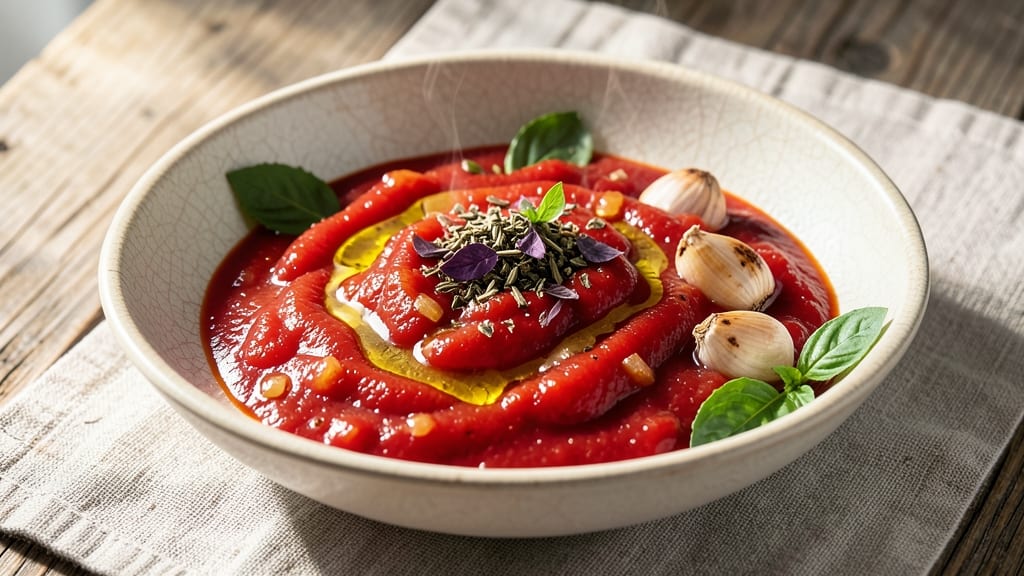
This all-day tomato sauce recipe transforms simple canned tomatoes into a rich, complex sauce with layers of flavor that deepen the longer it simmers.
The secret lies in slow cooking—letting the acidity mellow, the aromatics meld, and the tomatoes break down into a velvety consistency perfect for pasta, pizza, or braising. I developed this version after years of testing, and it delivers restaurant-quality depth without requiring specialty ingredients.
The process is straightforward but requires patience: onions and garlic caramelize first, then canned tomatoes, herbs, and a splash of vinegar or lemon juice come together in a low simmer.
This acidity balance is critical—it brightens the sauce while preventing bitterness, creating a harmonious flavor profile. The sauce thickens naturally as it reduces, intensifying its richness over time.
What you'll end up with is a versatile sauce that improves with storage, developing even more complexity in the fridge or freezer. It's ideal for meal prep—use it over pasta, as a pizza base, or as a braising liquid for meats.
The texture becomes silky-smooth, and the taste evolves from tangy to sweetly mellow, making every batch uniquely delicious.
For best results, let the sauce simmer for at least 3 hours (or up to 6), and always taste as you go. The longer it cooks, the deeper the flavor.
Store leftovers in airtight containers for up to 5 days in the fridge or freeze for months. This is the kind of sauce that turns ordinary meals into something extraordinary.
Ingredients for all day tomato sauce
Pantry staples meet slow-cooked magic for this transformative tomato sauce.
| Ingredient | Amount | Notes |
|---|---|---|
| Canned San Marzano Tomatoes 🍅 | 28 oz | Crushed or diced, high-quality |
| Yellow Onion 🧅 | 1 whole | Medium, finely chopped |
| Garlic Cloves 🧄 | 4 cloves | Peeled, minced finely |
| Extra-Virgin Olive Oil 🫒 | ½ cup | For sautéing, fruity variety |
| Dried Oregano 🌿 | 1 tsp | Italian or Mediterranean blend |
| Dried Basil 🍃 | 1 tsp | Or 1 tbsp fresh basil |
| Red Wine Vinegar 🍷 | 1 tbsp | Balances acidity, dry variety |
| Granulated Sugar 🍬 | 1 tsp | Balances acidity, white sugar |
| Salt 🧂 | 1 ½ tsp | Diamond Crystal preferred |
| Black Pepper 🌶️ | ½ tsp | Freshly ground, coarse grind |
San Marzano tomatoes are the star here—their sweetness and low acidity make all the difference. Trader Joe's and Whole Foods carry them year-round, or grab a high-quality Italian brand at Costco for bulk savings. The onions and garlic need time to caramelize, so don't rush this step. I always use yellow onions for their sweetness, but red onions work too if that's what you've got. For the olive oil, California extra-virgin brands like Corto or Colavita have that perfect fruity kick that translates well into the sauce.
No San Marzano tomatoes? Any good-quality canned tomatoes will work—just be prepared for slightly more acidity. Swap dried oregano for fresh at half the amount, but trust me, dried works better here. Running low on red wine vinegar? Balsamic vinegar at half the quantity gives a similar depth. The sugar is crucial for balancing the acidity—don't skip it, even if you're using sweet tomatoes. For extra richness, add a splash of tomato paste at the start, but it's not required.
This sauce tastes even better the next day, so make a big batch. Store in glass jars with tight lids in the fridge for up to 5 days, or freeze for 6 months. I like to portion it into 2-cup servings for easy grab-and-go pasta nights. For freezing, leave a little headspace—tomato sauce expands when it thaws. The longer it simmers, the deeper the flavor, so don't be afraid to let it cook all day.
Why You'll Love This Recipe
- No-Fuss Pantry Magic: I swear by this sauce because it lives in my pantry—just open a can, dump it in, and let time do the work. The San Marzano tomatoes? Sweet, meaty perfection that doesn’t need fancy prep.
- Garlic-Kissed Depth: That slow simmer with minced garlic and olive oil? It builds layers of flavor you’d pay $30 for at a restaurant. Honestly, the first time I tasted it, I wondered why I’d ever bought jarred sauce before.
- Weeknight to Potluck: Same sauce, endless uses—pasta, pizza, or even a quick dump over grilled chicken. Between us, I’ve brought it to holiday dinners and had people ask for the recipe before dessert was served.
- Budget-Friendly Goldmine: A single can of tomatoes stretches into meals for days. I make a big batch on Sundays, freeze half, and still have leftovers that taste better the next day. (Yes, even on a Tuesday night.)
Step-by-step instructions for all-day tomato sauce
This slow-simmered sauce builds flavor gradually—patience pays off with rich, balanced depth.
Sauté Onion and Garlic in Olive Oil
Heat the 0.5 cup extra-virgin olive oil in a large, heavy-bottomed pot over medium heat. Add the finely chopped yellow onion and cook for 5-6 minutes, stirring occasionally, until softened and translucent. The onions should release their sweetness without browning—this forms the aromatic base.
Push the onions to one side of the pot and add the minced garlic cloves. Stir for 30 seconds until fragrant but not browned. Garlic burns quickly, so keep an eye on it. This step develops the sauce's foundational flavors before adding the tomatoes. If the onions start to stick, reduce the heat slightly and give them another minute to soften completely.
Add Tomatoes and Initial Seasonings
Pour in the 28 oz canned San Marzano tomatoes, breaking them up gently with a wooden spoon. Stir in the 1 tbsp red wine vinegar, 1 tsp granulated sugar, 1.5 tsp salt, and 0.5 tsp black pepper. The vinegar brightens the sauce, while the sugar balances the acidity. Bring the mixture to a gentle simmer over medium-low heat.
Here's the thing—don't rush this. Let the sauce bubble softly for 10 minutes to allow the raw flavors to meld. The tomatoes will release their juices, and you'll see a light foam on top. Skim this off occasionally to keep the sauce clean. This initial simmer helps break down the tomatoes' texture, creating a smoother base for deeper flavor development.
Simmer Slowly for Rich, Concentrated Flavor
After the initial simmer, reduce the heat to low and let the sauce cook uncovered for at least 2 hours. This is where the magic happens—the sauce reduces gradually, intensifying its flavor. Stir occasionally, especially if it starts to stick to the bottom. If it gets too thick, add 1-2 tablespoons of water to maintain a smooth consistency.
You'll know it's ready when the sauce coats the back of a spoon and has thickened noticeably. The color should deepen to a rich, ruby red, and the aroma will be complex—sweet, tangy, and herbaceous. If you're short on time, you can speed this up slightly with 1 hour 30 minutes of simmering, but the longer it cooks, the more developed the flavor becomes. This is your reward for patience.
Finish with Herbs and Adjust Seasoning
Once the sauce has reached your desired thickness, stir in the 1 tsp dried oregano and 1 tsp dried basil. Let the sauce simmer for another 5 minutes to allow the herbs to infuse. Taste and adjust the seasoning—you might need a pinch more salt or a splash of vinegar to balance the flavors. The sauce should be harmonious, with no single ingredient overpowering the others.
Remove the pot from heat and let the sauce rest for 10 minutes. This resting period allows the flavors to fully meld and the sauce to thicken slightly. If you're using this for pasta or pizza, you can thin it with a little pasta water or broth if needed. The sauce will continue to improve as it sits, so it's best to prepare it ahead of time. Store it in an airtight container in the refrigerator for up to 5 days or freeze for longer storage.
Pro Tips For Making All Day Tomato Sauce
- CRANK THE HEAT FIRST: San Marzano tomatoes release their sweetness when caramelized, but that won’t happen if you simmer too gently. Start onions and garlic in a cold pot with olive oil, then turn the burner to medium-high and let them sizzle until the onions turn golden—about 8-10 minutes. I used to rush this, and the sauce always tasted flat. (Yes, even if you’re impatient like me.)
- SMASH THOSE GARLIC CLOVES: Don’t just mince garlic—smash the whole cloves with the flat side of your knife first. This crushes the cells, releasing more flavor into the oil before it even hits the pan. I learned this the hard way after making sauce that tasted like it was missing something. Works for onions too—just give them a rough chop instead of fine dicing.
- SALT THE TOMATOES BEFORE CRUSHING: Dump the San Marzano tomatoes into a bowl, sprinkle with 1 teaspoon of salt, and let them sit for 10 minutes. This breaks down the skins slightly, making them easier to crush or blend later. My grandmother swore by this, and she was right: the sauce thickens more naturally and tastes richer without extra salt later.
- STIR THE POT EVERY 30 MINUTES: After the initial cook, walk away—but set a timer to stir the sauce every half hour. This prevents scorching and keeps the flavors evenly distributed. I used to let it simmer unattended, and half the batch would turn bitter. (Your future self will thank you.)
Creative variations of this dish
Italian-Inspired Pizza Base
Transform this sauce into the perfect pizza foundation by spreading a thin layer over your favorite dough. I like to add 1 tbsp tomato paste to the sauce before baking for extra richness.
Top with fresh mozzarella, basil leaves, and a drizzle of extra-virgin olive oil after baking for that classic Neapolitan touch. 🍕
Spicy Pasta Sauce Twist
For a kick, stir in ½ tsp red pepper flakes or 1 tsp hot sauce during the final 5 minutes of simmering. This works beautifully with penne pasta and crispy pancetta. The heat mellows slightly as it cools, creating a balanced, flavorful bite. 🌶️
Vegetarian Braising Sauce
Use this sauce to braise portobello mushrooms or eggplant slices for a hearty vegetarian dish. Simmer the sauce with the veggies for 20-25 minutes until tender, then finish with fresh parsley and a squeeze of lemon. The sauce absorbs into the vegetables, infusing them with deep, savory flavor. 🍄
Creamy Tomato Dip
For a quick appetizer, blend 1 cup of the cooled sauce with ½ cup sour cream and 2 tbsp grated parmesan. Serve with toasted baguette slices or crudités like bell peppers and carrots. The tangy-sweet balance makes this dip irresistibly smooth and versatile. 🥕
Slow-Cooker Adaptation
Make this sauce hands-off by using a 6-quart slow cooker on low for 6-8 hours. Combine all ingredients except herbs, then stir in dried basil and oregano during the last 30 minutes.
This method is ideal for busy days—just dump, cook, and enjoy! The slow cooker enhances the sauce's depth even more. ⏳
Herb-Infused Variations
Swap the dried herbs for fresh ones at the end—try 1 tbsp chopped fresh basil or 1 tsp chopped thyme for a brighter, more aromatic profile.
For a Mediterranean twist, add ½ tsp dried rosemary during the final simmer. Each herb brings a unique layer of flavor to the sauce. 🌿
Nutrition facts
Frequently asked questions
Can I use fresh tomatoes instead of canned for this recipe?
Fresh tomatoes work but require extra prep. You'll need 6-8 medium ripe tomatoes, peeled, seeded, and chopped to yield about 28 oz of pulp. Fresh tomatoes have more water content, so simmer the sauce uncovered for 30-45 minutes longer to reduce it properly. The flavor will be brighter but slightly less concentrated than canned tomatoes.
Why does the recipe call for red wine vinegar when I don't have any?
The vinegar balances the sauce's acidity and adds depth. Substitute with 1 tbsp balsamic vinegar or ½ tbsp lemon juice if needed. Skip it only if you're using very sweet tomatoes, but the sauce will taste flatter without it. The sugar in the recipe helps counteract any sharpness from vinegar alternatives.
How do I prevent the sauce from sticking to the pot?
Stir frequently during the initial 10 minutes of simmering, and reduce heat if it starts to stick. For extra insurance, add 1-2 tablespoons of water if the sauce gets too thick. A heavy-bottomed pot prevents hot spots that cause sticking. Always simmer uncovered to let excess moisture evaporate naturally.
Can I make this sauce in a Dutch oven for better flavor?
A Dutch oven's thick base distributes heat evenly, creating deeper caramelization in the onions and garlic. Use the same recipe but reduce the simmering time slightly (1.5-2 hours) since Dutch ovens retain heat well. The sauce will develop even more complexity from the slow, even cooking process.
What's the best way to reheat this sauce?
Gently reheat on the stovetop over low heat, stirring frequently to prevent sticking. Avoid high heat which can break down the sauce's texture. For frozen sauce, thaw in the fridge overnight first. If using a microwave, cover with a damp paper towel and heat in 30-second intervals, stirring between each.