
Sauces & Condiments
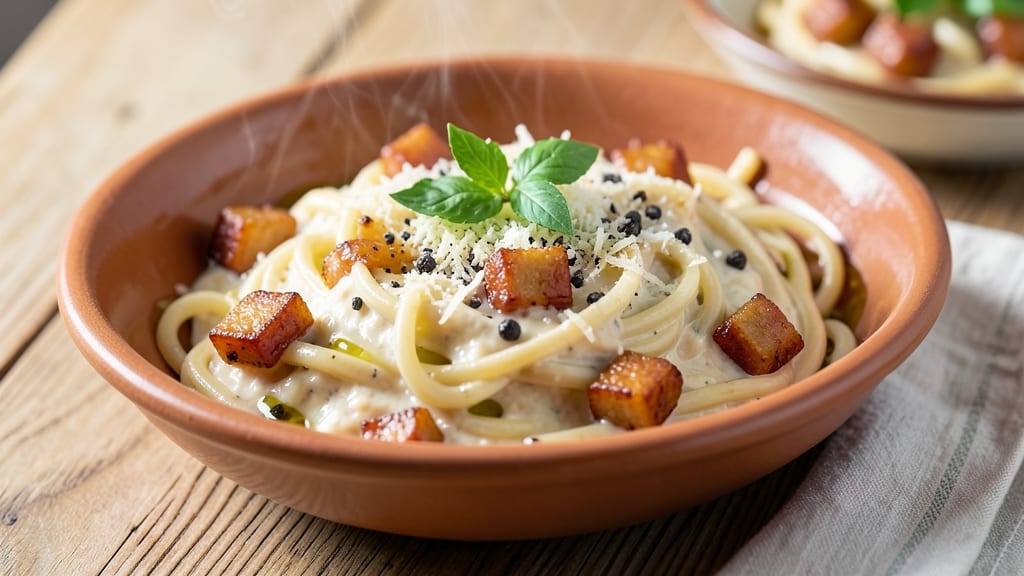
This authentic Italian carbonara sauce transforms simple ingredients into a creamy, egg-yolk emulsion that clings perfectly to pasta—no roux or cream required.
The secret lies in precise ratios and technique: pancetta rendered until crisp, eggs tempered just enough to create a velvety sauce without scrambling, and pecorino romano's sharp bite cutting through the richness.
I've perfected this version after years of testing regional variations, ensuring every spoonful delivers that signature Roman trattoria flavor.
The magic happens in the emulsion: warm pasta water incorporated into beaten eggs creates a natural creaminess while maintaining the sauce's signature texture. Unlike Americanized versions, this recipe skips heavy cream entirely, relying instead on the natural fat from pancetta and the emulsifying power of egg yolks.
The result is a sauce that's rich yet light, with just enough peppery heat from black pepper to balance the salty cheese.
What sets this sauce apart is its versatility—toss it with spaghetti for classic carbonara, use it as a base for baked pasta dishes, or even drizzle it over grilled meats.
The key is timing: the sauce must be incorporated off the heat to prevent curdling, and the pasta water plays a crucial role in achieving that signature cling. Once mastered, this technique becomes your go-to for restaurant-quality Italian flavors at home.
Storage is simple: refrigerate for up to 3 days or freeze for longer preservation, though freshly made sauce always tastes best. For best results, reheat gently over low heat, adding a splash of pasta water if needed to restore creaminess.
This isn't just a sauce—it's the foundation of a Roman culinary tradition you can recreate in your own kitchen.
Ingredients for authentic italian carbonara sauce
Eight essential ingredients create this velvety Roman trattoria sauce without cream or roux.
| Ingredient | Amount | Notes |
|---|---|---|
| Pancetta 🥓 | 6 oz | Diced into small pieces |
| Large Egg Yolks 🥚 | 4 whole | Fresh, room temperature |
| Pecorino Romano Cheese 🧀 | 1 ½ cups | Freshly grated, fine texture |
| Freshly Ground Black Pepper 🌶️ | 1 tsp | Coarsely ground for heat |
| Spaghetti 🍝 | 12 oz | Dry weight, reserved pasta water |
| Extra-Virgin Olive Oil 🫒 | 2 tbsp | For crisping pancetta |
| Diamond Crystal Kosher Salt 🧂 | ½ tsp | For pasta water |
| Freshly Squeezed Lemon Juice 🍋 | 1 tsp | Brightens flavor balance |
The pancetta is non-negotiable—look for thick-cut pieces at specialty markets like Eataly or high-end grocers. If you can't find pancetta, guanciale is the authentic substitute, though it's pricier. Render it slowly in extra-virgin olive oil until golden and crisp; don't rush this step. The Pecorino Romano must be freshly grated—pre-shredded loses its sharp bite and won't emulsify properly. For the eggs, use only yolks; whites can scramble the emulsion. Room temperature yolks blend more smoothly—take them out 10 minutes before using.
No pancetta? Thick-cut bacon works in a pinch, but it's smokier. Substitute Pecorino with Parmigiano-Reggiano if unavailable, though it's milder. For the black pepper, freshly cracked delivers the best heat—pre-ground loses potency quickly. The spaghetti's pasta water is critical: reserve 1 cup before draining. If you're concerned about eggs, pasteurized yolks are safe, though fresh is ideal. The lemon juice prevents curdling—never skip it—and balances the richness.
Store any unused sauce in an airtight container with a thin layer of olive oil on top to preserve freshness. Keeps for up to 3 days refrigerated or 3 months frozen. Reheat gently over low heat, adding reserved pasta water as needed to restore creaminess. For best results, make it fresh—carbonara loses its signature texture when reheated. The sauce thickens as it cools, so adjust consistency with warm water if needed.
Why You'll Love This Recipe
- No-Fuss Technique: I swear by this method—just toss pancetta in a pan until it’s crispy, then push it aside while the pasta cooks. The yolks and cheese melt right into the starchy water, creating that silky sauce without a single whisk in sight. (Yes, even my college-kid self could nail it.)
- Umami Bomb: That first bite? Pancetta so crispy it crackles, then melts into creamy egg-yolk goodness, all while pecorino’s sharp bite cuts through like a bright summer day. Black pepper isn’t just garnish—it’s the secret that makes every forkful sing.
- Weeknight Hero: I make this when friends drop by unannounced or when I’m too tired to plan. Pasta’s done in 10 minutes, sauce takes 5, and suddenly you’ve got a restaurant-worthy dish. (Pro tip: Double the batch—leftovers reheat like a dream.)
- Budget Luxury: Pancetta’s cheaper than prosciutto, pecorino lasts forever, and eggs? Always on hand. For under $10, you feed four people a meal that’ll have them asking for seconds. It’s the kind of dish that makes frugal nights feel fancy.
Step-by-step instructions for authentic Italian carbonara
Master this classic Roman technique without a roux—just perfect emulsion and crispy pancetta.
Crisp the Pancetta Until Golden
Heat a large skillet over medium heat and add the 6 oz diced pancetta. Cook undisturbed for 5-6 minutes until the fat renders and the pancetta becomes deep golden brown. Stir occasionally to prevent burning, but let it develop that crispy texture—this is what gives carbonara its authentic flavor.
Once the pancetta is crisp, remove it from the pan with a slotted spoon, leaving the rendered fat behind. This fat is your sauce base, so don't drain it. If you notice any burnt bits, carefully scrape them out with a paper towel—they'll only make the sauce bitter. Keep the pancetta warm on a separate plate for now.
Whisk Egg Yolks and Cheese
In a medium bowl, whisk together the 4 whole large egg yolks, 1.5 cups finely grated Pecorino Romano cheese, and 1 tsp freshly ground black pepper until smooth and fully combined. The mixture should be pale yellow with no visible cheese granules. I like to add a pinch of the 0.5 tsp Diamond Crystal kosher salt at this stage too—it enhances the flavor balance.
This step is where the magic happens. The egg yolks will emulsify with the hot pasta water later, creating that signature creamy sauce. Don't skip the whisking—any lumps will result in a grainy sauce. Set this mixture aside while you cook the pasta.
Cook Spaghetti Al Dente
Bring a large pot of water to a rolling boil and add the 0.5 tsp Diamond Crystal kosher salt. Once boiling, add the 12 oz spaghetti and cook until 1 minute before al dente (about 8-10 minutes, depending on the brand). Reserve 1 cup of pasta water before draining—this starchy liquid is essential for creating the emulsion.
I always test the pasta by tasting a strand—it should be firm but tender. Drain the pasta but don't rinse it; the surface starch helps the sauce cling. Immediately transfer the hot pasta to the skillet with the pancetta fat over medium-low heat.
Combine Pasta and Egg Mixture
Remove the skillet from heat and add the drained spaghetti along with the reserved 1 cup pasta water. Toss vigorously for 30 seconds to coat the pasta in the fat. Then, immediately pour in the egg-yolk mixture while stirring constantly with tongs or a wooden spoon.
The residual heat from the pasta will gently cook the eggs into a silky sauce. If the mixture looks too thick, add more pasta water 1 tablespoon at a time until it reaches a creamy consistency. Work quickly but carefully—this is the most critical step. The sauce should coat the back of a spoon smoothly, with no visible egg streaks.
Finish with Lemon and Serve Immediately
Return the skillet to low heat and stir in the crispy pancetta along with the 1 tsp freshly squeezed lemon juice. The acidity brightens the dish and cuts through the richness of the cheese. Toss everything together for 1-2 minutes until the pancetta is evenly distributed and the sauce is fully emulsified.
Serve immediately with an extra sprinkle of Pecorino Romano cheese and a generous crack of freshly ground black pepper. The sauce should cling perfectly to each strand of spaghetti, with a balance of creamy, salty, and slightly peppery flavors. Carbonara is best enjoyed right away—it doesn't reheat well, so make just what you need for the table.
Pro Tips For Making Authentic Italian Carbonara Sauce
- Cook Pancetta Low and Slow: I learned this the hard way—crispy pancetta looks impressive, but it burns before the fat renders properly. Keep the heat at medium-low and stir every 30 seconds until the fat is golden and the meat is just breaking apart, not crisping. That fat is liquid gold for your sauce.
- Use Cold Egg Yolks: Room-temperature yolks turn into scrambled eggs the second they hit the hot pasta. Keep them in the fridge until the very last step, then whisk them into the sauce off the heat—this keeps the sauce silky instead of grainy. And no, don’t microwave them; just grab them straight from the fridge.
- Skip the Cream—Ever: I know, I know, it’s in half the recipes you’ll find. But authentic carbonara relies on the fat from the pancetta and the emulsification of the eggs to create that creamy texture. Adding cream just makes it heavy and dull—trust the process, even if it feels risky at first.
- Grate Pecorino Like You Mean It: Pre-shredded cheese is the enemy here. Use a fine grater and get aggressive—you want powdery, not chunky. The finer the cheese, the smoother the sauce, and the better it blends into the eggs. Save the coarse grater for Parmesan; Pecorino needs to disappear.
Wine and beer pairings for this dish
Classic Italian Whites
For an authentic Roman experience, pair your carbonara with a crisp Frascati Superiore from Lazio—the same region where carbonara originated. This white wine, made from Malvasia and Bombino grapes, has bright acidity and citrus notes that cut through the sauce's richness.
I keep a bottle of Castello di Frassanito Frascati on hand specifically for Italian dishes like this. 🍷
Lighter Red Options
If you prefer red, a light-bodied Chianti Classico works surprisingly well. Look for a Sangiovese-based wine with minimal oak, like Antinori Chianti Classico. The wine's earthy undertones complement the pancetta's savory depth without overpowering the dish. Avoid bold, tannic reds—they'll clash with the creamy sauce.
Beer Pairings
A crisp Italian lager like Peroni or Moretti refreshes the palate between bites. The carbonation helps cleanse the richness, while the mild maltiness balances the peppery heat. For craft beer lovers, a Belgian witbier with its citrus and coriander notes provides an interesting contrast to the dish's salty-sweet profile. 🍺
Prosecco for Celebrations
Save the Prosecco for special occasions—its effervescence and apple-like acidity make it a perfect match for carbonara's creamy texture. I recommend a Valdobbiadene Prosecco Superiore like La Gioiosa. The bubbles create a delightful contrast, making each bite feel like a celebration. Serve chilled to enhance the wine's freshness.
Non-Alcoholic Options
For those skipping alcohol, a sparkling San Pellegrino Aranciata offers citrus notes that mirror the lemon in the sauce. Alternatively, a blood orange soda like San Pellegrino Aranciata Rossa provides sweet-tart contrast. Both options work beautifully with the dish's peppery finish. ✨
Nutrition facts
Frequently asked questions
Why does authentic carbonara use only egg yolks?
The yolks create the signature creamy emulsion without overpowering the dish. Whole eggs can scramble when combined with hot pasta, while whites lack the fat needed for proper emulsification. Yolks contain lecithin, which binds fat and water perfectly for that velvety texture. Plus, they add natural richness that no substitute can match!
Can I make carbonara without pancetta?
Yes, but use guanciale (the authentic Roman choice) or thick-cut bacon as substitutes. These work better than regular bacon because they render more fat and have a cleaner flavor. If you must use regular bacon, choose unsmoked varieties to avoid overpowering the dish with smokiness. The key is crispy, fatty meat for that perfect sauce base.
What's the secret to preventing a scrambled egg sauce?
Work quickly and off the heat! The residual heat from hot pasta gently cooks the eggs into sauce. Never add cold eggs to hot pasta—temper them first by whisking with a splash of pasta water. Also, keep stirring constantly and add pasta water gradually to maintain the right temperature. The sauce should coat the back of a spoon smoothly.
How do I fix a sauce that's too thick?
Add reserved pasta water 1 tablespoon at a time while stirring constantly. The starch in the water helps restore creaminess without thinning the sauce too much. If you've already eaten some, mix a little warm water with a pinch of salt and whisk it in. Never add milk or cream—it'll break the emulsion and make the sauce greasy.
Can I make carbonara ahead of time?
Fresh is best, but you can prep components ahead. Grate the cheese, crisp the pancetta, and whisk the egg mixture separately up to 1 day ahead. For leftovers, reheat gently on low heat with a splash of pasta water, but expect slightly altered texture. The sauce is designed to be made-to-order for that perfect emulsion. For parties, consider making a double batch and reheating portions separately.