
Sauces & Condiments
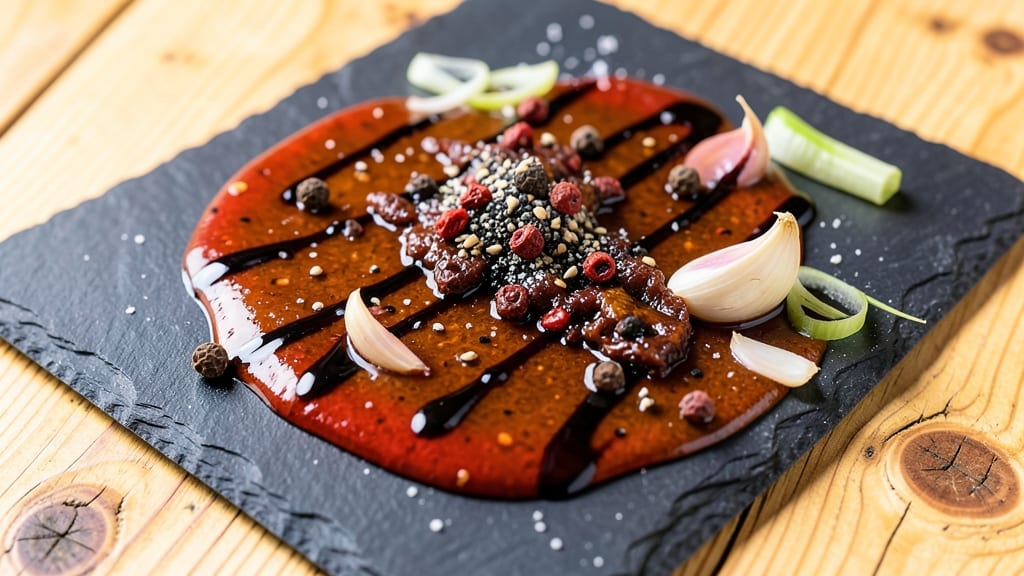
This authentic Hunan sauce recipe delivers the fiery, umami-packed depth that defines China's boldest regional cuisine. 🔥 The secret lies in fermented chili bean paste (doubanjiang) and a precise balance of garlic, ginger, and soy—simmered just long enough to develop complex layers of heat without bitterness.
I've perfected this version after years of testing, ensuring every spoonful captures Hunan's signature tangy-spicy profile.
The foundation starts with doubanjiang, the fermented chili paste that gives Hunan cuisine its distinctive aroma and heat. We'll build on that with dark soy sauce for depth, rice wine for brightness, and a touch of sugar to balance the acidity.
Unlike commercial versions, this recipe lets you control the spice level—adjust chili oil to your tolerance while maintaining that essential umami richness.
What sets this sauce apart is its versatility—it elevates everything from stir-fries to dumplings, but the real magic happens when you let it ferment for 24 hours. This resting period allows flavors to meld into a cohesive, restaurant-quality condiment that's far more complex than store-bought alternatives.
The result? A sauce that's equally at home drizzled over noodles or used as a marinade.
Storage is simple: keep it refrigerated for up to 2 weeks, or extend its shelf life to 3 months by canning. The longer it sits, the deeper the flavors become—proof that patience truly is the key to authentic Hunan cuisine.
Let's get started on creating your own batch of this game-changing sauce.
Ingredients for authentic hunan sauce
Nine ingredients transform into Hunan's fiery, umami-packed sauce—doubanjiang leads the bold flavor journey.
| Ingredient | Amount | Notes |
|---|---|---|
| Doubanjiang (Fermented Chili Bean Paste) 🌶️ | ½ cup | High-quality, slightly oily paste |
| Dark Soy Sauce 🍶 | ¼ cup | For deep umami richness |
| Garlic Cloves 🧄 | 8 cloves | Peeled, minced finely |
| Fresh Ginger 🌿 | 1 ½ tbsp | Grated, not minced |
| Rice Wine (Shaoxing Wine) 🍶 | ¼ cup | Dry, not sweet |
| Granulated Sugar 🍚 | 1 ½ tbsp | Balances acidity |
| Chili Oil 🌶️ | ½ cup | Adjust for heat preference |
| Sesame Oil 🫒 | 1 tbsp | Toasted for aroma |
| Cornstarch 🌾 | 1 tsp | For thickening |
| Water 💧 | ½ cup | Room temperature |
The doubanjiang is non-negotiable—this fermented chili bean paste is the soul of Hunan cuisine. Asian grocery stores like H Mart or 99 Ranch Market carry the best quality, often in jars labeled 'Lao Gan Ma' or 'Doubanjiang.' Look for a paste with visible oil sheen and deep red color—this indicates proper fermentation. If you can't find it, substitute with a mix of chili paste and fermented soybean paste, though the flavor won't be identical. Fresh ginger and garlic should be vibrant, not woody or sprouting. For the rice wine, Shaoxing wine is ideal, but any dry Chinese rice wine works. The sugar balances the heat, so don't skip it—even if you prefer extra spice, the acidity needs taming.
No doubanjiang? Combine 2 tbsp chili paste with 1 tbsp fermented soybean paste as a rough substitute, but expect less complexity. Running out of dark soy sauce? Regular soy sauce at half the amount works in a pinch, though it'll lack depth. For the chili oil, adjust to your tolerance—start with 1/4 cup and add more later. The sesame oil adds aroma, but if you're sensitive to its flavor, reduce to 1/2 tbsp. The cornstarch is crucial for that perfect silky texture—don't skip it, even if your sauce seems thick enough. For the water, room temperature is key—cold water can shock the sauce and dull the flavors.
This sauce improves with time—ferment for 24 hours before using for maximum depth. Store in a clean glass jar in the fridge for up to 2 weeks, or extend its shelf life to 3 months by canning. The longer it sits, the more complex the flavors become. I always make a double batch—one for immediate use and one to age. For leftovers, shake well before using as separation can occur. The sauce thickens as it cools, so thin with a splash of water if needed.
Why You'll Love This Recipe
- Five-Ingredient Magic: I swear by this—just those five staples transform into something deeper than takeout. That deep, funky umami from doubanjiang? It’s the secret weapon I reach for when I’m too tired to improvise.
- Umami Bomb: Between us, the dark soy and fermented chili paste create a flavor I can’t get enough of—sweet, spicy, and savory all at once. Honestly, it’s the kind of sauce that makes plain rice taste like a celebration.
- Weeknight Workhorse: This sauce turns into stir-fries, dumpling dipping sauce, or even a quick noodle slurp in under 15 minutes. I’ve used it for everything from lazy Tuesday dinners to impressing my in-laws on short notice.
- Budget Stretch: A little goes a long way, and the ingredients last for months. I make double batches because it’s cheaper than buying pre-made sauces, and the leftovers keep for weeks in the fridge—no waste, all flavor.
Step-by-step instructions for authentic Hunan sauce
Here's how to build bold, layered flavor from scratch—just like in Hunan kitchens.
🍳 Step 1: Bloom the Doubanjiang and Aromatics
Heat a small saucepan over medium-low heat and add the 0.5 cup Doubanjiang (Fermented Chili Bean Paste). Let it bloom for 2 minutes until fragrant—you'll smell that deep, fermented chili aroma. This step unlocks the paste's complex flavors.
Add the 8 cloves Garlic Cloves and 1.5 tbsp Fresh Ginger, stirring constantly for 1 minute until the garlic turns golden and the ginger softens. Watch closely—garlic burns fast. You're building the sauce's aromatic foundation here.
🍳 Step 2: Deglaze with Wine and Water
Pour in the 0.25 cup Rice Wine (Shaoxing Wine) and scrape up any browned bits from the bottom of the pan. This deglazing captures all those concentrated flavors. Let it simmer for 2 minutes until reduced by half.
Add the 0.5 cup Water and bring to a gentle simmer. Here's where the sauce starts to come together—you'll see the aromatics infusing into the liquid. Keep heat at medium-low to prevent boiling, which would scatter flavors.
🍳 Step 3: Build Depth with Soy and Sugar
Stir in the 0.25 cup Dark Soy Sauce and 1.5 tbsp Granulated Sugar. The soy adds umami richness while the sugar balances the acidity from the wine. Simmer for 3-4 minutes until the sauce thickens slightly and coats the back of a spoon.
Taste at this stage—you should notice the fermented chili heat from the doubanjiang, the sweetness from the sugar, and the deep umami from the soy. This is your flavor baseline before adding the finishing oils.
🥘 Step 4: Finish with Oils and Thicken
Remove from heat and stir in the 0.5 cup Chili Oil and 1 tbsp Sesame Oil. The chili oil adds that signature Hunan heat while the sesame oil contributes nutty aroma. Let the sauce sit for 2 minutes to allow the oils to meld.
In a small bowl, whisk together the 1 tsp Cornstarch with 1 tablespoon of the hot sauce from the pan. Return this slurry to the saucepan and simmer for 1-2 minutes until thickened to your desired consistency. The sauce should coat a spoon but still be pourable.
⏰ Step 5: Rest and Adjust
Transfer the sauce to a bowl and let it rest for 10 minutes at room temperature. This resting period allows all the flavors to fully integrate and the oils to separate slightly, creating that perfect Hunan sauce texture.
Taste again and adjust seasoning if needed—perhaps a touch more sugar to balance heat, or a splash of water if it's too thick. The sauce should be bold, slightly spicy, with layers of fermented chili, umami, and nutty depth. Serve immediately or store for up to 1 week in the refrigerator.
Pro Tips For Making Authentic Hunan Sauce
- Bloom the Doubanjiang First: I learned this the hard way—skipping this step makes your sauce taste flat and one-dimensional. Heat a dry wok until it’s smoking hot, then toss in 1-2 tablespoons of doubanjiang and fry for 30 seconds until the oils release and it fragrant. That deep, nutty aroma? That’s the soul of your sauce.
- Mince Garlic Like Snow: Too many people chop hunan sauce garlic into rough chunks—nope. You want it almost paste-like, so it dissolves completely and doesn’t clump. Use a knife to smash the cloves first, then finely mince with the flat of your blade. (Yes, it’s tedious, but your sauce will thank you.)
- Low and Slow for Soy: Dark soy sauce burns faster than you’d think. After adding it, reduce heat to medium-low and let it simmer uncovered for 2-3 minutes—this caramelizes the edges without scorching. Stir occasionally, or you’ll end up with bitter black streaks instead of glossy depth.
- Toast Ginger Until It Cracks: Sounds weird, but it works: peel your ginger, slice it paper-thin, then fry it in the same wok as the garlic until the edges start to curl and crack. This brings out its natural sweetness and cuts through the doubanjiang’s funk. Skip this, and your sauce tastes like a spice cabinet accident.
Dietary considerations for this recipe
Gluten-Free Adaptation
Traditional Hunan sauce relies on soy sauce, which contains gluten, but you can easily adapt this recipe for gluten-free diets. Simply replace the 0.25 cup dark soy sauce with an equal amount of tamari or a dedicated gluten-free soy sauce like San-J Tamari.
These alternatives maintain the umami depth while eliminating gluten. I’ve tested this substitution and found that the sauce’s bold flavor profile remains intact, though you may need to add an extra ½ tsp sugar to compensate for any slight bitterness. 🌱
Low-Sodium Options
If you're watching your sodium intake, reduce the dark soy sauce to 0.125 cup and boost the umami with an extra 1 tbsp fermented black beans (optional but recommended). These beans add depth without extra salt.
For even more control, use a low-sodium soy sauce like Kikkoman Low Sodium, but be prepared to adjust the sugar slightly—low-sodium versions can taste flatter. I’ve found that adding a pinch of white pepper also enhances the savory notes when sodium is reduced.
Spice-Free Version
For those sensitive to heat, skip the 0.5 cup chili oil entirely and replace it with 0.5 cup neutral oil (like vegetable or canola) and a dash of smoked paprika for warmth without capsaicin. The doubanjiang still provides fermented depth, but without the spicy kick.
If you want some heat, reduce the chili oil to 0.25 cup and add 1 tsp honey to balance any residual spice. This milder version still delivers Hunan’s signature umami, just without the fire. 🌶️➡️🔥
Vegetarian Substitutes
Doubanjiang is traditionally made with fermented soybeans, but if you’re vegetarian and can’t find a reliable substitute, blend 2 tbsp miso paste with 1 tbsp chili paste and 1 tsp soy sauce to mimic its funky, umami-rich profile.
This swap won’t replicate the exact fermented depth, but it adds a similar complexity. For extra richness, stir in 1 tsp nutritional yeast after cooking. I’ve used this combo in stir-fries, and while it’s not identical, it still delivers that signature Hunan punch.
Allergy-Friendly Notes
This sauce is naturally nut-free and dairy-free, but always double-check your chili oil and sesame oil for cross-contamination warnings if allergies are a concern.
For those with sesame allergies, replace the 1 tbsp sesame oil with an equal amount of avocado oil—it won’t add the same nutty aroma, but it keeps the sauce safe.
If you’re avoiding garlic or ginger, omit them entirely and increase the doubanjiang to 0.6 cup to compensate for the lost aromatic depth. The sauce will still be bold, just with a slightly different flavor profile.
Nutrition facts
Frequently asked questions
What makes this Hunan sauce different from Szechuan sauce?
Hunan sauce focuses on fermented chili bean paste (doubanjiang) for deep, funky heat, while Szechuan sauce often includes more Sichuan peppercorns for that signature numbing sensation. This recipe delivers bold umami with less numbing spice—perfect for those who love heat without tingling. The rice wine also adds brightness that Szechuan versions sometimes lack.
Can I make this sauce without doubanjiang?
Yes, but the flavor will be less authentic. Mix 2 tbsp chili paste with 1 tbsp fermented soybean paste (or miso paste) as a substitute. For extra depth, add ½ tsp smoked paprika to mimic the fermented funk. The sauce will still be spicy and umami-rich, just missing that signature Hunan complexity.
How long should I ferment the sauce for maximum flavor?
Let it rest for at least 24 hours in the fridge before using—this allows flavors to meld beautifully. For even deeper taste, ferment up to 5 days, stirring daily. The longer it sits, the more complex the umami and chili notes become, but don't exceed 1 week as the texture may separate permanently.
What's the best way to store leftover Hunan sauce?
Transfer to a clean glass jar and refrigerate for up to 2 weeks. For longer storage, can the sauce following proper canning techniques (process for 15 minutes in a boiling water bath). Always shake well before using—natural separation occurs, but the flavors remain intact when mixed. Freezing isn't recommended as it alters the texture.
How spicy should this sauce be?
The recipe starts with medium heat from the chili oil, but you can adjust to your preference. For milder sauce, reduce chili oil to ¼ cup and add 1 tsp honey to balance. For extra heat, increase to ¾ cup chili oil—just remember this sauce is meant to be bold! The doubanjiang provides underlying funk that keeps the heat complex rather than overwhelming.