
Sauces & Condiments
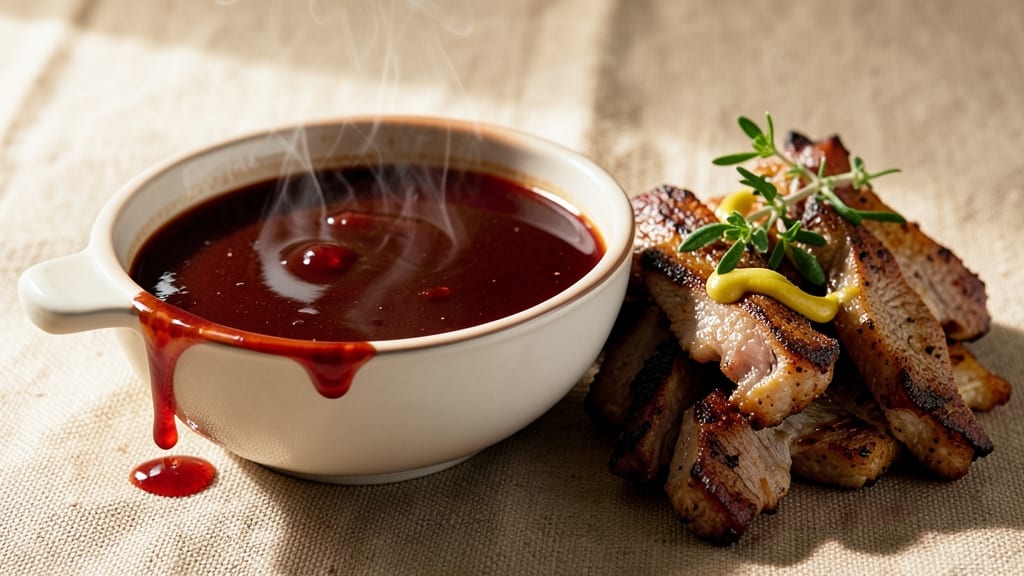
This au jus sauce recipe transforms simple beef broth into a deep, savory masterpiece that elevates roast beef leftovers into something extraordinary. 💛 The secret lies in careful reduction and precise seasoning—no shortcuts, just rich, restaurant-quality flavor built from the ground up.
I developed this method after realizing how often homemade au jus falls flat, and it's now my go-to for turning any beef dish into a showstopper.
The process is straightforward but requires attention to detail: simmering the broth until it thickens just enough to coat the back of a spoon, then straining for silky smoothness.
What makes this recipe special is the balance of umami depth from the beef broth and the bright acidity of red wine vinegar, which cuts through the richness without overpowering it.
The optional cornstarch slurry adds just the right amount of body, ensuring every bite of your roast beef is accompanied by a luxurious drizzle.
By the time you're done, you'll have a sauce that's glossy, flavorful, and impossible to resist—one that transforms ordinary leftovers into a meal worth celebrating.
The beauty of this recipe is its versatility: it works equally well as a dipping sauce for sandwiches, a glaze for roasted vegetables, or a finishing touch for steak frites. The key is patience; letting the flavors develop during the reduction is what separates good au jus from great.
Serve it warm alongside your favorite beef dishes, or store it in the fridge for up to a week—it only gets better as the flavors meld.
This isn't just a sauce; it's the finishing touch that turns a simple meal into something memorable. Let's make it—your taste buds will thank you.
Ingredients for au jus sauce recipe with beef broth
Nine ingredients transform humble beef broth into restaurant-worthy au jus magic.
| Ingredient | Amount | Notes |
|---|---|---|
| Beef Broth 🥩 | 4 cups | High-quality, homemade preferred |
| Red Wine Vinegar 🍷 | ¼ cup | Dry variety for brightness |
| Cornstarch 🌾 | 1 tbsp | For thickening slurry |
| Cold Water 💧 | 2 tbsp | For cornstarch slurry |
| Worcestershire Sauce 🍶 | 1 tbsp | For umami depth |
| Dijon Mustard 🌶️ | 1 tsp | For subtle tang |
| Black Peppercorns 🌶️ | ½ tsp | Freshly cracked preferred |
| Salt 🧂 | ½ tsp | Kosher or sea salt |
| Fresh Parsley 🌿 | 2 tbsp | Chopped, for garnish |
The beef broth is non-negotiable—homemade is ideal, but a high-quality store-bought like Kitchen Basics or Pacific Foods works in a pinch. Look for labels that say 'no added salt' if you're adding your own. The red wine vinegar should be dry (like Balsamic Vinegar Co.), not sweet—it's what cuts through the richness. I always grab extra parsley because half goes in the sauce, half gets garnished on top. Freshly cracked black peppercorns make a world of difference compared to pre-ground—worth the 30 seconds to crush them in a mortar and pestle.
No cornstarch? Arrowroot powder works 1:1. Skip the Worcestershire? A splash of soy sauce adds umami, though it'll taste slightly different. The Dijon mustard is optional but recommended—it adds complexity without overpowering. For a vegetarian version, swap beef broth for mushroom broth and Worcestershire for vegetarian Worcestershire sauce. The sauce thickens as it reduces, so don't worry if it looks too thin at first—patience is key. If you're making this ahead, the cornstarch slurry can be pre-mixed and stored in the fridge for up to 2 days.
This sauce keeps beautifully—1 week in the fridge and 3 months in the freezer. For freezing, use ice cube trays so you can thaw just what you need. The flavors actually improve over time as everything melds together. I always make extra because it disappears fast—great for dipping fries, drizzling over roasted potatoes, or turning a simple sandwich into something special. Store it in a sealed container with a splash of water to prevent a skin from forming.
Why You'll Love This Recipe
- Five-Ingredient Magic: I swear by this recipe because it’s the kind of sauce that turns a simple beef dinner into something restaurant-worthy—just by simmering broth, vinegar, and Worcestershire until that perfect glossy sheen coats everything.
- Slippery-Smooth Secret: The cornstarch slurry is my shortcut to velvety thickness without lumps. Stir it in while the broth bubbles, and—poof—no more thinning sauce mid-dinner. (Yes, even on a Tuesday night.)
- Leftovers That Shine: This sauce keeps like a dream in the fridge for up to a week. Drizzle it over next-day roast beef or toss it into a pot of mashed potatoes—it’s the kind of flavor that only gets better with time.
- Budget Booster: You’re basically making gold from pantry staples. A splash of vinegar brightens up cheap broth, Worcestershire adds depth, and cornstarch stretches it to feed the whole family without breaking the bank.
Step-by-step instructions for rich au jus with beef broth
Transform simple ingredients into a velvety, restaurant-quality au jus that elevates any roast beef.
🍳 Step 1: Build the Flavor Base
In a medium saucepan, combine the 4 cups beef broth with the 0.25 cup red wine vinegar and 1 tbsp Worcestershire sauce. Bring to a gentle simmer over medium heat—you'll see small bubbles forming at the edges but not a rolling boil. Let it cook uncovered for 5 minutes to let the vinegar's acidity mellow slightly and the flavors meld.
Here's where the magic happens: the vinegar brightens the broth while the Worcestershire adds that deep umami punch. I like to stir occasionally, but not constantly—this prevents the broth from reducing too quickly. You're looking for a fragrant aroma that combines savory and slightly tangy notes. If you're using homemade broth, this is your chance to appreciate its richness.
🥘 Step 2: Create the Thickening Slurry
While the broth simmers, whisk together the 1 tbsp cornstarch and 2 tbsp cold water in a small bowl until completely dissolved. This creates your thickening agent, and the cold water is crucial—it prevents the cornstarch from activating too quickly. Let it sit for 1 minute while you prepare the next step.
This slurry technique gives you precise control over the sauce's consistency. Too much cornstarch and you'll end up with a gluey mess; too little and your sauce will be watery. I've found that 1 tbsp cornstarch is perfect for this quantity of broth—it creates that beautiful, coatable texture without making the sauce heavy.
🍳 Step 3: Thicken the Sauce Perfectly
Slowly pour the cornstarch slurry into the simmering broth while whisking continuously. The moment you add it, you'll see the sauce begin to thicken—this is your signal to keep whisking vigorously. Reduce the heat to low-medium to prevent the sauce from boiling over as it thickens.
Cook for another 2-3 minutes until the sauce reaches your desired consistency—it should coat the back of a spoon but still be pourable. If it thickens too quickly, add 1-2 tablespoons of hot broth to loosen it. The sauce should be glossy and velvety, not pasty. Here's a pro tip: if you're serving this with roast beef, aim for a slightly thicker consistency that will cling beautifully to each slice.
🔪 Step 4: Season and Finish
Remove the sauce from heat and stir in the 1 tsp Dijon mustard, 0.5 tsp cracked black peppercorns, and 0.5 tsp salt. The mustard adds a subtle tang that balances the richness, while the peppercorns contribute a fresh, piquant bite. Taste and adjust the seasoning—you might need a touch more salt to complement the vinegar's acidity.
Let the sauce rest for 2-3 minutes off the heat. This resting period allows all the flavors to fully integrate. The sauce will thicken slightly more as it cools, so don't be tempted to over-thicken it now. For the final touch, stir in the 2 tbsp chopped fresh parsley just before serving—this adds a bright, herbal note that cuts through the richness.
⏰ Step 5: Serve Immediately
Strain the sauce through a fine-mesh sieve if you prefer a completely smooth texture, or leave it slightly textured for added depth. Serve the au jus immediately over sliced roast beef, drizzling generously over each portion. The contrast of the warm, rich sauce against the tender beef is what makes this dish truly special.
Here's the thing about au jus—it's all about timing. The sauce continues to thicken as it sits, so don't make it too far in advance. If you need to reheat leftovers, do so gently over low heat, stirring constantly to prevent the sauce from breaking. And trust me, every bite of that perfectly seasoned beef with this velvety sauce will have you wondering why you ever bought bottled au jus.
Pro Tips For Making Au Jus Sauce Recipe With Beef Broth
- Simmer Wine Vinegar First: I learned this the hard way—adding red wine vinegar straight to hot broth makes the sauce taste harsh and raw. Heat it alone for 30 seconds first, then pour it into the broth to mellow the acidity and integrate the flavor smoothly.
- Slurry Cornstarch Properly: Skip the lazy "just stir it in" approach. Mix cornstarch with cold water first (1 tbsp cornstarch to 2 tbsp water) until completely dissolved—no lumps. This slurry thickens like a dream instead of clumping into a gluey mess.
- Taste Before Thickening: Sauces go from perfect to gluey fast. Taste the broth before adding the slurry—adjust salt, vinegar, or Worcestershire now, not after. Once you thicken it, you’re locked in.
- Use Reduced Broth: Store-bought beef broth is watery and dull. Simmer your broth down by half first—it concentrates flavor and reduces the need for extra vinegar or Worcestershire. (Yes, it takes 15 minutes, but the sauce will taste like you spent all day.)
Essential equipment for au jus sauce recipe with beef broth
Saucepan Essentials
A medium saucepan with 3-quart capacity is your best friend for this recipe—I use my All-Clad stainless steel because it distributes heat evenly and prevents scorching. If you're working with a budget, a Calphalon nonstick saucepan works beautifully too.
The key is choosing a pan with sloped sides—this helps control the reduction process and prevents splattering when you add the cornstarch slurry. 🔥
Whisking Tools
Invest in a balloon whisk (like the OXO Good Grips) for this recipe—its flexible wires cut through the sauce while incorporating air, creating that silky texture. I keep mine in my kitchen at all times because it's also great for scrambling eggs and whipping cream.
Avoid cheap whisks with stiff wires; they struggle to blend the cornstarch properly and can leave lumps. For an even smoother finish, I sometimes use a handheld immersion blender after straining, though it's not required.
Measuring Tools
Precision matters when making au jus, so grab a stainless steel measuring spoon set (I love the KitchenAid 18-piece) for your cornstarch, water, and seasonings. For the beef broth, a liquid measuring cup with spout makes pouring easier without spills.
Pro tip: Use a digital kitchen scale to measure your cornstarch by weight (about 14 grams) if you're feeling fancy—it's more accurate than volume measurements, especially when working with powders. 💡
Straining Gear
For that restaurant-quality smoothness, a fine-mesh strainer (like the Heston Blumenthal Microplane) removes any unwanted particles from your sauce. If you don't have one, a cheesecloth or even a clean coffee filter works in a pinch.
I always keep a small strainer in my kitchen because it's useful for everything from making smooth soups to clarifying broths. For extra clarity, I sometimes double-strain through a paper coffee filter—it catches even the tiniest bits.
Optional Pro Tools
While not essential, a thermometer (like the Thermoworks ThermoPop) helps you monitor the sauce's temperature during reduction—aim for 195-205°F for optimal consistency. For flavor testing, I like using tasting spoons (the KitchenCraft set) because they're easy to clean and perfect for checking seasoning.
If you're making this sauce frequently, consider a small immersion circulator (like the Anova Nano) for precise temperature control during thickening.
Nutrition facts
Frequently asked questions
Can I use store-bought beef broth instead of homemade?
Yes! High-quality store-bought broth works perfectly—look for brands with minimal additives like Kitchen Basics or Pacific Foods. For best results, choose a "no added salt" version so you can control the seasoning. Homemade broth adds depth, but a good quality store-bought option will still deliver rich, savory flavor.
What if my au jus turns out too thick or too thin?
Too thick? Thin with 1-2 tablespoons of hot beef broth while whisking constantly. Too thin? Simmer uncovered for 2-3 more minutes to reduce further. For extra control, make a second cornstarch slurry with ½ tbsp cornstarch + 1 tbsp water if needed. The key is patience—au jus thickens as it cools, so don't overcorrect immediately.
Can I make this sauce ahead of time?
Store the completed sauce in an airtight container in the fridge for up to 1 week or freeze for 3 months. Reheat gently over low heat, stirring constantly to prevent separation. For freezing, portion into ice cube trays—perfect for thawing just what you need. The flavors actually improve as they meld over time.
What are the best ways to serve au jus?
This versatile sauce works beautifully with roast beef, steak sandwiches, or as a dipping sauce for fries. Drizzle over mashed potatoes or roasted vegetables for extra richness. For a modern twist, use it as a glaze for grilled meats or as a finishing sauce for beef stir-fries. The possibilities are endless!
Why does my au jus taste flat or bland?
Flat flavor usually means the broth lacked depth or seasoning wasn't balanced. Boost umami with an extra ½ tbsp Worcestershire sauce or 1 tsp soy sauce. For brightness, add ½ tsp more red wine vinegar. Always taste as you go—au jus should be rich, tangy, and slightly peppery. If needed, finish with a pinch of black pepper or a squeeze of lemon juice.