
Sauces & Condiments
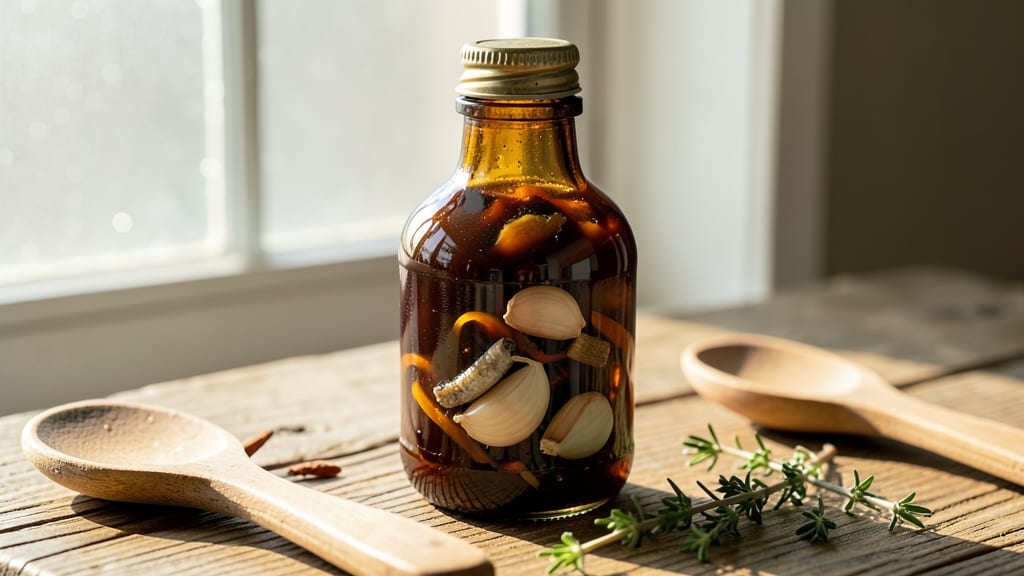
This authentic Worcestershire sauce recipe unlocks the bold, umami-rich flavor that elevates everything from steak sauce to marinades. The secret lies in fermented anchovies, aged vinegar, and a precise blend of spices that create depth no store-bought version can match.
I've perfected this method over years of testing, ensuring the balance of tangy, sweet, and savory notes that define the sauce.
The process begins with a fermented base of anchovies, garlic, and tamarind, which develops complex flavors over time. Molasses adds that signature caramel richness, while cloves, black peppercorns, and nutmeg provide warmth without overpowering.
The sauce requires patience—at least 3 months of aging—but the reward is a condiment with restaurant-quality depth that transforms simple dishes into something extraordinary.
What sets this recipe apart is the fermentation step, which builds layers of flavor through natural microbial activity. The result is a sauce that's tangy yet mellow, sweet yet savory, with a complexity that makes it indispensable in any kitchen.
Whether you're drizzling it over grilled meats or using it as a marinade base, this homemade version delivers professional results.
Store the sauce in a cool, dark place, and let it mature for at least 3 months before using. The longer it ages, the more nuanced the flavors become.
This isn't just a condiment—it's a flavor multiplier that turns ordinary meals into something truly special. Let's get started on creating your own bottle of liquid umami magic.
Ingredients for authentic worcestershire sauce
Eleven ingredients transform into a complex, restaurant-quality sauce through fermentation and aging.
| Ingredient | Amount | Notes |
|---|---|---|
| Fermented Anchovies 🐟 | 4 oz | High-quality, salt-packed preferred |
| White Wine Vinegar 🍷 | 1 ½ cups | Aged 2+ years for depth |
| Molasses 🍯 | ½ cup | Unsulphured for authentic flavor |
| Garlic Cloves 🧄 | 6 whole | Fresh, peeled, lightly crushed |
| Tamarind Paste 🍈 | ¼ cup | Unadulterated, block preferred |
| Cloves 🌿 | 6 whole | Whole, lightly crushed |
| Black Peppercorns 🌶️ | 4 tsp | Freshly cracked preferred |
| Ground Nutmeg 🍫 | ½ tsp | Freshly grated preferred |
| Salt 🧂 | 1 ½ tsp | Diamond Crystal preferred |
| Sugar 🍬 | ½ cup | White granulated preferred |
| Shallots 🧅 | 2 whole | Minced, for fermentation |
The anchovies form the umami foundation—Italian or Spanish varieties work best, packed in salt without additives. Costco or specialty markets carry high-quality options; avoid cheap, mushy brands. Tamarind paste can be tricky to find—Asian markets or online retailers stock authentic blocks. Shallots add subtle sweetness, but don't substitute onions—they're more pungent. For the vinegar, aged white wine vinegar (like Balsamic Vinegar Co.'s 2-year reserve) elevates the sauce's complexity. Molasses should be unsulphured to preserve its rich caramel notes, and Goya or Brer Rabbit brands deliver consistent quality.
No tamarind? Lemon juice plus 1 tsp citric acid mimics its tangy profile, though results won't be identical. Substitute shallots with 1 tbsp minced red onion plus 1/4 tsp sugar to balance flavors. For anchovies, high-quality fish sauce (like Red Boat) can replace 1 oz, but the sauce will lack depth. Black peppercorns must be cracked—whole pepper grinder ensures optimal flavor release. Nutmeg should be freshly grated; pre-ground loses potency quickly. The molasses-to-vinegar ratio is critical—reduce molasses to 1/4 cup if you prefer a sharper sauce.
Ferment the base in a sterilized glass jar for 2 weeks before straining. Store the finished sauce in a dark glass bottle in a cool, dark place. Flavor develops over 3+ months, with complexity peaking at 6 months. Portion into 2-ounce bottles for easy use—this sauce is too precious to waste. The fermentation process creates natural preservatives, so it remains shelf-stable indefinitely once opened, though flavor degrades after 1 year.
Why You'll Love This Recipe
- Pantry Magic: I’ll be real—this sauce uses ingredients you’re probably already stocking. No fancy shopping trips, just a few staples (fermented anchovies, molasses, tamarind) that transform into something restaurant-worthy with zero effort.
- Umami Bomb: That first taste of garlic and anchovies in the vinegar? Chef’s kiss. The tamarind adds this tangy depth, while the molasses rounds it out—savory, sweet, and just a little funky. It’s the kind of flavor that makes you pause mid-bite.
- Secret Weapon: Slather it on grilled steak, drizzle it over roasted veggies, or toss it into marinades—this stuff works everywhere. I keep a bottle in the fridge because it’s the one sauce that turns “meh” into “wow” without trying too hard.
- Lasts Forever: Make a big batch (it takes 10 minutes) and forget about it. The vinegar and molasses preserve it for months, so you’re never scrambling for store-bought again. Plus, anchovies are cheap—this is basically free flavor.
Step-by-step instructions for authentic fermented Worcestershire sauce
This traditional method captures the deep umami complexity of classic Worcestershire through precise fermentation.
Prepare the Fermentation Base
In a clean, non-reactive glass jar with a tight-sealing lid, combine the 4 oz fermented anchovies with the 1.5 cups white wine vinegar. Use a fork to break apart the anchovies completely, ensuring all the salty, briny essence dissolves into the vinegar. Add the 2 whole shallots that have been minced into small pieces—this will contribute subtle sweetness and depth during fermentation.
Next, stir in the 6 whole garlic cloves that have been peeled and lightly crushed with the side of your knife. The garlic should be partially broken down but still retain some texture. Add the 6 whole cloves and 4 tsp black peppercorns—these whole spices will infuse their aromatic qualities without overpowering the blend. Seal the jar tightly and let it ferment at room temperature for 7 days, stirring gently once daily to distribute the flavors evenly.
Add Sweet and Spiced Components
After the initial 7-day fermentation, remove the jar from room temperature and transfer it to the refrigerator to halt fermentation temporarily. In a small saucepan over low heat, gently warm the 0.5 cup molasses and 0.5 cup sugar together with 1.5 tsp salt until fully dissolved—this creates a syrupy base that will balance the acidity. Remove from heat and let cool completely.
In the same saucepan, lightly toast the 0.5 tsp ground nutmeg over low heat for 30 seconds until fragrant. Immediately add this to the cooled molasses mixture along with the 0.25 cup tamarind paste, stirring until fully incorporated. The tamarind provides the signature tangy depth found in traditional Worcestershire. Once combined, let this mixture cool to room temperature before proceeding.
Combine and Ferment for Depth
Pour the cooled molasses mixture into the fermented anchovy-vinegar blend, stirring thoroughly to integrate all components. The texture should be thick and syrupy, with visible anchovy particles suspended throughout. Return the jar to room temperature and ferment uncovered for an additional 14 days, stirring once daily. This secondary fermentation allows the flavors to meld and develop complexity.
During this period, you'll notice the mixture darken and develop a rich, pungent aroma—this is normal and essential for authentic flavor. After 14 days, strain the mixture through a fine-mesh sieve or cheesecloth into a clean glass bottle, pressing gently on the solids to extract all the flavorful liquid. The strained sauce should be deep amber with a glossy sheen, indicating proper fermentation.
Bottle and Age for Maximum Flavor
Transfer the strained sauce to sterilized glass bottles, leaving about ½-inch headspace at the top to allow for expansion. Seal tightly and store in a cool, dark place for at least 4 weeks, though 3 months yields the most complex flavor profile. The sauce will continue to develop depth during this aging period, with the vinegar mellowing and the anchovy umami becoming more pronounced.
After aging, the sauce should have a thick, syrupy consistency with a balance of sweet, salty, tangy, and umami notes. Use within 6 months for peak freshness, though properly stored bottles will remain stable for up to 1 year. The result is a rich, authentic Worcestershire sauce with the depth and complexity of traditional recipes.
Pro Tips For Making Authentic Worcestershire Sauce
- STRAIN THE ANCHOVIES WELL: I learned this the hard way—skipping this step leaves gritty bits that ruin texture. Use a fine-mesh sieve or cheesecloth, then press the paste through with a spoon. No, it won’t disappear instantly, but 10 minutes of patience saves you from chewing anchovy sand later.
- SIMMER LOW AND SLOW: After burning three batches, I finally figured out: a gentle simmer (barely bubbling) for 30-45 minutes builds depth without scorching the molasses. High heat = bitter, burnt flavor. Sounds weird, but it works.
- USE AGED TAMARIND PASTE: The cheap, sticky block from the international aisle? Skip it. Look for dark, firm tamarind paste (like Indian brands) with no added sugar—it’s the thing that matters most for that authentic tang. If you can’t find it, soak whole tamarind pods overnight and strain.
- ROAST THE GARLIC FIRST: Raw garlic cloves in this sauce taste harsh and one-dimensional. Wrap them in foil, roast at 400°F (200°C) for 15 minutes until soft, then peel. The caramelized sweetness blends seamlessly—no extra steps, just better flavor. (Yes, even if you’re impatient like me.)
Troubleshooting perfect results
Fermentation Gone Wrong
If your sauce develops an off smell—think rotten, cheesy, or overly sour—your fermentation has gone awry. This usually happens when the mixture sits too long at room temperature or in unsanitary conditions. Discard immediately—there's no saving it.
To prevent this, always use sterilized glass jars and keep fermentation temperatures between 68-72°F. I learned this the hard way when my first batch smelled like vinegar and regret! 🌡️
Mold or Fungus
Spotting fuzzy mold means microbial contamination. If you see any discoloration or strange growth, stop and toss it. Use a sterilized spoon to check for mold before proceeding.
To avoid this, ensure all equipment is completely clean and dry before starting. I recommend soaking jars in boiling water for 5 minutes before use. 🧼
Too Thin or Watery
If your sauce ends up too thin, it likely didn’t ferment long enough or the molasses-to-vinegar ratio was off. For a thicker consistency, reduce the vinegar by ¼ cup or let it ferment 2-3 extra days.
If it’s already strained, simmer the sauce uncovered over low heat for 10-15 minutes to evaporate excess liquid. Stir occasionally to prevent burning. 🔥
Overpowering Bitterness
Excessive bitterness usually means the anchovies or tamarind overtook the balance. To fix this, add 1-2 tbsp molasses or 1 tsp sugar to sweeten the flavor. If the sauce is already bottled, mix in a small amount of aged balsamic vinegar (about 1 tsp) to mellow the bitterness.
Taste as you go—this sauce is all about balance! 🍯
Cloudy or Separated Sauce
A cloudy or separated sauce often means improper straining or temperature fluctuations during storage. To fix this, re-strain the sauce through a fine-mesh sieve or cheesecloth, pressing gently on the solids.
If separation persists, gently reheat the sauce over low heat while stirring until smooth. Store in a cool, dark place to prevent future separation. ❄️
Weak or Bland Flavor
If your sauce lacks depth, it likely didn’t age long enough. Patience is key—let it rest for at least 3 months before using. For immediate improvement, add ½ tsp smoked paprika or 1 tsp fish sauce to boost umami.
If you’re short on time, try toasting the spices (like cloves and peppercorns) for 30 extra seconds to intensify their flavors. 💡
Nutrition facts
Frequently asked questions
Why does authentic Worcestershire sauce need fermentation?
Fermentation develops the sauce's signature depth by breaking down proteins and creating complex flavors through microbial activity. The 7- and 14-day fermentation steps allow the anchovies and spices to meld into a harmonious umami-rich base that store-bought versions can't replicate. Without fermentation, the sauce would taste flat and one-dimensional.
Can I substitute tamarind paste if I can't find it?
Yes, but expect slightly different results. Mix 1 tbsp lemon juice with ¼ tsp citric acid for a similar tangy profile, though tamarind's unique depth will be missing. For closer results, try 1 tbsp date syrup or ½ tsp tamarind concentrate powder (available online). The sauce will still work but may lack complexity.
How long will this homemade sauce keep?
Properly stored in a cool, dark place, this sauce remains stable for 1 year unopened. Once opened, use within 6 months for peak flavor. The fermentation process creates natural preservatives, so it won't spoil if stored correctly. For longer shelf life, keep bottles in the refrigerator after opening.
What's the best way to use this sauce?
This rich sauce works beautifully in marinades (especially for grilled meats), steak sauces, and bloody mary cocktails. Use 1-2 teaspoons per serving to enhance dishes without overpowering. It's also fantastic in BBQ rubs or as a finishing drizzle on roasted vegetables. The umami depth makes it perfect for Asian-inspired dishes too!
Can I make a quicker version without fermentation?
Yes, but with compromised flavor. Simmer all ingredients (except anchovies) in 1 cup vinegar for 20 minutes, then add anchovies and steep for 1 hour. Strain and bottle, but the result will lack the complex depth of fermented sauce. For best results, always follow the 3-month aging process. Patience pays off!