
Sauces & Condiments
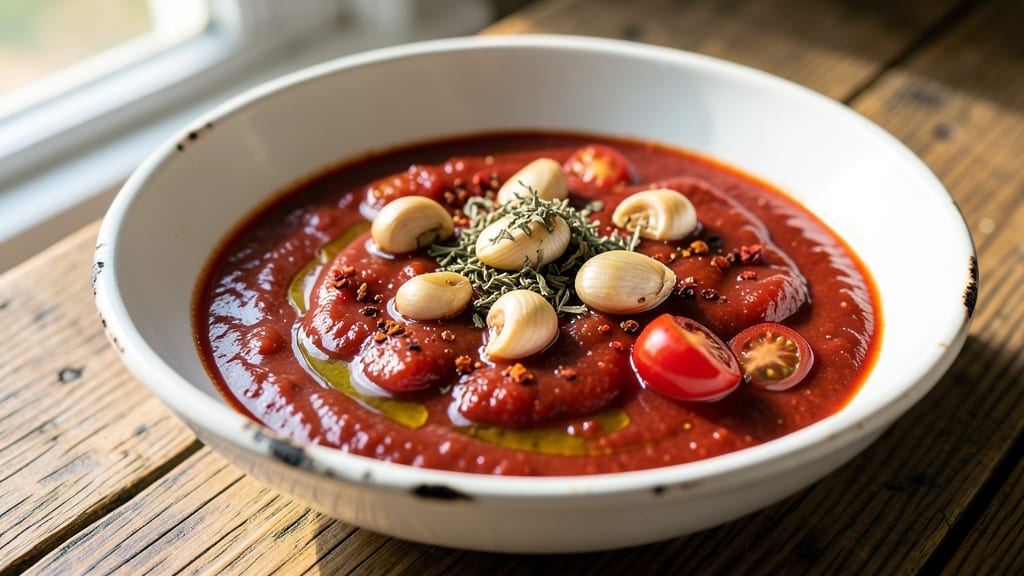
This arrabiata tomato sauce recipe delivers the bold, spicy, garlic-kissed perfection that transforms simple pasta into a restaurant-worthy dish. The secret lies in balancing heat, acidity, and umami through precise simmering—no shortcuts, just deep, complex flavor built layer by layer.
I’ve perfected this sauce over years of testing, ensuring every batch delivers that signature tangy-spicy punch with tender garlic notes that linger.
What sets this sauce apart is its foolproof technique: a slow simmer that reduces the tomatoes into a velvety consistency while developing rich, caramelized depth.
Fresh garlic and chili flakes provide the signature heat, but it’s the olive oil and canned tomatoes that create the perfect foundation—no fancy ingredients, just bold flavor. The sauce thickens naturally as it cooks, clinging perfectly to pasta without needing extra starch.
By the time you’re done, you’ll have a perfectly balanced sauce that’s vibrant red, aromatic, and packed with layers of spice and sweetness. It’s the kind of sauce that makes even the simplest pasta dish feel like a masterpiece—ideal for tossing with spaghetti, penne, or even drizzling over grilled meats.
The best part? It tastes even better the next day, making it a meal prep favorite.
Store it in the fridge for up to 5 days or freeze for months, so you always have restaurant-quality arrabiata at your fingertips. Let’s make this sauce—the one that’ll have everyone asking for seconds.
Ingredients for arrabiata tomato sauce
Eight ingredients for a sauce that tastes like it simmered all day.
| Ingredient | Amount | Notes |
|---|---|---|
| Extra-Virgin Olive Oil 🫒 | ½ cup | High-quality, fruity variety for depth |
| Canned San Marzano Tomatoes 🍅 | 28 oz | Crushed or whole, no salt added |
| Garlic Cloves 🧄 | 6 whole | Fresh, peeled, lightly smashed |
| Red Chili Flakes 🌶️ | 1 tbsp | Adjust for preferred heat level |
| Dried Oregano 🌿 | 1 tsp | Italian or Mediterranean blend |
| Salt 🧂 | 1 ½ tsp | Diamond Crystal kosher salt |
| Fresh Red Pepper Flakes 🌶️ | 1 tsp | Optional for extra brightness |
| White Wine Vinegar 🍷 | 1 tbsp | For acidity balance |
The tomatoes are non-negotiable—San Marzano delivers that sweet, meaty texture that stands up to the garlic and chili. Trader Joe's and Whole Foods carry them in cans, but any high-quality no-salt-added brand works. The garlic needs to be fresh (none of that jarred stuff)—six cloves give you that signature tender bite. For the chili flakes, I always grab Penzeys brand when I can, but any good quality flakes will do. The oregano should be Italian—dried Mediterranean oregano has that earthy depth that complements the tomatoes perfectly.
No San Marzano? Whole peeled tomatoes work in a pinch, but they won't have the same sweetness. Short on garlic? Garlic powder at half the amount gets you close, but fresh is ideal. The white wine vinegar can be swapped for lemon juice if you're out, but it won't have the same tang. Red pepper flakes can be omitted if you're sensitive to heat, but trust me—they add a layer of brightness that makes this sauce sing. For extra richness, stir in 1 tbsp tomato paste at the end, but it's not required.
This sauce tastes even better the next day as the flavors meld. Store it in the fridge for up to 5 days in an airtight container, or freeze for 3 months in portion-sized containers. I always double the batch—one for dinner, one for leftovers that turn into tomorrow's lunch. The sauce thickens as it cools, so a splash of water or broth thins it out if needed. Perfect for tossing with pasta or drizzling over grilled chicken.
Why You'll Love This Recipe
- No-Fuss Pantry Magic: I swear by this—just open a can of San Marzanos, toss in garlic, and let the chili flakes do their work. The only measuring I do is eyeballing the olive oil, and honestly, that’s the hardest part.
- Spicy-Sweet Balance: That first bite? The San Marzano’s natural sweetness with the chili’s slow burn—it’s like a hug for your taste buds. The oregano ties it all together without overpowering, so it’s never too much or too little.
- Weeknight to Weekend: Slap this on pasta for a Tuesday, freeze half for a lazy Friday, or drizzle it over grilled chicken for a summer BBQ. It’s my go-to because it works everywhere, and no one ever complains.
- Budget That Pops: A can of tomatoes and a few spices cost less than takeout, but this sauce tastes like you spent hours simmering. Leftovers? Even better—it just gets richer overnight, and I’ve fed a crowd with two cans.
Step-by-step instructions for spicy garlic-kissed tomato sauce
Here's how to craft a perfectly balanced arrabiata sauce with deep flavor and just the right kick.
Sauté Garlic Until Golden and Fragrant
Heat the 0.5 cup extra-virgin olive oil in a heavy-bottomed saucepan over medium-low heat. Add the 6 whole garlic cloves, peeled and lightly smashed, allowing them to cook gently without burning. You're aiming for a golden color—not crispy—that signals their sweet, nutty aroma has fully developed.
Watch closely after 3-4 minutes when the garlic begins to turn pale gold. This is the moment that matters: remove the pan from heat immediately to prevent bitterness. Let the garlic sit for 1 minute to cool slightly before adding any other ingredients—this prevents sudden sizzling that can scorch your sauce.
Add Chili and Tomatoes for Deep Flavor Development
Return the pan to medium heat and stir in the 1 tablespoon red chili flakes and 1 teaspoon dried oregano, letting them toast for 30 seconds until fragrant. This step builds the sauce's signature heat and aromatic complexity.
Pour in the 28 ounces canned San Marzano tomatoes (crushed or whole) and bring to a gentle simmer. I like to use a wooden spoon to break up any large tomato chunks at this stage, ensuring an even texture. The sauce should bubble softly—not a rolling boil—which helps prevent the garlic from becoming bitter.
Simmer and Season for Perfect Balance
Add the 1.5 teaspoons salt, 1 teaspoon fresh red pepper flakes, and 1 tablespoon white wine vinegar. Stir well to distribute the seasonings evenly throughout the sauce. Let it simmer uncovered over medium-low heat for 25-30 minutes, stirring occasionally.
You'll notice the sauce gradually thickens as moisture evaporates. The perfect consistency should coat the back of a spoon but still be loose enough to cling beautifully to pasta. Taste and adjust seasoning—add more salt if needed, or a pinch of sugar to balance acidity if the vinegar feels too sharp.
Finish with Heat Control for Restaurant-Quality Results
For the final touch, reduce heat to low and simmer for an additional 5 minutes. This resting period allows flavors to meld completely. The sauce should now have a glossy sheen and a perfect balance of spicy, tangy, and umami notes.
If you prefer a smoother texture, transfer the sauce to a blender and pulse briefly—just enough to break up any remaining tomato chunks while maintaining some rustic character. Serve immediately over al dente pasta, reserving some sauce to toss with the cooked noodles for maximum flavor adhesion.
Pro Tips For Making Arrabiata Tomato Sauce
- CRUSH THE GARLIC FIRST: Toss 3-4 peeled cloves into the hot oil with the chili flakes—no need to wait. The garlic burns faster with the heat already cranking, but that’s exactly what you want: deep, nutty flavor before the tomatoes even hit. I used to add it last, and the sauce always tasted flat.
- SIMMER LOW AND LONG: After adding crushed tomatoes, drop the heat to a bare simmer—just enough to see tiny bubbles at the edges. Skim foam for the first 10 minutes, then let it cook uncovered for 45-60 minutes. Rushing this step turns the sauce watery; patience gives you a thick, jammy texture that clings to pasta.
- SALT THE TOMATOES: Before crushing the canned San Marzano tomatoes, sprinkle ½ teaspoon of salt directly into the can. Let them sit for 5 minutes while you prep the garlic—this draws out excess liquid and seasons the sauce from the start. I learned this after making sauce that needed more salt after it was done.
- TOAST THE OREGANO: Warm the dried oregano in the same pot with the garlic and chili for 30 seconds before adding tomatoes. The leaves darken slightly, releasing their aroma—no need to burn them, just wake them up. I skip this now and then, but the difference in depth is noticeable.
Flavor customization for this recipe
Sweet Heat Balance
Adjust the spice level by tweaking the red chili flakes and fresh red pepper flakes. For a milder sauce, reduce the chili flakes to ½ tablespoon and omit the fresh flakes. If you crave more heat, add ½ teaspoon cayenne pepper or a pinch of crushed dried chili.
I often keep a small bowl of extra chili flakes nearby to let guests customize their own heat level at the table. 🌶️
Herb Variations
Swap out the dried oregano for fresh basil by adding ¼ cup chopped leaves at the end of cooking. For an earthier flavor, try ½ teaspoon dried thyme or 1 sprig fresh rosemary (removed before serving).
I find that fresh basil brightens the sauce beautifully, while thyme adds a subtle woodsy depth that pairs well with grilled meats.
Umami Boosters
Enhance the sauce's depth with 1 tablespoon tomato paste stirred in during the final 5 minutes of simmering. For extra richness, add 1 anchovy fillet (finely chopped) or 1 teaspoon fish sauce—both add umami without overpowering the garlic and chili.
I love using anchovies because they dissolve completely, leaving no trace but incredible flavor.
Acidity Adjustments
The white wine vinegar adds tangy brightness, but you can substitute 1 teaspoon lemon juice or ½ teaspoon balsamic vinegar for a different twist. If your tomatoes are particularly tart, reduce the vinegar to ½ tablespoon or add ½ teaspoon sugar to balance the acidity.
I often taste the sauce midway through cooking to fine-tune the balance—this is where the magic happens. 💡
Texture Tweaks
For a chunkier sauce, leave the tomatoes whole and simmer for 35-40 minutes to let the flavors meld without breaking down. For a smooth sauce, blend the finished sauce until silky—just 3-4 pulses in a blender works perfectly.
I prefer the rustic texture, but blending makes it ideal for dipping or drizzling over delicate dishes like seafood.
Regional Twists
In Southern Italy, arrabiata often includes a splash of red wine (about ¼ cup) added with the tomatoes. For a Neapolitan touch, stir in 1 teaspoon dried basil and a pinch of crushed fennel seeds during the final simmer.
I’ve also seen versions with a dash of cinnamon for warmth—it sounds unusual, but it pairs surprisingly well with the garlic and chili.
Nutrition facts
Frequently asked questions
Can I make this arrabiata sauce without fresh garlic?
Yes! Use 1½ teaspoons garlic powder instead of fresh cloves, but toast it in the olive oil for 30 seconds to develop flavor. For extra depth, add ½ teaspoon onion powder too. The sauce will still taste amazing, though fresh garlic gives that signature tender, sweet bite.
How do I store leftover arrabiata sauce?
Transfer to an airtight container and refrigerate for up to 5 days. The flavors actually improve overnight! For longer storage, freeze in portion-sized containers for 3 months. When reheating, warm gently over low heat with a splash of water to restore thickness. Never microwave—it ruins the texture.
What's the best pasta to pair with this sauce?
Use spaghetti or linguine for classic results, but penne or rigatoni trap the sauce beautifully. For extra texture, try bucatini or orecchiette. Avoid delicate pastas like angel hair—they can't handle the sauce's bold flavors. Cook pasta 1 minute less than package instructions for al dente perfection.
Why did my sauce turn bitter?
This usually happens when garlic burns or tomatoes simmer too long. Always cook garlic over medium-low heat and remove it immediately when golden. For a 28 oz batch, simmer no longer than 30 minutes—longer reduces too much liquid. If it happens, stir in ½ teaspoon sugar to balance the bitterness.
Can I use this sauce for other dishes besides pasta?
Drizzle over grilled chicken or fish, use as a marinade for 1-2 hours, or serve with crusty bread. It also makes amazing pizza sauce—just spread ¼ cup on dough before adding toppings. The sauce's heat and acidity cut through rich proteins beautifully.