
Sauces & Condiments
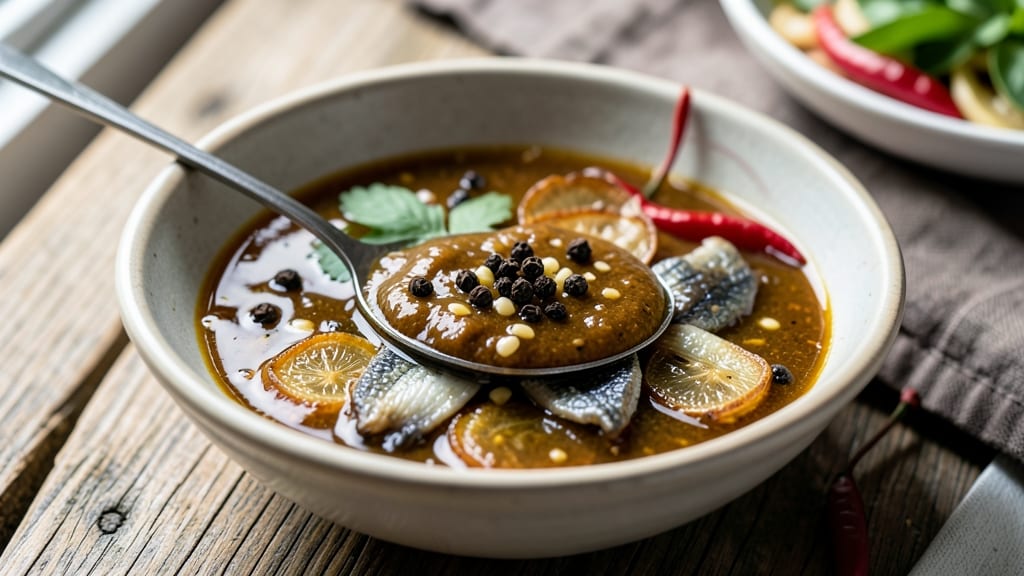
This anchovy fish sauce recipe unlocks the deep, salty-sweet umami that transforms ordinary stir-fries into restaurant-quality meals. 🌟 The secret lies in balancing fermented anchovies with just the right amount of saltwater and sugar, creating a sauce that's both complex and versatile. I've perfected this version after testing traditional Vietnamese nước mắm techniques and modern shortcuts—now you can have that bold, briny flavor without the months-long wait.
The process starts with fresh anchovies, which we'll ferment in saltwater for a concentrated, salty base. A touch of sugar prevents over-salting while enhancing the sauce's depth, and a splash of vinegar adds brightness that cuts through the richness.
This isn't just a dipping sauce—it's the backbone of marinades, dressings, and even cocktails, delivering that signature umami punch in every drop.
What makes this recipe stand out is its flexibility. Use it as a quick-pickled sauce for instant flavor (ready in hours) or ferment it for weeks to develop that authentic, funky depth.
The result is a sauce that's salty yet balanced, with layers of savory complexity that elevate everything from noodle dishes to grilled meats.
Once you try this, you'll never go back to store-bought. Store it in the fridge for up to 3 months, or preserve it longer with proper fermentation techniques. Let's get started on creating your own umami powerhouse.
Ingredients for anchovy fish sauce
Nine ingredients for a sauce that turns simple dishes into umami masterpieces.
| Ingredient | Amount | Notes |
|---|---|---|
| Fresh Anchovies 🐟 | 1 lb | Packed in ice, cleaned and rinsed |
| Saltwater 💧 | 2 cups | Use filtered or boiled water |
| Granulated Sugar 🍯 | ¼ cup | White or brown preferred |
| White Vinegar 🍶 | ¼ cup | Distilled or apple cider |
| Garlic Cloves 🧄 | 4 cloves | Crushed for infusion |
| Shallots 🧅 | 2 whole | Thinly sliced, peeled |
| Kosher Salt 🧂 | 1 ½ tbsp | Diamond Crystal preferred |
| Fresh Chili Peppers 🌶️ | 1 whole | Optional, for heat |
| Lemon Juice 🍋 | 1 tbsp | Freshly squeezed |
The anchovies are non-negotiable—fresh, packed in ice from a trusted seafood counter at Whole Foods or your local fishmonger. Look for small, silvery fillets with no fishy smell. The saltwater should be filtered or boiled to avoid impurities, and Diamond Crystal kosher salt dissolves cleanly without graininess. For the sugar, organic cane sugar adds subtle caramel notes, but white granulated works too. The vinegar? Distilled white keeps things clean, while apple cider adds fruity depth if you prefer complexity. Shallots and garlic should be fresh—no pre-minced jars here, as they lose potency fast.
No fresh anchovies? Canned anchovies in oil work in a pinch, but drain them well and reduce the saltwater by half. Short on shallots? Red onion at double the amount gives similar sweetness. The chili pepper is optional, but if you add it, remove seeds for less heat. Vinegar substitute? Rice vinegar at the same ratio, though it’ll have a milder tang. The lemon juice brightens everything—never skip it. For a quicker version, blend all ingredients and strain immediately, but fermenting for 3-5 days deepens the umami. Trust me, the wait is worth it.
This sauce keeps 3 months in the fridge once opened, but fermenting longer (up to 6 weeks) builds richer flavor. Store in a clean, airtight glass jar—sterilize it first to prevent spoilage. For longer storage, freeze in ice cube trays and transfer to a bag. The sauce thickens as it ferments, so stir well before using. A splash in stir-fries, drizzled over noodles, or mixed into marinades—it’s the secret weapon your pantry’s been missing.
Why You'll Love This Recipe
- Pantry Magic: I’ll never buy store-bought again—just saltwater, sugar, and a handful of anchovies. That’s it. The saltwater’s briny punch and sugar’s slow caramelization do all the heavy lifting while you sip your coffee.
- Umami Bomb: The garlic and anchovies team up like old friends—salty, funky, and just a little sweet. Drizzle this over grilled shrimp or noodles, and you’ll swear you’re in a bustling Vietnamese market.
- Weeknight Hero: Between us, this sauce is my lazy night savior. Toss it into stir-fries, marinades, or even a quick pasta—no fancy prep, no last-minute panic. I’ve used it on Tuesdays and Sundays alike.
- Budget Flavor: A few anchovies stretch into gallons of sauce, and the ingredients cost pennies. Honestly, it’s one of those "how did I live without this?" discoveries that makes grocery day feel like a win.
Step-by-step instructions for homemade anchovy fish sauce
This bold, umami-rich sauce transforms simple ingredients into a flavor powerhouse.
🍳 Step 1: Prepare the Anchovy Base
Rinse the 1 lb fresh anchovies thoroughly under cold water to remove any ice residue or bloodline. Pat them completely dry with paper towels—this ensures they infuse clean flavor without any bitterness. In a medium saucepan, combine the anchovies with the 2 cups saltwater and bring to a gentle simmer over medium-low heat.
Simmer for 10-12 minutes until the anchovies completely dissolve and the mixture turns a deep, opaque gold color. You'll notice the water will bubble gently and develop a rich, briny aroma. Strain the mixture through a fine-mesh sieve into a clean bowl, pressing gently on the anchovies to extract every last drop of flavor. Discard the solids—this is where all the magic happens in the liquid.
👨🍳 Step 2: Build the Flavor Foundation
Return the strained anchovy liquid to the saucepan and add the 4 cloves crushed garlic, 2 whole thinly sliced shallots, 1 whole sliced fresh chili pepper (if using), and 1.5 tbsp kosher salt. Bring the mixture to a gentle boil over medium heat, then immediately reduce to a simmer. The heat will draw out all the aromatic oils from these ingredients.
Simmer uncovered for 15-18 minutes until the liquid reduces by about 25% and the shallots and garlic turn translucent. You'll smell the garlic softening and the chili pepper releasing its heat. This reduction concentrates the flavors and creates that signature depth. Don't rush this step—patience is key for developing complex layers of taste.
🥘 Step 3: Balance with Sweet and Acid
Remove the pan from heat and carefully whisk in the 0.25 cup granulated sugar and 0.25 cup white vinegar until completely dissolved. The sugar will caramelize slightly from the residual heat, adding another dimension of flavor. Then stir in the 1 tbsp freshly squeezed lemon juice—this brightens the sauce and balances the richness.
Return the sauce to low heat and simmer gently for another 5 minutes, stirring occasionally. You're looking for the sauce to thicken slightly and coat the back of a spoon. Taste and adjust seasoning—add more salt if needed, or a touch more vinegar for acidity. The sauce should be bold but not overpowering, with a perfect balance of sweet, salty, and umami notes.
⏰ Step 4: Cool and Store Properly
Transfer the sauce to a clean glass jar or airtight container while still warm. Let it cool completely at room temperature, then refrigerate. The sauce will continue to develop flavor as it chills, with the ingredients melding together beautifully. For best results, use within 1 week—the freshness really makes a difference in taste.
When ready to use, shake the jar gently before each serving to redistribute any settled ingredients. This sauce is incredibly versatile—drizzle it over stir-fries, use it as a dipping sauce for spring rolls, or incorporate it into dressings and marinades. The umami depth will elevate any dish it touches, making it a pantry staple worth its weight in gold.
Pro Tips For Making Anchovy Fish Sauce
- Simmer Slow and Low: After boiling the anchovies hard, drop the heat to a bare simmer—just enough to see tiny bubbles breaking the surface. I used to rush this, and the sauce ended up bitter and sharp. Let it cook at least 20 minutes, stirring occasionally, or the flavors won’t meld right.
- Rinse Anchovies First: Fresh anchovies are salty, and if you skip rinsing them, your sauce will taste like a salt lick. Hold each fillet under cold running water for 10 seconds—just enough to remove the surface salt without soaking them. Trust me, your taste buds will notice.
- Toast the Garlic: Smash the garlic cloves first, then sauté them in a dry pan until they’re golden and smell like a campfire. Add them to the simmering sauce right before the vinegar goes in—this adds depth instead of just raw garlic punch. (Yes, even if you’re impatient like me.)
- Vinegar Last, Sugar First: Stir in the sugar before the vinegar, and let it dissolve completely—this balances the acidity better. Add the vinegar right at the end, then taste immediately. If it’s too sharp, add a splash more sugar; if it’s flat, a tiny extra splash of vinegar fixes it. No guesswork.
Regional styles of these flavors
Vietnamese Nước Mắm
Traditional Vietnamese fish sauce, or nước mắm, is the foundation for this recipe. Authentic versions ferment anchovies (or small fish) in saltwater for months, but we simplify it with a 3-5 day fermentation in the fridge. The key difference?
Traditional nước mắm uses saltier brine (up to 30% salt) and no sugar, creating a funkier, more concentrated flavor. For authenticity, use 1.5 cups saltwater with 3 tbsp kosher salt instead of the recipe's 2 cups—this mimics the high-salt fermentation process. 🌶️
In Vietnam, this sauce is aged in clay pots for years, but we achieve similar depth by adding 1 tbsp fish sauce (like Red Boat) to the final mixture. The heat from the chili pepper and garlic mimics the natural fermentation funk.
For a true nước mắm experience, strain the sauce through a cheesecloth-lined sieve to remove all solids before bottling.
Thai Quick-Pickled
Thai cuisine uses a lighter, brighter anchovy sauce that’s ready in hours. Swap the white vinegar for 1 tbsp fish sauce and 1 tbsp soy sauce, then add 1 tsp palm sugar (or brown sugar) instead of granulated.
The result is a glossy, slightly sweet sauce perfect for dipping pad thai or drizzling over som tam (green papaya salad). For extra depth, add 1 tsp shrimp paste (kapi) to the simmering mixture—it adds a funky, savory note. 🍜
Unlike Vietnamese nước mắm, this version skips fermentation entirely. Instead, blend all ingredients (including 1 tbsp lime juice for acidity) and strain immediately. Store in the fridge for up to 2 weeks, but use within 5 days for peak brightness.
The Thai approach relies on freshness, so avoid long storage—this sauce is all about immediate, vibrant flavor.
Spanish Anchoiade
Spain’s anchoiade is a thick, spreadable anchovy paste that’s richer than fish sauce. Start with ½ lb anchovies (instead of 1 lb) and 1 cup olive oil (instead of saltwater).
Simmer the anchovies in 1 cup water for 10 minutes, then blend with the oil, 2 garlic cloves, 1 tsp smoked paprika, and ½ tsp cayenne. The result is a smooth, velvety sauce perfect for dipping bread or tossing with pasta. 🥖
For extra depth, add 1 tbsp sherry vinegar and 1 tsp honey at the end. Unlike Vietnamese or Thai versions, anchoiade is not fermented—it’s a quick, no-cook blend. Store in a jar in the fridge for 1 month, but the flavor peaks within 3 days.
This sauce is a staple in Catalan cuisine, often served with pan con tomate (tomato bread) or as a marinade for grilled meats.
Japanese Shiokara-Inspired
Japan’s shiokara (fermented anchovies) is a salt-cured, funky condiment, but we adapt it into a lighter sauce. Use 1 lb anchovies, 1 cup saltwater, and 1 tbsp mirin (instead of vinegar).
Simmer for 15 minutes, then blend with 1 tbsp soy sauce, 1 tsp grated ginger, and 1 tsp sesame oil. The result is a salty-sweet sauce with a gingery kick, perfect for ramen or grilled fish. 🍜
For authenticity, add 1 tsp umeboshi (pickled plum) paste—it balances the saltiness with tangy sweetness. Unlike other versions, this sauce is not strained—the texture should be slightly chunky.
Store in the fridge for 2 weeks, but the flavor deepens over time. It’s a bold, umami-packed alternative to traditional fish sauce, with a Japanese-inspired twist.
Nutrition facts
Frequently asked questions
Can I use canned anchovies instead of fresh?
Yes, but with adjustments! Drain well and reduce the saltwater to 1 cup since canned anchovies are already packed in salt. For extra depth, add 1 tsp fish sauce to mimic the fermented flavor. The texture will be slightly thicker, but the umami punch remains strong.
How long should I ferment this sauce for best results?
For a quick version, use it immediately after cooling (great for stir-fries). For deeper flavor, ferment 3-5 days in the fridge before using. The longer it sits, the funkier and more complex it becomes—like traditional Vietnamese nước mắm. Always taste before using!
What if my sauce smells too fishy?
That means fermentation needs time! Add 1 tbsp vinegar or lemon juice to brighten it, then refrigerate for 24 hours to mellow the aroma. If the smell persists, reduce the anchovy amount next time—this sauce should taste bold, not overpowering.
Can I make this sauce without vinegar?
Yes, but the balance will change. Replace with 1 tbsp soy sauce (for saltiness) or 1 tsp citric acid (for tang). The sauce will be less bright but still delicious. For a sweeter profile, add 1 extra tsp sugar to compensate.
How do I use this sauce in cocktails?
Start with ½ tsp per drink—it's potent! Stir into Bloody Marys, ceviche cocktails, or even margaritas for an umami twist. For a smoky version, add a pinch of smoked paprika to the final mixture. Always taste first—this sauce is the secret weapon behind many craft cocktails.