
Sauces & Condiments
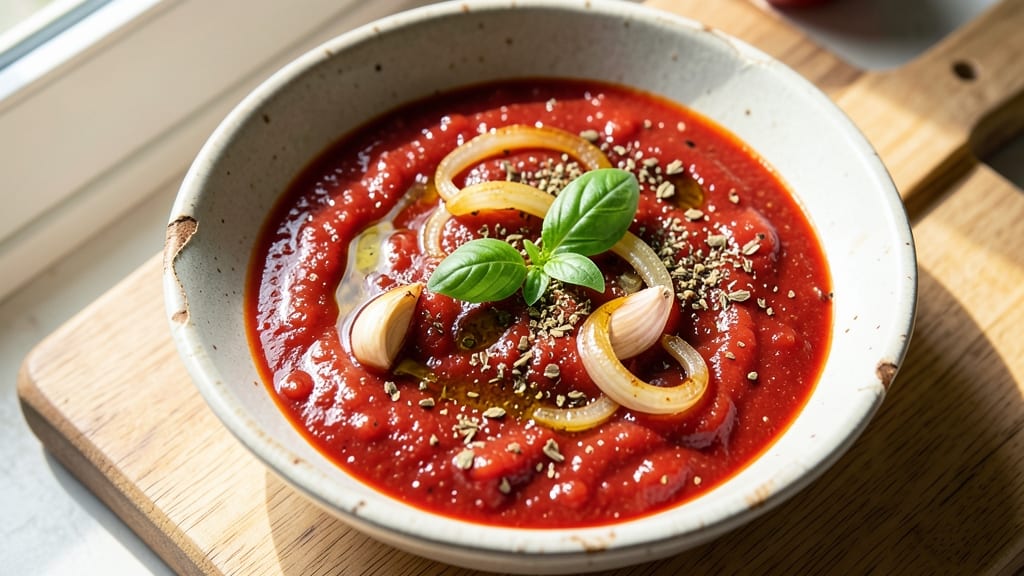
This all-natural pizza sauce recipe transforms simple tomatoes into a vibrant, herb-infused sauce that brings fresh garden flavor to every slice. 💛 The secret lies in simmering ripe tomatoes with aromatic garlic, basil, and a touch of onion until the flavors meld into a rich, velvety consistency—no canned shortcuts here.
What makes this sauce special is its bright, bright acidity and depth, achieved through slow cooking rather than artificial preservatives.
With just seven quality ingredients, you'll create a sauce that's restaurant-quality yet entirely homemade. The process is straightforward: chop, simmer, and blend until smooth, then adjust the seasoning to your taste.
This sauce keeps beautifully in the fridge for up to a week, making it perfect for meal prep or gifting to fellow pizza lovers.
What sets this recipe apart is the balance of natural sweetness from tomatoes and the fresh, herbal notes that elevate any pizza. The sauce thickens slightly as it cools, creating that perfect consistency for spreading or drizzling.
Whether you're topping a homemade crust or enhancing store-bought, this sauce will transform your pizza night.
Store it in an airtight container, and you'll have a pantry staple that's always ready for quick meals. Here's everything you need to make it from scratch!
Ingredients for all natural pizza sauce
Seven simple ingredients transform fresh tomatoes into vibrant, herb-infused pizza sauce.
| Ingredient | Amount | Notes |
|---|---|---|
| Ripe Tomatoes 🍅 | 2 ½ lbs | Fresh, vine-ripened preferred |
| Yellow Onion 🧅 | 1 whole | Medium size, finely chopped |
| Fresh Basil Leaves 🌿 | ½ cup | Packed, stems removed |
| Garlic Cloves 🧄 | 4 cloves | Peeled, minced finely |
| Extra-Virgin Olive Oil 🫒 | ¼ cup | High quality, fruity |
| Dried Oregano 🌿 | 1 tbsp | Or 2 tbsp fresh oregano |
| Sea Salt 🧂 | 1 ½ tsp | Diamond Crystal preferred |
The tomatoes are everything here—vine-ripened from summer farmers markets have the best flavor, but regular grocery store tomatoes work too (just pick firm, red ones). Costco or Trader Joe's usually carry good organic options. For basil, fresh is ideal but dried oregano at half the amount works in a pinch. The garlic? Smash those cloves with the side of your knife first—they'll release more flavor. Olive oil quality matters here too; skip the cheap stuff. Look for bottles labeled 'extra-virgin' with a harvest date.
No fresh basil? Dried oregano works at half the amount—just crush it between your fingers to release the flavor. Short on tomatoes? Canned San Marzano tomatoes (drained) add depth, but they won't have that same bright freshness. The sauce thickens as it cools, so if it's too thin after simmering, just let it sit for 10 minutes before tasting. Need more acidity? Add a splash of lemon juice at the end. And if you're feeling fancy, add a pinch of red pepper flakes for subtle heat.
This sauce keeps beautifully in the fridge for up to a week in an airtight container. For longer storage, freeze in ice cube trays—just thaw and stir before using. The flavors actually improve after a day or two as everything melds together. I always make a double batch—one for pizza night, one to gift to neighbors. It reheats perfectly, so you can keep it in the fridge ready for quick meals all week.
Why You'll Love This Recipe
- No-Cook Shortcuts: I swear by this sauce because it requires almost no chopping—just a quick dice of onion and a rough mince of garlic. The tomatoes? I toss them straight from the jar (or vine-ripened, if I’m feeling fancy) with a glug of olive oil and let the heat do the work.
- Herb-Packed Punch: That fresh basil? It’s the secret weapon. I wait until the very end to fold it in—just before serving—so the leaves stay vibrant and the flavor hits you like a sunlit Italian afternoon. The garlic and onion caramelize into something sweet and savory that makes store-bought sauce taste like a sad afterthought.
- Weeknight & Weekend Ally: This sauce is my go-to for everything: pizza night, bruschetta, or even a quick pasta when I’m too tired to think. Honestly, I’ve used it to dress up grilled chicken and roasted veggies, and it never lets me down. It’s the kind of recipe that turns a lazy dinner into something that feels intentional.
- Fridge Magic: Between us, I make a double batch every time because it lasts forever in the fridge—no weird aftertaste, just pure tomato goodness. And if you freeze it? It’s like having a backup chef on standby for those nights when takeout feels like too much effort. Plus, the ingredients are cheap, so you’re basically getting gourmet flavor for pennies.
Step-by-step instructions for fresh tomato pizza sauce
Here's how to make a vibrant, all-natural sauce that brings real summer flavor to your pizza.
🍳 Step 1: Roast the Tomatoes and Onion for Deep Flavor
Preheat your oven to 425°F and line a baking sheet with parchment paper. Cut the 2.5 lbs ripe tomatoes in half and place cut-side down on the sheet. Peel and slice the 1 whole yellow onion into ¼-inch thick rounds, then scatter them around the tomatoes.
Drizzle everything with 2 tablespoons of the 0.25 cup extra-virgin olive oil and sprinkle with 1 teaspoon of the 1.5 tsp sea salt. Roast for 25-30 minutes until the tomatoes soften and the onions caramelize to a golden brown. You'll know they're ready when the tomatoes collapse slightly and the onions look sweet and translucent.
👨🍳 Step 2: Sauté Garlic and Oregano in Olive Oil
While the tomatoes roast, heat the remaining 0.2 tablespoons extra-virgin olive oil in a large saucepan over medium-low heat. Add the 4 cloves minced garlic and cook for 30 seconds until fragrant but not browned—garlic burns quickly, so watch closely. Stir in the 1 tbsp dried oregano and let it toast for 10 seconds until aromatic.
Here's the thing—don't walk away. Garlic releases its flavor instantly, and you want that nutty aroma to infuse the sauce. If it starts to darken, remove the pan from heat immediately and let it cool for a minute before proceeding.
🥘 Step 3: Combine and Simmer the Sauce
Transfer the roasted tomatoes and onions to the saucepan with the garlic mixture. Using a wooden spoon, gently break up the tomatoes, releasing their juices. Add the 0.5 cup fresh basil leaves and bring everything to a gentle simmer over medium heat.
Let it cook uncovered for 15-20 minutes until the sauce thickens slightly and reduces by about ¼. You're looking for a consistency that coats the back of a spoon but still flows easily—this ensures perfect coverage on your pizza without being watery. Taste and adjust seasoning with the remaining 0.5 teaspoon sea salt if needed.
🔪 Step 4: Blend for Smooth Texture (Optional)
For a classic smooth sauce, transfer the mixture to a blender or food processor and pulse until completely smooth. I like to leave mine slightly rustic with small tomato chunks for extra texture—just give it a few quick pulses if you prefer that look.
Return the sauce to the saucepan and simmer for another 5 minutes to meld all the flavors. The sauce should be vibrant red with a rich, herby aroma. If it's too thick, add 1-2 tablespoons water to reach your desired consistency. Let it cool completely before using—this allows the flavors to develop fully.
Pro Tips For Making All Natural Pizza Sauce
- COOK LOW AND SLOW: I learned this the hard way—simmering pizza sauce at a rolling boil turns it into tomato soup. Instead, keep the heat at a gentle bubble (just tiny, occasional rises) for 20-30 minutes. This lets the flavors meld without burning the onions or garlic, and the texture stays chunky enough to hold up on pizza.
- PEEL AND CHOP GARLIC FAST: Fresh garlic makes all the difference, but nothing kills the vibe like waiting for it to burn. Smash the cloves with the flat side of your knife first, then slice thinly—this exposes more surface area to cook faster without turning bitter. (Yes, even if you're impatient like me.)
- SALT THE ONIONS FIRST: Tossing diced onion with a pinch of salt before cooking draws out moisture, making it sweat and caramelize properly. Skip this, and you’ll end up with raw, watery bits that turn your sauce into a sad, thin mess. Trust me, it’s worth the 30 seconds.
- FINISH WITH COLD BASIL: Sounds weird, but it works: Tear fresh basil leaves and add them at the very end, off the heat. The cold leaves keep their bright flavor instead of wilting into oblivion. If you’re short on time, use a handful of dried basil—but expect less aroma. (Your future self will thank you.)
Creative variations of these flavors
Herb-Infused Variations
Swap the basil for thyme and rosemary to create a Mediterranean-inspired sauce—just use 1 tbsp each of fresh thyme and rosemary leaves. The earthy notes pair beautifully with roasted vegetables or white pizzas.
For a garlic lover's twist, double the garlic to 8 cloves and add 1 tsp red pepper flakes after simmering for a spicy kick. 🌿
Sweet & Tangy Twists
Add 2 tbsp honey or maple syrup during the final simmer for a sweet-tangy balance that works perfectly with prosciutto or BBQ chicken toppings. For a citrus burst, stir in 1 tbsp lemon zest and 1 tbsp fresh lemon juice at the end.
This brightens the sauce and cuts through rich cheeses like mozzarella or gorgonzola.
Spicy & Smoky Adaptations
For a smoky depth, add 1 tbsp smoked paprika or ½ tsp chipotle powder when sautéing the garlic. For heat, blend in 1-2 tbsp hot sauce (like Cholula or Frank’s RedHot) after blending. This variation shines on spicy pepperoni or sausage pizzas. 🌶️
Regional Style Variations
For a Neapolitan-inspired sauce, reduce the basil to ¼ cup and add ½ tsp fennel seeds (toasted in the olive oil). For a New York-style twist, blend in 1 tbsp tomato paste at the end for extra richness.
Both versions deliver that classic pizza flavor but with a regional twist.
Vegetarian & Vegan Options
Make this sauce vegan-friendly by omitting any animal products (it already is!). For extra umami, add 1 tbsp nutritional yeast or 1 tsp miso paste during simmering. This deepens the savory notes without compromising the sauce’s natural brightness. Perfect for veggie-loaded pizzas!
Make-Ahead & Storage Hacks
Freeze the sauce in ice cube trays for easy portioning—just thaw and stir before using. For longer fridge life, layer the sauce in an airtight container with a sheet of parchment between each layer.
This prevents a soggy texture when reheating. The flavors actually improve after 2-3 days in the fridge! ❄️
Nutrition facts
Frequently asked questions
Can I use canned tomatoes instead of fresh?
You can, but fresh tomatoes give the brightest, most vibrant flavor. If using canned, opt for San Marzano tomatoes (drained well) and simmer for 10 extra minutes to deepen the flavor. Add 1 tsp sugar to balance acidity if needed. For the freshest taste, stick with ripe tomatoes roasted whole!
How do I adjust the thickness of the sauce?
If the sauce is too thin, simmer uncovered for 5-10 more minutes to reduce it. For a thicker texture, blend it longer or add 1 tbsp tomato paste at the end. If it's too thick, thin with 1-2 tbsp water or broth while warm. The sauce will naturally thicken as it cools!
What if I don’t have fresh basil?
No problem! Use 1 tbsp dried basil (or 2 tbsp dried oregano) instead. For extra flavor, add ½ tsp dried thyme or 1 tsp lemon zest. The sauce will still taste delicious—just slightly different. Fresh herbs make the biggest difference, but dried works in a pinch!
Can I make this sauce ahead of time?
This sauce tastes even better after 24 hours as flavors meld. Store in an airtight container in the fridge for up to 1 week or freeze in ice cube trays for easy portioning. Reheat gently on the stove or microwave until warm—no need to blend again!
Why does my sauce taste bland?
Blandness usually means the sauce needs more acidity or salt. Boost flavor by adding 1 tbsp lemon juice or ½ tsp red pepper flakes for brightness. Taste and adjust with extra salt (up to ½ tsp more) or a pinch of black pepper. Simmering longer also intensifies flavor—try reducing it by 10 more minutes.