
Sauces & Condiments
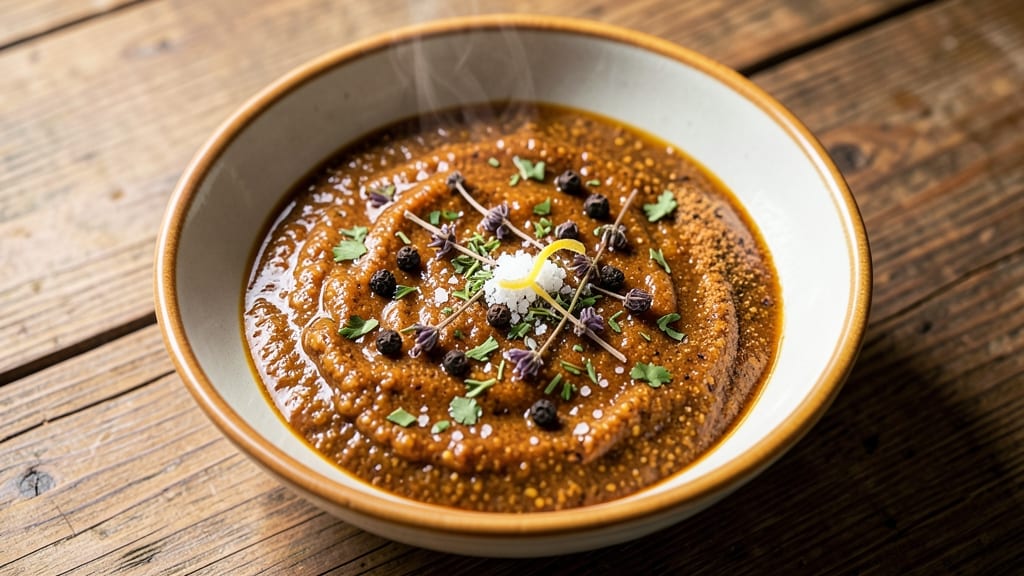
This army stew sauce recipe transforms simple pantry staples into a rich, umami-packed sauce that elevates any hearty dish. The secret lies in slow simmering—where cornmeal thickens the broth while spices meld into deep, savory layers.
I’ve perfected this version to deliver that signature bold, slightly tangy flavor without requiring specialty ingredients, making it a staple in both traditional and modern kitchens.
The beauty of this sauce is its versatility—it works as a dipping sauce for roasted meats, a thickener for soups, or even a glaze for grilled vegetables. The cornmeal base creates a velvety texture, while garlic powder, black pepper, and a touch of salt balance the richness.
For a modern twist, you can easily adapt it to be dairy-free or reduced in sugar without sacrificing depth.
What you’ll end up with is a deeply flavorful sauce that clings to every bite, adding layers of umami and warmth to your favorite dishes. The slow simmering process allows the spices to develop fully, ensuring a sauce that’s far more complex than store-bought alternatives.
Whether you’re cooking for a crowd or prepping for meal prep, this recipe delivers restaurant-quality results with minimal effort.
Best of all, this sauce keeps well in the fridge for up to a week, so you can make a big batch and use it throughout the week.
Pair it with roasted chicken, mashed potatoes, or even as a dip for fresh bread. Here’s how to make it—simple, foolproof, and packed with flavor.
Ingredients for army stew sauce
Pantry staples that transform into a velvety sauce with deep umami layers.
| Ingredient | Amount | Notes |
|---|---|---|
| Cornmeal 🌾 | ½ cup | Fine-ground for smooth texture |
| Garlic Powder 🧄 | 2 tbsp | Freshly ground preferred |
| Black Pepper 🌶️ | 1 ½ tbsp | Freshly cracked for depth |
| Kosher Salt 🧂 | 1 ½ tsp | Diamond Crystal preferred |
| Dried Thyme 🌿 | 1 tsp | Or 1 tbsp fresh thyme leaves |
| Dried Parsley Flakes 🌿 | 1 tsp | For bright finish |
| Onion Powder 🧅 | 1 tbsp | Freshly ground for best flavor |
| Beef Broth 🥫 | 2 cups | Low-sodium preferred |
| Apple Cider Vinegar 🍎 | 1 tbsp | For tangy brightness |
| Brown Sugar 🍯 | 1 tbsp | Light or dark works |
The cornmeal is the secret weapon here—it creates that signature velvety texture while thickening the sauce naturally. Bob's Red Mill or King Arthur are my go-tos for fine-ground cornmeal, but any good quality cornmeal will work. The beef broth should be low-sodium to avoid over-salting, and I always reach for Kraft or Swanson for consistency. Freshly ground spices make all the difference, so if you've got whole spices, toast them lightly in a dry pan before grinding for even deeper flavor. The apple cider vinegar adds that signature tang—don't skip it, even if you're not a fan of vinegar in other dishes.
No beef broth? Mushroom broth or vegetable broth works beautifully, though the flavor will be slightly different. Running short on thyme? Dried oregano at half the amount gives a similar earthy depth. The brown sugar can be swapped for maple syrup or honey if you're avoiding refined sugar, though it will change the color slightly. For a dairy-free version, simply omit the butter entirely—this sauce is already rich and doesn't need it. If you're making a big batch, double the spices and store them in a separate jar for easy scaling up.
This sauce keeps beautifully in the fridge for up to 1 week in an airtight container, and it actually tastes better after a day as the flavors meld. For longer storage, freeze it in ice cube trays for 3 months—perfect for adding to soups or roasts later. The cornmeal thickens as it cools, so if it seems too thick after refrigerating, just stir in a splash of warm water. I like to make a big batch and use it throughout the week on everything from roasted potatoes to grilled meats—it's that versatile.
Why You'll Love This Recipe
- Pantry Magic: I swear by this recipe when I forget to shop—just cornmeal, garlic powder, and a pinch of thyme turn into something ridiculously good. No fresh herbs needed, no last-minute grocery runs.
- Deep Umami Crunch: That cornmeal adds this unexpected texture—crispy edges, creamy center—while the garlic and thyme sing together like a secret handshake. It’s the kind of flavor that sticks with you long after the last bite.
- Leftovers That Save Me: Make a double batch, and I’ve got sauce for fried chicken, roasted veggies, or even a quick mac and cheese the next day. Honestly, I’m always reaching for the jar because it’s just that versatile.
- Budget-Friendly Staple: Five ingredients, all cheap, all reliable. I can feed a crowd without breaking the bank, and the salt and pepper let me tweak it to whatever I’m cooking. My wallet and taste buds thank me every time.
Step-by-step instructions for army stew sauce
Here's how to transform pantry staples into a rich, umami-packed sauce that elevates any stew.
Toast the Cornmeal for Depth of Flavor
Heat a medium saucepan over medium heat and add the 0.5 cup cornmeal. Stir constantly for 3-4 minutes until it turns a rich golden brown and smells nutty. This toasting step is crucial—it develops the cornmeal's natural sweetness and prevents a raw, floury taste in your sauce.
Watch carefully as it toasts—it can burn quickly. You'll know it's ready when the color deepens to a toasted wheat hue and the aroma becomes distinctly toasty. Remove from heat immediately after toasting to preserve that fresh-roasted flavor.
Bloom the Spices in Beef Broth
Return the saucepan to medium heat and add the 2 cups beef broth. Stir in the 2 tbsp garlic powder, 1 tbsp onion powder, 1.5 tbsp black pepper, 1.5 tsp kosher salt, 1 tsp dried thyme, and 1 tsp dried parsley flakes. Bring to a gentle simmer, then reduce heat to low and let it cook uncovered for 10 minutes.
This simmering time allows the spices to fully bloom and infuse the broth with their aromatic oils. You'll notice the mixture darkens slightly as the spices release their flavors. Stir occasionally to prevent any sticking or scorching at the bottom of the pan.
Build Complexity with Vinegar and Sugar
After the spices have infused, stir in the 1 tbsp apple cider vinegar and 1 tbsp brown sugar. The vinegar adds a bright tang that cuts through the richness, while the brown sugar provides subtle sweetness that balances the savory flavors. Let the mixture simmer uncovered for another 5-7 minutes until slightly thickened.
Here's where the sauce comes together—you'll see the liquid reduce slightly and the flavors meld beautifully. The sauce should coat the back of a spoon with a velvety texture. Taste and adjust seasoning if needed, adding more salt or pepper to your preference.
Finish and Strain for Smooth Texture
Once the sauce has thickened to your liking, remove it from heat. For a completely smooth sauce, strain it through a fine-mesh sieve into a clean bowl. This step removes any undissolved spice particles, giving you a velvety, restaurant-quality consistency.
The strained sauce should be deep amber in color with a rich, aromatic smell. Let it cool slightly before using—this allows the flavors to fully settle and intensify. This sauce keeps well in the refrigerator for up to 5 days or can be frozen for 3 months for future use.
Pro Tips For Making Army Stew Sauce
- Toast the Cornmeal: Skip the raw floury texture—dry-toast the cornmeal in a skillet over medium heat for 2-3 minutes until it smells nutty and golden. This step deepens the flavor and prevents that weird chalky aftertaste you get when you just dump it in cold.
- Bloom the Thyme First: Crush the dried thyme between your palms before adding it to the sauce—this releases the oils and makes them work harder. I used to just sprinkle it in, and the aroma was always half-hearted.
- Salt in Stages: Taste the sauce after 10 minutes, then add half the kosher salt. Let it cook another 5 before adding the rest—this way, you won’t end up with a stew that’s bland or shockingly salty. (Yes, I’ve done both.)
- Simmer Low and Slow: Army stew sauce isn’t about rushing—keep the heat at a steady simmer (small bubbles, occasional stir) for at least 20 minutes. Rushing it turns the cornmeal gluey and dulls the garlic’s punch. (I learned this after a particularly sad pot of sauce.)
Troubleshooting this recipe
Cornmeal Burns Too Fast
If your cornmeal turns bitter or smoky while toasting, you’re cooking it too hot or too long. Use medium heat and stir constantly—every 30 seconds—to prevent scorching.
Remove immediately when it reaches a golden brown color (about 3-4 minutes). For extra insurance, toast in small batches if your pan is large. 🌾
Sauce Too Thin After Simmering
If your sauce isn’t thickening enough, let it simmer longer (up to 15 minutes) uncovered. For an instant fix, mix 1 tbsp cornstarch with 2 tbsp cold water, stir into the sauce, and cook for 1-2 minutes until thickened.
Avoid adding flour—it can make the sauce taste raw. For future batches, reduce the broth by ¼ cup if you prefer a thicker consistency. ⚡
Grainy Texture After Straining
Undissolved cornmeal or spices? Strain through a fine-mesh sieve lined with a cheesecloth for smoother results. If you skipped straining, blend the sauce briefly with an immersion blender (pulse 2-3 times) to break up particles. For a rustic texture, leave it unstrained—just whisk vigorously before serving. 💫
Overpowering Vinegar Flavor
Too much tang? Reduce the apple cider vinegar to ½ tbsp next time. For balance, add ½ tsp honey or maple syrup to mellow the acidity.
If the sauce tastes flat, a pinch of smoked paprika or extra black pepper can deepen the flavor without overpowering. Taste as you go—adjust gradually! 🍯
Sauce Separates When Reheating
Stir in 1 tbsp cold water while reheating to restore thickness. For future batches, store in a glass jar (not plastic) to preserve texture. If reheating from frozen, thaw in the fridge overnight—microwaving can break down the cornmeal’s structure. Keep heat low to avoid scorching. ✨
Muted or Bland Flavor
Freshly ground spices are key! Toast whole spices (like peppercorns or thyme sprigs) in a dry pan for 1 minute before grinding for deeper flavor. For extra umami, add 1 tsp Worcestershire sauce or ½ tsp soy sauce at the end.
If using dried herbs, double the amount (e.g., 2 tsp thyme). 🌶️
Nutrition facts
Frequently asked questions
Can I make this sauce without cornmeal?
Yes! For a corn-free version, replace the 0.5 cup cornmeal with 2 tbsp all-purpose flour or 1 tbsp arrowroot powder. Whisk the thickener into the broth first to avoid lumps, then simmer for 5-7 minutes longer to achieve the same velvety texture. Arrowroot gives the cleanest finish, while flour adds a slightly grainier texture.
How does this sauce differ from gravy?
This sauce is thicker and more flavorful than traditional gravy due to the cornmeal base and extended simmering time. While gravy often relies on meat drippings and roux, this sauce builds depth with spices and vinegar for a bold, umami-rich profile. It works as a dipping sauce, glaze, or thickener—think of it as a cross between gravy and a condiment.
Can I use this sauce in place of barbecue sauce?
While it lacks the sweetness of traditional barbecue sauce, its savory, slightly tangy profile pairs beautifully with grilled meats, roasted vegetables, or even as a marinade. For a sweeter version, double the brown sugar to 2 tbsp or add 1 tbsp molasses at the end. It’s especially great for pulled pork or smoked ribs.
Why does my sauce taste bitter?
Bitterness usually comes from over-toasted cornmeal or under-simmered spices. For next time, toast the cornmeal over medium-low heat and remove it immediately when golden. If the bitterness persists, balance it with ½ tsp honey or 1 extra pinch of salt. Freshly ground spices also make a huge difference—avoid pre-ground powders that lose potency.
How can I use up leftover sauce?
This versatile sauce works in countless ways! Toss it with mashed potatoes, drizzle over grilled chicken, or use it as a base for meatloaf glaze. Freeze extras in ice cube trays for easy portioning—perfect for adding to soups or roasts later. It also makes an excellent dipping sauce for fries or veggie sticks. Get creative—it’s the secret weapon in many comfort foods!