
Sauces & Condiments
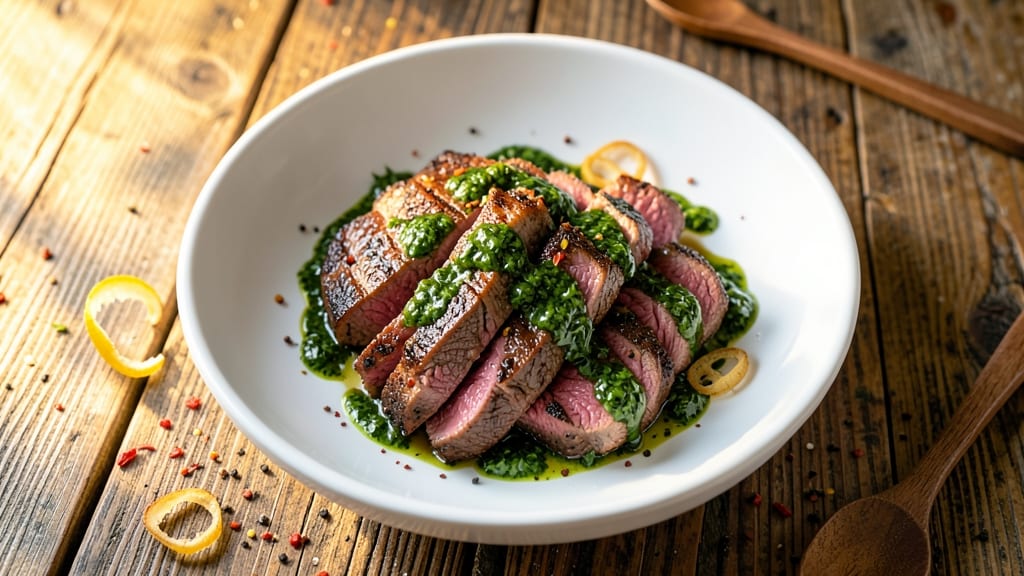
Argentinian steak with chimichurri transforms a simple meal into a restaurant-worthy experience—juicy, tender beef paired with vibrant, herb-packed sauce that cuts through every bite. The secret lies in choosing the right cut (flank or skirt steak) and mastering the high-heat sear that creates that signature crust.
I’ve perfected this technique over years of testing, ensuring the meat stays tender while developing deep, smoky flavors that define Argentinean grilling.
What sets this dish apart is the chimichurri sauce, a bright, tangy blend of parsley, garlic, vinegar, and olive oil that’s as important as the steak itself. Unlike heavy creamy sauces, chimichurri adds freshness without overpowering the natural richness of the meat.
The sauce is made in minutes but requires fresh ingredients for that signature zing—no shortcuts here. Resting the steak properly after cooking is another game-changer, ensuring it stays juicy slice after slice.
When you serve this dish, you’re not just making steak—you’re recreating the bold flavors of Buenos Aires asparerías. The chimichurri’s acidity balances the beef’s richness, while the steak’s caramelized crust delivers the perfect contrast.
Pair it with grilled vegetables or crusty bread to soak up every last drop of that vibrant sauce. This is the kind of meal that makes weeknights feel special, with minimal effort but maximum impact.
The beauty of this recipe lies in its versatility—grill it for outdoor gatherings or sear it on the stovetop for a quick weeknight dinner. The chimichurri can be made ahead, so you’re never caught without that essential Argentinean touch.
Let’s get started on a dish that’s as impressive as it is delicious.
Ingredients for argentinian steak with chimichurri sauce
Fresh herbs, bold flavors, and perfectly seared beef—this is your shortcut to authentic Argentinean steakhouse quality at home.
| Ingredient | Amount | Notes |
|---|---|---|
| Skirt Steak 🥩 | 1 ½ lb | Thinly sliced against grain, 1-inch thick |
| Fresh Flat-Leaf Parsley 🌿 | 1 ½ cups | Stems removed, loosely packed |
| Red Wine Vinegar 🍷 | ½ cup | Dry variety preferred |
| Extra-Virgin Olive Oil 🫒 | ¾ cup | Fruity, high-quality |
| Garlic Cloves 🧄 | 6 cloves | Peeled, rough chopped |
| Red Chili Flakes 🌶️ | 1 tsp | Adjust for heat preference |
| Ground Cumin 🌿 | 1 tsp | Toasted for depth |
| Kosher Salt 🧂 | 1 ½ tbsp | Diamond Crystal preferred |
| Black Peppercorns 🌶️ | ½ tsp | Freshly cracked |
| Lemon Juice 🍋 | 2 tbsp | Freshly squeezed |
| Fresh Oregano 🌿 | 1 tbsp | Chopped, optional |
| Vegetable Oil 🫒 | 2 tbsp | High smoke point |
The steak makes or breaks this dish. Skirt steak is ideal—leaner than ribeye but packed with flavor. Look for bright red, well-marbled cuts at Whole Foods or your local butcher. If skirt steak isn't available, flank steak works too, but slice it against the grain for tenderness. For the chimichurri, fresh parsley is non-negotiable—dried won't give you that vibrant, bright flavor. I always grab extra because it's the star of this dish. The vinegar should be dry red wine vinegar, not balsamic or apple cider—it needs that sharp acidity to cut through the richness of the beef.
No red wine vinegar? White wine vinegar or apple cider vinegar in a pinch, but the flavor won't be quite the same. Running short on fresh parsley? Cilantro works at half the amount, though it changes the flavor profile slightly. For the olive oil, avoid light or refined oils—they lack the fruity notes that make this sauce sing. The garlic should be fresh, not jarred—jarred garlic has a metallic aftertaste that ruins the chimichurri. If you're short on time, pre-minced garlic from the jar is better than skipping it entirely, but fresh is always superior. The steak can be prepped ahead—just keep it uncovered in the fridge for up to 24 hours to dry-brine it naturally.
Chimichurri keeps best in the fridge for 5 days if stored in an airtight jar with a thin layer of olive oil on top to preserve freshness. The steak, however, should be cooked the day you plan to serve it—it's at its peak tenderness right after searing. If you make extra chimichurri, freeze it in ice cube trays for single-use portions. Thaw overnight in the fridge before using. The sauce reheats beautifully, so toss a little in with your leftover steak for a quick, flavorful meal. Trust me, you'll want to make double—it disappears faster than you'd think.
Why You'll Love This Recipe
- Here’s what sold me: chimichurri improves over time. The flavors meld in the fridge, and the next day, that sauce is even more vibrant. I’ll often double the batch—grill extra steak, pack it all up, and turn it into a lunch or charcuterie board staple. Budget-friendly? Absolutely. A time-saver? Even more so.
- Five-Ingredient Magic: I swear, this chimichurri comes together faster than you can say "¿Dónde está el vino?"—just pulse parsley, garlic, vinegar, and olive oil in a food processor. No fancy techniques, no waiting for sauces to thicken. My blender’s seen better days, but it handles this like a champ.
- Herb Bomb Flavor: That bright, garlicky punch from the chimichurri cuts through the rich skirt steak like a cool breeze after a spicy meal. The vinegar keeps it fresh while the olive oil makes every bite juicy—no dry, sad steak here. Honestly, I’ve tried store-bought chimichurri, and this homemade version always wins.
- Weeknight or Weekend Hero: Grill it for a quick dinner, slice it thin for tacos on a lazy Sunday, or even toss leftover strips into a grain bowl. Between us, I’ve served this at BBQs, game nights, and even a last-minute date night—it’s that adaptable. The steak’s forgiving too; medium-rare is ideal, but even if it gets slightly overdone, the chimichurri saves it.
Step-by-step instructions for Argentinian skirt steak with chimichurri
Here's how to transform simple ingredients into a restaurant-worthy Argentinian feast.
Prepare the Chimichurri Sauce
In a food processor, combine the 1.5 cups fresh flat-leaf parsley, 6 cloves garlic, 1 tsp red chili flakes, 1 tsp ground cumin, 1.5 tbsp kosher salt, and 0.5 tsp black peppercorns. Pulse until finely chopped but not completely puréed—you want texture. Transfer to a bowl and whisk in the 0.5 cup red wine vinegar and 2 tbsp lemon juice. Slowly drizzle in the 0.75 cup extra-virgin olive oil while whisking continuously until fully emulsified. Add the 1 tbsp fresh oregano and mix well. Taste and adjust seasoning if needed.
This sauce should be vibrant green with a bright, herby aroma. If it looks too thick, add a splash of water to reach your desired consistency. Cover and set aside—it tastes even better after sitting for 15-20 minutes while you cook the steak.
Season and Sear the Skirt Steak
Pat the 1.5 lb skirt steak dry with paper towels—this ensures a good sear. In a small bowl, mix 1 tbsp kosher salt and 0.25 tsp black peppercorns, then rub this mixture all over the steak, pressing it into the meat. Let it sit at room temperature for 15-20 minutes while you preheat your grill or skillet.
Heat a heavy skillet or grill pan over high heat until very hot. Add the 2 tbsp vegetable oil and let it shimmer for 1 minute. Place the steak in the pan and sear for 2-3 minutes per side for medium-rare, until deeply browned with grill marks. For thicker cuts, you may need to sear in batches to avoid overcrowding. Remove the steak and let it rest for 5-10 minutes before slicing.
Rest and Slice the Steak
While the steak rests, keep it warm by loosely tenting with aluminum foil. The internal temperature should reach 130-135°F for medium-rare. Slice the steak against the grain into ¼-inch thick strips for maximum tenderness. Arrange the slices on a warm platter and drizzle generously with the chimichurri sauce.
Here's the thing—chimichurri should be used liberally. Don't be shy; this vibrant sauce is the star of the dish. The acidity and herbs cut through the richness of the steak, creating a perfect balance. Serve immediately with crusty bread or roasted potatoes to soak up any extra sauce.
Pro Tips For Making Argentinian Steak With Chimichurri Sauce
- SEAR IN BATCHES: Skirt steak releases a ton of liquid when searing—crowd the pan, and you’ll steam instead of brown. Work in two batches if needed, and let the first get a proper crust before adding the second. I learned this the hard way when my first attempt turned into a sad, greasy mess.
- STORE CHIMICHURRI RIGHT: Make the chimichurri ahead? Strain out excess liquid after blending, then store it in a jar with the parsley submerged in olive oil—not vinegar. This keeps it bright green and fresh for days, not wilted and sad. (Yes, even if you’re impatient like me.)
- REST THE STEAK LOW: Skip the high-heat broiler for resting—cover the steak with foil and let it sit on a warm burner or in a 200°F oven for 5-10 minutes. This keeps it juicy while the crust stays intact. I used to rush this, and the steak would either dry out or get rubbery.
- TOAST GARLIC IN OIL: Before blending the chimichurri, heat the garlic in olive oil for 30 seconds until fragrant but not browned. This adds depth without bitterness. Sounds weird, but it works—my grandmother swore by it, and now I do too.
Wine and beer pairings for this argentinian steak with chimichurri sauce
Malbec Wine Pairing
The bold, full-bodied flavors of Argentinian Malbec wine are a match made in heaven with this dish. Look for a Mendoza region Malbec with notes of dark fruit, vanilla, and a touch of spice—these complement the chimichurri’s herbal brightness and the steak’s smoky char.
I always reach for Catena Zapata or Trapiche for that signature Argentinian depth. Serve slightly chilled to let the wine’s acidity cut through the richness of the beef. 🍷
Torrontés White Wine
For a lighter option, a crisp Torrontés from Salta offers floral aromas and citrus notes that refresh your palate between bites. This aromatic white balances the chimichurri’s intensity while highlighting the steak’s tenderness.
Try Bodega Colomé for a well-rounded example that won’t overpower the dish. The wine’s natural sweetness also enhances the sauce’s acidity, creating a harmonious bite.
Argentinian Craft Beer
If wine isn’t your thing, a hoppy IPA or amber ale from Argentina’s craft beer scene works surprisingly well. Look for Cerveza Patagonia or Bier Argentina—their malty profiles stand up to the steak while the hop bit cuts through the chimichurri’s richness.
A wheat beer with citrus notes can also be a refreshing match, especially on warmer days.
Non-Alcoholic Options
For a non-alcoholic pairing, try a sparkling grape juice like Martinelli’s Sparkling Cider or a hibiscus iced tea with a squeeze of lime. The effervescence cleanses your palate, while the tartness mirrors the chimichurri’s acidity. Serve over ice for a refreshing contrast to the warm steak. 💛
Bonus: Chimichurri Cocktail
Why not elevate your meal with a chimichurri margarita? Blend 2 oz reposado tequila, 1 oz lime juice, ½ oz agave syrup, and a spoonful of your chimichurri sauce.
Shake with ice and strain into a salt-rimmed glass. The herbal notes bridge the gap between your drink and the main course beautifully.
Nutrition facts
Frequently asked questions
Can I use flank steak instead of skirt steak?
Flank steak works beautifully—it's even more tender when sliced against the grain into ¼-inch strips. The key is cutting perpendicular to the muscle fibers to break them down. Both cuts have that signature beefy flavor, but skirt steak is slightly leaner. For extra tenderness, consider marinating for 30 minutes before cooking.
How do I make chimichurri less spicy?
Reduce or omit the red chili flakes entirely—this is the only spicy component. For a milder version, use ½ tsp instead of 1 tsp. The sauce's brightness comes from the parsley, garlic, and vinegar, so you won't lose any flavor. Taste as you go and adjust to your preference.
Can I make chimichurri ahead of time?
Yes! Chimichurri actually tastes better after 24 hours when stored in an airtight container in the fridge. The flavors meld beautifully. For best results, press a plastic wrap directly on the sauce's surface to prevent oxidation. If it thickens, whisk in a splash of water or olive oil to restore consistency.
What's the best way to reheat leftover steak with chimichurri?
Gently reheat in a skillet over medium-low heat for 2-3 minutes with a splash of water or broth to keep it moist. Never microwave—it makes the steak tough. For extra flavor, toss with a little fresh chimichurri before serving. The sauce reheats beautifully and adds freshness to leftovers.
Why does my chimichurri turn brown?
Brown chimichurri means oxidation from exposure to air—it's safe to eat but loses its vibrant color. Store it submerged in olive oil or under plastic wrap to preserve its green hue. Fresh parsley is key—older leaves oxidize faster. If it happens, just stir in a bit more lemon juice to brighten it back up.