
Sauces & Condiments
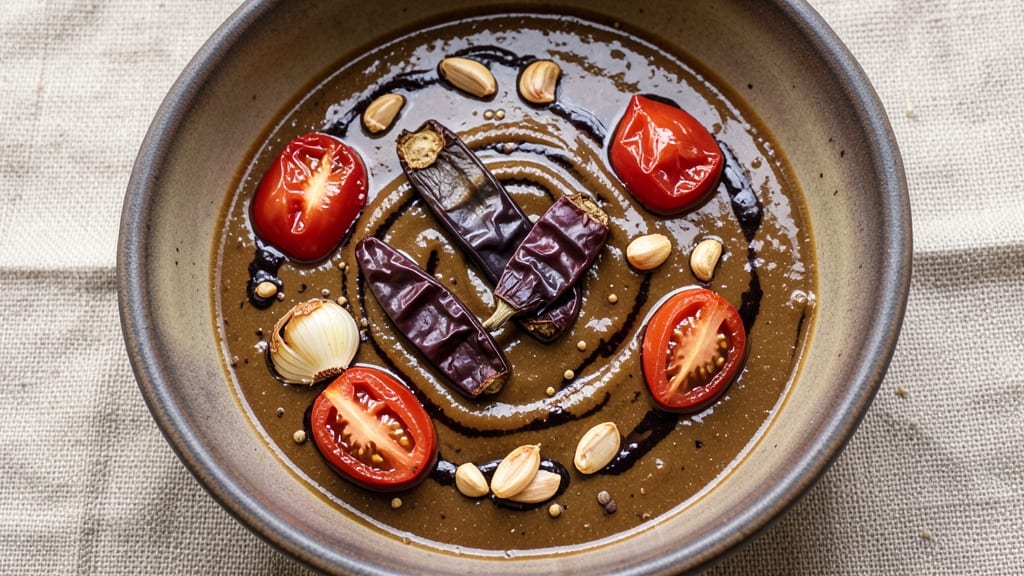
This ancho mole sauce recipe transforms simple ingredients into a rich, complex sauce that balances smoky, chocolatey, and slightly spicy notes—perfect for elevating everything from enchiladas to grilled vegetables.
The secret lies in toasting spices and blending dried ancho chiles with unsweetened chocolate, creating a velvety texture that’s both traditional and adaptable. What makes this version special is the 45-minute preparation, which delivers restaurant-quality depth without requiring hours of simmering.
Traditionally, ancho mole relies on dried chiles, warm spices, and a touch of chocolate for its signature depth, but this recipe includes a vegetarian-friendly adaptation that skips meat while keeping all the flavor.
The sauce starts with charring spices in a dry skillet to unlock their aromatic oils, then simmers with tomatoes, garlic, and a blend of spices until silky smooth. The result? A sauce that’s equally at home on roasted chicken, black beans, or even as a dip for crispy tortilla chips.
What sets this recipe apart is its versatility—adjust the heat level by adding more chiles or reducing the chocolate for a smokier profile. The sauce thickens beautifully when reheated, making it ideal for meal prep, and stores well in the fridge for up to a week.
Whether you’re serving it over tacos or drizzling it over grilled vegetables, this mole delivers layers of flavor that feel both comforting and sophisticated.
For those new to ancho chiles, soaking them in warm water for 15 minutes softens their texture and deepens their flavor—no need for fancy techniques, just patience. The sauce’s richness comes from balancing sweet, smoky, and spicy elements, so taste as you go and adjust to your preference.
Ready to make a sauce that tastes like a celebration? Let’s get started.
Ingredients for ancho mole sauce
Eleven ingredients blend smoky, sweet, and spicy notes into a velvety sauce perfect for enchiladas or grilled veggies.
| Ingredient | Amount | Notes |
|---|---|---|
| Dried Ancho Chiles 🌶️ | 4 whole | Stems removed, seeds optional |
| Unsweetened Chocolate 🍫 | ½ oz | Mexican chocolate preferred |
| White Onion 🧅 | 1 whole | Medium size, roughly chopped |
| Garlic Cloves 🧄 | 6 cloves | Peeled, slightly crushed |
| Roma Tomatoes 🍅 | 4 whole | Ripe, quartered, or 1 cup canned |
| Ground Cumin 🌿 | 1 tbsp | Toasted for deeper flavor |
| Ground Coriander 🌿 | 1 tbsp | Freshly ground preferred |
| Cinnamon Sticks 🌱 | 2 whole | Lightly toasted, broken into pieces |
| Cloves 🌿 | 4 whole | Lightly crushed |
| Vegetable Oil 🫒 | ¼ cup | For sautéing spices |
| Vegetable Broth 💧 | 1 ½ cups | Low-sodium preferred |
Ancho chiles are the heart of this sauce—look for dried pods at Mexican markets or specialty stores. They should be plump, not shriveled, and a deep reddish-brown color. Penzeys or Goya carry reliable brands if you can't find them fresh. Toasting them briefly in a dry skillet unlocks their smoky depth, but don't burn them. The unsweetened chocolate should be at least 50% cacao for authentic flavor—Abel or Ibarra brands are ideal but any high-quality dark chocolate works. For the cinnamon and cloves, whole spices toasted whole develop more aroma than pre-ground powders.
No ancho chiles? Substitute 2 dried guajillo chiles for a slightly tangier profile. Running short on chocolate? Add 1 tbsp cocoa powder plus 1 tsp sugar, but the sauce will be less rich. The vegetable broth can be swapped for water, but low-sodium stock adds depth. If you prefer a smoother texture, blend the tomatoes before adding them—just strain out the seeds. For extra smokiness, add 1 tsp smoked paprika with the spices. The Roma tomatoes can be fresh or canned (drained), but fresh gives a brighter acidity.
This sauce thickens as it cools, so stir in extra broth if needed while warm. Stores beautifully in the fridge for 5-7 days—the flavors deepen overnight. For longer storage, freeze in ice cube trays for 3 months. The sauce reheats perfectly, making it ideal for meal prep. Always taste before serving—adjust salt, chocolate, or chiles to balance your preference.
Why You'll Love This Recipe
- Here’s what sold me: the chocolate doesn’t taste sweet, but it rounds out the heat from the chiles into something velvety. Char the onions and garlic until they’re caramelized—that’s where the flavor pops. It’s the kind of sauce that makes you pause mid-bite.
- I’ll be real: a handful of dried chiles and a chocolate bar cost pennies compared to pre-made sauces. The sauce thickens beautifully, so I stretch it across multiple meals. Plus, the tomatoes and onion add freshness without breaking the bank.
Step-by-step instructions for ancho mole sauce
This recipe delivers authentic depth through precise technique and layered flavors.
Toast and Rehydrate the Dried Ancho Chiles
Heat a dry skillet over medium heat and toast the 4 whole dried ancho chiles for 30 seconds per side until fragrant but not charred. This step awakens their natural sweetness and deepens the smoky flavor. Immediately transfer them to a bowl and cover with 1.5 cups hot vegetable broth to rehydrate for 15 minutes.
While they soak, remove stems and seeds if desired—seeds add slight heat, while seedless chiles create a smoother sauce. The broth will develop a rich, reddish hue as the chiles release their essence. This initial soaking creates the sauce's foundation, so don't rush this step.
Sauté Aromatics Until Deeply Fragrant
In the same skillet, heat 0.25 cup vegetable oil over medium heat until shimmering. Add the 1 whole white onion (roughly chopped) and cook for 5 minutes until softened and golden. Remove the onion and set aside.
In the same oil, add the 6 peeled garlic cloves (slightly crushed), 2 toasted cinnamon sticks (broken into pieces), and 4 lightly crushed cloves. Sauté for 1 minute until garlic is golden and fragrant—don't let it burn. This aromatic base forms the sauce's complex flavor profile, so proper timing is critical.
Build the Spice and Chocolate Foundation
Return the sautéed onion to the skillet and add the 1 tbsp ground cumin, 1 tbsp ground coriander, and the rehydrated ancho chiles (with their soaking liquid). Simmer for 10 minutes over medium-low heat until the mixture reduces slightly and the flavors meld.
Reduce heat to low and stir in the 0.5 oz unsweetened chocolate (Mexican chocolate preferred) and the 4 whole quartered Roma tomatoes. Cook for 5 minutes until the tomatoes break down into a thick paste. The chocolate should melt completely, creating a velvety texture that balances the sauce's smoky depth.
Blend and Simmer to Perfection
Transfer the mixture to a blender and purée until completely smooth, scraping down the sides as needed. Return the sauce to the skillet and simmer uncovered over low heat for 10-15 minutes until thickened to your desired consistency. The sauce should coat the back of a spoon smoothly but not be gluey.
Taste and adjust seasoning with salt if needed—this sauce should be rich but not overpowering. The final texture should be silky with a balance of smoky, slightly sweet, and earthy notes. Strain through a fine-mesh sieve if you prefer an ultra-smooth finish, pressing gently on the solids to extract maximum flavor.
Pro Tips For Making Ancho Mole Sauce
- Toast Chiles Properly: Spread dried ancho chiles on a baking sheet and toast them under the broiler for 1-2 minutes per side—just until fragrant and slightly darkened. I learned this the hard way: skipping the toasting makes the sauce taste flat, like someone forgot to wake up the flavors. The skin should blister but not burn; if it does, you’re overdoing it.
- Blister, Don’t Burn Tomatoes: Char the Roma tomatoes over direct flame or a screaming-hot skillet until blackened in spots, then peel them under cold water. I used to worry about ruining them, but those blistered skins add depth the raw ones can’t match. If you’re short on time, a gas flame works faster than a broiler—just keep moving them.
- Grind Chocolate Last: Add the unsweetened chocolate after the sauce has simmered for at least 10 minutes and the raw flavors have mellowed. I was skeptical until I tried it—adding it early makes the sauce seize up and turn grainy. A blender or food mill works best; avoid pre-ground chocolate unless it’s labeled “culinary.”
- Strain Twice, Once Rough: First pass through a coarse strainer to catch seeds and skins, then a fine-mesh sieve for silkiness. I skip the second strainer, and the sauce still has texture—but if you want restaurant-level smoothness, the extra step is worth the 30 seconds. Just don’t skip the first; those tomato seeds turn bitter when overcooked.
Dietary considerations for this dish
Vegetarian Adaptations
This recipe skips meat entirely while keeping the sauce's rich depth by focusing on toasted spices, chocolate, and tomatoes as the flavor anchors. The unsweetened chocolate (especially Mexican brands like Abel) provides the signature sweetness traditionally balanced by meat, while the ancho chiles deliver smoky complexity.
For extra umami, add 1 tbsp soy sauce or 1 tsp mushroom powder to the simmering sauce. 🌱
Gluten-Free Safety
All ingredients in this recipe are naturally gluten-free, but always check spice blends (like cumin and coriander) for cross-contamination warnings. Use certified gluten-free vegetable broth and ensure your unsweetened chocolate isn't processed in shared facilities if strict avoidance is needed.
The sauce thickens beautifully without flour or cornstarch, making it inherently safe for gluten-sensitive diets. ✨
Nut-Free Options
While traditional Mexican chocolate often contains nuts, this recipe uses pure unsweetened chocolate (like Lindt 70% dark) to avoid nut cross-contamination. For extra richness, blend in 2 tbsp tahini (sesame paste) instead of chocolate—it adds a similar velvety texture without nuts.
Always verify chocolate labels if nut allergies are a concern in your kitchen. 💛
Spice Adjustments
Reduce heat by removing seeds from ancho chiles before soaking, or increase it by adding 1-2 dried arbol chiles (for extra kick). For a mild version, substitute 2 guajillo chiles (soaked separately) instead of ancho—they're sweeter with less heat.
The sauce's depth comes from balancing these elements, so taste as you go! 🌶️
Dairy-Free Enhancements
For a vegan version, skip the chocolate and replace it with 2 tbsp cocoa powder + 1 tsp sugar, then stir in 1 tbsp nutritional yeast for a cheesy note.
The sauce remains rich and complex without dairy. If using chocolate, ensure it's vegan-certified (like Pascha or Enjoy Life brands). The sauce's natural thickness works perfectly without dairy additions. 💪
Storage Tips
This sauce thickens as it cools, so store it in an airtight container with a splash of vegetable broth to maintain moisture. Refrigerate for up to 7 days or freeze in ice cube trays for 3 months.
Thaw overnight in the fridge before reheating gently on low heat—never microwave, as it can break the sauce's silky texture. 🧊
Nutrition facts
Frequently asked questions
Can I make this ancho mole sauce without chocolate?
The chocolate is essential for the sauce's signature depth and sweetness, but you can reduce it to 0.25 oz for a less rich version. For a chocolate-free alternative, add 1 tbsp cocoa powder + 1 tsp sugar and boost umami with 1 tbsp soy sauce or 1 tsp mushroom powder. The sauce will still be smoky and spicy but lose its velvety texture.
How do I adjust the heat level in this sauce?
Remove seeds from ancho chiles for a milder sauce, or keep them for subtle heat. For extra spice, add 1-2 dried arbol chiles (soaked separately) or a pinch of cayenne. For a sweeter, less spicy version, substitute 2 guajillo chiles instead of ancho. Always taste as you go—balance is key!
Can I use fresh chiles instead of dried ancho?
Fresh chiles won't work here—their moisture content and milder flavor won't replicate the deep, smoky complexity of dried ancho. If you must substitute, use 2 dried guajillo chiles (soaked separately) for a sweeter, slightly tangier profile. Never use fresh jalapeños or serranos—they'll make the sauce too spicy and watery.
Why did my sauce turn out too thin?
Sauce thickness depends on simmering time and reducing. If yours is too thin, simmer uncovered for an additional 10-15 minutes on low heat, stirring occasionally. For extra thickness, blend in 1 tbsp cornstarch mixed with 2 tbsp water at the end, or reduce the vegetable broth by 0.5 cup in future batches.
What’s the best way to store and reheat leftovers?
Store in an airtight container in the fridge for up to 7 days, or freeze in ice cube trays for 3 months. To reheat, warm gently on low heat with a splash of broth—never microwave, as it can break the sauce's silky texture. Stir occasionally to prevent burning. The sauce thickens as it cools, so add broth if needed.