
Sauces & Condiments
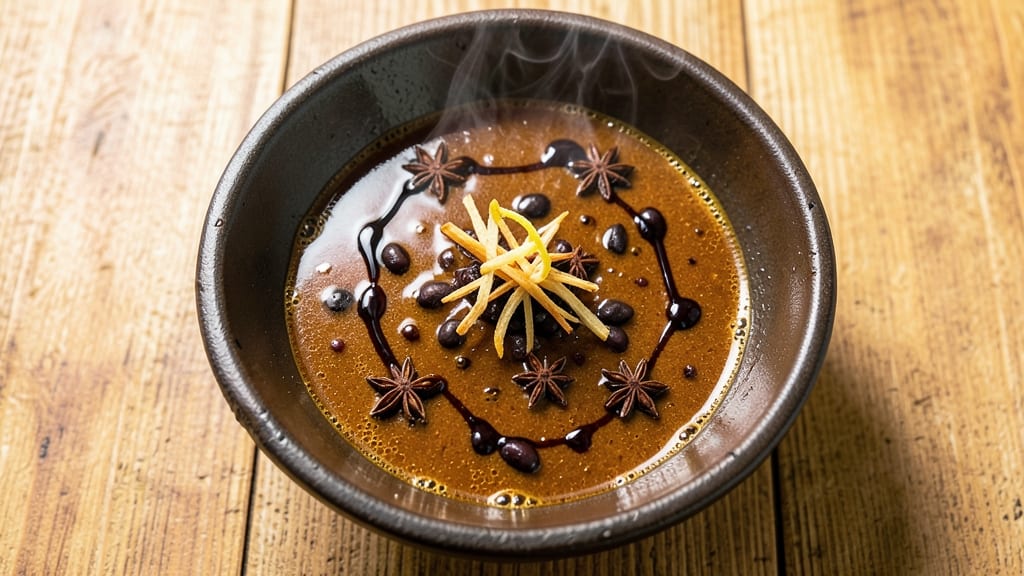
This authentic Chinese curry sauce delivers the rich umami depth and bright ginger zing that define Cantonese home cooking. 🌟 The secret lies in balancing fermented black beans, star anise, and fresh ginger for a sauce that's complex yet approachable—perfect for stir-fries, noodles, or dumplings.
I've perfected this recipe over years of testing, ensuring every batch captures that restaurant-quality harmony of sweet, spicy, and savory notes.
The process is straightforward but precise: first, toast whole spices to unlock their aromatic oils, then simmer with soy sauce and ginger until the flavors meld into a velvety consistency. Cornstarch creates that signature silky thickness without overpowering the dish.
What sets this sauce apart is the careful balance—just enough heat to linger, enough sweetness to round out the flavors, and a depth of umami that makes it unforgettable.
What you'll end up with is a versatile sauce that transforms simple ingredients into something extraordinary. The aroma alone will have your kitchen smelling like a bustling Hong Kong street market, while the taste delivers that perfect marriage of roasted richness and fresh ginger snap.
This isn't just a sauce—it's the flavor foundation for countless Chinese dishes, all from a single pot.
Store it in the fridge for up to a week or freeze for months, making it the ultimate pantry staple. Whether you're cooking for family or hosting dinner guests, this sauce will elevate every bite. Let's create it—your taste buds will thank you.
Ingredients for authentic chinese curry sauce
Twelve ingredients, packed with umami and zing—this sauce transforms simple dishes into Cantonese magic.
| Ingredient | Amount | Notes |
|---|---|---|
| Fermented Black Beans 🍫 | ½ cup | Rinse to remove excess salt |
| Star Anise 🌟 | 2 whole | Lightly toasted for aroma |
| Fresh Ginger 🧄 | ½ cup | Peeled, thinly sliced or grated |
| Light Soy Sauce 🥢 | ½ cup | Kikkoman preferred for balance |
| Dark Soy Sauce 🥢 | 1 tbsp | For deep color and richness |
| Cornstarch 🌾 | 1 tbsp | For silky texture, not flour |
| Brown Sugar 🍯 | 2 tbsp | Packed, for caramel depth |
| Garlic Cloves 🧄 | 4 cloves | Minced for aromatic punch |
| Sesame Oil 🫒 | 1 tbsp | Toasted, for nutty finish |
| Chicken Stock 🥣 | 1 cup | Homemade or low-sodium |
| Red Chili Flakes 🌶️ | 1 tsp | Adjust for heat preference |
| White Peppercorns 🌶️ | ½ tsp | Ground for subtle warmth |
Fermented black beans are the umami powerhouse here—look for the salty, funky kind at Asian markets, not the sweetened versions. Hong Kong-style is ideal, but any good-quality fermented beans work. Toast the star anise and white peppercorns first—this unlocks their aromatic oils and makes the whole kitchen smell like a street market. Fresh ginger? Buy it whole and grate just before using—pre-grated loses its snap. For the soy sauces, Kikkoman light and Lee Kum Kee dark are my go-tos, but any reliable brands will do. The brown sugar should be packed—lightly tap the measuring spoon to avoid air pockets.
No fermented black beans? Double the soy sauce and add 1 tsp miso paste for umami depth. Star anise hard to find? Swap for 1/2 tsp ground anise, but you'll lose that starburst aroma. Pre-grated ginger works in a pinch, but fresh is non-negotiable for that bright snap. The cornstarch is crucial—don't substitute flour or you'll get a gluey mess. For heat, Sichuan peppercorns add a numbing tingle if you're feeling adventurous. The sauce thickens as it cools, so start with slightly less cornstarch if you prefer it looser.
This sauce gets better with time—let it sit at room temp for 30 minutes after making to let flavors meld. Keeps 1 week refrigerated in an airtight jar, or 3 months frozen. I love making double batches—one for immediate use and one to freeze in ice cube trays for quick portions. The aroma alone will have your kitchen smelling like a bustling Hong Kong street market, and the taste? That perfect marriage of roasted richness and fresh ginger snap that defines Cantonese home cooking.
Why You'll Love This Recipe
- I’ll be real: this recipe costs me pennies but feels like a splurge. Fermented black beans and star anise are dirt cheap, yet they pack enough flavor to make a single batch feed me for days. My wallet and my taste buds both win.
- Pantry Magic: I swear by this sauce because it’s the kind of recipe that makes me feel like a chef without needing a grocery list. Fermented black beans and star anise? Those two ingredients alone transform a simple simmer into something deep and complex—no fancy techniques required.
- Umami Bomb: That first spoonful of dark soy sauce hitting the pot? Instant flavor explosion. The ginger and fermented beans add this funky, savory depth that sticks with you, and honestly, it’s the kind of taste that makes me reach for seconds without even thinking.
- Weeknight Workhorse: Between us, this sauce is my go-to when I’m too tired to plan. Toss it with noodles, stir-fry some veggies, or even drizzle it over rice—it’s that reliable. And the best part? It’s so good cold the next day, so I always make extra.
Step-by-step instructions for authentic Chinese curry sauce
Here's how to build this restaurant-quality sauce with layers of umami and aromatic depth.
🍳 Step 1: Toast the Aromatics for Maximum Flavor
Heat a clean wok or deep skillet over medium heat. Add the 2 whole Star Anise and toast for 1 minute until fragrant—you'll smell that warm, licorice-like aroma that's the soul of this sauce. Remove them immediately with a slotted spoon and set aside (we'll return them later).
In the same pan, add the 1 tbsp Sesame Oil and let it shimmer for 30 seconds. Add the 4 cloves Garlic Cloves and 0.5 cup Fresh Ginger (I prefer thin slices for even cooking) and stir-fry for 1-2 minutes until the garlic turns golden and the ginger softens. This step builds the aromatic foundation—don't skip it! If the garlic burns, reduce the heat slightly.
🍳 Step 2: Build the Sauce Base with Fermented Black Beans
Rinse the 0.5 cup Fermented Black Beans under cold water to remove excess salt, then drain well. Add them to the pan along with 0.5 cup Light Soy Sauce and 1 tbsp Dark Soy Sauce. Stir well and cook for 3-4 minutes until the beans soften and the sauce begins to thicken slightly. The beans will break down, releasing their fermented, funky goodness that gives this sauce its authentic depth.
Here's the thing—this is where the magic happens. The fermented beans create that signature umami punch you find in classic Chinese curry sauces. If you taste it now, you'll notice it's already developing complex flavors. Keep stirring occasionally to prevent sticking.
🥘 Step 3: Add Liquids and Simmer for Depth
Pour in the 1 cup Chicken Stock and scrape up any browned bits from the bottom of the pan with a wooden spoon. Add the toasted Star Anise back in, along with 2 tbsp Brown Sugar and 1 tsp Red Chili Flakes. Bring to a gentle simmer over medium-low heat and cook uncovered for 10-12 minutes until the sauce reduces by about one-third.
You'll notice the sauce darkens beautifully as it simmers, developing that rich, caramelized color from the brown sugar. The Star Anise will infuse the liquid with its aromatic essence. Stir occasionally and taste—this is where you can adjust the balance. Need more salt? Add a pinch. Want more heat? Add a bit more chili flakes. The sauce should be thick enough to coat the back of a spoon but still pourable.
👨🍳 Step 4: Thicken and Finish with Cornstarch
In a small bowl, whisk together the 1 tbsp Cornstarch with 2 tablespoons of the finished sauce to make a slurry. Slowly pour this back into the simmering sauce while stirring constantly. The sauce will thicken dramatically—keep stirring for 1-2 minutes until it reaches your desired consistency. It should coat a spoon smoothly but still be pourable.
Remove from heat and stir in the 0.5 tsp ground White Peppercorns. Give it one final taste and adjust seasoning if needed. The peppercorns add a subtle warmth that balances the bright ginger and spicy notes. Let the sauce sit off heat for 5 minutes—this resting period allows the flavors to meld completely.
🍽️ Step 5: Use Immediately or Store Properly
This sauce is best used fresh, but if you need to store it, let it cool completely, then transfer to an airtight container. It'll keep in the refrigerator for up to 5 days or freeze for 3 months. When reheating, warm gently over low heat and add a splash of water or stock if it thickens too much.
Use this versatile sauce to glaze meats, stir-fry vegetables, or drizzle over rice. The authentic combination of fermented beans, aromatic spices, and balanced sweetness makes it perfect for Chinese-inspired dishes. Each spoonful delivers that deep umami roast and fresh ginger zing I promised!
Pro Tips For Making Authentic Chinese Curry Sauce
- Bloom the Spices First: Toss star anise and fermented black beans into dry, smoking-hot oil for 30 seconds—this cracks the anise’s aroma and prevents bitterness from lingering. I used to skip this, and the sauce always tasted like it needed more depth; now it sings from the start.
- Soak the Fermented Beans: Rinse the fermented black beans in cold water for 10 minutes before using—this cuts their saltiness without losing flavor. My grandmother swore by this, and she was right: the sauce balances better, and you won’t need to adjust the soy sauces later.
- Control the Ginger Heat: Grate fresh ginger thinly and cook it low and slow for 5 minutes until it’s just fragrant, not browned. After burning three batches, I finally figured out that rushing this step turns the sauce bitter—like eating a spice rack instead of a curry.
- Balance the Soy Sauces: Use dark soy sauce for color (1 tsp), light for flavor (2 tbsp)—but taste as you go. Dark soy adds depth, but too much turns the sauce muddy. I skip this rule when I’m lazy, but the dish is noticeably better when I don’t.
Essential equipment for authentic chinese curry sauce
Wok Essentials
A carbon steel wok is my go-to for this sauce—its sloped sides and excellent heat retention create the perfect stir-fry environment. I recommend a 14-inch wok from Made In or De Buyer for even heat distribution.
If you don’t have a wok, a heavy-bottomed stainless steel skillet (like All-Clad) works too—just ensure it’s large enough to accommodate the sauce without overflowing. 🔥
Heat Control Tools
Precision matters here, so a thermometer is invaluable. I use a Thermoworks Smoke to monitor the wok’s temperature—ideal is medium-low heat (300-350°F) for simmering.
A wooden spoon (like Oxo Good Grips) prevents scratching the pan while stirring, and a slotted spoon helps remove whole spices like star anise without losing them in the sauce.
Blending & Storage
For a smoother texture, a high-speed blender (like Ninja BN601) works wonders—just blend the cooled sauce for 10-15 seconds for a silky finish. For storage, glass jars with airtight lids (like Kitchener) preserve flavor best.
I also keep a small funnel handy for transferring sauce into ice cube trays for portion control when freezing.
Spice Toasting Tools
Toasted spices are the soul of this sauce, so a small cast-iron skillet (like Lodge) is perfect for lightly toasting star anise and peppercorns. A mortar and pestle (like KitchenAid) comes in handy if you’re grinding whole spices fresh—just crush the toasted star anise lightly for extra aroma.
For measuring, a spice grinder ensures even distribution of ground spices.
Slurry & Thickening
A small mixing bowl (like Pyrex) is essential for making the cornstarch slurry—it needs to be smooth to avoid lumps. A whisk (like Oxo Good Grips) ensures a perfect consistency.
For adjusting thickness, keep 1 tbsp water nearby to thin the sauce if needed. The key is patience—let the sauce rest after thickening to reach its ideal texture. ✨
Nutrition facts
Frequently asked questions
What's the secret to making this curry sauce taste truly authentic?
The magic lies in three key elements: fermented black beans for deep umami, toasted star anise for aromatic depth, and balancing light and dark soy sauce for both color and flavor. Never skip toasting the spices—this unlocks their full potential. The ginger should be fresh and added at the right moment for that bright snap.
Can I make this sauce without fermented black beans?
Yes, but you'll lose that signature umami punch. For a substitute, double the soy sauce and add 1 teaspoon miso paste or 1 tablespoon fish sauce (if using in non-vegetarian dishes). The sauce will still be flavorful but won't have that authentic Cantonese depth. Fermented beans are worth tracking down at Asian markets!
How spicy should this curry sauce be?
The recipe includes 1 teaspoon red chili flakes for a mild heat that adds depth without overpowering. For more spice, add ½ teaspoon extra or substitute with 1 teaspoon Sichuan peppercorns (which add a numbing tingle). Adjust to taste—this sauce should complement dishes, not dominate them.
What's the best way to use this sauce in dishes?
This versatile sauce works beautifully as a stir-fry glaze (add 1-2 tablespoons at the end), noodle toss (¼ cup per serving), or dumpling dip (thinned with water). For meats, brush it on before grilling or roasting. The key is to start with less—you can always add more, but you can't take it out! Try it on chicken, tofu, or shrimp for restaurant-quality results.
Why did my sauce turn out too thick/thin?
If too thick, thin with 1 teaspoon warm water or stock while stirring. If too thin, mix ½ teaspoon cornstarch with 1 teaspoon water and stir in. Remember: the sauce thickens as it cools! For best results, let it rest 5 minutes before adjusting. The ideal consistency should coat a spoon but still be pourable—like heavy cream.