
Sauces & Condiments
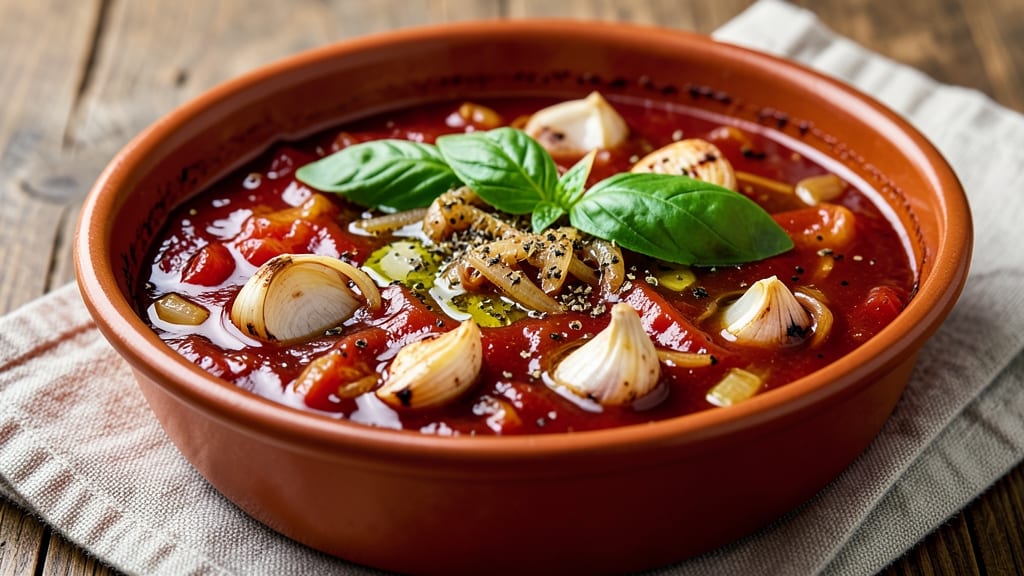
This sugo sauce recipe transforms simple ingredients into the rich, slow-simmered tomato sauce that elevates every pasta dish. Growing up in a Boston triple-decker, I learned from Nonna that the secret lies in patience—letting flavors meld over time rather than rushing the process.
The aroma alone will transport you to an Italian trattoria, where this sauce is the star of the show.
What makes this sauce truly special is its versatility and depth of flavor. With just a few pantry staples—tomatoes, garlic, onions, and herbs—you create a sauce that's rich enough for lasagna yet bright enough for a quick weeknight spaghetti.
The key is simmering it low and slow, allowing the natural sweetness of the tomatoes to caramelize while the garlic and herbs infuse every drop.
By the time you're done, you'll have a velvety, aromatic sauce that clings perfectly to pasta, absorbs into crusty bread, or even stands alone as a flavorful dip.
It's the kind of sauce that turns a simple meal into something extraordinary—exactly what Nonna always promised would happen when you take your time in the kitchen.
Store it in the fridge for up to five days or freeze for months, so you always have restaurant-quality sauce ready whenever inspiration—or hunger—strikes. Let's get cooking!
Ingredients for sugo sauce
Eight simple ingredients create Nonna's rich, aromatic sugo sauce that transforms any pasta dish.
| Ingredient | Amount | Notes |
|---|---|---|
| Extra-Virgin Olive Oil 🫒 | ½ cup | High quality, fruity variety |
| Yellow Onion 🧅 | 1 whole | Medium size, finely chopped |
| Garlic Cloves 🧄 | 4 cloves | Fresh, peeled and minced |
| San Marzano Crushed Tomatoes 🍅 | 28 oz | High quality canned tomatoes |
| Fresh Basil Leaves 🌿 | ½ cup | Packed, stems removed |
| Dried Oregano 🍃 | 1 tsp | Italian or Mediterranean blend |
| Sea Salt 🧂 | 1 tsp | Fine grain preferred |
| Freshly Ground Black Pepper 🌶️ | ½ tsp | Freshly cracked preferred |
| Red Wine 🍷 | ½ cup | Dry, bold variety like Chianti |
| Tomato Paste 🍅 | 2 tbsp | Squeeze tube or canned |
The tomatoes are the heart of this sauce—San Marzano is ideal, but any high-quality canned tomatoes work. Trader Joe's and Whole Foods carry great options, or grab a 28-oz can from the Italian aisle. Fresh basil? Farmers markets have the best, but grocery store basil works if it's bright green and not wilted. The red wine adds depth—any dry, bold red like Chianti or Sangiovese does the trick. If you don't have wine, beef broth with a splash of balsamic works too. The tomato paste is non-negotiable—it thickens the sauce beautifully and adds that classic sugo richness. Grab a squeeze tube for convenience, or use canned paste if that's what you've got.
No fresh basil? Dried oregano at half the amount keeps the Italian flavors intact. Short on red wine? Substitute extra tomato paste or a splash of vinegar for acidity. The olive oil matters—extra-virgin with fruity notes gives the best flavor. If you're using pre-minced garlic, toast it in the oil first for deeper flavor. The onions can be yellow or red—just make sure they're sweet and fresh. For extra richness, stir in a splash of heavy cream at the end, but keep it optional so the sauce stays versatile.
This sauce gets better with time—simmer it longer for thicker consistency. Store leftovers in the fridge for up to 5 days, or freeze for up to 3 months. I like to portion it into ice cube trays for easy single-use servings. The sauce thickens as it cools, so add a splash of water or broth if it's too thick when reheating. It reheats beautifully—just warm on the stove or microwave until hot. The aroma alone will have you reaching for pasta!
Why You'll Love This Recipe
- Five-Ingredient Magic: I swear by this—just oil, onion, garlic, tomatoes, and basil. That’s it. No fancy gadgets, no hidden pantry items, just pure, unfussy flavor that still feels special.
- Garlic-Basil Bomb: The moment those crushed tomatoes hit the pan with garlic and fresh basil? My kitchen smells like a Tuscan sunset. That bright, herby punch cuts through the richness of pasta or meat like a knife.
- Weeknight Workhorse: This sauce doubles as marinara for spaghetti, a topping for grilled chicken, or even a pizza base. Honestly, I’ve used it in tacos when I was tired of takeout—it’s that reliable.
- Leftovers That Lie: You’ll make twice as much as you need because it tastes even better the next day. The flavors meld into something deeper, and it reheats like a dream—no splattering, no burning, just smooth, rich goodness.
Step-by-step instructions for slow-simmered sugo sauce
Here's how to build a rich, velvety tomato sauce that clings perfectly to pasta.
Sauté Onion and Garlic Until Soft
Heat the 0.5 cup extra-virgin olive oil in a large, heavy-bottomed saucepan over medium-low heat. Add the 1 whole yellow onion, chopped into small dice, and cook for 8-10 minutes until the onions become translucent and slightly golden around the edges. Stir occasionally to prevent browning.
Here's the thing—this slow cook is key. You want the onions to melt into the oil without coloring, which would add bitterness to your sauce. When the onions are soft and their raw edge disappears, add the 4 cloves minced garlic cloves. Cook for another 1-2 minutes until the garlic is fragrant but not browned. That aroma is what makes this sauce sing.
Build the Sauce Base with Tomato Paste and Wine
Reduce the heat to low and stir in the 2 tablespoons tomato paste, spreading it evenly around the pan. Let it cook undisturbed for 2-3 minutes until it darkens slightly and fills your kitchen with that deep, caramelized tomato scent. This step develops the sauce's depth—don't rush it.
Next, pour in the 0.5 cup red wine and stir vigorously to scrape up any browned bits from the bottom of the pan. These bits, called fond, are packed with flavor. Let the wine simmer for 3-4 minutes until it reduces by about half. You'll see the liquid shrink and the alcohol burn off, leaving behind concentrated wine flavor.
Add Tomatoes and Seasonings for Simmering
Pour in the 28 oz san marzano crushed tomatoes and stir well to combine. Add the 1 teaspoon dried oregano, 1 teaspoon sea salt, and 0.5 teaspoon freshly ground black pepper. Bring the sauce to a gentle simmer over medium-low heat. Here's where patience pays off—let it cook uncovered for 45-50 minutes, stirring occasionally.
You're looking for a sauce that thickens naturally as the moisture evaporates. Stir every 10 minutes to prevent sticking, and taste occasionally. If the sauce gets too thick before the time is up, add 2-3 tablespoons of water to maintain the right consistency. The sauce should coat the back of a spoon smoothly but still be saucy enough to cling to pasta.
Finish with Fresh Basil and Adjust Seasoning
About 10 minutes before the sauce is done, stir in the 0.5 cup fresh basil leaves, packed and stems removed. The basil will add bright, fresh flavor that cuts through the richness of the tomatoes. Taste the sauce and adjust the seasoning if needed—add more salt if it's bland, or a pinch more pepper if it needs more depth.
Remove the sauce from heat and let it rest for 5 minutes. This resting period allows the flavors to meld completely. The sauce should be vibrant red, glossy, and perfectly balanced—sweet from the tomatoes, rich from the wine, and bright from the basil. If you're serving it immediately, give it a final stir before ladling it over your pasta.
Pro Tips For Making Sugo Sauce
- SWEAT THE ONION: DESCRIPTION: Don’t rush the onion—cut it into even ¼-inch slices and cook them in olive oil over medium-low heat until they’re translucent and just starting to turn golden. I used to burn this step, but taking the extra 5 minutes makes the sauce richer and sweeter, especially when paired with the acidity of San Marzano tomatoes.
- CRUSH GARLIC GENTLY: DESCRIPTION: Smash the garlic cloves with the flat side of your knife instead of mincing them finely—this keeps the flavor intact and prevents it from turning bitter. I learned this the hard way after overcooking minced garlic in a previous batch and ruining the sauce’s balance.
- SIMMER LOW AND LONG: DESCRIPTION: Reduce the heat to the lowest setting once the tomatoes are added and let the sauce bubble softly for at least 20 minutes. This isn’t the time to speed things up—low and slow deepens the flavors and lets the basil’s aroma infuse properly. (Yes, even if you’re impatient like me.)
- ADD BASIL LATE: DESCRIPTION: Tear the basil leaves by hand and stir them in only during the last 5 minutes of cooking—this preserves their bright, fresh flavor instead of letting it turn bitter. I skip this sometimes, and the sauce still works, but the difference is noticeable when done right.
Make-ahead tips for leftovers
Freezer Prep
Portion cooled sugo into quart-sized freezer bags or airtight containers, leaving 1-inch headspace for expansion. I like using Silicone Molds (like those from Amazon Basics) to create sauce cubes—just pop one into simmering pasta for instant flavor.
Label with date and "sugo"—trust me, you'll forget what's in there after a few months! 🧊
Fridge Storage
Store your sugo in the fridge for up to 5 days in a glass container (I use Pyrex with a tight lid). The sauce thickens as it cools, so add 1-2 tablespoons water when reheating.
I always make double batches because this sauce disappears faster than you'd think—especially when paired with garlic bread. 🥖
Reheating Perfectly
For stovetop reheating, warm sauce over low heat for 5-7 minutes, stirring occasionally. If using the microwave, heat in 30-second intervals until steaming, stirring between each. Never microwave on high—it ruins the texture. A splash of pasta water revives any dried-out sauce instantly. 🔥
Sauce Boosts
Want extra richness? Stir in 1 tablespoon butter or 2 tablespoons heavy cream when reheating. For umami depth, add 1 teaspoon soy sauce or a pinch of red pepper flakes.
My Nonna always kept a jar of sun-dried tomatoes chopped in her freezer—just toss in a handful when reheating for extra depth. ✨
Make-Ahead Meal Prep
Prep sugo the night before pasta nights to save 30 minutes of cooking time. Store in the fridge, then transfer directly to your pasta pot while water boils.
I also keep a small saucepan dedicated to reheating—it's my secret weapon for busy weeknights. The flavor actually improves overnight as the spices meld. 💡
Portion Control
For single servings, freeze sauce in ice cube trays—just pop one cube into simmering pasta for perfect portioning. Need more sauce? Double the recipe and freeze half.
I've made 8 servings at a time and kept them in the freezer for months. The key is using airtight containers to prevent freezer burn. 🧊
Nutrition facts
Frequently asked questions
What's the difference between sugo and marinara sauce?
Sugo is richer and more complex than marinara—it simmers longer with wine, tomato paste, and fresh herbs like basil, creating depth of flavor. Marinara is lighter, often made with just tomatoes, garlic, and olive oil. Think of sugo as marinara's sophisticated cousin, perfect for hearty dishes like lasagna or bolognese.
Can I make sugo without wine?
Use 0.5 cup beef or vegetable broth plus 1 teaspoon balsamic vinegar for acidity, or add 1 tablespoon extra tomato paste to intensify flavor. The wine adds depth, but this substitution works beautifully—just simmer the broth longer to concentrate the flavor.
Why did my sugo turn out too acidic?
Too much wine or vinegar can make sugo taste sharp. Balance it by adding 1 teaspoon sugar or 2 tablespoons heavy cream to mellow the acidity. Stir in 1/4 cup pasta water to thin if needed, then taste again. The key is patience—simmering longer reduces acidity naturally.
How do I use leftover sugo?
Toss with cooked pasta, use as a pizza sauce, or spread on grilled cheese. For extra flavor, stir in 1 tablespoon butter or a handful of sun-dried tomatoes. Freeze in ice cube trays for single-serving portions—just pop one cube into simmering pasta for instant flavor.
Can I make sugo in a slow cooker?
Yes! Sauté onions and garlic first, then transfer everything to the slow cooker on low for 6-8 hours or high for 3-4 hours. The slow cooker's gentle heat enhances the flavors beautifully. Just stir occasionally and add water if it gets too thick. Perfect for hands-off cooking!