
Sauces & Condiments
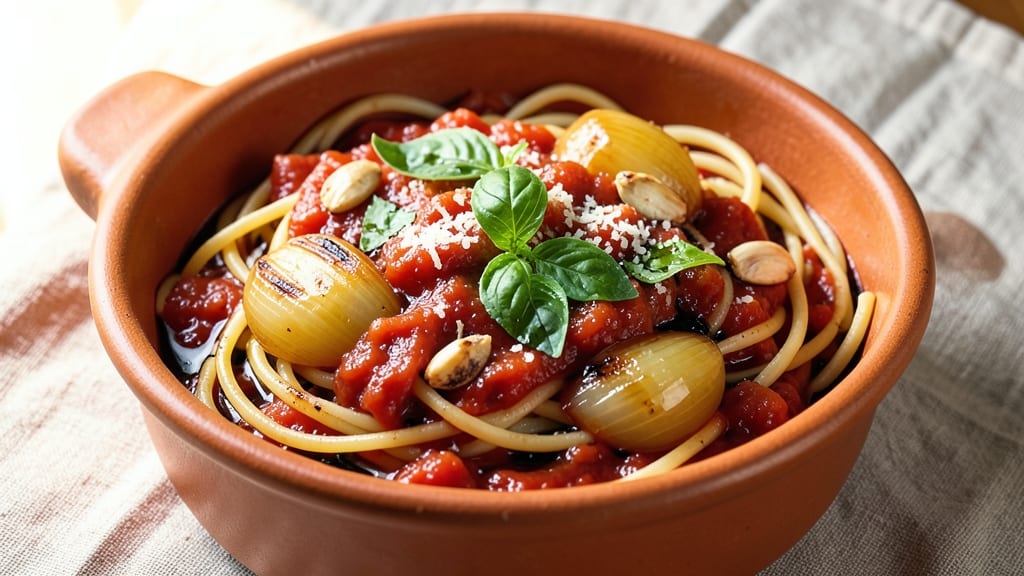
This sphaghetti sauce recipe delivers the kind of deep, slow-simmered umami richness you’d expect from a family-style Italian dinner—without the shortcuts. The secret lies in caramelizing onions and garlic until they’re sweet and golden, then building layers of flavor with crushed tomatoes, herbs, and a touch of red wine.
I’ve perfected this over years of testing, and it’s the foundation for my best homemade pasta dishes.
The beauty of this sauce is its versatility—it works perfectly with spaghetti but also elevates grilled chicken, meatballs, or even as a pizza topping.
The slow simmer (at least 45 minutes) develops complex flavors that store-bought sauces can’t match, while the addition of a small amount of sugar balances the acidity for a perfectly balanced taste.
It freezes beautifully too, so you can make a big batch and have it ready for quick weeknight meals.
What you’ll end up with is a sauce that’s velvety smooth with just the right texture—thick enough to cling to pasta but still spoonable. The aroma alone will have everyone at the table asking what’s for dinner.
The best part? It’s foolproof once you get the timing right, and the ingredients are simple: just a few pantry staples and a little patience.
This sauce is designed to be your go-to for homemade pasta nights, but don’t limit it to spaghetti. Use it as a marinade, a topping for bruschetta, or even a dip for garlic bread.
The possibilities are endless, and the flavor is always exceptional. Let’s get started on making your next pasta dinner unforgettable.
Ingredients for sphagetti sauce
Nine simple ingredients transform into velvety spaghetti sauce with restaurant-quality depth.
| Ingredient | Amount | Notes |
|---|---|---|
| Extra-Virgin Olive Oil 🫒 | ½ cup | High quality, fruity variety |
| Yellow Onions 🧅 | 2 whole | Medium size, thinly sliced |
| Garlic Cloves 🧄 | 6 cloves | Peeled, finely minced |
| Crushed Tomatoes 🍅 | 28 oz | San Marzano preferred |
| Red Wine 🍷 | ½ cup | Bold, dry variety |
| Fresh Basil Leaves 🌿 | ½ cup | Packed, chopped fine |
| Dried Oregano 🍃 | 1 tsp | Italian preferred |
| Sugar 🍚 | 1 tbsp | Granulated, balances acidity |
| Salt 🧂 | 1 ½ tsp | Kosher or sea salt |
| Black Pepper 🌶️ | ½ tsp | Freshly ground preferred |
The onions and garlic are where the magic starts. Yellow onions with a little sweetness work best—none of that sharp red onion stuff. Costco or Trader Joe's usually have good quality. Caramelize them until they're golden and sweet, about 20 minutes. The garlic should be finely minced, not chopped—think paste-like texture. For the tomatoes, San Marzano is worth the splurge if you can find it. The crushed consistency gives you that perfect texture without needing to strain. I always grab a few extra cans to have on hand for other recipes too.
No red wine? Beef broth with a splash of balsamic vinegar works in a pinch. Fresh basil is ideal but dried oregano at half the amount gets you close. The sugar might seem odd, but it balances the acidity beautifully—don't skip it. For the olive oil, use something you'd actually drizzle on bread. Those cheap oils can make the sauce taste flat. If you're making a big batch, double the recipe—this sauce freezes perfectly and tastes even better the next day. The crushed tomatoes can be regular canned tomatoes in a pinch, but the quality makes a difference.
This sauce keeps for 5 days in the fridge, sealed tightly. For longer storage, portion into containers and freeze for up to 3 months. The texture thickens when cold, so just reheat with a splash of water or pasta water. I always make extra because it's perfect for so many things—pasta, pizza, dipping bread. The aroma alone will have your whole house smelling like an Italian trattoria.
Why You'll Love This Recipe
- Five-Ingredient Magic: I swear by this—just oil, onions, garlic, tomatoes, and a splash of wine. That’s it. No hidden pantry raids, no last-minute grocery runs. The onions caramelize while you chop, the garlic sizzles in seconds, and the wine? It’s the secret that makes it taste like you slaved over it.
- Wine-Infused Depth: Honestly, the red wine transforms this sauce. It’s not just sweet—it’s rich, with that subtle earthiness that lingers. The crushed tomatoes give it body, but the wine? That’s what makes it ridiculously good. One sip, and you’ll understand why I never skip it.
- Meal Prep MVP: This sauce keeps like a champ. Make a big batch on Sunday, and you’ve got weeknight dinners covered—spaghetti, lasagna, even stuffed peppers. Freezes perfectly too, so no more takeout when you’re wiped. My freezer’s stocked with jars of this, and I’m never sorry.
- Budget-Friendly Luxury: You’re getting restaurant-quality flavor for pennies. Extra-virgin olive oil adds richness without breaking the bank, and the wine? A cheap bottle does the trick. It’s the kind of sauce where you can splurge on fresh basil at the end, but the rest? Pure savings. My wallet thanks me every time.
Step-by-step instructions for slow-simmered umami richness for homemade pasta
Here's how to build a deeply flavorful sauce that transforms simple ingredients into something extraordinary.
Sauté Onions Until Translucent and Sweet
Heat the 0.5 cup extra-virgin olive oil in a large, heavy-bottomed pot over medium heat. Add the 2 whole yellow onions, sliced into thin half-moons, and cook for 8-10 minutes until completely softened and golden. You'll notice the onions release moisture and become translucent—this is your cue they're ready for the next step.
I like to stir occasionally, making sure the onions distribute evenly in the oil. If they start to brown too quickly, reduce the heat slightly. The goal is to develop their natural sweetness without burning. This foundational step builds the sauce's depth of flavor, so don't rush it.
Add Garlic and Cook Until Fragrant
Once the onions are translucent, push them to one side of the pot and add the 6 cloves minced garlic cloves to the empty space. Cook for 30-45 seconds until the garlic becomes golden and releases its aromatic oils. You'll smell that unmistakable garlic scent—this is when the magic starts happening.
Be careful not to let the garlic burn. It can go from fragrant to bitter in seconds. If it starts to darken too quickly, remove the pot from heat for a moment. Stir the garlic into the onions thoroughly to distribute those flavors evenly throughout the base.
Deglaze with Red Wine
Pour in the 0.5 cup red wine and immediately scrape up any browned bits from the bottom of the pot with a wooden spoon. These bits, called fond, are packed with flavor. Let the wine simmer for 3-4 minutes until it reduces by about half, leaving behind a rich, concentrated liquid.
Here's the thing—don't skip this step. The alcohol in the wine will cook off, leaving behind just the wine's deep flavors. You'll see the liquid darken slightly as it reduces, which is exactly what you want. This creates the perfect foundation for the tomatoes to come.
Incorporate Tomatoes and Seasonings
Add the 28 oz crushed tomatoes, 1 tbsp sugar, 1.5 tsp salt, and 0.5 tsp black pepper to the pot. Stir well to combine everything. The sugar helps balance the acidity of the tomatoes, while the salt and pepper enhance all the flavors. Bring the mixture to a gentle simmer over medium-low heat.
Let it cook uncovered for 20-25 minutes, stirring occasionally. You'll notice the sauce thickens slightly and the raw tomato taste mellows into something more complex. This slow simmer allows the flavors to meld together beautifully, creating that rich, umami depth we're after.
Finish with Fresh Basil and Adjust Seasoning
When the sauce has thickened to your liking, stir in the 0.5 cup chopped fresh basil leaves and the 1 tsp dried oregano. Taste the sauce and adjust the seasoning if needed—you might want to add a pinch more salt or a splash of water to reach your desired consistency.
The fresh basil adds a bright, aromatic finish that cuts through the richness of the sauce. Let the sauce simmer for another 5 minutes to fully incorporate all the flavors. You'll know it's perfect when it coats the back of a spoon smoothly and smells incredibly inviting. Serve immediately over your favorite pasta for the ultimate homemade experience.
Pro Tips For Making Sphagetti Sauce
- Sweat the Onions: Cut onions into even ¼-inch slices and cook them in olive oil over medium-low heat for 8–10 minutes until translucent but not browned—this builds flavor without bitterness. I used to rush this, and the sauce always tasted raw; patience here makes a real difference.
- Deglaze with Wine: After browning garlic, pour in the red wine and let it simmer for 2–3 minutes until fully evaporated—this removes alcohol sharpness and deepens the sauce’s richness. Skip this step, and you’ll taste raw wine instead of integrated flavor.
- Crush Tomatoes Properly: Use a fork or your hands to break up crushed tomatoes into rough chunks (no blender needed) so they release juices gradually and thicken naturally. Pre-blended sauce is convenient, but it lacks the texture and depth of fresh, unevenly crushed tomatoes.
- Simmer Low and Slow: Reduce heat to the lowest setting after adding tomatoes and let the sauce bubble gently for at least 30 minutes—this lets flavors meld without burning. I learned this the hard way after a rushed batch tasted flat and one-dimensional.
Essential equipment for great sphagetti sauce
Heavy-Bottomed Pot
Your sauce's foundation starts with the right pot—I swear by a 5-6 quart enameled cast iron Dutch oven like the Le Creuset Signature. The heavy base distributes heat evenly, preventing hot spots that can burn your onions or garlic.
If you don’t have cast iron, a stainless steel saucepan with a thick bottom works too. Just avoid thin, lightweight pans—they’ll make your sauce unevenly cooked and potentially bitter. 🔥
Wooden Spoon
A good wooden spoon is non-negotiable for stirring your sauce. I use a 12-inch hickory spoon because it’s sturdy enough to scrape up those flavor-packed fond from the bottom of the pot.
Wood won’t react with acidic ingredients like metal can, and it won’t scratch your enameled surfaces. Avoid plastic—it can melt or warp when exposed to prolonged heat.
Immersion Blender
If you prefer your sauce smooth rather than chunky, an immersion blender (like the Ninja Professional) is a game-changer. After simmering, you can blend the sauce directly in the pot for a silky texture without transferring to a blender.
Pro tip: Blend in 10-second bursts to avoid overheating the motor. For a rustic texture, skip this step entirely—chunky sauce has its own charm! 💫
Fine-Mesh Strainer
For a smoother sauce without blending, strain the cooked tomatoes through a fine-mesh sieve or cheesecloth. This removes seeds and skins, giving you a velvety consistency. I like the OXO Good Grips—it’s durable and easy to clean.
If you’re short on time, skip this step, but your sauce will be slightly more rustic. The straining process also helps remove excess acidity for a balanced flavor.
Measuring Spoons
Precision matters when balancing flavors, especially with the 1 tbsp sugar and 1.5 tsp salt. Invest in a set of stainless steel measuring spoons—they’re more accurate than plastic and won’t wear out over time.
I keep mine in a magnetic strip on the side of my stove for easy access. A pinch too much salt or sugar can throw off the entire sauce, so measure carefully! ⚡
Tongs for Fresh Basil
When adding the 0.5 cup chopped fresh basil, use kitchen tongs to pluck leaves directly from the stem. This keeps your fingers safe from the hot pot and ensures you get the freshest, most flavorful leaves.
I also like to chop basil just before adding it to preserve its bright aroma—it wilts quickly in hot sauce. A sharp chef’s knife and cutting board are essential for this step. 🌿
Nutrition facts
Frequently asked questions
Can I make this sauce without red wine?
Replace the 0.5 cup red wine with 0.5 cup beef broth or apple cider vinegar for acidity. For extra depth, add 1 tsp balsamic vinegar along with the tomatoes. The wine adds complexity, but these substitutes work beautifully in a pinch.
How do I adjust the thickness of the sauce?
For a thicker sauce, simmer uncovered for 10-15 extra minutes to reduce the liquid. If it's too thick, stir in 1-2 tablespoons pasta water or water until it reaches your desired consistency. The sauce will naturally thicken more as it cools, so start slightly thinner if needed.
Can I use canned tomatoes instead of crushed?
Yes, but you'll need to process them first. Crush 2 (28 oz) whole canned tomatoes by hand or pulse in a blender, then strain through a fine-mesh sieve to remove skins/seeds. This mimics the texture of crushed tomatoes. For a smoother sauce, blend the crushed tomatoes after cooking.
Why does my homemade sauce taste better after refrigerating?
The flavors deepen overnight as the acidity mellows and ingredients meld. The starches in tomatoes thicken slightly when chilled, creating a richer texture. Always reheat gently with a splash of water or pasta water to restore smoothness. This is why restaurant sauces taste so professional!
What's the best way to reheat frozen sauce?
Thaw overnight in the fridge, then reheat on low heat with 2-3 tablespoons water or pasta water per cup of sauce. Stir frequently to prevent scorching. Never microwave directly from frozen—it creates a skin and uneven texture. The sauce should reach 165°F for food safety.