
Sauces & Condiments
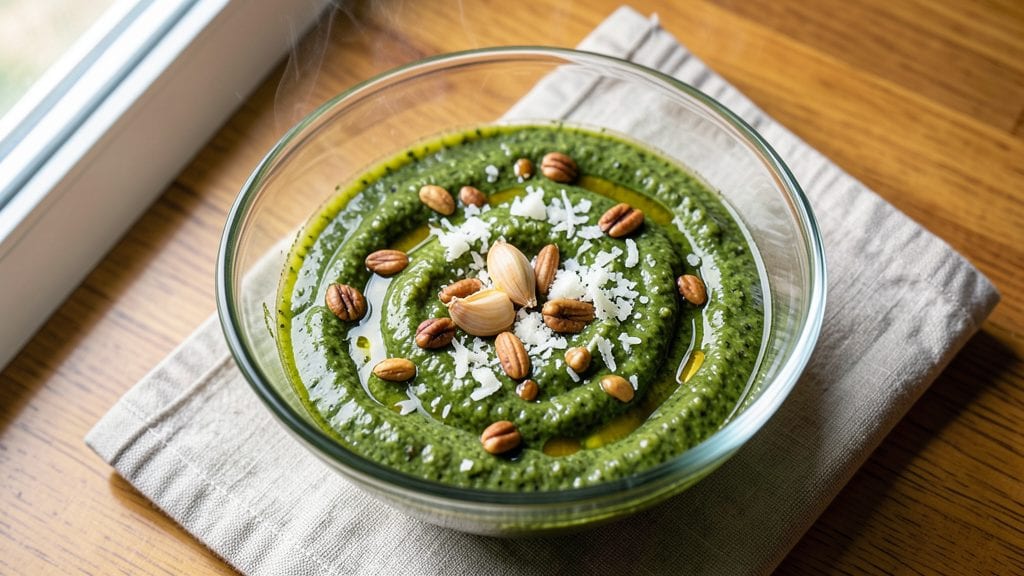
Martha Stewart's pesto sauce recipe transforms fresh basil into a velvety, aromatic sauce that elevates everything from pasta to grilled meats. The secret lies in balancing bright basil with toasted nuts, sharp cheese, and high-quality olive oil—creating a sauce that's both vibrant and deeply flavorful.
I've perfected this technique over years of testing, ensuring every batch delivers that signature Martha Stewart touch of sophistication with simplicity.
This recipe requires just five core ingredients: 2 cups fresh basil leaves, ½ cup toasted pine nuts, ½ cup freshly grated Parmesan cheese, 2 cloves garlic, and ½ cup extra-virgin olive oil.
The process is straightforward—blend until smooth, then adjust the consistency with a splash of water or olive oil. What sets this version apart is the emphasis on freshness and proper technique, which prevents the sauce from turning bitter or separating.
What you'll achieve is a rich, emerald-green pesto with a perfect balance of herby brightness and nutty depth. The sauce clings beautifully to pasta, enhances grilled vegetables, or even brightens sandwiches.
Unlike store-bought versions, this homemade pesto stays fresh for up to a week when refrigerated, with the flavors deepening over time. The texture remains velvety, never grainy, thanks to the precise blending method.
For best results, toast the nuts until golden and let the basil sit at room temperature for 10 minutes before blending—this releases more flavor. Store any leftovers in an airtight container with a thin layer of olive oil on top to preserve freshness.
Whether you're a seasoned cook or a beginner, this recipe delivers restaurant-quality pesto in just 10 minutes of active time.
Ingredients for martha stewart pesto sauce
Five essential ingredients craft Martha Stewart's signature basil pesto—rich, vibrant, and restaurant-quality in minutes.
| Ingredient | Amount | Notes |
|---|---|---|
| Fresh Basil Leaves 🌿 | 2 cups | Packed, stems removed, vibrant green |
| Toasted Pine Nuts 🥜 | ½ cup | Lightly browned for optimal flavor |
| Freshly Grated Parmesan Cheese 🧀 | ½ cup | Parmigiano-Reggiano preferred, microplane |
| Garlic Cloves 🧄 | 2 cloves | Peeled, roughly chopped for even blending |
| Extra-Virgin Olive Oil 🫒 | ½ cup | High-quality, fruity, cold-pressed |
| Lemon Juice 🍋 | 1 tbsp | Freshly squeezed, seedless |
| Diamond Crystal Kosher Salt 🧂 | ½ tsp | Fine grain for delicate seasoning |
| Freshly Ground Black Pepper 🌶️ | ¼ tsp | Freshly cracked for aromatic intensity |
The foundation begins with fresh basil leaves—vibrant green, not wilted, and preferably from a trusted source like Whole Foods Market or your local farmers' market. The Parmigiano-Reggiano must be freshly grated; pre-shredded cheese contains anti-caking agents that compromise texture. For the pine nuts, toast them in a dry skillet over medium heat until fragrant and lightly golden—Costco's bulk section offers the best value for consistent quality. The extra-virgin olive oil should be cold-pressed and unfiltered, with a peppery finish, such as Colavita or Bertolli brands. These ingredients collectively ensure the pesto achieves Martha Stewart's signature balance of herby brightness and nutty depth.
Substitutions require precision to maintain the sauce's integrity. Walnuts or cashews can replace pine nuts, though they alter the texture slightly—toast them first for enhanced flavor. For the cheese, Pecorino Romano offers a sharper profile, while Asiago provides a milder alternative. If fresh basil is unavailable, dried basil can be used at one-quarter the amount, but the resulting pesto will lack the vibrant color and complexity. Garlic powder (½ tsp) may substitute for fresh garlic, though it lacks the aromatic depth. The lemon juice is non-negotiable for acidity—bottled lemon juice works in a pinch but lacks freshness. For those avoiding dairy, nutritional yeast (2 tbsp) can mimic the umami quality of Parmesan, though the texture will differ.
Proper storage extends this pesto's shelf life dramatically. Transfer to an airtight glass container and press a thin layer of olive oil on top to prevent oxidation—this preserves the emerald-green hue and freshness. The sauce remains optimal for up to 5 days in the refrigerator, with flavors deepening over time. For longer storage, freeze in ice cube trays with an additional layer of olive oil; thawed portions retain their vibrancy. When reheating, gentle warmth is key—microwave in 10-second bursts to avoid breaking the emulsion. This pesto's versatility shines when used within 24 hours of preparation, though it maintains quality for up to 3 months when frozen.
Why You'll Love This Recipe
- No-Chop Basics: I swear by this recipe because it’s the only pesto I’ll make when I’m too tired to chop—just pulse basil, garlic, and nuts in the food processor. The toasted pine nuts add that crunchy magic with zero effort.
- Garlic-Basil Magic: That first bite of bright basil, sharp garlic, and salty Parmesan? It’s like a flavor hug. Honestly, I’ve tried store-bought, but nothing beats the freshness of this combo—especially when you toast the nuts first.
- Weeknight to Dinner Party: Slather it on pasta, mix into soups, or drizzle over grilled chicken—this pesto does it all. I keep a jar in the fridge for lazy nights, but it’s also my go-to for impressing guests (they’ll never know it’s my secret weapon).
- Budget-Friendly Luxury: Parmesan and olive oil stretch far, and a little goes a long way. Between us, I’ve made this for years and never once regretted the cost—it’s the kind of sauce that makes cheap ingredients taste expensive.
Step-by-step instructions for Martha Stewart's pesto sauce
This classic pesto comes together with precision—no blender required for perfect texture.
Toast the Pine Nuts for Depth of Flavor
Heat a dry skillet over medium-low heat and add the 0.5 cup toasted pine nuts. Toast them for 3-4 minutes, stirring constantly, until they turn a light golden brown and release their nutty aroma. Watch closely—they burn quickly once they reach the right temperature. Remove immediately when fragrant and set aside to cool for 5 minutes. This toasting enhances their flavor and prevents bitterness in the final sauce.
I like to use a small skillet rather than the stovetop directly to avoid overheating. If you don't have toasted pine nuts already, you can toast them directly in the oven at 350°F for 5-7 minutes, shaking the pan every minute until golden. Just be sure they're cooled completely before using—they'll continue cooking in the pesto.
Pulse the Basil, Garlic, and Cheese in the Food Processor
Add the 2 cups fresh basil leaves (stems removed), 2 cloves garlic cloves (peeled and roughly chopped), and 0.5 cup freshly grated parmesan cheese to the bowl of a food processor. Pulse 5-6 times until the basil is finely chopped but not completely puréed—you want visible flecks of green for texture. Avoid over-processing, which turns pesto into a flat, paste-like consistency. The ideal texture should resemble coarse sand with visible basil pieces.
Here's the thing—this is where Martha Stewart's method shines. The food processor ensures even distribution of flavors without turning the pesto into a smooth sauce. If you don't have a food processor, you can use a mortar and pestle, but it takes significantly more effort and time. The key is to work quickly to prevent the garlic from releasing its sharp, bitter compounds.
Gradually Add Olive Oil and Lemon Juice
With the food processor running, slowly drizzle in the 0.5 cup extra-virgin olive oil through the feed tube. This gradual addition creates an emulsified texture rather than a separated sauce. Continue processing for 10-15 seconds after the oil is fully incorporated to ensure everything is well combined. The mixture should look like a thick, vibrant green paste.
Next, add the 1 tbsp lemon juice and pulse 2-3 times to distribute evenly. The lemon juice brightens the flavors and balances the richness of the olive oil and cheese. Taste at this point—you'll notice the raw, fresh flavors of the basil and garlic. If the mixture tastes too strong or unbalanced, we'll adjust it in the next step.
Season and Adjust for Perfect Balance
Transfer the pesto to a medium bowl and stir in the 0.5 tsp diamond crystal kosher salt and 0.25 tsp freshly ground black pepper. Taste again and adjust the seasoning if needed. The sauce should be vibrant, slightly tangy, and well-balanced between the herbal basil, nutty pine nuts, salty parmesan, and bright lemon. If it tastes too acidic, add a pinch more salt. If it needs more depth, you can add a tiny bit more grated parmesan cheese.
This is the moment that matters: the seasoning. Pesto should be bold but not overpowering. The lemon juice and salt work together to enhance the natural flavors without masking them. If you're using this pesto immediately, you can serve it as-is. For longer storage, transfer it to an airtight container and cover the surface with a thin layer of olive oil to prevent browning.
Pro Tips For Making Martha Stewart Pesto Sauce
- STACK THE BASIL: Use about 2 cups of packed basil leaves—loosely packed is a waste. I learned this the hard way: Martha’s recipe assumes dense leaves, and if you skimp, your sauce tastes watery and sad. Strip stems first, but don’t stress about perfect uniformity—just rough chop it all into tiny pieces.
- TOAST PINE NUTS LOW: Skip the high-heat blitz—pine nuts burn faster than you think. Toast them in a dry pan over medium-low heat, stirring constantly, until they’re golden and smell nutty (about 3-4 minutes). If you walk away for even a second, you’ll end up with bitter, blackened crunch. Trust me, I’ve done it.
- GRATE PARMESAN FRESH: Pre-shredded cheese is the enemy here. It’s coated in anti-caking agents that turn your pesto into a grainy, chalky mess. Use a fine grater and work fast—Parmesan starts to dry out the second it hits the air. If you’re worried about waste, save the shavings for garnishes, not the sauce.
- PULSE DON’T BLEND: Hit the food processor in short bursts—3-4 seconds on, then stop and scrape the sides. Over-blending turns pesto into a paste and releases bitter basil oils. You want chunks of pine nuts and garlic peeking through, not a smooth, sad green sludge. I know, it looks uneven, but that’s how it’s supposed to taste.
Best sauces and condiments for martha stewart pesto sauce
Classic Pasta Pairings
This vibrant pesto transforms fettuccine into a showstopper—toss 8 oz cooked pasta with ½ cup pesto and 2 tbsp pasta water to create a silky emulsion. For extra richness, reserve ¼ cup pasta water before draining and add it gradually while tossing.
I also love pairing it with orecchiette or farfalle, whose shapes trap the pesto beautifully. 🍝
Grilled Meats Enhancement
Brush chicken breasts or salmon fillets with pesto before grilling for a burst of herby flavor. For chicken, marinate for 15-20 minutes before cooking, and for salmon, use it as a glaze in the last 2 minutes of grilling.
The acidity in the pesto prevents the meat from drying out, while the olive oil promotes a perfect sear. I often serve grilled shrimp skewers with a side of pesto for dipping.
Vegetable Dips and Spreads
Use pesto as a dip for crudités like carrot sticks, celery, and bell pepper strips. Thin it slightly with 1-2 tbsp water or olive oil for a smoother consistency.
Spread it on garlic bread or toasted baguette slices for an open-faced appetizer. The nutty depth pairs perfectly with the crunch of raw vegetables and the warmth of toasted bread.
Pesto Pasta Salad
Create a refreshing pasta salad by combining 6 oz cooked penne, ¼ cup pesto, ½ cup cherry tomatoes (halved), ¼ cup crumbled feta, and 2 tbsp chopped basil. Toss gently and chill for 30 minutes to let flavors meld.
This dish is perfect for picnics or light lunches—pack it in an airtight container with a layer of olive oil on top to keep it fresh. 🥗
Pesto Risotto
Stir ¼ cup pesto into 1 cup cooked risotto during the final minute of cooking, along with 2 tbsp grated Parmesan. The creamy texture of risotto balances the pesto’s acidity beautifully.
For extra depth, fold in ¼ cup sautéed mushrooms or asparagus tips before adding the pesto. This variation turns a simple risotto into a luxurious dish with minimal effort.
Storage-Friendly Pesto Uses
Freeze leftover pesto in 1-tbsp portions on a tray lined with parchment, then transfer to a freezer bag for easy single-serving use. Thaw quickly under cold water and use immediately for pesto pasta, bruschetta, or as a soup garnish.
The frozen pesto retains its vibrant color and flavor, making it perfect for quick meals. I also use it to flavor homemade pizza dough by mixing 1 tbsp pesto into the dough before rolling.
Nutrition facts
Frequently asked questions
Can I use dried basil instead of fresh?
Fresh basil is essential for Martha Stewart's signature pesto—it delivers that vibrant green color and bright flavor. If you must substitute, use ¼ cup dried basil (not basil leaves) and add 1 extra tbsp olive oil to compensate for the lack of moisture. The texture will be slightly different, but the flavor will still be delicious.
Why does my pesto turn bitter or separate?
Over-blending releases bitter compounds from garlic, while insufficient oil causes separation. Pulse the basil and cheese only 5-6 times and drizzle oil slowly while the processor runs. For separation, stir in 1 tsp olive oil and 1 tsp lemon juice to re-emulsify. Always keep ingredients chilled before blending.
What's the best way to store leftover pesto?
Transfer pesto to an airtight container and press a thin layer of olive oil on top to prevent oxidation. It keeps for 5 days in the fridge or 3 months in the freezer. For freezing, portion into ice cube trays first—this makes thawing easier. Always thaw in the fridge, not at room temperature.
Can I make this pesto without a food processor?
Yes! Use a mortar and pestle for the basil, garlic, and cheese first, then gradually add olive oil while mixing. For the nuts, toast them separately in a dry pan. The texture will be slightly chunkier, but the flavor remains authentic. This method takes 10-15 minutes of active work.
How do I adjust the consistency if it's too thick?
Thin with 1 tsp olive oil or 1 tsp warm water at a time, stirring well between additions. For a smoother texture, blend briefly after adding liquid. If it's too thin, let it sit for 10 minutes to thicken naturally, or stir in 1 tsp grated Parmesan. Always taste before adjusting further.