
Sauces & Condiments
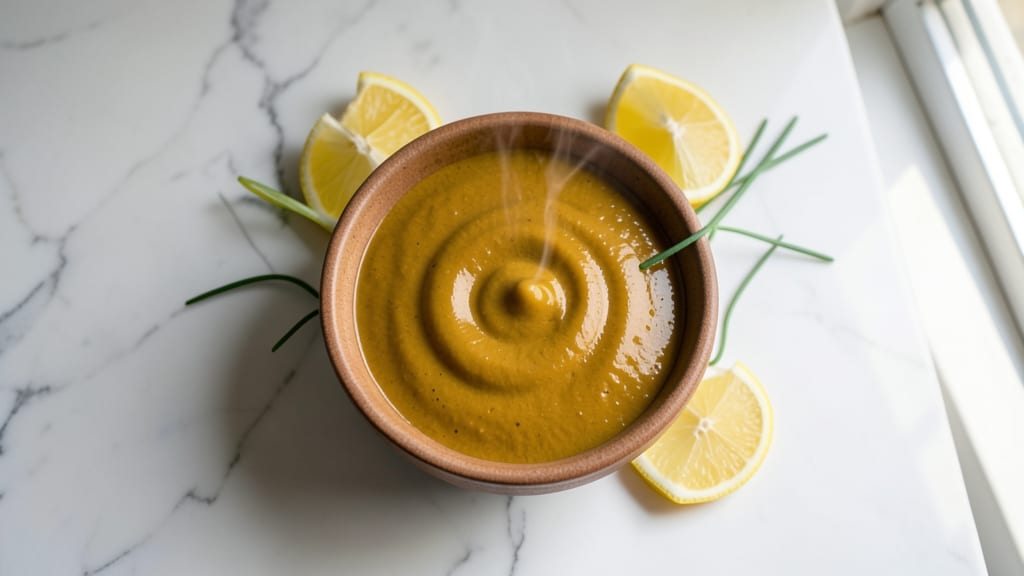
A perfect hollandaise sauce recipe transforms breakfast into a gourmet experience—creamy, velvety, and brightened with just the right lemon tang. Standing on a stool in my Nonna’s cramped kitchen, I learned that tempering butter and controlling heat are the secrets to a perfect emulsion.
This sauce isn’t just for eggs Benedict; it elevates asparagus, fish, and even grilled vegetables with restaurant-quality richness.
The key lies in precision: egg yolks whisked over gentle heat while melted butter is added in slow drizzles. A broken sauce? No problem—just whisk in a splash of hot water to restore its silky texture.
With just five ingredients and 15 minutes of focused effort, you’ll achieve a sauce so smooth it feels like cheating. The lemon juice adds that signature brightness that keeps hollandaise from tasting too heavy.
What you’ll end up with is a sauce that’s perfectly balanced—creamy yet light, tangy yet rich, with a glossy finish that makes every dish it touches feel luxurious.
The moment it coats your plate, you’ll understand why this classic sauce remains a breakfast staple. Let’s make it together, step by step.
Pair it with poached eggs for a classic Benedict, drizzle it over grilled asparagus, or use it to enhance seafood dishes. The possibilities are endless, but the technique remains the same: patience and control. Here’s how to nail it every time.
Ingredients for *hollandaise sauce
Five core ingredients transform into the velvety, lemon-kissed sauce of your dreams—no shortcuts, just pure technique.
| Ingredient | Amount | Notes |
|---|---|---|
| Large Egg Yolks 🥚 | 4 whole | Fresh, room-temperature preferred |
| Unsalted Butter 🧈 | ¾ cup | Cold, cut into 1/4-inch cubes |
| Fresh Lemon Juice 🍋 | 1 ½ tbsp | Strained, Meyer lemon preferred |
| Distilled White Vinegar 🍶 | ½ tsp | For acid balance and stability |
| Diamond Crystal Kosher Salt 🧂 | ¼ tsp | Fine grain, adjust to taste |
Egg yolks are the heart of hollandaise, so use the freshest possible—they emulsify better than older yolks. Trader Joe's sells eggs labeled 'extra fresh' that work perfectly. The butter? European-style unsalted (like Plugrá) melts smoother than American butter—worth the splurge for restaurant-quality results. Cut it into small cubes so it melts evenly without scorching. For the lemon juice, Meyer lemons add subtle sweetness, but regular lemons work in a pinch. Strain the juice through a fine-mesh sieve to avoid pulp clogging your whisk. The vinegar might seem odd, but it stabilizes the emulsion—trust the process!
No fresh lemon juice? Bottled lemon juice works in a bind, but add a pinch of citric acid to mimic freshness. Butter too expensive? Ghee or clarified butter works beautifully—just omit the salt since they're already seasoned. Egg yolks too pricey? Use pasteurized liquid egg yolks (like from the refrigerated section), but whisk them over ice water to prevent overheating. The salt is non-negotiable—Diamond Crystal kosher is ideal, but any fine sea salt works. Pro tip: Taste as you go—hollandaise should balance creamy richness with bright acidity, never one-dimensional.
This sauce is delicate—use it immediately for peak texture. If it thickens too much, whisk in 1 tsp hot water to restore silkiness. For storage, keep it in a sealed jar over ice water (the classic bain-marie method) to prevent separation. It reheats beautifully—just whisk over a double boiler with a splash of hot water. Portion into ramekins for individual servings, or freeze in ice cube trays for quick single-use portions. Never reheat directly in a microwave—it’ll scramble the eggs!
Why You'll Love This Recipe
- I’ll be real: this sauce looks intimidating, but the double boiler method is way simpler than I expected. Just yolks, butter, and a splash of vinegar—no whisking marathon, no failed attempts. The vinegar kick keeps it stable while you work, so no scrambling if you take your eyes off it for a sec.
- No Fuss, Big Payoff: I’ll be real: this sauce looks intimidating, but the double boiler method is way simpler than I expected. Just yolks, butter, and a splash of vinegar—no whisking marathon, no failed attempts. The vinegar kick keeps it stable while you work, so no scrambling if you take your eyes off it for a sec.
- Rich, Tangy Magic: That buttery richness with a bright lemon finish? It’s the kind of balance that makes you pause mid-bite. The acidity from the vinegar and lemon cuts through the richness, so it’s never heavy—just velvety with a little zing. Honestly, I’ve made hollandaise before, but this version actually tastes like it belongs in a restaurant.
- Eggs Benedict Any Day: Between us, this is my go-to for weekend brunches, but it’s also the secret weapon for poached fish or grilled veggies. I keep a small batch in the fridge all week—drizzled over avocado toast or even scrambled eggs when I’m lazy. The salt and lemon make it adaptable to whatever’s on the plate.
Step-by-step instructions for silky emulsion sauces
Here's how to create the perfect hollandaise—rich, velvety, and bursting with lemon brightness every time.
Prepare the Egg Yolks and Acid Base
Place the 4 whole large egg yolks in a heatproof bowl that fits snugly over a saucepan of simmering water. This double boiler method prevents the yolks from scrambling while gently warming them. Add the 1.5 tablespoons fresh lemon juice, 0.5 teaspoon distilled white vinegar, and 0.25 teaspoon diamond crystal kosher salt to the yolks and whisk vigorously until fully combined.
The acid components are critical—they help stabilize the emulsion by breaking down proteins in the yolks, allowing them to better bind with the butter. Whisking ensures even distribution, so every yolk gets the acid treatment for a smooth, stable sauce. I like to strain the lemon juice first to remove any pulp that could make the sauce grainy.
Warm the Yolks Over Gentle Heat
Position the bowl over a saucepan filled with about 2 inches of simmering water, ensuring the bottom of the bowl doesn't touch the water. You want the water to be at a steady simmer—not a rolling boil—so the yolks warm gently. Whisk constantly for 3-4 minutes until the mixture thickens slightly and reaches 160°F on an instant-read thermometer.
This gradual warming is where the magic happens. The heat causes the proteins in the yolks to unfold just enough to create a stable base for the butter to emulsify later. If the mixture starts to thicken too quickly or looks like it's about to scramble, remove it from the heat immediately. You're aiming for a ribbon stage—when you lift the whisk, the streaks should hold their shape briefly before blending back in.
Gradually Incorporate the Cold Butter
Remove the bowl from the heat and begin adding the 0.75 cup unsalted butter, cut into ¼-inch cubes, one piece at a time. After each addition, whisk vigorously until the butter is fully incorporated before adding the next. This process should take 5-7 minutes total, with the sauce gradually thickening into a glossy, golden emulsion.
The butter must be cold when you start—this ensures it melts slowly and emulsifies properly rather than separating. If the sauce breaks (curdles or looks grainy), immediately add 1 teaspoon hot water from the saucepan and whisk vigorously. This trick often rescues a broken sauce by giving the proteins another chance to stabilize. The final sauce should be thick enough to coat the back of a spoon but still flow smoothly.
Adjust Seasoning and Temperature
Once all the butter is incorporated, return the bowl to the double boiler for 1-2 minutes to reach 170°F. This final warming ensures the sauce is hot enough to serve immediately without breaking when poured over hot dishes. Taste and adjust the seasoning—add more diamond crystal kosher salt if needed, or a touch more lemon juice if the sauce tastes flat.
The sauce should now be silky, glossy, and perfectly balanced between rich butter and bright lemon. If it's too thick, whisk in 1 teaspoon hot water to loosen it. For serving, strain it through a fine-mesh sieve to remove any potential lumps, then pour it into a warmed sauceboat. This emulsion is delicate—use it immediately while it's at peak temperature and texture.
Pro Tips For Making *Hollandaise Sauce
- Temper Butter Gradually: Dump cold butter in all at once, and you’ll scramble yolks faster than you can say "breakfast disaster." Melt butter first, then let it cool slightly—just until it’s liquid but not hot enough to sizzle. Add it drop by drop at first, then in thin streams once the sauce starts thickening. (Yes, it’s tedious, but your sauce won’t curdle.)
- Use Vinegar as Backup: Lemon juice is the star, but keep a tiny splash of distilled white vinegar nearby—it’s your insurance policy. If the sauce separates or tastes bland, a pinch of vinegar (we’re talking ¼ teaspoon) will rebalance the acidity without overpowering. (I learned this after serving a dinner where the lemon was "meh.")
- Salt the Yolks First: Toss those yolks with a generous pinch of kosher salt (about ¼ teaspoon) before whipping them with vinegar. The salt stabilizes the emulsion from the start, so you won’t end up with a sauce that’s either flat or grainy. (This isn’t just fussy—it’s the difference between "good" and "restaurant-quality.")
- Strain Through Fine Mesh: No matter how careful you are, lumps sneak in. After emulsifying, strain the sauce through a fine-mesh sieve into a warm bowl—it’ll look weirdly smooth, but trust me. (I used cheesecloth once, and it clogged mid-strain. Don’t repeat my mistake.)
Creative variations of this dish
Breakfast Reinvented
Hollandaise isn’t just for eggs Benedict—it transforms avocado toast into a gourmet masterpiece. Spread mashed ripe avocado on toasted sourdough, top with a poached egg, and drizzle with hollandaise. The creamy sauce cuts through the avocado’s richness while the egg adds protein.
I tested this combo after a failed attempt at homemade bagels (story for another time), and it became a weekend staple. 🍳
Seafood Sensation
Pair hollandaise with grilled halibut or shrimp skewers for a restaurant-worthy seafood dish. The sauce’s acidity balances the fish’s natural oils while its richness enhances the protein. I once served this at a Boston neighborhood potluck, and it disappeared faster than my Nonna’s meatballs.
For extra flair, add finely chopped chives or smoked paprika to the finished sauce.
Vegetable Upgrade
Drizzle hollandaise over roasted asparagus or grilled zucchini for a vegetarian showstopper. The sauce’s velvety texture contrasts beautifully with the vegetables’ natural sweetness. I roast asparagus at 425°F for 12 minutes until tender-crisp, then top with hollandaise and a sprinkle of Parmesan cheese.
The acidity in the sauce brightens the earthy flavors of the veggies.
Sweet Twist
Yes, you read that right—hollandaise works on warm berries or grilled peaches. The butter’s richness pairs surprisingly well with the fruit’s natural sugars. I once made this for a summer dessert and added a touch of vanilla extract to the sauce for a sweet-savory balance.
Serve over warm grilled peaches or strawberries for a decadent yet refreshing treat.
Global Fusion
Take hollandaise beyond its French roots with Japanese-inspired or Mexican-style twists. For a Japanese touch, add 1 teaspoon soy sauce and a pinch of sesame seeds to the finished sauce, then drizzle over miso-glazed salmon.
For a Mexican twist, mix in ½ teaspoon chipotle powder and serve with grilled corn and black beans. The possibilities are endless—just keep the emulsion technique intact. 🌍
Cheese Lover’s Hack
For a gooey, cheesy version, stir ¼ cup grated Gruyère or Comté into the finished hollandaise. The cheese melts into the sauce, adding a nutty depth.
I discovered this hack after a failed attempt at mac and cheese (long story), and it’s now my go-to for grilled cheese sandwiches or truffle fries. The cheese adds a luxurious texture without compromising the sauce’s silky consistency.
Nutrition facts
Frequently asked questions
Why does my hollandaise sauce break or curdle?
This usually happens when the sauce gets too hot or the butter melts too quickly. Always use cold butter cut into small cubes and add it slowly while whisking vigorously. If it breaks, whisk in 1 teaspoon hot water from your double boiler to rescue it. The key is patience—rushing causes separation.
Can I make hollandaise without a double boiler?
Use a heatproof bowl over a saucepan with just 2 inches of simmering water (not boiling). The bottom of the bowl should never touch the water. Alternatively, place the bowl over a steamer basket in a pot with 1 inch of water. Both methods create gentle, even heat for a perfect emulsion.
How do I store leftover hollandaise sauce?
Store it in an airtight container over ice water (like a bain-marie) to prevent separation. It keeps well in the fridge for 1-2 days. To reheat, whisk over a double boiler with a splash of hot water until smooth. Never microwave it—it'll scramble the eggs!
What's the best way to use hollandaise with eggs Benedict?
Poach your eggs in simmering water with vinegar (like white wine or apple cider) for 3 minutes for perfect doneness. Toast your English muffins, layer with ham or smoked salmon, top with poached eggs, and finish with a generous drizzle of hollandaise. The sauce should coat the back of a spoon but still flow smoothly.
Can I substitute butter in hollandaise?
For a lighter version, use clarified butter or ghee (just omit the salt). For extra richness, try brown butter—add it at the end and whisk quickly to maintain the emulsion. Avoid margarine or vegetable oils—they won't emulsify properly and can make the sauce greasy.