
Sauces & Condiments
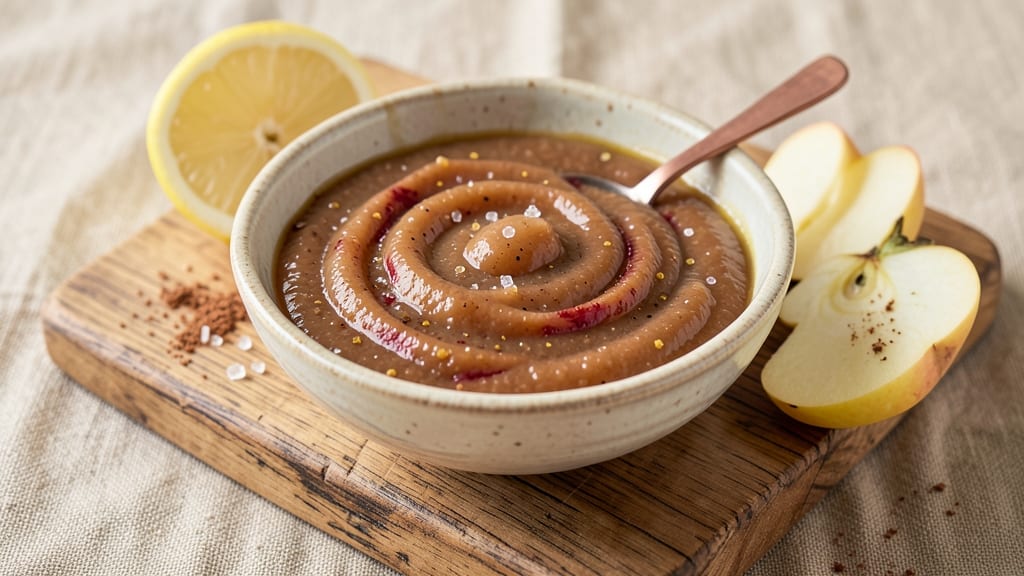
Transforming fresh apples into a homemade apple sauce recipe from fresh apples captures autumn's warmth in every spoonful—no store-bought substitutes needed. The process is straightforward: peel, core, and simmer apples until tender, then mash or blend for silky smoothness.
This recipe delivers a versatile sauce that's perfect for topping pancakes, stuffing pies, or pairing with savory dishes like pork chops.
The beauty of homemade apple sauce lies in its customizable nature. You can adjust sweetness with honey or maple syrup, or add warming spices like cinnamon and nutmeg for depth. For a chunkier texture, skip blending entirely—simply mash the cooked apples with a potato masher.
The result is a naturally sweet, fragrant sauce that tastes like harvest season in every bite.
What sets this recipe apart is its simplicity and flexibility. With just 5 key ingredients and 30 minutes of active time, you'll have a batch of apple sauce that keeps beautifully in the fridge for up to a week or freezes for months.
The process involves minimal equipment—a large pot, a peeler, and either a masher or blender—and yields a sauce that's infinitely better than anything from a jar.
Whether you prefer it smooth or rustic, lightly sweetened or spiced, this apple sauce adapts to your taste. It's the perfect way to use up seasonal apples while creating a pantry staple that elevates both sweet and savory dishes. Let's get started on making your own from scratch.
Ingredients for apple sauce recipe from fresh apples
Five simple ingredients transform fresh apples into silky, spiced apple sauce—no jars needed.
| Ingredient | Amount | Notes |
|---|---|---|
| Fresh Apples 🍎 | 4 lb | Mixed varieties like Honeycrisp and Granny Smith |
| Water 💧 | 1 ½ cups | Or unsweetened apple juice |
| Granulated Sugar 🍚 | ½ cup | Adjust to taste for sweetness |
| Ground Cinnamon 🌿 | 1 tsp | Or 1/4 tsp cinnamon sticks |
| Ground Nutmeg 🌿 | ¼ tsp | Freshly grated preferred |
| Lemon Juice 🍋 | 1 tbsp | Freshly squeezed for brightness |
| Salt 🧂 | ¼ tsp | Kosher or sea salt |
Apples are the star, so grab a mix of sweet and tart varieties—Honeycrisp for sweetness, Granny Smith for tang. Look for firm, unblemished fruit at Trader Joe's or your local farmers market. If you can't find fresh apples, frozen unsweetened apple slices work in a pinch (no need to thaw). The cinnamon and nutmeg are non-negotiable for that cozy autumn flavor—Penzeys has great whole spices if you want to grind your own, but the jarred stuff works fine. Skip the pre-mixed spice blends; you want control over the warmth.
No sugar? Maple syrup or honey work beautifully—use half the amount since they're sweeter. Short on apples? Substitute with 2 cups unsweetened applesauce (just add the spices and water). The lemon juice keeps the sauce vibrant, but if you're out, a pinch of citric acid does the trick. For a chunkier texture, skip blending entirely—just mash with a potato masher. If you're making this ahead, toss in an extra pinch of salt to preserve freshness. The sauce thickens as it cools, so don't worry if it looks runny right after cooking.
This sauce keeps for 1 week in the fridge, sealed in a jar with a thin layer of water on top to prevent browning. For longer storage, freeze in ice cube trays or small jars—perfect for single-serving portions. Reheat gently on the stove or microwave until warm. The flavor actually improves after a day or two as the spices meld. I always make a big batch—it disappears fast on pancakes, toast, or even as a topping for savory dishes like pork chops.
Why You'll Love This Recipe
- No Peel Required: I’ll admit, I used to stress over peeling apples for sauce—until I realized you can just core and chop them, skins on. The texture stays perfect, and honestly? The subtle bitterness from the skin just deepens that warm, spiced sweetness. (Yes, even my kids stop complaining mid-bite.)
- Spiced Like Fall: That first spoonful of cinnamon and nutmeg? It’s like autumn in a jar. The sugar caramelizes just enough to balance the tartness of the apples, but don’t overdo it—trust me, you’ll want to taste as you go. The aroma alone makes my kitchen smell like a bakery.
- Pantry Staple Magic: This sauce turns into everything: a glaze for roasted pork, a swirl in oatmeal, or a dip for cinnamon toast. I keep a jar in the fridge for lazy mornings or last-minute dinner upgrades. (Between us, it’s also my go-to for doctoring up store-bought yogurt when I’m in a rush.)
- Zero-Waste Winner: Use up those bruised apples sitting on your counter—no need to toss them. A big batch costs pennies, stays fresh for weeks in the fridge, and freezes like a dream. I make it in bulk when apples are cheap, then pull it out whenever I need a quick, cozy fix. (Pro tip: the longer it sits, the richer the flavor.)
Step-by-step instructions for homemade apple sauce
Here's how to turn fresh apples into velvety, spiced apple sauce with minimal effort.
Peel, Core, and Chop the Apples
Start by peeling the 4 lb fresh apples using a vegetable peeler or sharp knife. I like to leave the skin on for extra fiber and color, but peeling gives you smoother sauce. Cut the apples in half, remove the cores using a paring knife, and then chop them into ½-inch chunks. You want even-sized pieces so they cook uniformly.
Here's the thing—if you're using particularly hard apples like Granny Smith, you might want to chop them even smaller. The goal is to have pieces that'll soften completely during cooking. Place the chopped apples in a large pot and give them a quick stir to distribute them evenly.
Combine Apples with Water and Sugar
Add the 1.5 cups water and 0.5 cup granulated sugar to the pot with the apples. Stir everything together until the sugar dissolves completely. This is where the magic starts—the sugar will caramelize slightly as the apples cook, adding depth of flavor.
I always give the mixture a taste at this point to check the sweetness level. Since apples vary in natural sweetness, you might want to adjust the sugar slightly. Remember, you can always add more later if needed, but you can't take it out once it's dissolved.
Simmer Until Apples Are Tender
Place the pot over medium-high heat and bring the mixture to a boil. Once boiling, reduce the heat to medium-low and let it simmer uncovered for 20-25 minutes. You'll know it's ready when the apples are fork-tender and the mixture has thickened noticeably.
Don't walk away during this step. You want to keep an eye on the pot to prevent it from boiling over. Stir occasionally, especially if you notice the edges starting to stick. The apples should break down completely, releasing their juices and creating a thick, chunky sauce.
Add Spices and Lemon Juice
Once the apples are tender, stir in the 1 tsp ground cinnamon, 0.25 tsp ground nutmeg, 1 tbsp lemon juice, and 0.25 tsp salt. The spices will infuse throughout the sauce, giving it that warm, comforting flavor. The lemon juice brightens everything up, cutting through the sweetness just enough to balance the flavors.
Let the sauce simmer for another 5-7 minutes to allow the spices to meld with the apples. You'll notice the aroma becomes more intense and inviting. This is when the sauce starts to develop its signature warm, spiced apple scent that fills your kitchen.
Blend or Mash to Desired Texture
For a smooth sauce, use an immersion blender to blend the mixture directly in the pot until completely smooth. If you prefer a chunkier texture, use a potato masher to break down the apples while leaving some texture. I like to give it a few pulses with the immersion blender to achieve a slightly textured but still creamy consistency.
Taste the sauce and adjust the seasoning if needed. You might want to add a bit more sugar if it tastes tart, or a splash more lemon juice if it needs more brightness. Transfer the apple sauce to a clean jar or bowl and let it cool to room temperature before serving or refrigerating.
Pro Tips For Making Apple Sauce Recipe From Fresh Apples
- PEEL AND CORE LIKE A PRO: Peeling apples for sauce is optional, but if you skip it, chop them into even ½-inch chunks—this ensures they soften uniformly without turning to mush. I learned this the hard way when my first batch had a mix of leather-like bits and overcooked apples.
- USE COLD WATER, NOT HOT: Start with cold water in your pot—it takes longer to boil, but it prevents the apples from immediately breaking down into a watery sludge. After burning through three batches of sad, thin sauce, I finally cracked this.
- STIR AT THE END: Let the sauce simmer uncovered for the last 5 minutes—this thickens it naturally. Stirring too soon just traps steam and keeps it watery. Sounds counterintuitive, but it works every time.
- SWEETEN SPARINGLY, THEN TASTE: Add half the sugar first, then taste before adding more. Apples vary wildly in tartness, and you’ll end up with either a cloyingly sweet mess or a bland one if you guess wrong. I now keep a spoon handy and adjust as I go.
Serving suggestions for this recipe
Breakfast Pairings
This apple sauce is a game-changer for breakfast—drizzle it over fluffy pancakes or French toast for a naturally sweet topping that cuts through rich batter. I love pairing it with scrambled eggs and crispy bacon for a balanced plate.
For a make-ahead option, store the sauce in a glass jar in the fridge and reheat gently before serving. 🍳
Savory Applications
Don’t limit apple sauce to sweet dishes! It’s surprisingly delicious with roasted pork tenderloin or pork chops, where its sweet-tart balance complements savory meats. Try it as a glaze for ham or as a filling for sausage-stuffed peppers.
The spices in the sauce add warmth that pairs beautifully with grilled chicken or turkey breast too.
Dessert Elevations
Use this sauce as a filling for apple turnovers, mini pies, or cheesecake swirls—the cinnamon and nutmeg take it to the next level. Spread it on toasted brioche or cinnamon rolls for a gourmet touch.
For a no-bake option, layer it with Greek yogurt and granola in a parfait. The lemon juice keeps the flavors fresh, even in baked goods.
Baking & Preserving
Bakers swear by homemade apple sauce for apple crisp, cobbler, or galette recipes—it’s fresher and more flavorful than canned versions. Freeze extra sauce in ice cube trays for single-serving portions, perfect for quick toppings.
The sauce also works as a natural sweetener in muffins or quick breads, replacing up to ½ cup sugar per batch.
Global Twists
In Scandinavian cuisine, apple sauce is often served with smoked salmon or herring—the acidity balances the richness. For a Mexican-inspired twist, mix it with chipotle powder and serve with tacos or quesadillas.
In India, it’s sometimes paired with curry to cut through the heat. The possibilities are endless! 🌍
Nutrition facts
Frequently asked questions
Can I make apple sauce without peeling the apples? Leaving the skin on adds fiber and a beautiful color to your apple sauce. Just
How do I adjust the sweetness if my apples are very tart?
Taste the cooked apples before adding sugar—you may only need ¼ cup instead of the full ½ cup. For extra tart apples, try adding 1-2 tbsp honey or maple syrup at the end. Alternatively, balance the tartness with a splash more lemon juice (up to 1 tbsp) for brightness.
Can I substitute water with apple juice or broth?
Yes! Use unsweetened apple juice for deeper flavor or low-sodium chicken broth for a savory twist (great for pork dishes). Just reduce the sugar slightly if using juice. For broth, skip the salt adjustment—broth already contains it. The texture will be slightly thinner, so simmer longer to thicken.
Why did my apple sauce turn out watery?
This happens when apples aren't cooked long enough or too much liquid was added. Simmer uncovered for 5-10 more minutes to evaporate excess moisture. For thicker sauce, mash well or blend with a splash of cornstarch slurry (1 tbsp cornstarch + 1 tbsp water). Store-bought pectin (½ tsp) also helps stabilize texture.
What's the best way to store homemade apple sauce?
For fridge storage, keep in an airtight jar for up to 1 week. Cover with plastic wrap pressed directly on the surface to prevent browning. For freezing, portion into ice cube trays or small jars—thaw overnight in the fridge. The sauce actually tastes better after 24 hours as flavors meld!