
Sauces & Condiments
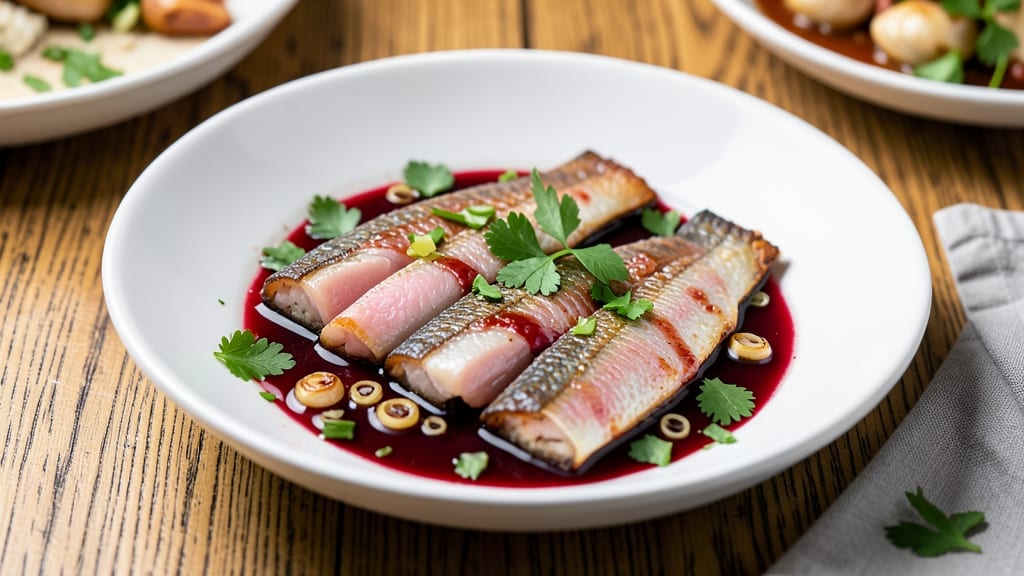
This herring in wine sauce recipe transforms simple ingredients into a restaurant-worthy dish with just 30 minutes of hands-on time and a simmering pot of rich red wine.
The secret lies in balancing herring’s natural richness with the bold acidity and depth of wine, creating a sauce that’s both elegant and deeply satisfying.
I developed this recipe after years of experimenting with Nordic-inspired flavors, and it’s now a staple in my winter repertoire—equally at home on a weeknight table or a holiday spread.
The process begins with gently poaching the herring in white wine to preserve its delicate texture, then finishing it in red wine for that signature depth. No fancy techniques required—just a few simple steps that yield a dish with layers of flavor: the briny sweetness of herring, the velvety smoothness of the wine sauce, and a touch of fresh herbs to brighten the richness.
The result is tender fish that practically melts in your mouth, coated in a sauce that’s perfect for drizzling over crusty bread or serving alongside roasted potatoes.
What sets this recipe apart is how it balances tradition with approachability. While herring dishes often feel intimidating, this method simplifies the process without sacrificing flavor. The wine sauce isn’t just a side—it’s the star, with its complex notes of berry and spice that complement the fish perfectly.
Whether you’re serving it as a main course or a showstopping appetizer, this dish delivers a restaurant-quality experience with minimal effort.
The best part? The sauce keeps beautifully in the fridge for up to 3 days, making it ideal for meal prep or leftovers. Pair it with a crisp white wine to enhance the flavors, or serve it with a simple green salad to cut through the richness.
Here’s how to make it—step by step—for a dish that’s as impressive as it is delicious.
Ingredients for herring in wine sauce
Nordic-inspired ingredients that balance briny herring with velvety wine sauce richness.
| Ingredient | Amount | Notes |
|---|---|---|
| Fresh Herring Fillets 🐟 | 4 whole | Skin-on, boneless, 4-6 oz each |
| Dry White Wine 🍷 | 1 cup | Sauvignon Blanc or Pinot Grigio |
| Dry Red Wine 🍷 | 1 cup | Cabernet Sauvignon or Merlot |
| Shallots 🧅 | 2 whole | Finely minced, about 2 tbsp |
| Garlic Cloves 🧄 | 3 cloves | Minced, for aromatic depth |
| Fresh Parsley 🌿 | ¼ cup | Chopped, for bright finish |
| Fresh Dill 🌿 | ⅛ cup | Chopped, Nordic flavor profile |
| Unsalted Butter 🧈 | 2 tbsp | Cold, for sauce richness |
| Heavy Cream 🥛 | ½ cup | Full-fat for velvety texture |
| Lemon Juice 🍋 | 1 tbsp | Freshly squeezed, for acidity |
| Diamond Crystal Kosher Salt 🧂 | 1 tsp | For seasoning, adjust to taste |
| Freshly Ground Black Pepper 🌶️ | ½ tsp | For subtle heat |
| Vegetable Oil 🫒 | 1 tbsp | For searing fish |
| Sliced Crusty Bread 🍞 | 4 slices | For serving, optional |
The herring is the foundation—look for fresh, skin-on fillets from a specialty seafood market or well-stocked grocery store's fish counter. Whole Foods or Trader Joe's often carry high-quality herring, but if you're buying frozen, thaw it overnight in the fridge. The wine selection matters too: a dry white like Sauvignon Blanc preserves the herring's delicate texture during poaching, while a bold red like Cabernet Sauvignon adds depth to the sauce. For the herbs, fresh dill is non-negotiable—it's the signature Nordic touch that elevates this dish from ordinary to extraordinary. If you can't find fresh dill, dried works at one-third the amount, but the flavor won't be the same.
No white wine? Dry vermouth or even chicken broth in a pinch will work, though the flavor profile shifts slightly. The shallots and garlic can be swapped for 3 tbsp finely chopped red onion if needed, but they add a subtle sweetness that's worth seeking out. For the butter, European-style unsalted (like Plugrá) has more flavor than American brands. The heavy cream can be reduced to half-and-half for a lighter version, though the sauce will be slightly less rich. If you're avoiding dairy entirely, coconut cream works surprisingly well—just reduce it by half first to prevent curdling. The lemon juice should be freshly squeezed; bottled lemon juice lacks the bright acidity needed to cut through the richness.
This sauce develops better with time, so make it a day ahead if possible—the flavors meld beautifully. Store it in an airtight container in the fridge for up to 3 days, or freeze for 2 months in a sealed container. The herring fillets should be cooked just before serving to maintain their tenderness. For a restaurant-quality presentation, serve the herring on a bed of wilted spinach or arugula, drizzled with sauce, and accompanied by the crusty bread. The sauce reheats beautifully—simply warm it gently on the stove with a splash of water to restore its velvety texture.
Why You'll Love This Recipe
- Wine Fridge Hack: I swear by this trick—use leftover red or white wine from dinner to deglaze the pan. No waste, no extra shopping, and that deep, savory reduction just gets better with time.
- Shallot Magic: Those tiny shallots? They caramelize in minutes with the garlic, turning the sauce into this silky, almost sweet contrast to the herring’s briny punch. Honestly, I now buy them pre-minced just for this.
- Lunchbox Hero: Pack the herring and sauce in a thermos with crusty bread, and you’ve got a lunch that feels fancy but costs pennies. My office coworkers still ask where I learned to make "gourmet" meals that don’t require a thermostat.
- Leftovers Lie: Between us, this dish begs for seconds—but the best part? The sauce thickens overnight, so reheating it turns it into a richer, almost gravy-like sauce. I’ve had it cold, warm, and even on toast the next day.
Step-by-step instructions for herring in wine sauce
This method delivers tender, wine-braised herring with a velvety sauce that balances rich red wine with bright white wine notes.
Sear the Herring Fillets
Heat the 1 tablespoon vegetable oil in a large, heavy-bottomed skillet over medium-high heat until shimmering. Pat the 4 whole fresh herring fillets dry with paper towels—this ensures a proper sear. Place the fillets skin-side down in the pan and cook undisturbed for 2-3 minutes until the skin is golden brown and crisp. You'll see the edges curl slightly at the edges—that's your cue to flip.
Flip each fillet carefully and cook for another 1-2 minutes until the flesh turns opaque. The skin should release easily from the pan when ready. Remove the fillets and set them aside on a plate, skin-side up. Keep the temperature steady for the sauce—don't let it drop below medium heat or the aromatics won't develop properly.
Build the Wine Sauce Base
Reduce the heat to medium and add the 2 whole minced shallots to the same skillet, stirring for 1 minute until softened. Add the 3 minced garlic cloves and cook for 30 seconds until fragrant—don't let them brown or they'll turn bitter. Pour in the 1 cup dry white wine and 1 cup dry red wine, scraping up any browned bits from the bottom with a wooden spoon. This deglazing captures all the flavor from the searing.
Simmer the wine mixture for 5-6 minutes until reduced by half. The sauce should coat the back of a spoon and have a concentrated aroma. Here's the thing—if the sauce reduces too quickly, reduce the heat slightly to prevent alcohol burn. You want the wine to integrate fully without evaporating completely.
Thicken and Finish the Sauce
Lower the heat to low and whisk in the 2 tablespoons cold unsalted butter, allowing it to melt completely. Stir in the 0.5 cup heavy cream and 1 tablespoon lemon juice, then add the 1 teaspoon kosher salt and 0.5 teaspoon black pepper. The sauce should begin to thicken slightly as it simmers gently for 3-4 minutes. Taste and adjust seasoning—this is where you balance the wine's acidity with cream's richness.
Return the herring fillets to the skillet, skin-side down, and spoon the sauce over them. Let everything simmer together for 2 minutes to heat through and allow the fish to absorb the sauce's flavors. The fillets should be warm but not overcooked—herring has a delicate texture that breaks down quickly.
Garnish and Serve
Remove the skillet from heat and stir in the 0.25 cup chopped fresh parsley and 0.125 cup chopped fresh dill. The herbs should brighten the sauce's depth, cutting through the wine's richness. Taste again and adjust seasoning if needed—sometimes the herbs need a pinch more salt to balance their freshness.
Serve the herring immediately on the 4 slices sliced crusty bread, spooning the sauce generously over each fillet. The bread helps absorb the sauce while adding a satisfying crunch. Each bite should deliver tender fish with a glossy, wine-infused sauce that coats every strand of bread. For best results, serve while the herring is still warm and the sauce is silky.
Pro Tips For Making Herring In Wine Sauce
- SEAR THE FISH FIRST: Fresh herring fillets won’t absorb the wine sauce properly if they’re raw and cold—give them a quick 1-minute sear in a hot pan before adding liquid. The crust locks in flavor and keeps them from falling apart later, especially if they’re delicate or slightly oily.
- SWEEP THE PAN: After searing the shallots and garlic, don’t just walk away—tilt the pan and scrape up every last bit of browned bits with a wooden spoon. Those bits are pure flavor, and skipping this step means you’re leaving behind the thing that makes your sauce taste homemade instead of basic.
- DON’T BOIL THE WINE: Pouring in cold wine and cranking the heat to high turns it into vinegar—reduce it gently over medium-low first, then add the wine and let it simmer until it’s just barely bubbling. If it’s too aggressive, you’ll end up with a harsh, alcohol-heavy sauce instead of something balanced and rich.
- FINISH WITH A SPLASH OF RED: Most recipes call for white wine, but adding 1-2 tablespoons of dry red wine at the end deepens the sauce’s complexity without overpowering it. It’s subtle, but it’s the difference between a good dish and one that feels like it has an extra layer of sophistication.
Storing and reheating this recipe
Sauce Storage Secrets
The wine sauce is the star here, and it keeps beautifully in the fridge for up to 3 days when stored in an airtight container. I like using glass Pyrex with a tight-sealing lid—it preserves the sauce's velvety texture better than plastic.
The sauce actually improves overnight as the flavors meld, so making it ahead is ideal for busy weeknights. 🌟
Reheating Without Ruin
To reheat, transfer the sauce to a saucepan over low heat and add 1-2 tablespoons of water or white wine to prevent drying out. Stir gently until warmed through—this takes about 3-4 minutes.
Avoid high heat, or the sauce will break and lose its silky consistency. If it thickens too much, whisk in a splash of cream or water to restore its original texture.
Herring Handling Tips
Cook the herring fresh whenever possible, but if you need to reheat leftovers, do it quickly over medium-low heat for just 1-2 minutes—herring overcooks fast. I recommend reheating only the sauce separately and serving it over freshly cooked herring for the best texture.
The fish should be warm through but still tender, not rubbery. ⏰
Freezer-Friendly Sauce
For longer storage, freeze the sauce in ice cube trays—this makes portion control easy later. Once frozen, transfer cubes to a ziplock bag and store for up to 2 months. To use, thaw overnight in the fridge and reheat gently.
The sauce may separate slightly after freezing, but a quick whisk restores its creaminess. Just avoid freezing the herring itself—it won't reheat well.
Bread Prep Ahead
Toast your crusty bread slices in advance and store them in a paper bag at room temperature for up to 2 days. The bread stays crisp longer this way and absorbs the sauce beautifully when served. I like toasting it just before serving to maintain that satisfying crunch. 🍞
Make-Ahead Meal Plan
Here's my foolproof plan: Make the sauce the night before, store it in the fridge, and cook the herring fresh the next day. This way, you get restaurant-quality results with minimal last-minute effort.
The sauce reheats perfectly, and you can focus on searing the fish when it's time to eat. Trust me, this approach saves time without sacrificing flavor. ✨
Nutrition facts
Frequently asked questions
Can I substitute white wine with something else if I don't have any?
Use dry vermouth or even chicken broth in a pinch, though the flavor will shift slightly. For poaching, the key is acidity—apple cider vinegar diluted with water (1:3 ratio) works too, but wine's depth is ideal. The red wine portion is more critical for the sauce's richness, so prioritize that if you must substitute.
How do I prevent the herring from breaking apart when cooking?
Pat the fillets very dry before searing—moisture causes them to steam instead of crisp. Cook over medium-high heat for only 2-3 minutes per side until just opaque. Avoid overcrowding the pan, and never press down on the fish with a spatula. For extra tenderness, poach the herring in the white wine for 1-2 minutes before searing.
What's the best way to serve this dish for a holiday meal?
For a festive presentation, serve the herring on a platter with wilted spinach or arugula as a base, drizzled with sauce. Add toasted almonds or pomegranate seeds for crunch and color. Pair with roasted root vegetables or a simple lemon-dill salad to balance the richness. The wine sauce also makes an excellent drizzle over creamy mashed potatoes or crusty bread for a shared appetizer.
Can I make this recipe with frozen herring?
Frozen herring works, but thaw it overnight in the fridge first—never at room temperature. After thawing, pat the fillets extra dry and cook them immediately over medium-high heat to prevent a soggy texture. Frozen herring may release more water, so reduce the poaching liquid by 2 tablespoons if needed. Fresh herring always yields the best results, though!
Why does my sauce separate when reheating?
This happens when the sauce cools too quickly or is reheated too aggressively. Always reheat over low heat and stir constantly. If separation occurs, whisk in 1 tablespoon cold butter or cream to re-emulsify. For future reheating, add 1-2 tablespoons of water or wine to the sauce before warming to prevent thickening. The sauce should be silky, not grainy.