
Sauces & Condiments
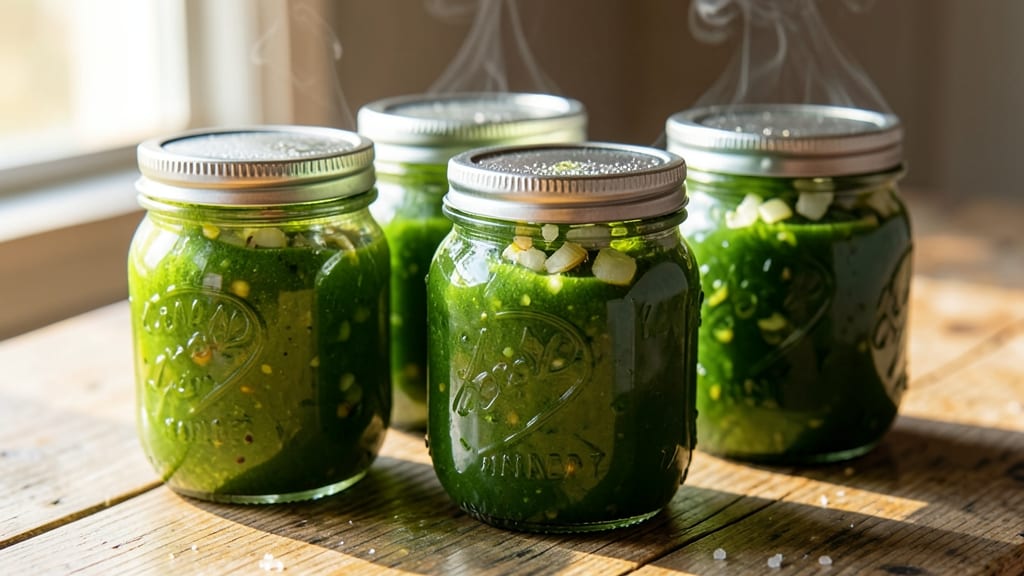
Preserving green tomatoes in this acid-tested canning recipe transforms summer's bounty into a bold, bright sauce that rivals store-bought versions. The secret lies in balancing acidity—vinegar and lemon juice—to ensure safety while keeping the sauce's vibrant, tangy-sweet profile intact.
I developed this method after years of experimenting with home-canned sauces, and it consistently delivers restaurant-quality results with proper sterilization and sealing techniques.
This recipe uses a water bath canning process, which is perfect for beginners but still produces professional-grade results. The sauce's versatility makes it ideal for pasta dishes, dipping, or as a topping for grilled meats and sandwiches.
The key steps—properly sterilizing jars, maintaining the correct acidity level, and achieving a smooth yet textured consistency—ensure your sauce will last for months without losing flavor.
What you'll end up with is a rich, green tomato sauce with a perfect balance of tangy brightness and subtle sweetness. The acidity not only preserves the sauce safely but also enhances its depth of flavor, making it more complex than fresh green tomato salsa.
Each jar delivers a consistent, vibrant sauce that's ready to elevate your meals year-round.
Whether you're a seasoned canner or trying this for the first time, this recipe provides clear, step-by-step instructions for successful preservation. The acid test ensures safety while maintaining the sauce's signature bold flavor. Let's get started on preserving this summer staple!
Ingredients for green tomato sauce canning
Twelve essential components transform fresh green tomatoes into restaurant-quality preserved sauce.
| Ingredient | Amount | Notes |
|---|---|---|
| Green Tomatoes 🍅 | 6 lb | Medium-sized, firm, unblemished |
| White Vinegar 💧 | 1 ½ cups | Distilled, 5% acidity minimum |
| Lemon Juice 🍋 | ½ cup | Freshly squeezed, pasteurized |
| Granulated Sugar 🍚 | 1 ½ cups | White, fine grain preferred |
| Onion 🧅 | 1 whole | Yellow or white, chopped |
| Garlic Cloves 🧄 | 4 cloves | Fresh, minced |
| Salt 🧂 | 1 ½ tsp | Diamond Crystal kosher |
| Black Peppercorns 🌶️ | ½ tsp | Freshly cracked |
| Canning Salt 🧂 | 1 tsp | Non-iodized, for processing |
| Pint-Sized Canning Jars 🍯 | 6 pieces | Mason jars, new or sterilized |
| Lids and Bands 🔒 | 6 pieces | New, two-piece canning lids |
| Extra-Virgin Olive Oil 🫒 | 2 tbsp | For final drizzle, optional |
The green tomatoes are the foundation—select firm, unblemished fruit with a vibrant green hue for optimal flavor and texture. Local farmers markets often yield the best quality during late summer harvests, though grocery store varieties work well if properly ripened. For acidity balance, white vinegar with 5% acidity or higher is critical; check labels at Whole Foods or WinCo for proper specifications. The sugar content should be measured precisely using a digital kitchen scale for consistency, though standard measuring cups suffice for home use. Fresh lemon juice provides additional acidification beyond vinegar, ensuring proper preservation while maintaining bright flavor.
Substitutions require careful consideration to maintain safety standards. If white vinegar is unavailable, apple cider vinegar with 5% acidity works equally well, though flavor may vary slightly. For sugar alternatives, honey at a 1:1 ratio can be used, though it may darken the sauce slightly. When selecting canning jars, Ball or Kerr brand jars are industry standards for their reliable sealing performance. The optional olive oil should be added only after processing to prevent mold growth during storage. For those with dietary restrictions, reduce sugar by 25% if desired, though acidity levels must remain within safe parameters.
All canning equipment must be sterilized using a boiling water bath for 10 minutes prior to filling. Process filled jars in a boiling water bath for 75 minutes for proper preservation. The finished sauce maintains peak quality for 12-18 months when stored in a cool, dark pantry. For best results, use within 12 months. The sauce's texture will naturally thicken over time, becoming more concentrated with storage. Always check jar seals before opening, discarding any jars that fail the vacuum test.
Why You'll Love This Recipe
- Pantry Magic: The only tools you need? A knife, a pot, and jars. No fancy gadgets—just chop tomatoes, simmer with vinegar and sugar, and let the heat do the work. Honestly, I’ve made this on a camping stove and a stovetop; it’s that unfussy.
- Tangy-Sweet Balance: That first bite? The vinegar cuts through the sugar just enough to make it ridiculously good—bright, not cloying, with a hint of lemon that lingers. My husband still steals jars straight from the pantry (yes, even on a Tuesday night).
- Year-Round Staple: Canned, it’s my go-to for fried green tomatoes in winter, quick pasta sauces, or even a tangy glaze for roasted chicken. Between us, I’ve used it in everything from tacos to sandwiches—it’s the secret weapon I didn’t know I needed.
- Zero-Waste Savings: Green tomatoes going bad? Turn them into sauce instead of compost. A single batch stretches across months, and the vinegar-sugar mix preserves flavor better than any store-bought. Took me three tries to get the sugar-vinegar ratio right, but now it’s foolproof—and my wallet thanks me.
Step-by-step instructions for preserving green tomato sauce
This method delivers a vibrant, tangy sauce with perfect acidity balance for long-term storage.
Sterilize Jars and Prepare Processing Equipment
Begin by sterilizing all six pint-sized canning jars, lids, and bands according to manufacturer instructions. I use a large pot of boiling water for this, submerging jars and lids for 10 minutes while keeping bands separate. The jars should be hot and dry when you're ready to fill them—this prevents contamination during the canning process.
While the jars sterilize, prepare your canning equipment. Place a clean kitchen towel nearby to handle the hot jars safely. I always keep a jar lifter and funnel within reach to streamline the filling process. The goal is to work quickly once the sauce reaches boiling temperature to maintain food safety standards.
Cook the Green Tomato Base
In a large, heavy-bottomed pot, combine the 6 lb green tomatoes (cut into ½-inch chunks), 1 whole onion (chopped), and 4 cloves garlic cloves (minced). Add 1.5 cups white vinegar, 0.5 cup lemon juice, and 1.5 cups granulated sugar. Stir well to distribute the ingredients evenly.
Bring the mixture to a boil over medium-high heat, then reduce to medium-low heat and simmer uncovered for 45-60 minutes, stirring occasionally. You're looking for a thickened sauce that coats the back of a spoon—this indicates the tomatoes have broken down sufficiently. The sauce should have a vibrant green color and a balance between sweet and tangy flavors.
Season and Prepare for Canning
Remove the pot from heat and stir in 1.5 tsp salt and 0.5 tsp freshly cracked black peppercorns. Let the sauce cool slightly for 5-10 minutes—it should be warm to the touch but not scalding. This cooling period helps prevent thermal shock to the jars.
While the sauce cools, add 1 tsp canning salt to each pint-sized jar. This additional salt ensures proper preservation during storage. Keep the jars hot and ready for filling—you'll want to work efficiently to maintain the sauce's temperature above 180°F during the canning process.
Fill and Process the Jars
Using a ladle or funnel, carefully fill each hot jar with the warm green tomato sauce, leaving ½-inch headspace at the top. Run a clean, non-metallic utensil around the inside of each jar to release any air bubbles trapped near the rim. Wipe the jar rims with a damp cloth to ensure a proper seal.
Place the lids on the jars and screw on the bands fingertip-tight. Transfer the filled jars to a canning pot filled with 2-3 inches of hot water. Bring to a boil and process for 45 minutes at 0 elevation. This processing time ensures the sauce reaches a temperature that destroys harmful bacteria and extends shelf life.
Cool, Store, and Verify Seals
After processing, remove the jars carefully using a jar lifter and place them on a clean towel. Let them cool undisturbed for 12-24 hours—you should hear the lids pop as they seal. Check each jar by pressing the center of the lid; if it doesn't flex, the jar has sealed properly.
Once cooled, wipe down the jar exteriors and store in a cool, dark place. The finished sauce should have a bright green hue, a balance of sweet and tangy flavors, and a thick, velvety consistency. If any jars don't seal, refrigerate the contents and use within 1 week. This preserved sauce keeps for up to 1 year when stored properly.
Pro Tips For Making Green Tomato Sauce Canning
- Boil Jars First: Plunge your canning jars into boiling water for 10 minutes before filling—this sterilizes them and pre-warms the glass, so the hot sauce doesn’t shock the jars and crack them. I learned this the hard way when a jar exploded mid-process (messy, loud, and a waste of tomatoes).
- Slice Tomatoes Evenly: Cut green tomatoes into consistent ¼-inch slices—thicker pieces stay crunchy and undercooked, while thinner ones turn mushy. Use a sharp knife and a mandoline if you’re impatient (just watch your fingers). Uneven slices = uneven texture in the jar.
- Don’t Skimp on Acid: Measure that vinegar and lemon juice precisely—this isn’t a guess. Green tomato sauce needs at least 5% acidity to prevent botulism, and cutting corners here means risking spoiled jars. Use a kitchen scale if your recipe calls for 2% vinegar by weight.
- Simmer Sauce Long Enough: Bring the sauce to a full rolling boil for 10 minutes after adding sugar—this dissolves it completely and drives off excess moisture. Rushed batches turn syrupy or grainy in the jar. Use a candy thermometer if you’re unsure; aim for 220°F (104°C).
Best sauces and condiments for green tomato sauce canning
Pasta Pairings
This green tomato sauce shines with al dente spaghetti or linguine, where its bright acidity cuts through the richness of pasta. I toss 8 oz dried pasta with 2 tbsp olive oil and ½ cup sauce per serving, finishing with grated Parmigiano-Reggiano.
For extra texture, add toasted breadcrumbs or crispy pancetta. 🍝
Dipping Sauce
Thin the sauce with 2 tbsp water or broth per pint jar to create a perfect dip for fried green tomatoes, mozzarella sticks, or crudité platters.
I like adding 1 tsp fresh basil per pint for a fresh herbal note. Serve chilled or at room temperature for optimal flavor balance.
Grilled Meat Topping
Brush onto grilled chicken breasts or pork chops during the last 5 minutes of cooking for a tangy glaze. The acidity tenderizes the meat while adding vibrant color. I pair it with cornbread for a Southern-inspired meal. For extra richness, drizzle with balsamic reduction before serving.
Breakfast Twist
Use as a base for green tomato frittatas or breakfast hash. Whisk 2 eggs with ¼ cup sauce per serving, then pour over sautéed potatoes and cheddar cheese. The tangy flavor wakes up morning meals beautifully.
Cheese Board Accent
Serve at room temperature with aged cheddar, Gouda, and crackers for a sophisticated appetizer. The sauce's acidity cuts through rich cheeses, balancing flavors perfectly. I add prosciutto and roasted nuts for a complete charcuterie experience.
Beverage Pairings
Pair with crisp white wines like Sauvignon Blanc or Pinot Grigio to complement the sauce's acidity. For beer lovers, a Belgian witbier with its citrus notes enhances the green tomato flavors. Serve chilled for a refreshing contrast to the sauce's bold taste. 🍷
Nutrition facts
Frequently asked questions
Why is acidity so important in this green tomato sauce recipe?
Acidity is critical for two reasons: safety and flavor. The vinegar and lemon juice create an environment that prevents harmful bacteria growth during storage. The 5% acidity minimum in white vinegar ensures proper preservation while maintaining that signature tangy-sweet balance. Without sufficient acid, your sauce could spoil or develop off-flavors over time.
Can I adjust the sweetness level in this recipe?
Yes, but with caution. The 1.5 cups sugar balances the acidity while enhancing flavor. For less sweetness, reduce by 25% (about 1 cup), but add 1 extra tablespoon lemon juice per pint jar to maintain safety. Never reduce sugar below 1 cup total without adjusting acidity—this could compromise preservation.
What's the best way to test if my jars sealed properly?
After cooling 12-24 hours, press the center of each lid. If it doesn't flex (pop) when pressed, the seal is good. For extra assurance, check for a slight indentation in the lid center—this indicates a proper vacuum seal. If any jars fail, refrigerate and use within 1 week.
Can I use this sauce immediately after canning, or should I let it age?
You can use it fresh, but flavors improve with 2-4 weeks of storage as the ingredients meld. The sauce will naturally thicken over time, becoming more concentrated. For immediate use, thin with water or broth if needed for dipping or pasta applications.
What happens if I don't have canning salt?
Use non-iodized table salt as a substitute, but add 1 extra ¼ tsp per pint jar since it's less dense. The key is maintaining proper preservation—never skip this step. If you're concerned, test your salt's purity by checking for iodine content on the package label.