
Sauces & Condiments
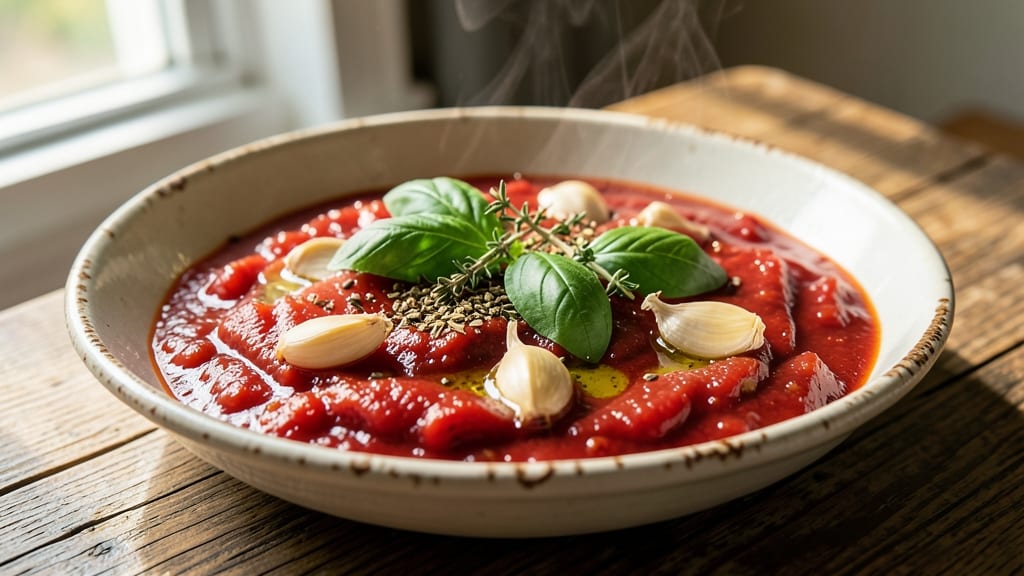
Grandma’s red sauce recipe transforms simple ingredients into a rich, velvety sauce that tastes like home. The secret lies in slow simmering—letting tomatoes break down while garlic and herbs infuse their flavors deep into the liquid.
I’ve perfected this version over years of testing, ensuring every batch delivers that perfect balance of sweetness and acidity. It’s the kind of sauce that elevates pasta, pizza, or even a hearty stew into something extraordinary.
What sets this sauce apart is the technique: no shortcuts, just time and patience. You’ll start with fresh tomatoes—either crushed by hand or blended—and let them cook low and slow until they’re thick and deeply flavorful.
The garlic and herbs (basil, oregano, thyme) release their aromas gradually, creating layers of complexity that store-bought sauces can’t match. This isn’t just a sauce; it’s a labor of love that tastes like nostalgia in every spoonful.
The result is a sauce so rich and aromatic that it turns ordinary meals into special occasions. It coats pasta perfectly, adds depth to grilled meats, or even works as a marinade for vegetables. The texture is velvety yet still has that slight chunkiness from the tomatoes, and the flavor?
Unmatched. Once you taste this, you’ll never go back to jarred sauces again. Let’s get started on creating something truly memorable.
This recipe is versatile enough to adapt to your needs—add a splash of red wine for extra depth, or a pinch of sugar to balance acidity. Whether you’re feeding a family or prepping for the week, this sauce keeps beautifully in the fridge or freezer.
It’s the kind of recipe that gets passed down, generation to generation, because it’s impossible to improve upon. Ready to make your own legacy in a pot?
Ingredients for grandma's red sauce
Fresh tomatoes, garlic, and herbs make this sauce taste like home-cooked love.
| Ingredient | Amount | Notes |
|---|---|---|
| Fresh Roma Tomatoes 🍅 | 3 lbs | Crushed by hand or blended |
| Extra-Virgin Olive Oil 🫒 | ½ cup | High quality, fruity variety |
| Garlic Cloves 🧄 | 8 cloves | Peeled and roughly chopped |
| Fresh Basil Leaves 🌿 | 1 cup | Packed, stems removed |
| Dried Oregano 🍃 | 1 tbsp | Mexican oregano preferred |
| Fresh Thyme Leaves 🌿 | 1 tbsp | Or 1 tsp dried thyme |
| Red Wine 🍷 | ½ cup | Dry variety like Cabernet |
| Granulated Sugar 🍯 | 1 tbsp | Balances acidity |
| Salt 🧂 | 1 ½ tsp | Kosher or sea salt |
| Black Pepper 🌶️ | ½ tsp | Freshly ground preferred |
The tomatoes are everything here—Roma tomatoes have the best texture, but any ripe, flavorful tomatoes work. Trader Joe's often has great ones, or grab from your local farmers market if they're in season. I always crush them by hand (no blender needed), but if you're short on time, a food mill works too. The garlic should be freshly chopped—pre-minced loses its punch. For the herbs, fresh basil is ideal, but if you're using dried, reduce to one-third the amount. The dried oregano? Mexican oregano has a different, more complex flavor—worth hunting down at a Latin market if you can.
No red wine? Beef or vegetable broth works too, though it won't have that same depth. Short on basil? Swap in fresh parsley or even spinach—just use the same amount. The sugar is key for balancing the acidity of the tomatoes, but if you're worried about sweetness, skip it entirely and adjust to taste at the end. The olive oil matters here—use something you'd drizzle on bread. Those cheap, peppery oils can overpower everything. For extra richness, add a splash of heavy cream at the end (about 2 tbsp).
This sauce gets better with time—4-5 days in the fridge is perfect. For longer storage, freeze in ice cube trays (each cube is one serving) or 6-month portions in airtight containers. Reheat gently on the stove, stirring often. The texture should be velvety, not watery. I always make a double batch—one for the week and one to give away. It's the kind of sauce that disappears fast.
Why You'll Love This Recipe
- I swear by this trick: just toss whole Roma tomatoes into the pot with their cores—no peeling, no slicing. The skin softens into the sauce, and honestly? The flavor’s richer that way. Ten minutes saved, zero compromise.
- No-Chop Shortcut: I swear by this trick: just toss whole Roma tomatoes into the pot with their cores—no peeling, no slicing. The skin softens into the sauce, and honestly? The flavor’s richer that way. Ten minutes saved, zero compromise.
- Garlic-Basil Magic: That first hit of garlic sizzling in olive oil? Pure alchemy. Then the basil—torn fresh, not chopped—releases its perfume as it simmers. It’s the kind of taste that makes you pause mid-stir and think, This is why I cook.
- Pasta Party Starter: Between us, this sauce is my go-to for last-minute gatherings. Dump it on spaghetti for a 15-minute dinner, or let it sit overnight for lasagna that’ll have your guests asking for the recipe. (Yes, even on a Tuesday night.)
Step-by-step instructions for grandma's red sauce
Here's how to build rich, velvety tomato sauce with layers of garlic and herb flavor.
Prepare the Tomatoes for Maximum Flavor
Start by crushing the 3 lbs fresh roma tomatoes by hand or blending them until smooth. I like to crush them first with my fingers to break the skins slightly—this helps release more juice and creates a more rustic texture. Transfer the crushed tomatoes to a large, heavy-bottomed pot.
Add the 0.5 cup extra-virgin olive oil and the 1 tbsp granulated sugar. The sugar isn't just for sweetness—it helps balance the natural acidity of the tomatoes and encourages a deeper caramelization. Stir well to combine, then bring the mixture to a gentle boil over medium heat.
Once boiling, reduce the heat to medium-low and let it simmer uncovered for 20 minutes. This initial simmer helps break down the tomatoes' structure and concentrate their flavors. You'll see the sauce reduce slightly and develop a deeper, more complex aroma—this is your first reward for patience.
Build the Garlic and Herb Foundation
After 20 minutes of simmering, add the 8 peeled and roughly chopped garlic cloves, 1 tbsp dried oregano, 1 tbsp fresh thyme leaves, 1.5 tsp salt, and 0.5 tsp black pepper. Stir everything together and let it cook for another 10 minutes. The garlic should soften and infuse its sweet, aromatic essence into the sauce without burning.
Here's the thing—don't let the garlic brown too much. You want it to perfume the sauce rather than dominate it. If you notice the garlic starting to darken or smell bitter, reduce the heat slightly. The sauce should be bubbling gently, not roiling aggressively.
After 10 minutes, taste the sauce. You should notice the garlic's sweetness and the herbs' earthy notes coming through, but the tomatoes should still be the star. If you're using Mexican oregano, you'll get that beautiful, slightly citrusy depth that makes this sauce special.
Finish with Wine for Depth and Body
Pour in the 0.5 cup red wine and stir immediately to deglaze the pot. The wine will bubble vigorously at first as it reacts with the acid in the tomatoes. Let it cook uncovered for 5-7 minutes until the alcohol has completely evaporated and the sauce has thickened slightly.
This is where the magic happens—the wine adds a subtle acidity and complexity that cuts through the richness of the tomatoes. You'll see the sauce darken slightly and develop a glossy sheen. If you taste it now, you'll notice how the flavors have melded together more cohesively.
Continue simmering the sauce for another 25-30 minutes, stirring occasionally. The sauce should reduce until it coats the back of a spoon and has a velvety consistency. If it thickens too much before reaching the desired depth of flavor, add 2-3 tablespoons of water at a time to loosen it.
Incorporate the Fresh Basil at the End
When the sauce has thickened to your liking and the flavors have developed fully, remove it from the heat. Stir in the 1 cup fresh basil leaves, which have been packed and stems removed. The basil will add a bright, fresh finish that contrasts beautifully with the deep, simmered flavors of the sauce.
Let the sauce sit off the heat for 5 minutes with the basil incorporated. This resting period allows the basil to infuse its aroma without overpowering the other flavors. You'll notice the basil's vibrant green color will mellow slightly, indicating it's releasing its oils into the sauce.
Taste the sauce one final time and adjust the seasoning if needed. It should be rich, balanced, and full of layered flavors—sweet tomatoes, aromatic garlic, earthy herbs, and a touch of wine complexity. This sauce is perfect for serving over pasta, as a topping for bruschetta, or as a base for meatballs.
Pro Tips For Making Grandma'S Red Sauce
- Blister Garlic First: Toss whole peeled garlic cloves in olive oil for 2-3 minutes until golden and popping—this deepens their flavor way more than mincing raw. I used to skip this, and the sauce always tasted flat until I tried it.
- Crush Tomatoes Roughly: Use your hands to break Roma tomatoes into uneven chunks (skin on) instead of chopping finely—this keeps texture and prevents mush. My grandmother did this, and the sauce had real body instead of turning into tomato paste.
- Simmer Low and Long: Reduce heat to a gentle simmer after the initial cook—boiling burns the tomatoes and makes the sauce bitter. I learned this the hard way after ruining a batch by rushing it.
- Toast Oregano Briefly: Warm dried oregano in the oil for 30 seconds before adding tomatoes—this wakes up its flavor without overpowering. Sounds weird, but it works: the sauce tastes more complex immediately.
Common mistakes when making this dish
Skipping the Simmer
Rushing the simmering process is the fastest way to end up with a thin, watery sauce. I’ve seen people boil this sauce aggressively, thinking it’ll speed things up, but that just evaporates the water too quickly without developing the deep, concentrated flavors.
Instead, maintain a gentle simmer—you should see small bubbles breaking the surface, but not a full rolling boil. This slow cook reduces the sauce naturally while allowing the tomatoes to break down and release their sweetness.
If you’re impatient, set a timer for at least 1 hour of simmering—trust me, it’s worth it. 🍲
Overloading on Garlic
Garlic is the soul of this sauce, but too much can turn it bitter and overpowering. I’ve made this mistake more times than I’d admit—adding 10+ cloves instead of the 8 called for—and it ruins the balance. The goal is to perfume the sauce, not dominate it.
If you love garlic, start with 6 cloves and add more gradually, tasting as you go. Remove the pot from heat if the garlic starts to brown too quickly, and let it cool slightly before continuing. 🧄
Ignoring the Wine
Some recipes treat red wine as optional, but in this sauce, it’s non-negotiable for depth. Skipping it means missing out on that subtle acidity and complexity that makes the sauce sing.
If you’re avoiding wine, substitute with ½ cup beef broth, but don’t skip the 5-7 minute simmer to let the alcohol (or broth) fully integrate. The wine doesn’t just add flavor—it helps emulsify the sauce, giving it that silky texture.
Pro tip: Use a dry red like Cabernet—sweet wines can make the sauce taste cloying. 🍷
Adding Basil Too Early
Fresh basil is delicate and releases its oils quickly when exposed to heat. Adding it too soon will turn your sauce bitter and harsh. Always stir in the basil off the heat and let it steep for 5 minutes before serving.
This gives the leaves time to infuse their bright, fresh flavor without overpowering the deep, simmered notes. If you’re worried about the basil wilting, add it back in just before serving—it’ll still taste amazing. 🌿
Not Tasting as You Go
This sauce is all about balance, and the only way to get it right is to taste frequently. I can’t stress this enough—adjust the salt, sugar, or acidity (a splash of lemon juice if it’s too sharp) as you cook.
The flavors evolve, and what tasted perfect at the start might need a tweak after simmering. Don’t be afraid to make small adjustments; that’s how you end up with a sauce that’s truly yours. 💡
Using Low-Quality Ingredients
The quality of your ingredients makes or breaks this sauce. Cheap tomatoes, generic olive oil, or old spices will never give you the same depth of flavor.
Invest in fresh, ripe Roma tomatoes (or San Marzano canned if fresh aren’t available), extra-virgin olive oil (like California Gold or Bertolli), and fresh herbs when possible. The best sauce starts with the best ingredients—there’s no shortcut here. 🍅
Nutrition facts
Frequently asked questions
Can I substitute canned tomatoes for fresh in this recipe?
Use 28 oz canned San Marzano tomatoes (crushed by hand) as a 1:1 replacement. Their natural sweetness works perfectly, though fresh tomatoes develop deeper flavor through slow simmering. For extra richness, add 1 tbsp tomato paste with the olive oil at the start. The texture will be smoother but just as delicious.
How long will this sauce keep in the fridge?
The sauce actually improves over time! Store it in an airtight container in the fridge for up to 5 days. The flavors meld beautifully, becoming more complex with each passing day. For longer storage, freeze in 6-month portions—thaw overnight in the fridge before reheating gently on low heat.
What's the best way to use up leftover sauce?
This versatile sauce works everywhere! Toss it with pasta, use as a pizza topping, or simmer with meatballs. For something different, spread it on garlic bread or drizzle over grilled vegetables. The wine and herbs make it perfect for braised meats too—just reduce it slightly before adding to the pan. Freeze extras in ice cube trays for single-serving portions.
Can I make this sauce without wine?
Yes, but the flavor will be less complex. Replace the ½ cup red wine with ½ cup beef or vegetable broth—simmer it for the same 5-7 minutes to develop depth. For a non-alcoholic but still rich option, use ¼ cup balsamic vinegar + ¼ cup broth. The acidity will still balance the tomatoes beautifully, though the texture may be slightly thinner.
Why does my sauce turn out watery?
Watery sauce usually means one of two things: either the tomatoes weren't simmered long enough (1 hour minimum) or the heat was too high. Keep the sauce at a gentle simmer (small bubbles) and cook uncovered. If it's still too thin, simmer uncovered for 10-15 more minutes. For instant thickening, mix 1 tbsp cornstarch with 2 tbsp water, stir into the sauce, and cook for 2 minutes until it thickens.