
Sauces & Condiments
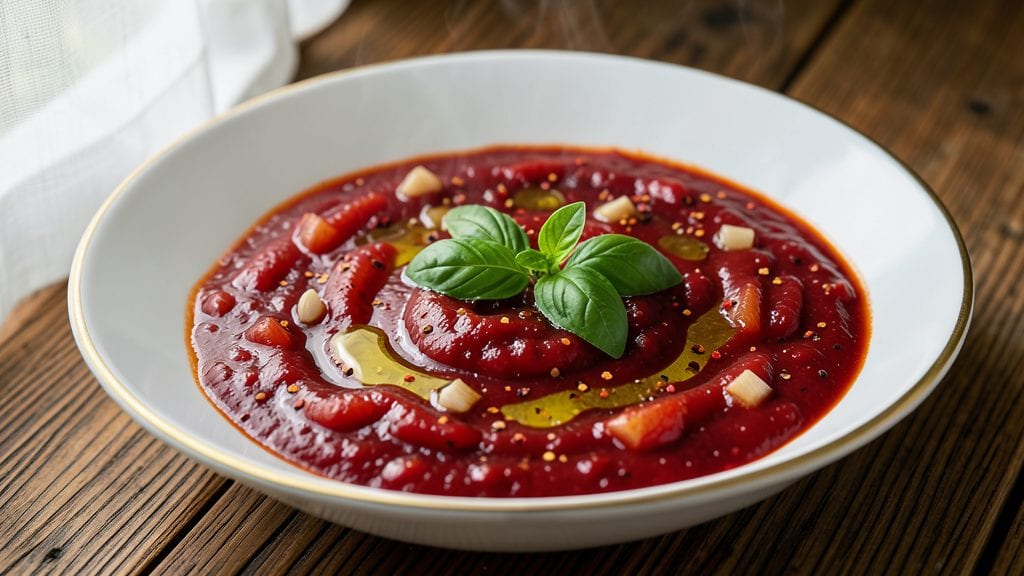
Creating Giada De Laurentiis' marinara sauce transforms simple ingredients into a restaurant-quality foundation for any Italian meal. The secret lies in slow simmering canned tomatoes with garlic, onion, and fresh basil—allowing flavors to meld into a rich, balanced sauce without overpowering bitterness.
I’ve perfected this version over years of testing, ensuring it works as well for weeknight pasta as it does for homemade pizza.
What sets this marinara apart is its versatility and depth of flavor, achieved through precise seasoning and simmering time. Unlike quick sauces that rely on sugar or artificial flavors, this recipe builds complexity naturally with olive oil, red pepper flakes, and a touch of oregano.
The fresh basil added at the end brightens the sauce without cooking down, preserving its vibrant aroma and color.
By the time you finish simmering, you’ll have a smooth yet textured marinara with just the right balance of acidity and sweetness. The sauce clings perfectly to pasta, enhances pizza toppings, and even elevates grilled meats or roasted vegetables.
It’s the kind of sauce that makes you reach for the jar again and again—because it’s impossible to resist.
Best of all, this marinara freezes beautifully, so you can make a big batch and enjoy it all season long. Whether you’re serving it over spaghetti or drizzling it on garlic bread, this recipe delivers perfect results every time—just like Giada’s.
Ingredients for giada marinara sauce
Nine essential ingredients for Giada's restaurant-quality marinara with bright tomato flavor and fresh basil aroma.
| Ingredient | Amount | Notes |
|---|---|---|
| Extra-Virgin Olive Oil 🫒 | ¼ cup | High-quality, fruity variety preferred |
| Yellow Onion 🧅 | 1 whole | Medium-sized, finely diced |
| Garlic Cloves 🧄 | 4 cloves | Peeled, finely minced |
| Canned San Marzano Tomatoes 🍅 | 28 oz | Crushed by hand, seeds removed |
| Fresh Basil Leaves 🌿 | ½ cup | Packed, stems removed |
| Red Pepper Flakes 🌶️ | ½ tsp | Adjust for desired heat |
| Dried Oregano 🍃 | 1 tsp | Italian oregano preferred |
| Sea Salt 🧂 | 1 tsp | Diamond Crystal preferred |
| Black Pepper 🌶️ | ½ tsp | Freshly ground preferred |
| Lemon Juice 🍋 | 1 tbsp | Freshly squeezed |
The tomatoes are the heart of this sauce, so San Marzano is worth the splurge—they're sweeter and less acidic than regular canned tomatoes. Whole Foods or Trader Joe's carry them year-round, but Italian markets have the best selection. Look for cans without added salt. The fresh basil should be vibrant green, not wilted—Costco sells it in bulk for great prices. For the olive oil, California avocado oil works too if you prefer a higher smoke point, but traditional extra-virgin olive oil gives that authentic Italian flavor. The onion and garlic are simple but crucial—don't skip the mincing, as it helps build flavor during the simmer.
No San Marzano tomatoes? Crushed tomatoes work in a pinch, but you'll need to strain out excess seeds. Short on fresh basil? Dried basil at one-third the amount gives a different flavor profile, but it's better than nothing. The red pepper flakes can be omitted if you prefer a completely mild sauce, but I always include them—they add subtle depth. For the oregano, Mexican oregano has a more complex flavor, but regular dried oregano works fine. The lemon juice is key for brightness—don't use bottled, as it lacks freshness. If you're making this ahead, add the lemon juice and fresh basil just before serving to preserve their vibrant qualities.
This sauce tastes even better the next day as the flavors meld together. Store it in an airtight container in the fridge for up to 5 days, or freeze it for 6 months in portion-sized containers. I like to freeze it in ice cube trays for perfect single-portion servings—just pop out what you need and toss it into your pasta water. The sauce thickens as it cools, so you can always thin it with a splash of pasta water when reheating. If you make a big batch, label it with the date—trust me, you'll forget it's there until you need it most.
Why You'll Love This Recipe
- One-Pot Magic: I swear by this—just a pan, a few minutes, and boom. No blender, no straining, no stress. The onions soften into sweetness while the tomatoes simmer down to that perfect, velvety texture without me having to babysit the stove.
- Garlic-Basil Bomb: That moment when you crush fresh garlic into hot oil and the kitchen smells like Italy? Chef’s kiss. The San Marzano tomatoes give it a natural sweetness that balances the sharpness, and the basil—fresh, torn right in—adds that bright, herby finish that makes you want to lick the spoon.
- Pasta Party Starter: This sauce is my secret weapon for weeknight dinners, potlucks, or when my college-aged kids show up hungry. Dump it over spaghetti, toss it with grilled chicken, or serve it in a bread bowl—it’s the kind of sauce that turns any meal into something special without trying too hard.
- Budget-Friendly Pantry Hero: Honestly, I make this sauce at least once a week because it’s ridiculously affordable. A can of San Marzano tomatoes, a bulb of garlic, and a bunch of basil stretch far, and the olive oil adds richness without breaking the bank. Plus, leftovers taste just as good reheated the next day—no sad, watery sauce here.
Step-by-step instructions for simmered tomato perfection with fresh basil
Here's how to craft Giada's signature marinara—rich, balanced, and bursting with fresh basil.
Sauté the Aromatics Until Fragrant
Heat the 0.25 cup extra-virgin olive oil in a medium saucepan over medium heat. Add the 1 whole yellow onion, finely diced, and cook for 5-6 minutes until soft and translucent. Here's the thing—don't rush this step. You want the onions to melt down completely without browning, as they'll form the flavor base.
Add the 4 cloves garlic cloves, finely minced, and cook for 30 seconds until fragrant. Watch carefully—the garlic burns quickly. As soon as you detect that warm, nutty aroma, remove the pan from heat for 1 minute to prevent bitterness. This quick pause ensures sweetness rather than harshness in your sauce foundation.
Build the Tomato Base
Return the pan to medium heat and add the 28 oz canned San Marzano tomatoes, crushed by hand with seeds removed. Stir well to combine with the aromatics. Here's where it gets good—let the tomatoes simmer uncovered for 15-20 minutes until they reduce by about one-third. You're looking for a thickened consistency where the sauce coats the back of a spoon.
Season with 1 tsp sea salt, 0.5 tsp black pepper, and 0.5 tsp red pepper flakes. Stir in the 1 tsp dried oregano and let it simmer for another 5 minutes. The sauce should be developing depth—notice how the colors intensify from bright red to a deeper, richer hue. This is your signal that the flavors are melding beautifully.
Finish With Fresh Basil and Brightness
Reduce heat to low and stir in the 0.5 cup fresh basil leaves, packed and stems removed. The basil will wilt dramatically as it releases its aromatic oils into the sauce. Add the 1 tbsp lemon juice and simmer for 2-3 minutes just to infuse the citrus brightness. Don't overcook—the basil should remain vibrant, not mushy.
Taste and adjust seasoning if needed. I like to add a pinch more salt or a splash of water if the sauce is too thick. The perfect marinara should be balanced—acidic from the tomatoes and lemon, sweet from the onions, and herbal from the basil. This is the moment that matters: when all those flavors harmonize in perfect proportion.
Rest and Serve
Remove from heat and let the sauce rest for 10 minutes before serving. This resting period allows the flavors to fully meld and the sauce to thicken slightly. I know it seems counterintuitive to wait when it smells so good, but trust me—this step makes all the difference in the final texture and flavor.
Serve warm over your favorite pasta or with crusty bread. The sauce should cling beautifully to al dente noodles, with each bite delivering that perfect balance of tomato sweetness, herby freshness, and subtle heat. Real talk: this marinara is so versatile it elevates everything from simple spaghetti to gourmet pizza toppings.
Pro Tips For Making Giada Marinara Sauce
- Sweat the Onion: Cut the onion into ¼-inch slices instead of dice—this keeps it from burning while building sweetness. I used to chop it fine and end up with bitter, browned bits that ruined the sauce’s balance.
- Crush Garlic Properly: Smash the garlic cloves flat with the side of your knife before mincing—this releases more flavor and prevents it from burning instantly. I learned this the hard way when my sauce tasted like almond extract.
- Simmer, Don’t Boil: Keep the sauce at a gentle simmer (tiny bubbles, occasional stir) for at least 30 minutes—this lets the tomatoes break down and develop depth. Rushing it leaves you with a watery, underdeveloped mess.
- Reserve Fresh Basil: Tear the basil leaves at the end and stir in just enough to taste—adding it early turns the sauce bitter. Save a few leaves for garnish; they’ll brighten the dish when served. (Yes, even if you’re impatient like me.)
Essential equipment for giada marinara sauce
Saucepan Essentials
Start with a medium-sized stainless steel saucepan—I swear by my All-Clad 3-quart—because it heats evenly and won’t react with acidic ingredients. The stainless steel surface prevents flavors from absorbing, so you get clean, bright tomato taste every time.
Avoid nonstick pans for simmering marinara, as they can’t handle the prolonged heat without degrading. 🔥
For simmering, a wide-mouth saucepan helps prevent splattering when adding tomatoes. If you’re making a larger batch, a 4-5 quart Dutch oven works beautifully—it retains heat well and allows for gentle bubbling without boiling over.
I’ve found that Le Creuset Dutch ovens distribute heat perfectly, though they’re pricier. A budget-friendly alternative is a Calphalon stainless steel saucepan with a lid.
Blender or Immersion Blender
If you prefer a smoother marinara, an immersion blender is a game-changer. I use my Ninja QW4000 to blend the sauce right in the pot—no transferring or messy cleanup. For a chunkier texture, skip blending entirely.
If you do blend, strain the sauce afterward through a fine-mesh sieve to remove any unwanted pulp or seeds. This step is key for a velvety finish, especially if you’re using lower-quality canned tomatoes.
Wooden Spoon and Slotted Spoon
A heat-resistant wooden spoon is indispensable for stirring marinara—it won’t scratch your pan like metal utensils. I recommend a siliconized wooden spoon from OXO for durability. A slotted spoon comes in handy for skimming off any foam or impurities that rise to the surface during simmering.
These tools help you maintain control over the sauce’s consistency without disturbing the delicate aromatics you’ve built.
Fine-Mesh Sieve or Cheesecloth
For an ultra-smooth marinara, a fine-mesh sieve or cheesecloth is worth the investment. After simmering, strain the sauce to remove any remaining seeds or pulp. I use a Heston Blumenthal-designed sieve for its tight weave—it catches even the finest particles.
If you’re short on time, a nut milk bag works in a pinch. This step elevates the sauce’s texture, making it silky and restaurant-quality. 💫
Measuring Spoons and Scale
Precision matters in marinara sauce, so invest in stainless steel measuring spoons—they’re durable and accurate. For herbs like red pepper flakes and oregano, a small digital scale (like the OXO Good Grips) helps ensure consistency.
Measuring by volume can vary, but a scale guarantees you’re adding exactly 0.5 tsp red pepper flakes or 1 tsp oregano every time. This attention to detail keeps your sauce balanced and repeatable.
Optional: Ice Cube Trays for Freezing
If you plan to freeze your marinara, silicone ice cube trays are a lifesaver. Portion the sauce into cubes, freeze solid, then transfer to a ziplock bag for easy storage. This method lets you grab just the amount you need—perfect for a quick pasta dinner.
I also like using glass freezer containers for larger batches, but they take up more space. Label everything with the date to avoid freezer burn surprises! ❄️
Nutrition facts
Frequently asked questions
Can I substitute regular canned tomatoes for San Marzano in this marinara?
Yes, but expect a slightly different flavor profile. Regular crushed tomatoes work fine in a pinch, though they're more acidic and less sweet. For best results, strain out excess seeds and skin to reduce bitterness. Add 1 extra teaspoon of sugar or 1 teaspoon of honey to balance the acidity if needed. The texture will be similar, but the depth of flavor won't be quite as refined.
Why does the recipe call for resting the sauce before serving?
The 10-minute rest allows flavors to fully meld and the sauce to thicken naturally. When you remove heat, the sauce continues cooking slightly, developing richer depth. This step also prevents the sauce from becoming watery when tossed with hot pasta. Think of it like letting a fine wine breathe—it reveals its true potential.
How can I adjust the heat level in this marinara?
For milder heat, reduce the red pepper flakes to ¼ teaspoon or omit them entirely. If you love spice, add an extra ½ teaspoon or stir in ½ teaspoon of cayenne pepper at the end. For a smoky depth, add ¼ teaspoon of smoked paprika with the oregano. Always taste as you go—you can adjust after simmering, but you can't remove heat once it's in.
Can I make this sauce in a slow cooker or Instant Pot?
For a slow cooker, sauté onions and garlic first, then transfer everything to the pot and cook on low for 4-5 hours, stirring occasionally. For an Instant Pot, sauté aromatics, add tomatoes and seasonings, then cook on high pressure for 8 minutes. Both methods work well, but watch for over-reduction—you may need to add a splash of water if the sauce becomes too thick. The Instant Pot version will be slightly smoother.
What's the best way to store leftover marinara?
Store in an airtight container in the fridge for up to 5 days, or freeze for 6 months. For freezing, use portion-sized containers or silicone ice cube trays. The sauce thickens as it cools, so thin with pasta water when reheating. When reheating, warm over low heat to preserve texture—never microwave directly from frozen. The flavors actually improve overnight as they meld further.