
Sauces & Condiments
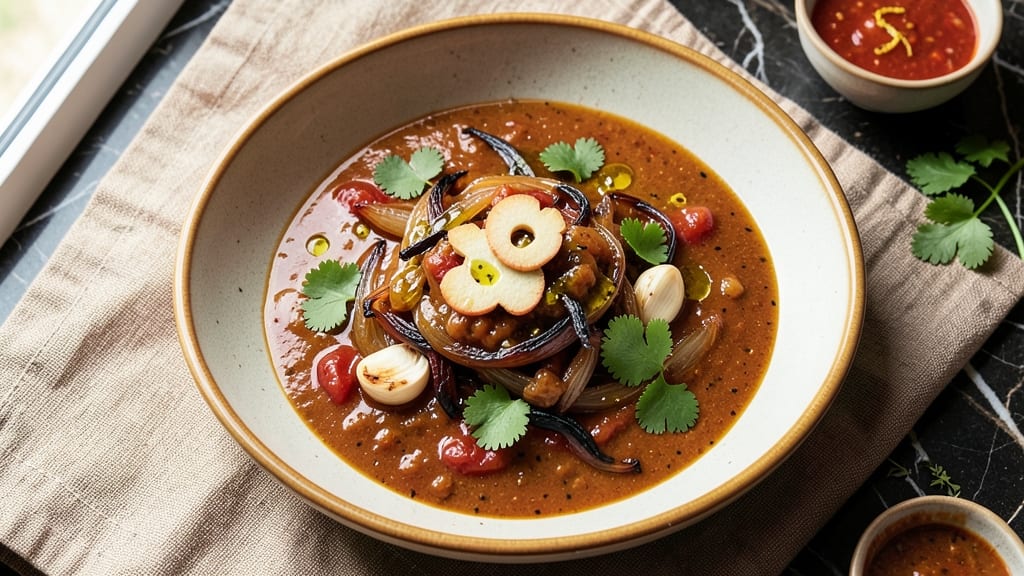
This curry sauce recipe without coconut milk delivers rich, velvety depth using a tomato base and aromatic spices—perfect for transforming weeknight meals. The secret lies in slow-cooked onions, garlic, and ginger that form a fragrant foundation, while turmeric, cumin, and coriander create layers of warmth.
Unlike traditional coconut-based curries, this version stays light yet intensely flavorful, ideal for stir-fries, marinades, or as a base for grilled meats.
The process begins with blooming whole spices in oil to unlock their full potential, then simmering tomatoes until they break down into a smooth, caramelized paste. A blend of broth and cream (optional) balances acidity while keeping the sauce versatile—thin it for soups or thicken it for glazes.
What sets this apart is how the spices meld over time, creating a complex, restaurant-quality flavor without dairy or coconut.
What you’ll end up with is a vibrant, aromatic sauce that clings beautifully to proteins or vegetables while adding depth to any dish. The texture remains silky-smooth, not heavy, and the flavor profile adapts effortlessly to curries, rice bowls, or even as a marinade.
Best of all, it stores well in the fridge for up to 5 days or freezes perfectly for future use.
Whether you’re avoiding coconut or simply prefer a lighter sauce, this recipe proves you don’t need dairy or coconut milk to achieve bold, satisfying curry flavors. The key is patience—letting the spices and tomatoes develop their full potential before blending. Here’s how to make it.
Ingredients for curry sauce recipe without coconut milk
Nine spices, two onions, and a can of tomatoes—this sauce builds flavor like magic.
| Ingredient | Amount | Notes |
|---|---|---|
| Yellow Onions 🧅 | 2 whole | Thinly sliced, charred edges preferred |
| Garlic Cloves 🧄 | 6 cloves | Peeled, smashed for deeper flavor |
| Fresh Ginger 🌿 | 2 tbsp | Finely grated, not minced |
| Extra-Virgin Olive Oil 🫒 | ½ cup | High-quality, fruity variety |
| Canned Crushed Tomatoes 🍅 | 1 can | San Marzano preferred, no salt added |
| Tomato Paste 🍅 | ½ cup | Squeeze tube or canned, no sugar added |
| Ground Cumin 🌿 | 1 tbsp | Toasted for deeper aroma |
| Ground Coriander 🌶️ | 1 tbsp | Freshly ground preferred |
| Turmeric Powder 🧂 | 1 tsp | Bright orange, no additives |
| Garam Masala 🌶️ | 1 tbsp | Homemade or quality store-bought |
| Vegetable Broth 💧 | 1 cup | Low-sodium preferred |
| Heavy Cream 🥛 | ¼ cup | Optional for richness |
| Salt 🧂 | 1 tsp | Kosher or sea salt |
| Black Pepper 🌶️ | ½ tsp | Freshly ground preferred |
| Lemon Juice 🍋 | 1 tbsp | Freshly squeezed |
The onions and garlic are your flavor anchors here. Yellow onions add sweetness when caramelized, while garlic and ginger need to bloom in the oil for at least 3 minutes—don't skip this step. San Marzano tomatoes are worth the splurge for their sweetness, but any high-quality canned tomatoes work. For the spices, Penzeys or bulk bins are great for freshness, but even the regular grocery store spices will work if they're not ancient. The tomato paste? Grab the squeeze tube from Trader Joe's—no waste, lasts forever.
No garam masala? Mix 1 tsp cumin, 1 tsp coriander, 1/2 tsp cinnamon, and 1/4 tsp cardamom for a close substitute. Short on heavy cream? Coconut milk (if not avoiding) or extra broth will keep it smooth. The lemon juice brightens everything—don't skip it. For a smokier flavor, char the onions in a dry pan first. If you're making this ahead, add the lemon juice last so it doesn't curdle. The sauce thickens as it cools, so adjust with extra broth if needed.
This sauce keeps beautifully in the fridge for 5 days, and freezes perfectly for 3 months. I always double the batch—one for dinner, one for freezing. Store it in a jar with a tight lid, and the flavors actually deepen over time. To reheat, warm gently on the stove with a splash of broth if it's too thick. A little goes a long way—2-3 tbsp per serving is plenty for rice bowls or stir-fries.
Why You'll Love This Recipe
- No-Coconut Necessary: The crushed tomatoes and ginger team up to give you a rich, tangy base that doesn’t rely on coconut milk—no weird textures or aftertaste here. Honestly, I was skeptical at first, but the olive oil caramelizes the onions into something so deep and savory, it feels like a proper curry should.
- One-Pot Magic: Minimal chopping, one pan, and 20 minutes later—this sauce is ready. Between us, I’ve burned curry sauces before because of layers of spices and coconut milk, but this? Just sauté, simmer, and go. The garlic and ginger mellow into something smooth without any fuss.
- Leftovers That Shine: This sauce actually improves the next day. I’ve used it on weeknight dinners, in freezer meals, and even drizzled over grilled chicken—every time, it’s better than the first batch. No sad, watered-down curry here; the tomatoes hold up, and the flavors meld into something even more complex.
- Budget-Friendly Flex: Yellow onions and canned tomatoes are pantry staples, and this recipe doesn’t demand specialty ingredients. I’ll be real: my grocery bill stays low, but the flavor? It’s the kind of sauce that makes you forget you’re saving money. Plus, it’s the only curry I make that doesn’t break the bank.
Step-by-step instructions for velvety tomato-based curry sauce
Here's how to build a rich, spiced tomato curry without coconut milk—deep flavor with every spoonful.
Char the Onions and Build the Spice Base
Heat a large, heavy-bottomed pot over medium-high heat. Add the 2 whole yellow onions and let them char directly on the dry surface for 5-7 minutes, turning occasionally, until they develop deep blackened edges and soften. This step adds incredible depth to the sauce—don't skip it.
Once charred, remove the onions and set aside. Add the 0.5 cup extra-virgin olive oil to the same pot and reduce heat to medium. Add the 6 peeled garlic cloves and 2 tbsp finely grated fresh ginger. Cook for 2-3 minutes until the garlic turns golden and fragrant—this prevents bitter flavors. Immediately add 1 tbsp ground cumin, 1 tbsp ground coriander, and 1 tsp turmeric powder, stirring constantly for 30 seconds to toast the spices.
Develop the Tomato Foundation
Pour in the 1 can crushed tomatoes and 0.5 cup tomato paste, stirring to combine. Increase heat to medium-high and let the mixture bubble vigorously for 8-10 minutes until it thickens slightly and the raw tomato taste disappears. This reduction concentrates the flavors and forms the base of your sauce.
Here's where the magic happens: Add the charred onions back to the pot along with 1 cup vegetable broth. Stir well and bring to a gentle simmer. Partially cover the pot and let it cook for 15-20 minutes until the sauce reduces by about one-third and the flavors meld together. You want a thick, jammy consistency at this stage—this ensures your sauce won't be watery when finished.
Finish with Cream and Brighten the Flavor
Reduce heat to low and stir in the 0.25 cup heavy cream (if using). Let it simmer gently for 3-4 minutes—this adds richness without overpowering the spice profile. The sauce should now be velvety smooth. Taste and adjust seasoning with 1 tsp salt and 0.5 tsp black pepper as needed.
For that final bright pop, stir in the 1 tbsp freshly squeezed lemon juice and 1 tbsp garam masala. Simmer for another 1-2 minutes to let the garam masala bloom. The lemon juice cuts through the richness while the garam masala adds that warm, aromatic finish. Your sauce is now ready to serve over rice, pair with grilled chicken, or use as a marinade.
Pro Tips For Making Curry Sauce Recipe Without Coconut Milk
- Sweat the Onions Properly: Don’t rush this—cut onions into even ¼-inch slices and cook them in olive oil over medium-low heat for 8-10 minutes until they’re translucent but not browned. I used to walk away, and the sauce would taste raw; patience here means deeper flavor without bitterness.
- Mince Ginger Like It’s 1985: Skip the grater—use a sharp knife and chop the ginger very finely (almost like a paste) so it blends smoothly into the sauce. My grandmother swore by this, and she was right: lumpy ginger ruins the texture, no matter how good the rest of it is.
- Simmer Tomatoes Low and Slow: After adding crushed tomatoes, reduce heat to the lowest setting and let the sauce bubble gently for at least 15 minutes. I learned this the hard way—high heat makes the sauce split and turn mealy. Let it work for you, even if it means staring at the pot.
- Boost Flavor with a Splash of Water: If the sauce thickens too much, add 2-3 tablespoons of water and a pinch of salt to loosen it up. Sounds weird, but it works: the salt helps the tomatoes release more juice, and the water keeps the sauce silky without diluting the taste. (Yes, even if you’re impatient like me.)
Serving suggestions for this recipe
Rice Bowl Elevation
This curry sauce transforms simple rice into a flavor showstopper. I love serving it over jasmine rice or basmati, where the sauce clings to each grain beautifully.
For extra texture, top with toasted cashews or crispy fried shallots. A sprinkle of fresh cilantro adds brightness, while pickled red onions cut through the richness. 🌟
Protein Pairings
Grilled chicken thighs are my go-to protein—toss them in 2 tbsp sauce before grilling for sticky, flavorful bites. For vegetarian options, try crispy tofu or chickpeas, both of which absorb the sauce's depth.
The sauce also works as a marinade for shrimp skewers or beef strips—just let them marinate for 30 minutes before cooking.
Vegetable Stir-Fries
Use this sauce as a base for vibrant stir-fries. Sauté bell peppers, broccoli, and snap peas in a wok, then deglaze with 2 tbsp sauce and 1 tbsp soy sauce.
The sauce's natural sweetness balances the vegetables' crunch. For extra umami, add a splash of fish sauce or hoisin. Serve with rice noodles for a quick, satisfying meal.
Flatbread Dipping Sauce
Warm the sauce slightly and serve it as a dip for naan, pita, or flatbreads. The velvety texture contrasts perfectly with the bread's crispy edges. For a restaurant-style touch, drizzle with yogurt (if avoiding dairy, use coconut yogurt) and garnish with mint leaves.
This is especially great for game-day snacks or as a starter with crudité.
Soup or Stew Booster
Add a ladle of this sauce to lentil soups or vegetable stews for instant depth. The tomato base blends seamlessly, while the spices warm up the dish. For a creamy twist, stir in ½ cup Greek yogurt at the end.
It’s a game-changer for hearty winter meals—just 1 tbsp per bowl enhances flavor without overpowering.
Freezer-Friendly Meal Prep
Double the batch and freeze half for quick meals later. Store in silicone molds or glass jars with tight lids. When ready to use, thaw overnight in the fridge, then reheat gently with a splash of broth.
I often use it for one-pot meals—just toss with frozen veggies and protein, then simmer until everything is cooked. It’s my secret to stress-free weeknight dinners. ✨
Nutrition facts
Frequently asked questions
Can I make this curry sauce without tomatoes?
Yes, but the flavor profile will change significantly. For a tomato-free version, substitute with 1 cup tomato paste (instead of crushed tomatoes) plus 1 cup vegetable broth and add 1 tbsp apple cider vinegar to balance acidity. Alternatively, use 1 cup puréed butternut squash or 1 cup blended cauliflower for a lighter base—both work well with the spices.
How do I adjust the thickness for different uses?
This sauce starts thick but thins as it cools. For dipping sauces, use it as-is or thin with 1-2 tbsp warm broth. For stir-fries, reduce to ½ cup sauce + 1 tbsp soy sauce to coat ingredients lightly. To thicken, simmer uncovered for 5-10 minutes or stir in 1 tsp cornstarch mixed with water.
What's the best way to store leftover sauce?
Transfer to an airtight container and refrigerate for up to 5 days. For longer storage, freeze in ice cube trays (perfect for single-use portions) or glass jars (leave 1-inch headspace to prevent cracking). Thaw overnight in the fridge—never microwave directly from frozen.
Can I make this sauce vegan?
Skip the heavy cream and use ¼ cup coconut milk (if avoiding coconut, try ¼ cup cashew cream) or extra broth. For richness, stir in 2 tbsp nutritional yeast or 1 tbsp tahini at the end. The spices will still shine through beautifully.
Why does my sauce taste bitter?
Overcooking the garlic or spices is the most common cause. To fix it, immediately stir in 1 tsp sugar or 1 tbsp honey to balance bitterness. For prevention, remove garlic when golden (2-3 minutes max) and toast whole spices (30 seconds) rather than grinding them first. Lemon juice also helps brighten flavors—add it at the end.