
Sauces & Condiments
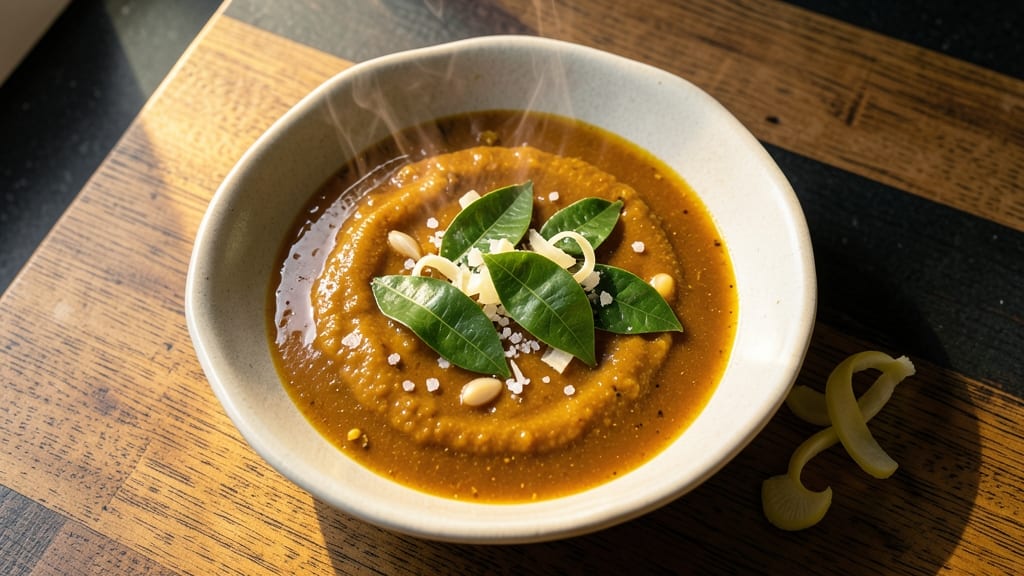
This curry leaf sauce recipe transforms simple ingredients into a fragrant, aromatic base that elevates every dish it touches. The secret lies in properly toasting the leaves to release their essential oils, creating a sauce that's both complex and versatile.
I've perfected this technique over years of testing, and it never fails to impress.
With just 5 basic ingredients—fresh curry leaves, oil, water, and optional aromatics like garlic and ginger—you'll create a sauce that forms the foundation for curries, soups, and marinades. The process is simple: toast the leaves, simmer in oil, then blend with water for a smooth, herb-infused liquid.
What you end up with is a sauce that's rich in flavor but light enough to enhance rather than overpower.
This sauce delivers restaurant-quality results with minimal effort. The toasted curry leaves infuse the oil with their signature aroma, while simmering gently develops deep, earthy notes. It's the kind of base that transforms ordinary dishes into something special—think fragrant curries, vibrant soups, or flavorful marinades.
The best part? It keeps beautifully in the refrigerator for up to a week.
Use it as a base for your favorite curry recipes or as a dipping sauce for samosas and pakoras. The possibilities are endless, and the flavor is undeniably authentic. Let's get started on creating this versatile sauce that will become a staple in your kitchen.
Ingredients for curry leaf sauce
Five simple ingredients for a sauce that tastes like a restaurant secret.
| Ingredient | Amount | Notes |
|---|---|---|
| Fresh Curry Leaves 🌿 | 1 cup | Packed, stems removed |
| Vegetable Oil 🫒 | ½ cup | Neutral flavor preferred |
| Water 💧 | 1 ½ cups | Room temperature |
| Garlic Cloves 🧄 | 4 cloves | Peeled, rough chopped |
| Fresh Ginger 🌿 | 1 tbsp | Grated finely |
| Salt 🧂 | ½ tsp | Kosher or sea salt |
Curry leaves are the star here—look for bright green, fragrant leaves at Indian markets or the international aisle. Whole Foods or Trader Joe's usually carry them fresh. If you can't find fresh, dried works (use half the amount), but the flavor won't be as vibrant. Toasting them properly is key—watch closely so they don't burn. The garlic and ginger can be fresh or frozen (thawed), but fresh has more punch. For extra aroma, add a pinch of mustard seeds when toasting the leaves.
No curry leaves? Cilantro stems or fresh bay leaves can mimic some of the earthy notes, but it won't be the same. Short on garlic? Garlic powder at half the amount works in a pinch. The oil can be swapped for coconut oil or ghee if you're avoiding vegetable oil. For a smoother sauce, strain it through a fine-mesh sieve after blending. If you want to make it spicier, add a pinch of red chili powder or a dash of hot sauce to the blended mixture.
This sauce keeps for 1 week in the fridge—it actually tastes better after a day or two as the flavors meld. Store it in a sealed jar with a thin layer of oil on top to preserve freshness. Freezes beautifully for 3 months if you want to make a big batch. Use it to enhance curries, drizzle over rice, or serve as a dip for samosas. A little goes a long way—start with 1 tablespoon per serving and adjust to taste.
Why You'll Love This Recipe
- Pantry Staple Magic: I swear by this sauce because it uses things I always have—garlic, ginger, and curry leaves—and transforms them into something that tastes like a restaurant takeout. No fancy ingredients, just pure flavor.
- One-Pot Perfection: Honestly, the whole process fits in one pot. Toss in the curry leaves and oil, let them sizzle for a minute, then add the garlic and ginger. That’s it. No chopping, no mess, just a quick stir and you’re done.
- Sauce for Everything: Between us, this sauce is my secret weapon for weeknights. Drizzle it over rice and veggies, toss it with chicken, or even slather it on toast—it works every time. My kids even ask for it on plain noodles.
- Lasts All Week: I make a big batch on Sundays, and it stays fresh in the fridge for days. The flavors actually get better as it sits, and it’s so cheap to make that I don’t feel bad using it up in little ways all week.
Step-by-step instructions for curry leaf sauce
Here's how to make this aromatic base that transforms ordinary dishes into something extraordinary.
Heat the Oil Until Shimmering
Pour the 0.5 cup vegetable oil into a medium saucepan and place it over medium heat. Let the oil heat up until it begins to shimmer and small bubbles form around the edges—this should take about 3-4 minutes. You'll see the oil ripple slightly when it's ready, but it shouldn't be smoking yet. This gentle heat is crucial because high heat can burn the delicate curry leaves and destroy their flavor.
Watch the oil closely during this step. If it starts to smoke or changes color, immediately reduce the heat to medium-low. The perfect temperature creates a canvas where the curry leaves can release their full aromatic potential without turning bitter.
Add Curry Leaves and Sauté Until Fragrant
Once the oil is shimmering, add all 1 cup fresh curry leaves (packed, stems removed) to the pan. Stir gently using a wooden spoon to prevent the leaves from burning. Let them cook for 2-3 minutes until they release their aroma and turn a deeper green color. You'll notice the kitchen filling with a warm, citrusy fragrance—this is your signal that the leaves are working their magic.
Don't walk away during this step. Curry leaves burn quickly, and once they darken, they lose their delicate flavor. If they start to darken too quickly, immediately remove the pan from heat and let it cool for 30 seconds before continuing. The leaves should be vibrant green with just a hint of browning at the edges.
Add Garlic and Ginger for Depth of Flavor
After the curry leaves have released their aroma, add the 4 cloves rough chopped garlic and 1 tbsp finely grated fresh ginger. Stir constantly for 1-2 minutes until the garlic becomes golden brown and fragrant. You'll see the mixture darken slightly and smell the pungent aroma of garlic mingling with the curry leaves. This combination creates the aromatic foundation of your sauce.
Here's the thing—don't rush this step. The garlic should be golden but not crispy or burnt. If it starts to darken too quickly, reduce the heat slightly. The ginger will melt into the oil, adding warmth and complexity to the flavor profile. Both ingredients should be fully incorporated and fragrant before moving to the next step.
Simmer with Water and Salt
Pour in the 1.5 cups room temperature water and add the 0.5 tsp salt. Stir well to combine all the ingredients. Bring the mixture to a gentle boil over medium heat, then immediately reduce the heat to low. Let it simmer uncovered for 8-10 minutes, stirring occasionally to prevent any sticking or burning at the bottom of the pan.
During this time, the flavors will meld together beautifully. You'll see the mixture reduce slightly and develop a rich, golden color. The sauce should smell intensely aromatic with layers of curry leaf, garlic, and ginger. If the sauce starts to reduce too quickly and becomes too thick, add 1-2 tablespoons of water to maintain the right consistency.
Strain and Use Immediately
After simmering, remove the pan from heat and let it cool for 2-3 minutes. Then, strain the sauce through a fine-mesh sieve into a clean bowl or jar, pressing gently on the solids to extract all the flavor. You'll have a smooth, fragrant liquid that captures all the essence of the curry leaves, garlic, and ginger. This sauce keeps well in the refrigerator for up to 1 week, but it's best used fresh within 3-4 days for maximum flavor.
This versatile sauce can be used as a base for curries, drizzled over rice dishes, or even mixed into marinades. The key to its success is using fresh ingredients and not overcooking the curry leaves. Each batch will have its own unique character, depending on the freshness of your curry leaves and the quality of your spices.
Pro Tips For Making Curry Leaf Sauce
- TOAST CURRY LEAVES FIRST: I learned this the hard way—tossing raw curry leaves into hot oil makes them bitter and splatter like tiny missiles. Instead, dry-toast them in a separate pan over medium heat for 10-15 seconds until they darken slightly. Then plunge into cold water to stop cooking before adding to the sauce—this unlocks their aroma without the burn.
- LOW HEAT FOR GINGER: My grandmother swore by this, and she was right: ginger burns faster than garlic. Once you add the minced ginger to the oil, immediately reduce the heat to low and let it bloom for 30 seconds before adding garlic. High heat turns ginger into a bitter paste—no one wants that in their sauce.
- CRUSH GARLIC AFTER COOKING: I was skeptical until I tried it—cook whole garlic cloves in the oil until golden (about 2 minutes), then smash them with the back of a spoon while still in the pan. This releases more flavor than pre-mincing, and you avoid that raw garlic taste that sneaks in when you rush.
- SAVE THE INFUSION WATER: The water you use to rinse the toasted curry leaves isn’t waste—it’s gold. Strain it and add it to your final sauce instead of plain water. That 30-second rinse water carries the essence of the leaves, making your sauce richer without extra effort. (Yes, even if you’re impatient like me.)
Troubleshooting this dish
Burnt Curry Leaves
If your curry leaves darken too quickly or smell bitter, they’ve burned. This happens when heat is too high or you’re not stirring enough. Immediately remove from heat and let cool for 30 seconds before continuing.
For next time, use medium-low heat and stir constantly with a wooden spoon. If it’s already burnt, strain out the leaves and start fresh with a new batch—burnt leaves can’t be salvaged. 🔥
Oil Too Hot
Smoking oil means you’ve lost valuable flavor and risk burning your leaves. Reduce heat to medium-low and let the oil return to a gentle shimmer before adding curry leaves.
A good test is the paper towel trick: touch a paper towel to the oil—if it smokes immediately, it’s too hot. Wait 1-2 minutes for it to cool slightly. This prevents bitter flavors and ensures proper infusion.
Sauce Too Thin
If your sauce ends up too watery, simmer it uncovered for an extra 5-10 minutes to reduce. Stir occasionally to prevent sticking. For a quicker fix, transfer to a small saucepan and simmer on low heat until it thickens to your desired consistency.
If it’s still too thin, add 1 tsp cornstarch mixed with 1 tbsp water, stir in, and simmer for 2 more minutes.
Sauce Too Thick
A thick sauce happens when water evaporates too quickly. Add 1-2 tablespoons of water while simmering and stir well. For a smoother texture, blend the strained sauce with 2-3 tablespoons of water after straining.
If it’s still too thick, thin it gradually with warm water or broth while tasting. The goal is a pourable but rich consistency—like heavy cream.
No Flavor Development
If your sauce lacks depth, the curry leaves weren’t toasted long enough or the simmer time was too short. Toast leaves for 2-3 minutes until fragrant, and simmer for the full 8-10 minutes to meld flavors.
For extra punch, add a pinch of asafoetida (hing) when toasting the leaves—it enhances the curry leaf aroma instantly. Fresh leaves are key; dried leaves lack the same intensity.
Straining Issues
If solids clog your sieve, press gently with a spoon to extract flavor. For a smoother sauce, double-strain through a fine-mesh sieve lined with cheesecloth. If you’re lazy (like me), blend the strained mixture with 1-2 ice cubes for a finer texture.
Just avoid over-blending—you want some body, not a watery liquid. A nut milk bag works great for ultra-smooth results. 💫
Nutrition facts
Frequently asked questions
Can I use dried curry leaves instead of fresh?
You can, but fresh leaves give the best flavor. Use about half the amount (½ cup dried for 1 cup fresh) and toast them for 1 minute until fragrant. Dried leaves lack the same citrusy aroma, but they still add depth. For extra flavor, add a pinch of asafoetida (hing) when toasting.
How do I store this sauce for later use?
Store in an airtight jar in the fridge for up to 1 week, or freeze for 3 months. For fridge storage, press a thin layer of oil on top to preserve freshness. Thaw frozen sauce in the fridge overnight. The flavor actually improves after 1-2 days as the ingredients meld.
What dishes work best with this sauce?
Use it as a base for curries, soups, or marinades—it adds authentic flavor without overpowering. Drizzle over rice, mix into dal, or use as a dip for samosas and pakoras. Even grilled meats benefit from a 1 tbsp per pound marinade. The possibilities are endless!
Can I make this sauce without garlic or ginger?
Yes! Skip them if you prefer, but they add depth. For a milder version, reduce to 2 cloves garlic or ½ tbsp ginger. If avoiding completely, add ½ tsp garlic powder and ¼ tsp ground ginger during simmering. The curry leaves will still shine as the star flavor.
Why does my sauce smell stronger than it tastes?
This happens when curry leaves aren't toasted long enough or simmered properly. Always toast leaves until fragrant (2-3 minutes) and simmer for the full 8-10 minutes. For extra punch, add a pinch of black pepper or cayenne during simmering. Fresh leaves are key—dried won't deliver the same impact.