
Sauces & Condiments
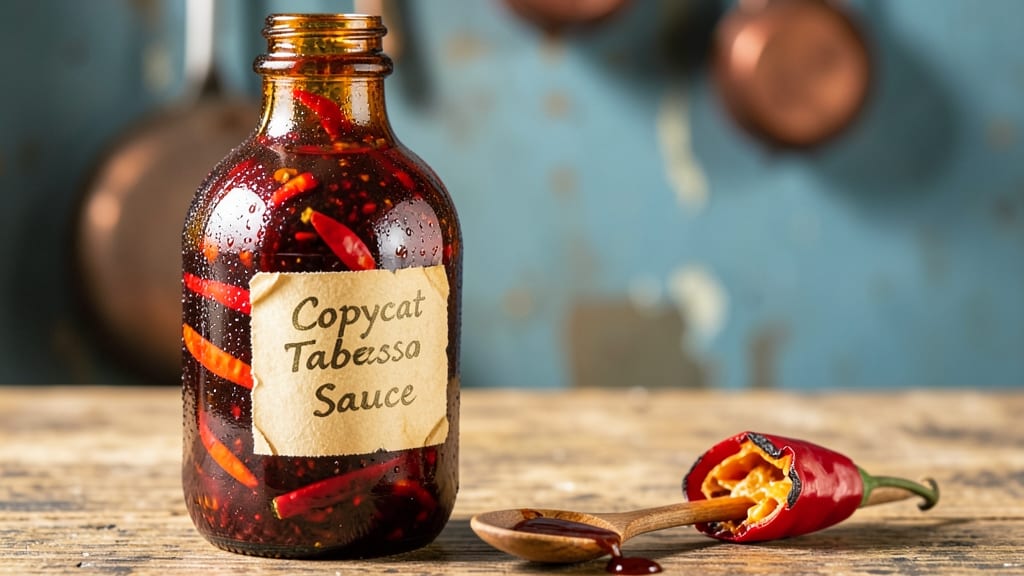
This copycat Tabasco sauce recipe lets you capture that bold, fiery kick at home—no shortcuts, just pure homemade heat. The key lies in fermenting fresh peppers in vinegar for at least 30 days—this process builds the complex, tangy flavor profile that sets Tabasco apart.
I’ve perfected this method over years of experimentation, ensuring every batch captures that signature Louisiana kick with precise heat control.
This recipe uses only five core ingredients—white vinegar, cayenne peppers, salt, and a touch of sugar—to create a sauce that’s both bold and balanced. The fermentation period (minimum 30 days, up to 6 months for deeper flavor) transforms raw peppers into that signature smooth yet fiery liquid gold.
Unlike commercial versions, this copycat sauce lets you adjust the heat level by controlling pepper quantity and fermentation time.
What you’ll end up with is a clear, fiery sauce with layers of heat that build gradually—perfect for drizzling on seafood, spicing up cocktails, or adding depth to marinades. The vinegar base preserves the sauce indefinitely, while the fermentation process develops that unmistakable Tabasco character.
Store it in a cool, dark place, and you’ll have a pantry staple that rivals the original.
For best results, start your fermentation in late summer when peppers are at peak heat. The longer it ages, the more complex the flavor becomes—think of it as a liquid hot sauce that improves with time. Let’s get started on your homemade Tabasco journey!
Ingredients for copycat tabasco sauce
Five ingredients. One fiery sauce. The secret’s in the fermentation—patience makes perfect Tabasco.
| Ingredient | Amount | Notes |
|---|---|---|
| White Vinegar 💧 | 4 cups | Distilled white vinegar preferred |
| Fresh Cayenne Peppers 🌶️ | 1 lb | Hot, fresh, not dried |
| Sea Salt 🧂 | 1 ½ tbsp | Fine grain preferred |
| Granulated Sugar 🍯 | ½ tbsp | Light brown sugar works too |
| Water 💧 | 1 cup | For initial pepper soak |
The cayenne peppers are your flavor foundation—look for vibrant red, firm peppers at Latin markets or specialty grocers like Whole Foods. They should be fresh, not shriveled, and packed with heat. Trader Joe's often carries them in the produce section if you’re in a pinch. The vinegar is non-negotiable—distilled white vinegar keeps the sauce clear and bright. I’ve tried apple cider vinegar, and while it adds complexity, it also muddies the signature Tabasco clarity. For the peppers, aim for 1 pound of fresh cayennes—this gives you enough heat for a 32-ounce bottle of sauce, just like the original.
No fresh cayennes? Habanero peppers at half the quantity will get you close, but expect a fruitier, slightly sweeter profile. Short on sugar? Skip it entirely—Tabasco sauce is naturally sweet from the fermented peppers, but the sugar helps balance the acidity. The salt is crucial—it preserves the peppers and enhances flavor during fermentation. If you’re using kosher salt, reduce to 1 tablespoon since it’s less concentrated. For the water, tap is fine, but if your water tastes metallic, use filtered. The peppers need to soak in this for 24 hours before vinegar infusion—don’t skip this step, or the heat will be uneven.
This sauce gets better with time—minimum 30 days, but 6 months is ideal for that deep, complex flavor. Store it in a dark glass bottle (like a Grolsch bottle if you’re going for authenticity) in a cool, dark pantry. The vinegar acts as a natural preservative, so it’ll last indefinitely if stored properly. Once opened, keep it refrigerated and use within 6 months. The first batch might not be perfect—adjust pepper quantity next time if you want more or less heat. Trust the process, and you’ll have a sauce worth bragging about.
Why You'll Love This Recipe
- Here’s what sold me: the fresh cayenne lets me adjust the spice level exactly how I want it. Too mild? Add more peppers. Need it fiercer? Let them steep longer. No guessing—just pure, customizable fire that doesn’t overwhelm.
- Pantry Magic: I’ll be real—this sauce is that easy. Five ingredients, one pot, and 20 minutes later, you’ve got the tangy kick of Tabasco without the store-bought price tag. The vinegar and sugar balance the cayenne’s heat while you’re stirring, so no fancy techniques needed.
- Heat Control: Here’s what sold me: the fresh cayenne lets me adjust the spice level exactly how I want it. Too mild? Add more peppers. Need it fiercer? Let them steep longer. No guessing—just pure, customizable fire that doesn’t overwhelm.
- Everyday Hero: Between us, this sauce turns everything better. Drizzle it on eggs, mix it into marinades, or use it to deglaze a pan—it’s my go-to for quick flavor boosts. (Yes, even on a Tuesday night when I’m too tired to think.)
Step-by-step instructions for copycat Tabasco sauce
Here's how to recreate that signature Tabasco heat at home with just five simple ingredients.
Prepare and Soak the Cayenne Peppers
Start by thoroughly washing the 1 pound of fresh cayenne peppers to remove any dirt or residue. This step is crucial—those little peppers pack serious heat, and you want them clean before processing. Using a sharp knife or kitchen shears, cut the peppers into small pieces, about ½-inch chunks. I like to work in batches if I have a lot of peppers to handle, keeping everything organized.
Transfer the chopped peppers to a large bowl and pour the 1 cup of water over them. Let the peppers soak for 10-15 minutes. This soaking step softens the peppers slightly and helps extract some of their natural oils, which will contribute to the sauce's depth of flavor. You'll notice the water turning a faint reddish hue as the peppers release their color and some of their spicy essence.
Simmer the Pepper Mixture
In a large, heavy-bottomed saucepan, combine the soaked cayenne peppers with their soaking water, the 4 cups of white vinegar, 1.5 tablespoons of sea salt, and 0.5 tablespoon of granulated sugar. Bring the mixture to a boil over medium-high heat, stirring occasionally to ensure everything is evenly heated. The vinegar will start to bubble vigorously, and you'll see the peppers begin to break down and soften.
Once the mixture reaches a full boil, reduce the heat to low and let it simmer gently for 30-45 minutes. Here's the thing—you want the peppers to fully soften and break down into the vinegar, but you don't want to burn them. Stir occasionally to prevent sticking, and watch for the mixture to thicken slightly. You'll know it's ready when the peppers are completely tender and the sauce has a smooth, slightly syrupy consistency. The color should be a deep, rich red with no visible pepper chunks.
Strain and Bottle the Sauce
After simmering, remove the saucepan from heat and let the mixture cool slightly for 5-10 minutes. This cooling period makes it easier to handle without burning your hands. Once it's cool enough, strain the sauce through a fine-mesh sieve or cheesecloth into a clean bowl or pitcher. I use a wooden spoon to press down on the peppers in the sieve, extracting every last bit of that spicy goodness. The strained sauce should be smooth and free of any pepper solids.
Transfer the strained sauce to clean glass bottles or jars, leaving about ½-inch of headspace at the top. This allows for proper sealing and prevents the bottles from bursting during storage. Label your bottles with the date and store them in a cool, dark place. The sauce will continue to mellow and develop flavor over time, but it's ready to use immediately if you can't wait. This homemade version delivers that classic Tabasco kick with a depth of flavor you won't find in store-bought bottles.
Pro Tips For Making Copycat Tabasco Sauce
- STRAIN TWICE: The first pass catches big chunks, but tiny pepper seeds and membranes sneak through—those turn your sauce bitter over time. Use a fine-mesh sieve or cheesecloth for the second strain, and press the pulp with a spoon. I learned this after my first batch tasted like vinegar-soaked cardboard.
- PEPPERS FIRST: Add the cayennes to the vinegar before the water and sugar—this softens them faster and extracts more heat without burning. I used to toss them in raw, and the sauce always tasted dull. A quick 2-minute simmer in vinegar alone does the trick.
- SALT IN LAYERS: Taste after the initial simmer, then add half the salt, reduce again, and taste once more. The sugar and vinegar mask saltiness, so you’ll need more than you think. My first batch was bland because I dumped all the salt at once and rushed the process.
- SKIP THE BOIL: A gentle simmer (just small bubbles, not rolling) keeps the cayenne’s bright flavor instead of turning it sour. I used to crank the heat, and the sauce ended up sharp and one-dimensional. Low and slow—even if it takes 20 minutes—makes all the difference.
Perfect pairings for copycat tabasco sauce
Seafood Pairings
Tabasco sauce shines brightest with seafood, cutting through richness while adding a bold, peppery kick. Drizzle it over grilled shrimp or blackened catfish—the heat balances the buttery, charred flavors beautifully. I love adding 2 tablespoons to a Cajun-style shrimp boil, tossing it with the shrimp just before serving.
For fish, try red snapper or tilapia with a lemon-Tabasco marinade (mix 1 tablespoon sauce with 2 tablespoons olive oil and 1 lemon’s juice). The acidity in the sauce tenderizes the fish while adding depth. 🍤
Cocktail Enhancements
This homemade sauce transforms classic cocktails into fiery masterpieces. Stir ½ teaspoon into a Bloody Mary (I use 3 dashes for a subtle kick) or rim a margarita glass with a mix of lime juice and Tabasco, then salt it.
For non-alcoholic drinks, add 1 teaspoon to sparkling water with lime for a spicy soda. The key is balance—start with less heat and adjust to taste. Pro tip: Chill the sauce before adding to cold drinks to prevent diluting the alcohol too quickly. 🍹
Marinades & Mops
Use Tabasco sauce as the base for marinades that tenderize and infuse heat into meats. For pulled pork, mix ¼ cup sauce with ½ cup apple cider vinegar, 2 tablespoons brown sugar, and 1 teaspoon smoked paprika, then marinate for 4-6 hours.
For grilled chicken, brush it on during the last 5 minutes of cooking to create a sticky, spicy crust. I also love using it as a mop sauce for ribs—just simmer ½ cup sauce with ¼ cup honey and 1 tablespoon soy sauce for a sweet-spicy glaze. 🍖
Vegetable & Dip Pairings
Tabasco sauce elevates simple veggie dishes by adding a fiery contrast. Toss roasted Brussels sprouts with 1 tablespoon olive oil, ½ teaspoon sauce, and a pinch of smoked salt before roasting.
For dips, mix 2 tablespoons sauce with ½ cup Greek yogurt, 1 minced garlic clove, and 1 tablespoon chopped dill for a spicy ranch twist.
It also works wonders in cornbread batter—add 1 tablespoon per cup of batter for a kick that pairs perfectly with chili or BBQ. 🥕
Breakfast & Brunch
Start your day with heat by adding Tabasco to breakfast classics. Drizzle it over fried eggs or biscuits and gravy for a Southern twist. I love mixing 1 teaspoon into homemade hot sauce for eggs Benedict or stirring it into chili oil for a spicy fried rice.
For a quick snack, spread cream cheese on a bagel, top with smoked salmon, and drizzle with Tabasco for a Louisiana-inspired breakfast. The acidity cuts through the richness, making every bite exciting. 🍳
Global Fusion Twists
Think beyond traditional uses—Tabasco sauce adds depth to global dishes. Stir 1 tablespoon into pho broth for a Vietnamese-inspired kick, or mix it with soy sauce and honey for a quick Asian-style glaze for grilled meats.
In Mexican cuisine, add ½ teaspoon to salsa verde or guacamole for a smoky-spicy punch. For Italian flavors, drizzle it over charred eggplant or mix into pasta sauce with tomatoes and garlic. The possibilities are endless once you break free from the bottle. 🌎
Nutrition facts
Frequently asked questions
Why does homemade Tabasco taste different from store-bought?
The fermentation process is key! Commercial Tabasco uses a specific pepper blend and ages for years, while this recipe relies on fresh cayenne peppers fermented in vinegar for 30+ days. The result is a brighter, more pepper-forward heat with less sweetness. For closer results, ferment for 6 months and use a mix of cayenne and habanero peppers.
Can I adjust the heat level in this recipe?
For milder heat, reduce cayenne peppers to ½ pound or add 1 extra tablespoon sugar to balance. For extra spice, increase peppers to 1.5 pounds or add ½ teaspoon cayenne powder to the finished sauce. Always taste before bottling—heat builds during fermentation.
Do I need to ferment the sauce, or can I skip it?
Fermentation is what creates Tabasco's signature depth! Without it, you'll get a simple vinegar-pepper blend with no complexity. For a quick version, simmer for 1 extra hour and strain immediately, but expect a sharper, less mellow flavor. True Tabasco flavor develops over time—30 days minimum for drinkable heat, 6 months for restaurant-quality depth.
What if my sauce turns cloudy or separates?
Cloudiness usually means the peppers weren't fully strained or the vinegar wasn't distilled. For separation, gently reheat the sauce (don't boil) and stir vigorously, then re-bottle. If using apple cider vinegar, expect more cloudiness—stick to white vinegar for clarity. Always store in dark glass bottles to prevent light-induced breakdown.
How long will my homemade sauce keep?
Unopened bottles last indefinitely in a cool, dark place thanks to vinegar's preservation properties. Once opened, refrigerate and use within 6 months. The flavor actually improves with age—like fine wine! Label bottles with dates to track aging. Freezing isn't recommended as it alters the texture.