
Main Courses
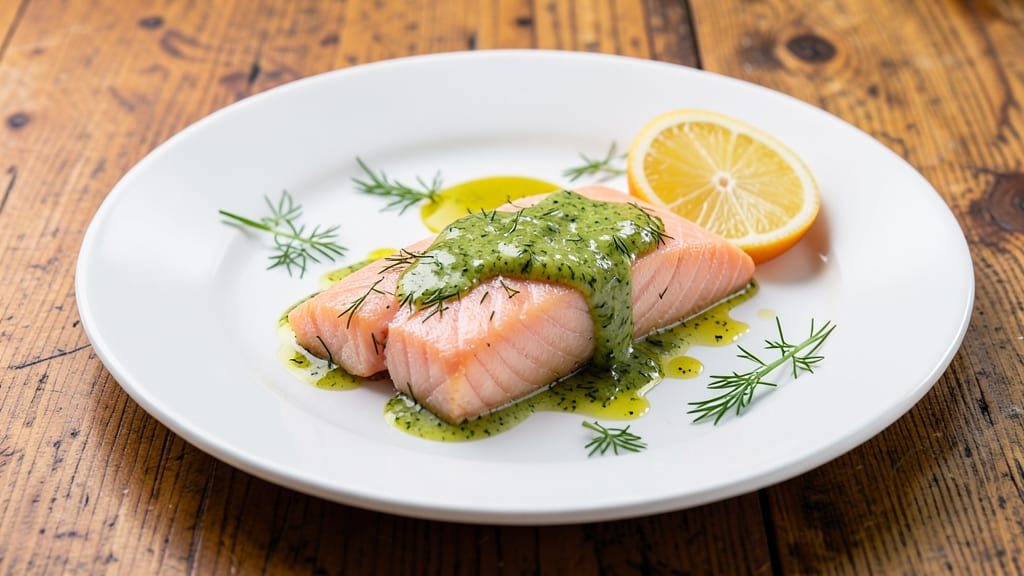
Cold poached salmon with dill sauce delivers restaurant-quality elegance without the fuss of complicated techniques—just precise timing and a bright, herby sauce. The secret lies in gently poaching the fish in aromatic broth until perfectly tender, then chilling it to achieve that silky, melt-in-your-mouth texture.
I developed this method after years of perfecting hotel-style presentations at home, where every bite balances delicate salmon with the crisp acidity of fresh dill.
The process is simpler than it sounds: simmer the salmon in lightly seasoned water with aromatics until just cooked through, then shock it in ice water to stop the cooking instantly.
Meanwhile, the dill sauce comes together in minutes with Greek yogurt, fresh dill, and a touch of lemon—no heavy cream or complicated steps. This dish transforms a simple protein into something refined yet approachable, perfect for summer entertaining or a light weeknight dinner.
What you’ll end up with is flaky, buttery salmon with a clean, bright sauce that cuts through its richness. The cold presentation elevates it further, making it feel like a special-occasion dish without requiring hours in the kitchen.
Serve with cucumber salad, crusty bread, or asparagus spears to complete the meal. The contrast of temperatures and textures makes every bite satisfying.
This recipe scales beautifully for gatherings, and the sauce keeps well for up to 3 days—ideal for meal prep. Whether you’re hosting or treating yourself, the combination of tender salmon and vibrant dill sauce delivers a dish that’s both impressive and effortless.
Let’s get started on creating your perfect chilled salmon dinner.
Ingredients for cold poached salmon with dill sauce
Four elegant fillets, a cup of herby yogurt, and precise timing transform simple salmon into restaurant-worthy perfection.
| Ingredient | Amount | Notes |
|---|---|---|
| Center-Cut Salmon Fillets 🐟 | 4 whole | Skin-on, 6-8 oz each, sushi-grade preferred |
| Fresh Dill Weeds 🌿 | 1 cup | Packed, stems removed for sauce |
| Plain Greek Yogurt 🥛 | 1 cup | Full-fat, unsweetened, thick texture preferred |
| Lemon Juice 🍋 | ¼ cup | Freshly squeezed, seeds strained |
| Extra-Virgin Olive Oil 🫒 | ¼ cup | Light, fruity variety for brightness |
| White Wine Vinegar 🍷 | 1 tbsp | Dry, for poaching liquid |
| Fresh Bay Leaves 🌿 | 2 whole | Dried works in pinch |
| Garlic Cloves 🧄 | 3 cloves | Smashed, for poaching |
| Diamond Crystal Kosher Salt 🧂 | 1 ½ tsp | For poaching liquid |
| Black Peppercorns 🌶️ | ½ tsp | Freshly cracked |
| Ice Cubes ❄️ | 2 cups | For shocking salmon |
| Cold Water 💧 | 4 cups | For shocking salmon |
| Unsalted Butter 🧈 | 2 tbsp | Cold, for finishing |
The salmon makes or breaks this dish—center-cut fillets with skin-on stay together beautifully. Local fish markets often carry the best quality, but any reputable seafood counter will have sushi-grade options. Look for fillets with vibrant pink flesh and minimal bruising. If you can't find fresh dill, dried works at one-third the amount, but fresh delivers that bright, crisp acidity the sauce needs. The Greek yogurt should be thick and creamy—Fage or Chobani full-fat are my go-tos. For the poaching liquid, white wine vinegar adds depth without overpowering, but lemon juice works in a pinch if you're avoiding alcohol.
No fresh dill? Cilantro or parsley can stretch it, but use half the amount. The yogurt can be swapped for sour cream or crème fraîche if you prefer tangier sauce. For the poaching broth, vegetable or chicken stock works if you're skipping the vinegar. The butter at the end? Cold, cubed butter melts beautifully over chilled salmon—don't skip this step. If you're prepping ahead, make the sauce first and store it separately. The salmon keeps well chilled for 2 days before serving, making this perfect for meal prep.
This dish is all about timing—poach the salmon just until it reaches 125°F internal temp, then shock immediately in ice water. The sauce comes together in minutes but tastes even better after 30 minutes of chilling—the flavors meld perfectly. Store the salmon and sauce separately in airtight containers. The salmon stays fresh for 2 days in the fridge, while the sauce keeps for 3 days. For serving, arrange the salmon on a platter with the sauce spooned around it—simple, elegant, and restaurant-quality.
Why You'll Love This Recipe
- I’ll be real: salmon can feel fancy, but this recipe stretches it. A single fillet feeds two easily, and the sauce costs pennies. Plus, leftovers? They’re basically the same next day—just as good, if not better, cold. That’s money saved and flavor won.
- No-Cook Magic: I swear, this is the only salmon dish where I don’t even turn on the stove. Just cold water, a bowl, and 20 minutes—no heat, no fuss. The salmon stays so tender it melts in your mouth, and honestly? That’s half the battle won right there.
- Dill-Yogurt Dream Team: Between us, the sauce is what makes this dish ridiculously good. That bright dill cuts through the richness of the yogurt, while the lemon juice keeps it from being too heavy. One bite and you’ll understand why I keep buying salmon just for this.
- Lunchbox Hero: This is my go-to for work lunches or picnics—packs like a dream, stays fresh for days, and still tastes fresh at room temperature. (Yes, even on a Tuesday night when you’re too tired to reheat anything.) The dill sauce keeps it from getting boring, too.
Step-by-step instructions for cold poached salmon with dill sauce
Here's how to achieve perfectly tender, silky salmon with a vibrant herb sauce that stays fresh and bright.
Prepare the Poaching Liquid and Salmon
In a large saucepan, combine the 4 cups cold water, 1 tbsp white wine vinegar, 1.5 tsp diamond crystal kosher salt, 0.5 tsp freshly cracked black peppercorns, and the 2 whole fresh bay leaves. Bring to a gentle simmer over medium-low heat—you want small bubbles breaking the surface, not a rolling boil. This controlled temperature prevents the salmon from becoming tough.
While the liquid heats, carefully place the 4 whole center-cut salmon fillets skin-side down in a shallow dish. Using a pastry brush, lightly coat both sides with 0.25 cup extra-virgin olive oil. This creates a delicate barrier that helps the fillets hold their shape during poaching. I always work quickly here—salmon cooks fast once submerged.
Poach the Salmon to Perfect Tenderness
Once the poaching liquid reaches that gentle simmer, carefully lower the salmon fillets in—skin-side down first. They should float just below the surface. Cover the pan with a lid and maintain the medium-low heat for exactly 8-10 minutes. You'll know it's done when the salmon flakes easily with a fork and the center reaches 125°F internally—just slightly undercooked for that melt-in-your-mouth texture.
Here's the thing—don't lift the lid during cooking. The steam buildup helps maintain even heat distribution. If you peek, you risk temperature fluctuations that can make the salmon cook unevenly. When time's up, remove the fillets with a slotted spoon and transfer them to a large bowl filled with 2 cups ice cubes and 4 cups cold water. This ice bath shocks the proteins and locks in that perfect texture.
Create the Vibrant Dill Sauce
While the salmon chills, prepare the sauce by combining the 1 cup plain Greek yogurt, 0.25 cup lemon juice, 1 cup fresh dill weeds (stems removed), and the 3 smashed garlic cloves in a blender or food processor. Pulse until smooth but still slightly textured—you want visible dill flecks for that fresh herb appeal. With the motor running, slowly drizzle in the 0.25 cup extra-virgin olive oil to emulsify the sauce. It should be thick enough to coat the back of a spoon but still spreadable.
Taste and adjust seasoning with additional diamond crystal kosher salt or lemon juice if needed. The sauce should be bright, tangy, and herb-forward with just a hint of garlic sweetness. I like to let it sit at room temperature for 5 minutes before serving—this allows the flavors to meld beautifully.
Finish and Serve with Confidence
Once the salmon has chilled for 10 minutes in the ice bath, pat it dry gently with paper towels. Using a sharp knife, carefully separate each fillet from the skin, keeping them whole. Place each fillet on a chilled platter and drizzle with the prepared dill sauce. For an elegant touch, add 2 tbsp cold unsalted butter to each serving—it melts beautifully against the cool salmon.
Serve immediately with the sauce spooned generously over each fillet. The contrast of cool, tender salmon with the vibrant green sauce creates a restaurant-worthy presentation. Each bite delivers that perfect balance of creamy texture, bright acidity, and fresh herb notes—ideal for summer gatherings or elegant weeknight dinners.
Pro Tips For Making Cold Poached Salmon With Dill Sauce
- USE CENTER-CUT FILLETS: Thinner edges cook faster—center-cut stays juicy and even. If you grab the cheaper whole fillet, trim the thickest parts yourself; the extra 2 minutes now saves you dry, overcooked salmon later.
- CHOP DILL LIKE HERBS: Tear the stems by hand, not chop—you want bright, leafy texture, not pulp. Skip the food processor unless you’re making dill sauce for a crowd; fresh dill turns to mush fast.
- POACH AT LOW SIMMER: A rolling boil ruins the salmon; aim for tiny bubbles at the edges, not violent action. Test with a thermometer—160°F (71°C) max. Too hot? Reduce heat and wait; patience here keeps the fish tender.
- ACIDIFY THE YOGURT: Mix in 1 tablespoon lemon juice before adding fresh dill—this balances the tang and thickens the sauce faster. No time? Use 1/4 tsp cream of tartar instead; it’s the same trick restaurants use.
Perfect pairings for this recipe
Crisp Cucumber Salad
This refreshing side balances the richness of the salmon perfectly.
Thinly slice 2 medium English cucumbers and toss with 2 tbsp extra-virgin olive oil, 1 tbsp fresh lemon juice, 1 tbsp chopped fresh dill, ½ tsp diamond crystal kosher salt, and ¼ tsp freshly cracked black pepper.
Let it marinate for 15 minutes before serving—this draws out the juices for maximum crunch. 🥒
Crusty Sourdough Bread
Warm, crusty bread soaks up any extra dill sauce beautifully. I recommend a baguette-style sourdough from your local bakery—look for one with a crisp exterior and soft interior.
Toast slices until golden and serve with a side of herbed butter (mix 2 tbsp softened butter with 1 tsp chopped fresh dill and ¼ tsp salt). The contrast of warm bread with cool salmon is pure magic. 🥖
Blistered Asparagus
For a more substantial side, blister 1 bunch asparagus in 1 tbsp olive oil over high heat for 3-4 minutes until tender-crisp. Finish with a sprinkle of flaky sea salt and a squeeze of lemon. The bright, green vegetables complement the salmon's delicate flavor without overpowering it. 💚
Lemon-Garlic Green Beans
Lightly sauté 1 lb green beans in 1 tbsp butter with 2 minced garlic cloves and 1 tbsp lemon juice until just tender. Finish with 1 tsp chopped fresh dill and a pinch of salt.
The acidity in the sauce mirrors the dill sauce on the salmon, creating a cohesive flavor profile. 🌿
Wine Pairing: Sauvignon Blanc
A crisp, mineral-driven Sauvignon Blanc from New Zealand or Loire Valley cuts through the richness of the salmon beautifully. Look for notes of citrus and fresh herbs—these echo the lemon and dill in the dish. I love Kim Crawford Sauvignon Blanc for its vibrant acidity and refreshing finish. 🍷
Beer Pairing: Belgian Witbier
For beer lovers, a Belgian witbier like Stella Artois Wit or Hoegaarden offers a citrusy, spiced contrast. The coriander and orange peel notes complement the dill sauce while the effervescence cleanses the palate between bites. Serve chilled for the best experience. 🍺
Nutrition facts
Frequently asked questions
Why poach salmon instead of grilling or baking?
Poaching creates the perfect silky, melt-in-your-mouth texture without overcooking. The gentle simmer in aromatic liquid keeps the fish moist and tender, while the ice bath afterward locks in that restaurant-quality texture. For chilled dishes, poaching is ideal because it prevents the salmon from drying out or becoming rubbery when refrigerated.
Can I use frozen salmon for this recipe?
Yes, but thaw it properly first! Place frozen salmon in the refrigerator for 24 hours or use the quick thaw method in cold water (never microwave). Pat dry thoroughly before poaching to ensure even cooking. The texture won't be as pristine as fresh, but it still works beautifully for this method.
How far ahead can I make this dish?
Prepare the salmon and sauce separately up to 2 days ahead. Store the fillets in an airtight container with sauce on top (or wrapped in plastic) and refrigerate. The sauce keeps well for 3 days in the fridge. Re-chill before serving for the best texture. This makes it perfect for meal prep!
What if my salmon comes out overcooked?
If the salmon feels firm or dry, it was likely overcooked. The key is timing—remove it when the center reaches 125°F (about 8-10 minutes). For future attempts, reduce heat slightly or use a thermometer. The ice bath helps, but prevention is better!
Can I make this dish without wine vinegar?
Swap the white wine vinegar for lemon juice or apple cider vinegar in equal amounts. The acidity is what brightens the poaching liquid, so don't skip it entirely. For a non-alcoholic, non-acid option, use 1 tbsp chicken stock instead.