
Sauces & Condiments
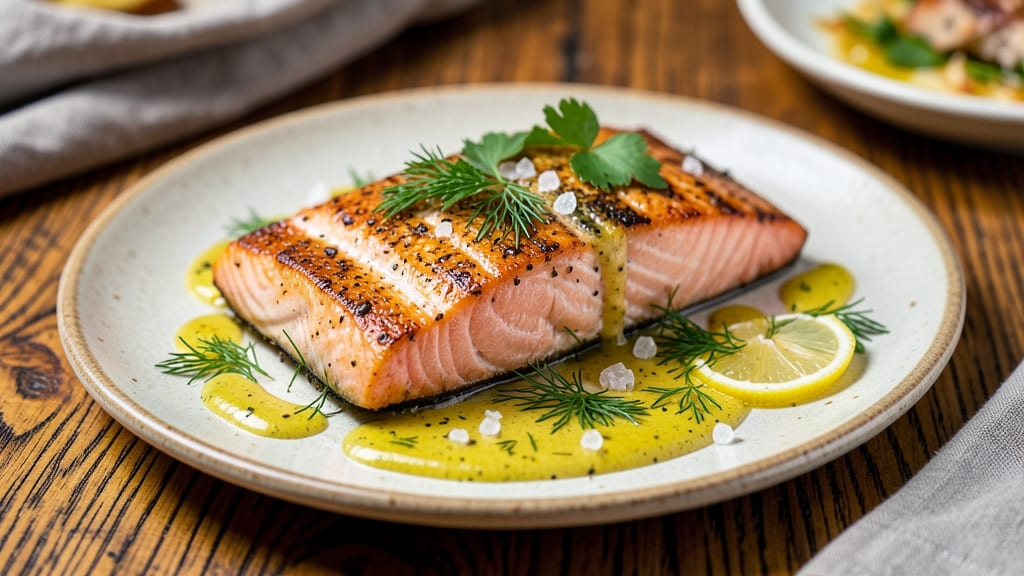
Baked salmon with mustard dill sauce transforms weeknight dinners into restaurant-worthy meals with minimal effort. The secret lies in achieving that perfect crispy skin while keeping the flesh tender, all paired with a tangy, herbaceous sauce that brightens every bite. After years of perfecting this technique, I’ve developed a method that guarantees foolproof results—no fancy equipment required.
The mustard dill sauce is where the magic happens. A blend of Dijon mustard, fresh dill, and a touch of lemon creates a harmonious balance of sharpness and freshness.
When drizzled over the salmon, it cuts through the richness of the fish, leaving your plate looking as impressive as it tastes. The sauce is simple to prepare but elevates the dish to new heights.
What you’ll end up with is perfectly baked salmon—golden, crispy skin on the outside and moist, flaky flesh within—all topped with a vibrant mustard dill sauce that ties the dish together. This recipe is designed to impress without the stress, making it ideal for both weeknight dinners and special occasions.
The best part? The entire process takes less than 30 minutes, including prep and baking. Whether you’re cooking for two or a small gathering, this dish delivers restaurant-quality results with minimal effort. Let’s get started!
Ingredients for baked salmon with mustard dill sauce
Four ingredients for the salmon, eight for the sauce—simple but restaurant-quality ingredients.
| Ingredient | Amount | Notes |
|---|---|---|
| Center-Cut Salmon Fillets 🐟 | 2 whole | Skin-on, 6-8 oz each, patted dry |
| Extra-Virgin Olive Oil 🫒 | 2 tbsp | High-quality, fruity variety |
| Diamond Crystal Kosher Salt 🧂 | 1 ½ tsp | Fine grain preferred |
| Fresh Dill Weeds 🌿 | ½ cup | Stems removed, loosely packed |
| Dijon Mustard 🍯 | 2 tbsp | Mild or hot, no additives |
| Fresh Lemon Juice 🍋 | 2 tbsp | From 1/2 lemon, freshly squeezed |
| Unsalted Butter 🧈 | 2 tbsp | Cold, cut into small pieces |
| Garlic Cloves 🧄 | 2 cloves | Minced, for sauce |
| Heavy Cream 🥛 | ¼ cup | Full-fat for richness |
| Freshly Ground Black Pepper 🌶️ | ½ tsp | Cracked peppercorns preferred |
| Granulated Sugar 🍚 | ½ tsp | Balances mustard acidity |
| All-Purpose Flour 🌾 | 1 tbsp | For sauce thickening |
The salmon makes or breaks crispy skin. Center-cut fillets are key—they hold their shape better than tail-end cuts. Look for freshness: the flesh should be bright, translucent pink with no graying. I always grab mine from Whole Foods or the seafood counter at Trader Joe's—they keep it flash-frozen first, so it stays ultra-fresh. Pat them bone-dry with paper towels (the secret to crispy skin), and don’t skip the cold butter rub—it’s what creates that golden crust. If your fillets vary in thickness, trim them to even size for consistent cooking.
No Dijon mustard? Yellow mustard plus a pinch of sugar works in a pinch, though it’ll lack depth. Fresh dill is non-negotiable here—dried just won’t cut it. Trader Joe’s sells it in little jars that last weeks, or grab a bunch at the farmers market. The heavy cream can be swapped for half-and-half if you’re watching fat, but trust me on the full-fat version for that velvety texture. For the butter, European-style like Plugrá melts smoother than American butter. And if you’re out of sugar, a splash of honey (if not vegan) or maple syrup will do—just reduce the mustard slightly to balance.
Salmon keeps best in the coldest part of your fridge, wrapped in parchment. Use within 2 days for peak crispiness. The sauce? Make it fresh and use it the same day—it won’t hold up well after 24 hours. Portion the sauce into small jars if you’re prepping ahead, and store it in the fridge. The butter for the salmon can be prepped a day ahead—just keep it cold until ready to use. This dish reheats beautifully—just 5 minutes at 350°F with a splash of water to steam the sauce back to life.
Why You'll Love This Recipe
- Same recipe, different vibes: toss it with roasted potatoes for a lazy Tuesday or serve it over greens for a guest-worthy plate. Honestly, it’s my go-to when I want to impress without stressing.
- No-Fuss Prep: I swear by this recipe when I’m too tired to fuss—just drizzle olive oil, sprinkle salt, and bake. The mustard dill sauce comes together in minutes with ingredients I already have, so no last-minute grocery runs.
- Tangy-Creamy Magic: That bright Dijon mustard and fresh dill cut through the richness of the salmon, leaving you with a sauce that’s rich but not heavy. The salmon stays moist, and the crust? Chef’s kiss—just right.
- Weeknight to Dinner Party: Same recipe, different vibes: toss it with roasted potatoes for a lazy Tuesday or serve it over greens for a guest-worthy plate. Honestly, it’s my go-to when I want to impress without stressing.
Step-by-step instructions for baked salmon with mustard dill sauce
The secret to perfect salmon lies in crispy skin and a balanced sauce—here's how to nail both.
Prepare the Salmon for Maximum Crispiness
Preheat your oven to 400°F with a rack positioned in the lower third. Pat the skin-on salmon fillets completely dry with paper towels—this is non-negotiable for crispy skin. I press down firmly on each fillet to remove every trace of moisture, even in the crevices.
Place the fillets skin-side down on a parchment-lined baking sheet. Drizzle the 2 tablespoons extra-virgin olive oil evenly over the skin, then sprinkle with 1 teaspoon diamond crystal kosher salt and 0.25 teaspoon freshly ground black pepper. Let them rest at room temperature for 10 minutes while the oven finishes preheating.
Bake Until Skin is Crispy and Fish Flakes Easily
Bake the salmon for 12-15 minutes until the skin is deep golden brown and crispy, and the internal temperature reaches 135°F when measured at the thickest part. Don't peek during baking—every time you open the oven, you risk losing heat and steam, which prevents proper crisping.
Here's the thing—salmon is done when it flakes easily with a fork but still has a slight resistance in the center. Overcooking turns it rubbery, so pull it out when it's just shy of perfect. Transfer the fillets to a plate, skin-side up, and tent loosely with foil to keep warm while you make the sauce.
Make the Mustard Dill Sauce from Scratch
In a small saucepan, melt the 2 tablespoons unsalted butter over medium heat. Add the 2 cloves minced garlic and cook for 30 seconds until fragrant—don't let it brown or it'll turn bitter. Immediately whisk in the 2 tablespoons Dijon mustard and 0.5 teaspoon granulated sugar.
Slowly pour in the 0.25 cup heavy cream while whisking constantly to prevent curdling. Bring to a gentle simmer and cook for 2-3 minutes until slightly thickened. Remove from heat and stir in the 2 tablespoons fresh lemon juice and 0.5 cup chopped fresh dill weeds—this brightens the sauce and balances the richness.
Finish the Sauce and Serve Immediately
Return the sauce to low heat and whisk in the 1 tablespoon all-purpose flour to thicken further. Cook for another 1 minute until it coats the back of a spoon. Taste and adjust seasoning with more salt or lemon juice if needed—this sauce should be tangy, herby, and perfectly balanced.
Drizzle the warm sauce over the baked salmon, spooning some underneath to coat the fish completely. Serve immediately with the crispy skin facing up—this is where all the magic happens. The contrast between the crispy exterior, tender flesh, and bright herb sauce makes every bite worth it.
Pro Tips For Making Baked Salmon With Mustard Dill Sauce
- Pat the Salmon Dry: I used to skip this step and wondered why my salmon always ended up steamed instead of crisp. Grab paper towels and press firmly—especially on the skin side—before seasoning. The extra moisture is the enemy of a good crust.
- Use Room-Temp Mustard: Cold Dijon mustard makes the sauce clump like glue. Let that jar sit for 10 minutes on the counter first, then whisk it into the olive oil and dill. Smooth, emulsified sauce every time—no lumps to scrape out.
- Salt the Skin First: Season the salmon skin side first with salt, then flip and season the flesh. The salt draws out moisture, helping the skin crisp while keeping the inside tender. (Yes, it sounds counterintuitive, but it works.)
- Bake at 425°F: Too low, and you’ll end up with sad, rubbery salmon. Too high, and the skin burns before the center cooks. Stick to 425°F and bake for 12–15 minutes—no peeking!—until the internal temp hits 130°F. The residual heat will finish cooking it perfectly.
Common mistakes when making your baked salmon with mustard dill sauce
Overcooking the Salmon
Salmon is done when it reaches 135°F internal temperature and flakes easily with a fork—but don’t overcook it! I’ve ruined many a perfect fillet by leaving it in too long, resulting in dry, rubbery fish.
Set a timer for 12-15 minutes and check at 12 minutes. If the skin isn’t crispy yet, give it 1-2 more minutes max. 🌡️
Skipping the Resting Time
After baking, never skip the 5-minute rest under foil. This allows juices to redistribute, ensuring every bite stays moist. I’ve learned the hard way—cutting into salmon too soon means dry, flavorless bites. Trust the process, even if it feels counterintuitive.
Using Wet Ingredients for Skin
Moisture is the enemy of crispy skin! If your salmon fillets aren’t completely dry before baking, the skin will steam instead of crisp. Pat them down with paper towels until they’re bone-dry—even the crevices.
I double-check by pressing a towel to the skin; if it comes away damp, I pat again. 🧻
Sauce Separation Issues
Sauce curdling or separating? The culprit is usually heat or over-whisking. When adding cream to the butter-mustard mixture, keep the heat on low-medium and whisk gently. If it starts to curdle, immediately remove from heat and stir in 1 teaspoon cold water to smooth it out.
A splash of lemon juice can also help realign the emulsion.
Uneven Cooking
Thickness matters! If your salmon fillets vary in size, trim them to even thickness before baking. I use kitchen shears to trim thicker edges to ½-inch thickness for consistent doneness. Also, avoid overcrowding the baking sheet—leave 1-inch space between fillets for proper airflow and even browning.
Over-Salting the Sauce
The mustard dill sauce should be bright, not salty. Taste as you go! If it’s too salty, balance it with more lemon juice or a pinch of sugar. I’ve ruined a few batches by over-salting—now I taste after each addition. The sauce should sing with herbaceousness, not saltiness. 🌿
Nutrition facts
Frequently asked questions about baked salmon with mustard dill sauce
Can I make this recipe with skinless salmon fillets?
The crispy skin is what makes this dish special, but you can adapt it for skinless fillets! Simply bake them at 375°F for 10-12 minutes (they cook faster without skin) and finish with the sauce. For extra texture, top with toasted breadcrumbs before baking.
How do I store leftovers?
Store baked salmon and sauce separately in airtight containers. The salmon keeps for 2 days in the fridge, while the sauce is best used fresh but lasts 1 day if refrigerated. Reheat gently at 350°F for 5 minutes with a splash of water to restore moisture.
What sides pair best with this dish?
This salmon shines with bright, acidic sides like lemon-butter asparagus or a simple arugula salad with lemon vinaigrette. For heartier meals, try roasted potatoes or quinoa pilaf. The mustard dill sauce's tanginess balances rich sides beautifully.
Can I use frozen salmon?
Yes, but thaw it properly first! Place frozen fillets in a sealed bag and submerge in cold water for 30 minutes per inch of thickness. Pat completely dry before seasoning—moisture ruins crispy skin. Never thaw at room temperature.
Why is my sauce too thick?
If your sauce is too thick, thin it with 1 teaspoon warm water or a splash of heavy cream while whisking gently. The sauce should coat the back of a spoon but still flow smoothly. For future batches, reduce the flour to 0.5 tablespoons if needed.