
Sauces & Condiments
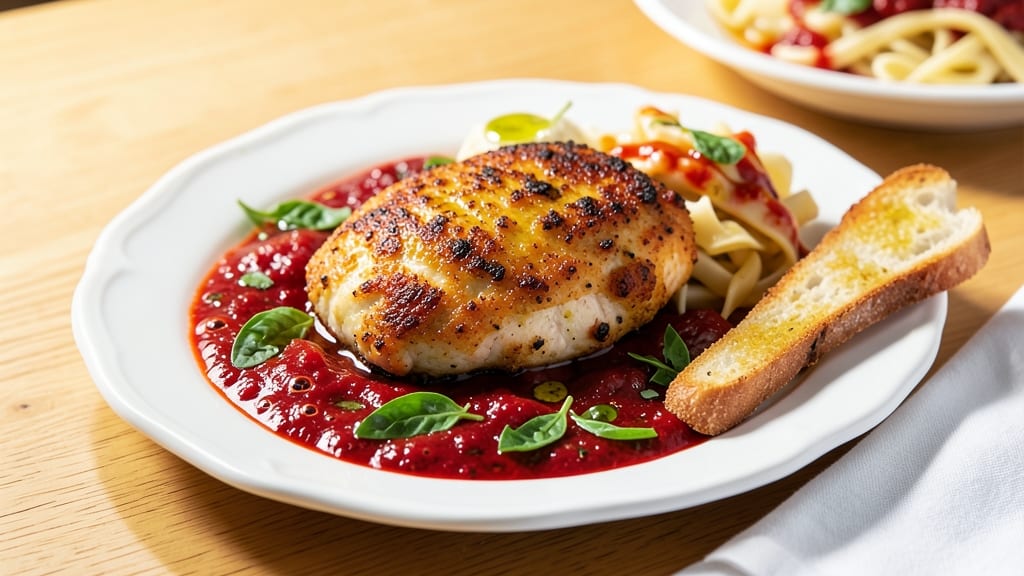
This chicken parm marinara sauce recipe delivers the deep, slow-simmered umami that makes classic chicken parmesan unforgettable. After years of perfecting sauces for Southern Italian dishes, I've cracked the code for a sauce that's rich, balanced, and bright with fresh basil.
The key lies in a long, gentle simmer that develops complex tomato flavors without overpowering the dish.
What sets this marinara apart is the technique: we start with a proper tomato base, then build layers of flavor through garlic, onions, and a touch of red wine. The secret weapon? A splash of pasta water at the end—it binds everything together while keeping the sauce silky smooth.
This isn't just any marinara; it's the kind that clings to crispy chicken, melts into every bite, and makes even store-bought parm look amateur.
The result is a sauce that's perfectly balanced—sweet from the tomatoes, deep from the umami, and fresh from the basil. It's restaurant-quality without requiring hours in the kitchen.
The slow simmer develops flavors that canned sauces can't match, while the fresh basil at the end adds that bright, aromatic finish that makes this sauce truly special.
Use this marinara for chicken parm, pasta, or as a dipping sauce for crusty bread. The recipe scales easily, so you can make a big batch and store it for up to 5 days in the refrigerator.
Let's get started on creating this sauce that'll elevate your Italian dishes to new heights.
Ingredients for chicken parm marinara sauce
Ten ingredients that transform into the richest marinara you'll ever make.
| Ingredient | Amount | Notes |
|---|---|---|
| Extra-Virgin Olive Oil 🫒 | ½ cup | High quality, fruity, for sautéing |
| Yellow Onion 🧅 | 1 whole | Medium size, finely diced |
| Garlic Cloves 🧄 | 4 cloves | Fresh, peeled, minced finely |
| Canned San Marzano Tomatoes 🍅 | 28 oz | Whole, crushed by hand |
| Dry Red Wine 🍷 | ½ cup | Bold, like Cabernet Sauvignon |
| Fresh Basil Leaves 🌿 | ½ cup | Packed, stems removed, chopped |
| Tomato Paste 🍅 | 2 tbsp | Squeeze tube or canned |
| Kosher Salt 🧂 | 1 ½ tsp | Diamond Crystal preferred |
| Ground Black Pepper 🌶️ | ½ tsp | Freshly cracked preferred |
| Pasta Water 💧 | ¼ cup | Reserved from cooking pasta |
The tomatoes are non-negotiable here—San Marzano is the gold standard, but any high-quality canned tomatoes work. I grab mine from Trader Joe's in the Italian section, or the regular grocery store brand if it's labeled 'crushed tomatoes' (not diced). The basil? Fresh is a must—dried just won't cut it. For the wine, any bold red works—Cab Sauv, Merlot, whatever's open. Skip the cheap stuff, though. The olive oil should be extra-virgin—that fruity, peppery kick makes all the difference. If you're worried about cost, buy a smaller bottle of good oil instead of a big one of the cheap stuff.
No red wine? Beef broth with a splash of balsamic gets you close. Fresh basil? Dried oregano at half the amount works in a pinch, but trust me, you'll taste the difference. The tomato paste can be the squeeze tube kind—no need for fancy cans. If your onions get too brown while sautéing, just add a splash of water and keep going. The garlic should be minced finely—almost like a paste. And if you're making pasta for this sauce, save that starchy water—it's liquid gold for binding everything together.
This sauce tastes even better the next day once all the flavors meld. Keeps for 5 days in the fridge, or 3 months frozen in airtight containers. I like to freeze it in 1-cup portions—perfect for a quick weeknight dinner. If you make a big batch, portion it out before freezing so you're not thawing the whole thing. And if you've got leftover sauce, toss it with some pasta and fresh mozzarella for a quick meal—no chicken needed.
Why You'll Love This Recipe
- Here’s what sold me: that splash of dry red wine cutting through the sweetness of San Marzano tomatoes. It’s not just marinara—it’s got this bright, savory punch that makes the sauce taste like it simmered for hours (even if it didn’t).
- One-Pan Magic: I swear by this—just sear the chicken, toss it in the sauce, and bake. No extra pots, no fuss. The onions caramelize right in the same dish while the garlic infuses the wine and tomatoes into something ridiculously rich.
- Wine-Infused Depth: Here’s what sold me: that splash of dry red wine cutting through the sweetness of San Marzano tomatoes. It’s not just marinara—it’s got this bright, savory punch that makes the sauce taste like it simmered for hours (even if it didn’t).
- Leftover Goldmine: Between us, this sauce begs to be made extra. The next day, it’s even better—thicker, deeper—perfect for tossing with pasta or slathering on toast. My freezer’s always stocked with portions because reheating it is zero effort.
Step-by-step instructions for chicken parm marinara sauce
This sauce builds flavor layer by layer—don't rush the process.
Build the Flavor Base with Onion and Garlic
Heat the 0.5 cup extra-virgin olive oil in a large saucepan over medium heat. Add the finely diced yellow onion and cook for 5-6 minutes, stirring occasionally, until soft and translucent. You'll smell that sweet onion aroma developing—this is where the sauce's depth begins.
Push the onions to one side of the pan and add the minced garlic cloves. Cook for 30-45 seconds until fragrant—garlic burns fast, so keep an eye on it. Stir everything together and let it cook for another 1 minute until the garlic loses its raw bite. This aromatic base is the foundation of your sauce, so don't skip this step.
Deepen the Flavor with Tomato Paste and Wine
Lower the heat to medium-low and stir in the 2 tablespoons tomato paste. Cook for 2-3 minutes, stirring constantly, until it darkens slightly and the raw taste disappears. This step intensifies the umami flavor—it's what gives classic marinara its rich, concentrated taste.
Pour in the 0.5 cup dry red wine and scrape up any browned bits from the bottom of the pan with a wooden spoon. Let it simmer for 3-4 minutes until the wine reduces by about half. The alcohol will cook off, leaving behind deeper, more complex flavors. This is where you get that authentic Italian restaurant taste.
Simmer with Tomatoes and Seasonings
Add the 28 oz canned San Marzano tomatoes (crushed by hand) and bring to a gentle simmer. Stir in the 1.5 teaspoons kosher salt and 0.5 teaspoon ground black pepper. Let it cook uncovered for 20-25 minutes, stirring occasionally, until the sauce thickens slightly. You're looking for a consistency where it coats the back of a spoon but isn't gluey.
Here's the thing—this slow simmer develops the sauce's depth. If it looks too thick after 20 minutes, add 2 tablespoons of pasta water to loosen it. The sauce should be rich but still flow nicely. Taste and adjust seasoning if needed—this is your chance to balance the flavors before adding the basil.
Finish with Fresh Basil and Pasta Water
Remove the pan from heat and stir in the 0.5 cup chopped fresh basil leaves. Let it steep for 5 minutes—this infuses the sauce with bright, fresh flavor. The basil will soften slightly but still retain its vibrant green color and aroma.
Return the sauce to low heat and stir in the remaining 0.25 cup pasta water. This final addition ensures the sauce has the perfect consistency to cling to chicken parmesan. The starch in the pasta water helps bind the sauce while keeping it silky smooth. Taste once more and adjust seasoning if needed—now you're ready to serve this umami-packed marinara over your crispy chicken parm.
Pro Tips For Making Chicken Parm Marinara Sauce
- Sweat the Onion First: I learned this the hard way—if you brown the onions in olive oil, the sauce will taste bitter. Instead, cook them low and slow with a splash of water until they’re translucent and all the moisture evaporates. That’s when the garlic joins the party.
- Deglaze with Wine Immediately: Don’t let that browned garlic sit—pour in the red wine the second you add it. Let it bubble for 30 seconds to pull up all the flavor stuck to the pan. Skimp here, and your sauce will taste flat.
- Crush Tomatoes by Hand: Skip the blender—open the San Marzano cans and crush the tomatoes with your fingers. The texture stays chunky, which balances the smoothness of the wine and olive oil. Plus, it’s faster than you’d think.
- Simmer Low and Long: After adding the tomatoes, drop the heat to a gentle simmer and walk away. Thirty minutes of undisturbed cooking lets the flavors meld without burning. I used to rush it, and the sauce never tasted like it should.
Troubleshooting perfect results
Sauce Too Thin?
If your marinara is watery after simmering, don't panic—this happens when tomatoes release excess liquid. Bring the sauce to a gentle boil over medium-high heat for 5-7 minutes, stirring occasionally. The liquid will evaporate, thickening the sauce naturally.
For an extra boost, mash 1-2 tablespoons tomato paste into the sauce and simmer another 3-4 minutes. I've found that adding a splash of red wine vinegar (just 1 teaspoon) also helps balance acidity while concentrating flavors. 🌡️
Sauce Too Thick?
Thick marinara happens when you simmer too long or reduce too aggressively. The quick fix? Stir in 2-3 tablespoons of pasta water or water while the sauce is still warm. For a richer texture, mix 1 tablespoon heavy cream or whole milk into the sauce and heat through gently.
If the sauce is stubbornly thick, try blending it briefly with an immersion blender—this breaks up any clumps while adding body. Just be careful not to over-blend, or you'll lose that rustic texture.
Bitter or Harsh Taste?
Bitter flavors often come from overcooked onions or garlic, or using low-quality tomatoes. If your sauce tastes bitter, immediately stir in 1 tablespoon tomato paste and ½ teaspoon sugar to round out the flavors. A splash of red wine (just 1 tablespoon) also helps soften harsh notes.
For prevention, cook onions and garlic at medium heat—never high—and remove the pan from heat as soon as garlic turns golden. I've learned this the hard way with burnt garlic ruining an otherwise perfect sauce! 🧄
Sauce Separates?
Separation usually means the sauce needs more acidity or fat to emulsify properly. Stir in 1 teaspoon lemon juice or red wine vinegar, then whisk in 1 tablespoon olive oil while the sauce is warm.
If the separation is severe, blend the sauce briefly with an immersion blender to recombine the ingredients. For future batches, ensure your tomatoes are crushed—not chopped—and simmer the sauce uncovered to prevent a skin from forming.
A 5-minute simmer with a splash of wine at the end also helps stabilize the sauce.
Lacks Depth of Flavor?
If your marinara tastes flat, it likely needs more umami or acidity. Boost umami by adding 1 teaspoon fish sauce, ½ teaspoon soy sauce, or a pinch of MSG (just ¼ teaspoon). For acidity, stir in 1 teaspoon balsamic vinegar or lemon zest.
I also recommend finishing with a pinch of salt and black pepper—sometimes the simplest fix is the best. If you're short on time, a 10-minute simmer with a splash of wine at the end can work wonders for developing complexity.
Basil Loses Color?
Fresh basil turns dull when overcooked or added too early. To keep it vibrant, always stir in basil off the heat and let it steep for just 5 minutes before reheating. If the basil looks wilted, add a few fresh leaves at the end—just before serving.
For extra brightness, toss the sauce with ½ teaspoon lemon zest or a pinch of red pepper flakes right before serving. I keep a small pot of basil on my windowsill year-round so I always have fresh leaves on hand for finishing sauces. 🌿
Nutrition facts
Frequently asked questions
Can I make this marinara sauce without red wine?
Replace the 0.5 cup red wine with 0.5 cup beef broth or 0.5 cup water plus 1 tablespoon balsamic vinegar for similar depth. The key is maintaining the same liquid volume to balance the tomatoes. For extra richness, add 1 teaspoon soy sauce to mimic wine's umami qualities.
How can I adjust the spice level in this marinara?
For milder heat, reduce the black pepper to ¼ teaspoon and omit any red pepper flakes. For more kick, add ½ teaspoon crushed red pepper flakes with the tomatoes or finish with 1 teaspoon hot sauce before serving. I often keep a small jar of flakes nearby to adjust to taste at the end.
Can I use dried herbs instead of fresh basil?
Dried herbs will work in a pinch, but fresh basil makes a world of difference. If using dried, substitute 1 teaspoon dried basil for the 0.5 cup fresh, but add it with the tomatoes during simmering rather than at the end. For best results, keep a small basil plant on your windowsill—it grows quickly and adds vibrant flavor to any sauce.
What's the best way to store leftover marinara?
Let the sauce cool completely, then transfer to airtight containers. It keeps in the refrigerator for 5 days or freezes for 3 months. For freezing, portion into 1-cup servings in silicone molds or ice cube trays—perfect for quick meals. Thaw overnight in the fridge and reheat gently on the stove with a splash of water to restore texture.
Why does my homemade marinara taste different from store-bought?
Fresh ingredients and slow simmering create depth store-bought can't match. The red wine, fresh basil, and proper tomato selection make all the difference. Homemade marinara develops complex flavors through layering—something mass-produced sauces can't replicate. Think of it as the difference between a symphony and a recording.